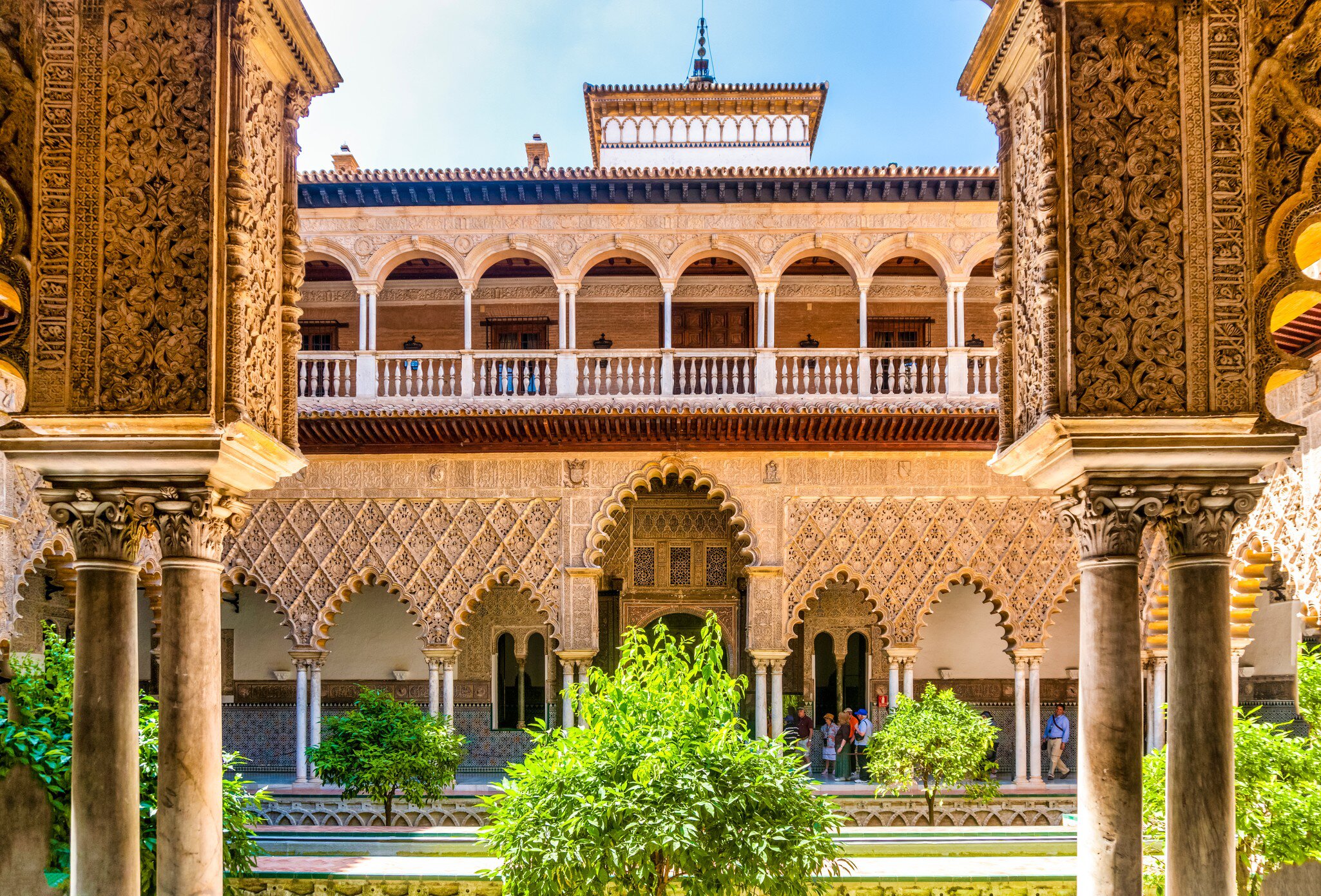
Exquisitely decorated and with a labyrinthine quality, the palaces, courtyards and gardens of Seville’s royal complex are a memorable spectacle. Since the 10th century, Moorish rulers and Spanish monarchs presided over their kingdoms from the Real Alcázar, tearing down, augmenting and rebuilding sections of the sprawling complex to suit their tastes and whims.
Patio del León
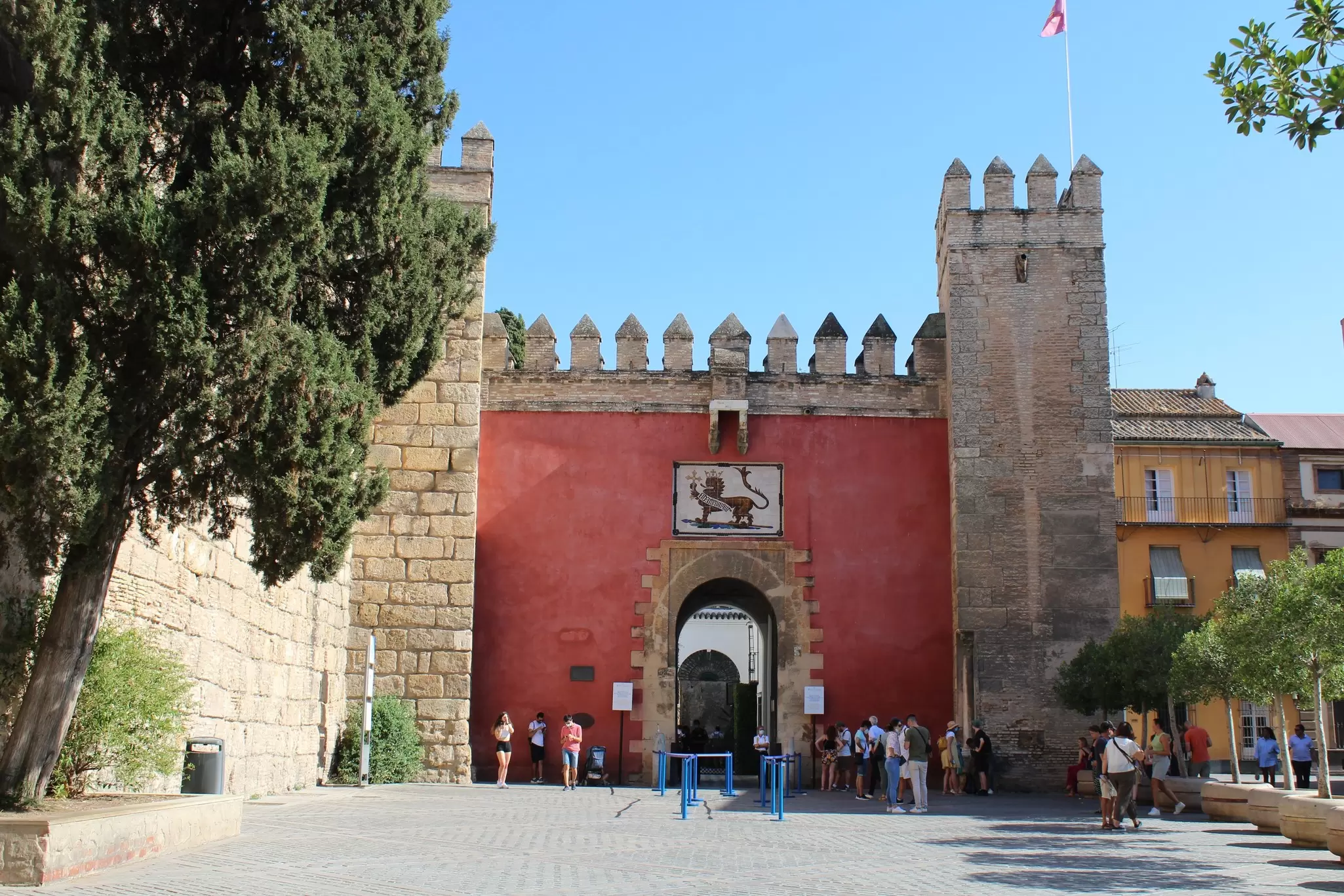
Entry to the Real Alcázar is through the peach-colored Puerta del León (Lion’s Gate) on Plaza del Triunfo. As you pass into the Patio del León (Lion’s Courtyard), the Sala de la Justicia (Hall of Justice) is on your left. Note its Mudéjar plasterwork and artesonado (wooden ceiling of interlaced beams with decorative insertions). On the other side is the Patio del Yeso (Plaster Courtyard), part of the 12th-century Almohad palace, complete with a pond stuffed with goldfish. These sections give a good flavor of what’s to come.
Patio de la Montería
Next, you’ll enter the much bigger Patio de la Montería (Hunting Party’s Courtyard). You can imagine the king’s entourage ready to head out on a hunt. The Casa de la Contratación (Trade House), on the square's western side, was where contracting and trade with Spain’s American colonies was once controlled. Further nods to the seafarers whose wealth shaped this city can be seen in the Salón del Almirante (Admiral’s Hall).
Palacio de Don Pedro
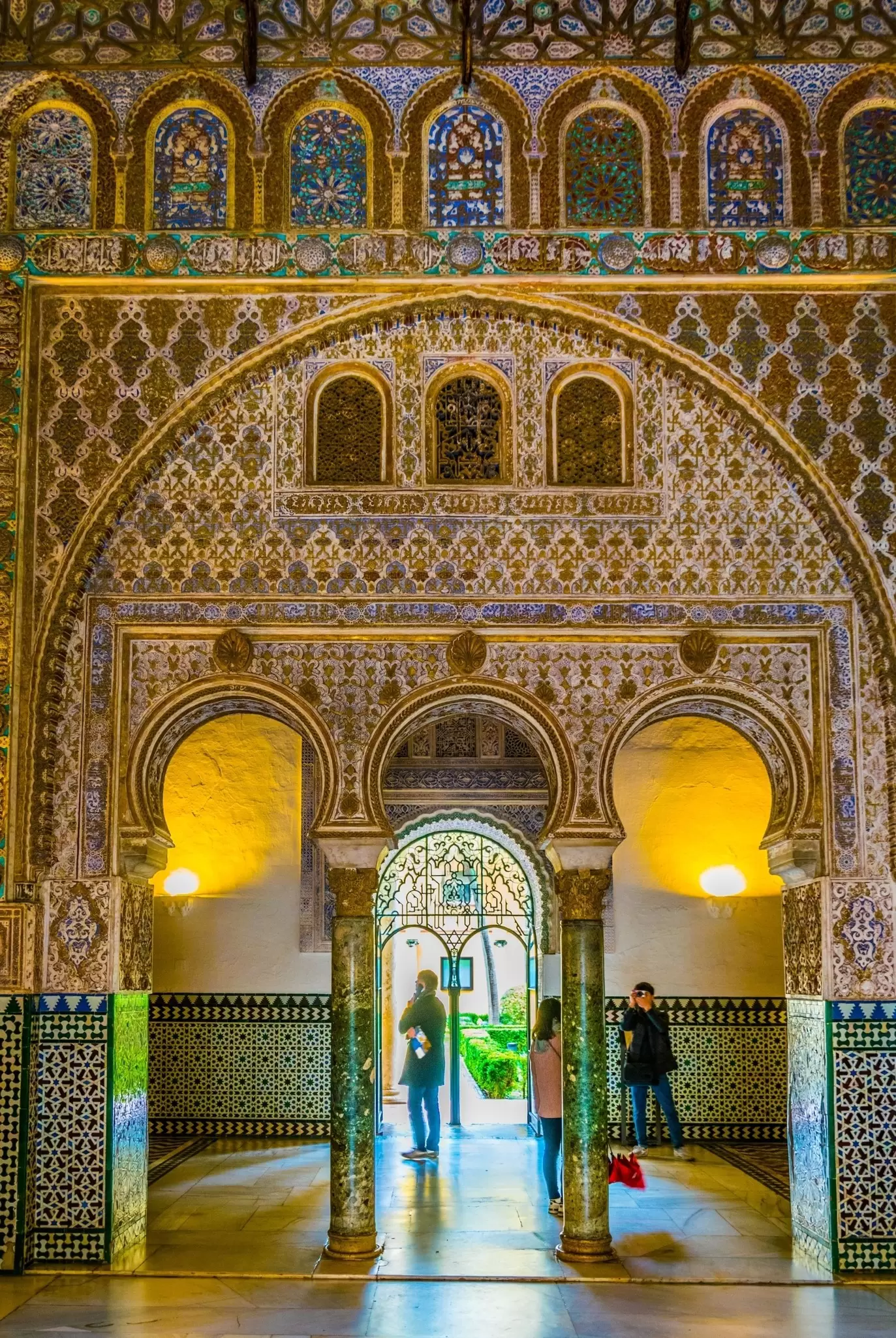
The finest building overlooking the Patio de la Montería is Palacio de Don Pedro. Its ornate stonework is humble by comparison with what lies within. Built for King Pedro I (1350–69) with the help of Moorish Granada’s finest artisans, it has an exquisite Mudéjar-style interior. Highlights include the golden-tiled dome ceiling of the Cuarto del Príncipe (Prince’s Suite), and the spectacular Salón de Embajadores (Hall of the Ambassadors), originally Pedro I’s throne room. The wooden, star-patterned dome was added in 1427.
Patio de las Doncellas
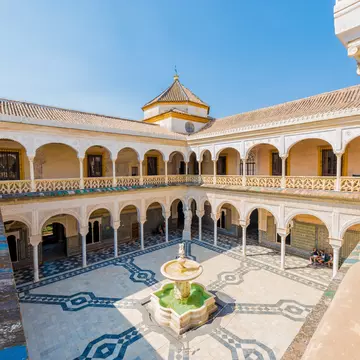
At the heart of this palace is the sublime central courtyard, the Patio de las Doncellas (Maiden’s Courtyard). The sunken garden at its core, framed by carved arches, plasterwork and tiling, was uncovered by archaeologists in 2004. The magnificent plaster and tile work reaches its pinnacle at the Alcoba Real (Royal Quarters), on the courtyard's north side. Beyond this is the covered Patio de las Muñecas (Dolls’ Courtyard).

Palacio Gótico
The style changes drastically upon entering the Palacio Gótico (Gothic Palace), southeast of the Patio de las Doncellas, which was built for Alfonso X in the 13th century. Much remodeled for Carlos I in the 16th century, it's now known as the Salones de Carlos V (after his additional title as Holy Roman Emperor Charles V).
Jardines de los Reales Alcázares
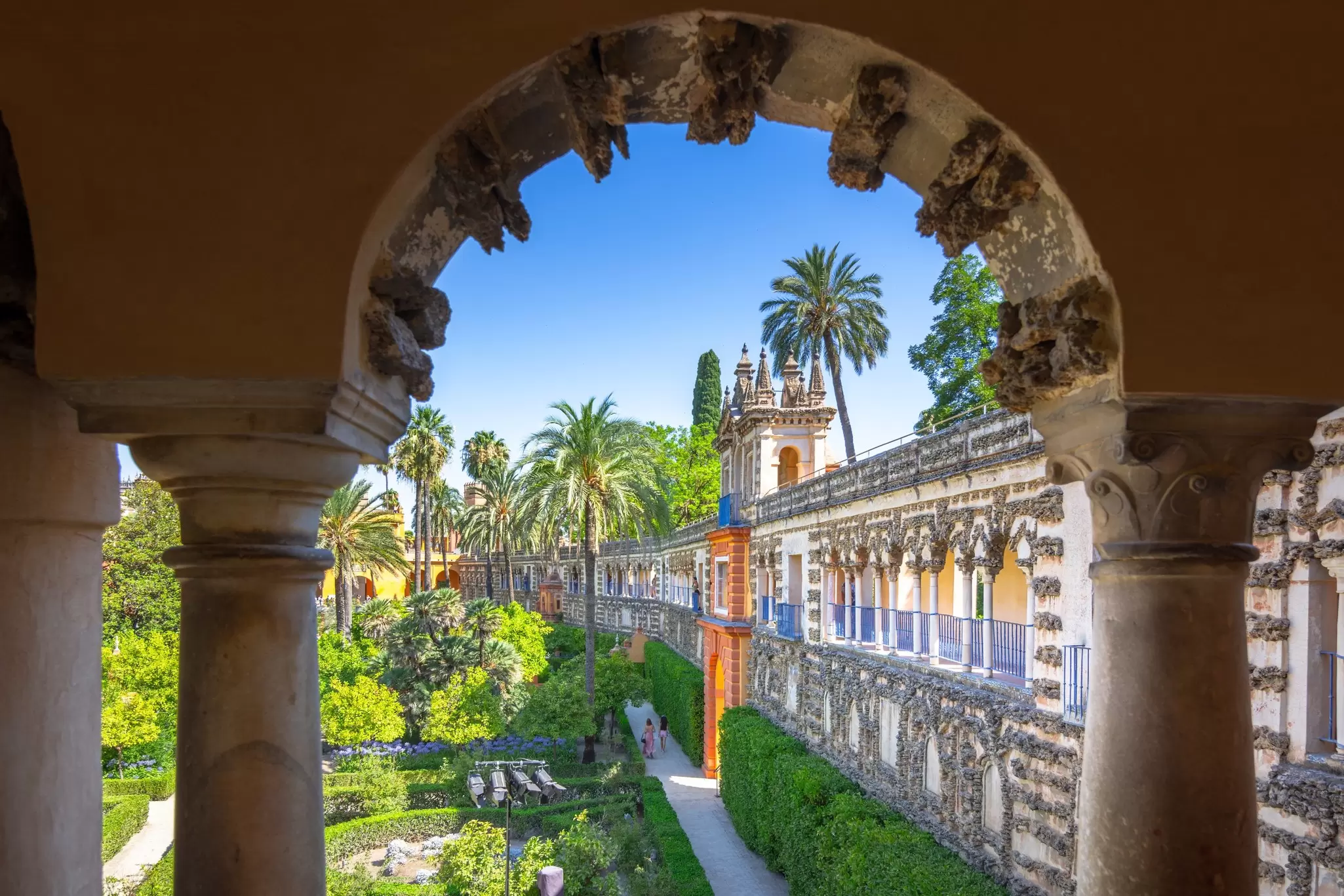
The Jardines de los Reales Alcázares (Royal Alcazar Gardens) offer shaded paths between mazes of myrtle, fish-filled ponds and lofty palm trees. The highlight is the Galería de Grutesco (Grotto Gallery), a 17th-century porticoed gallery created from remnants of a Muslim-era wall, offering views over the gardens and a former Almohad well. There’s also a fantastic hedge maze.