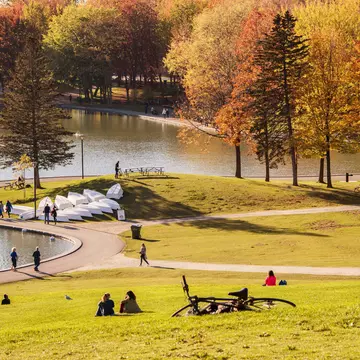
Exhale around Parc Jean-Drapeau, spread across two islands lapped by the St Lawrence River. Île Ste-Hélène, closest to Old Montréal, evolved over centuries from Indigenous land to colonial estate to military outpost to 19th-century public park. The city expanded its boundaries and built Île Notre-Dame for Expo 67 – an ambitious world's fair with futuristic flair – using river-dredged sediment and excavation debris from Montréal's Métro system.
One of the most provocative structures left over from the fair is Brutalist Habitat 67 (habitat67.com; 90-minute tour adult/child $58/free), a LEGO-like arrangement of prefabricated blocks designed by Israel-born architect Moshe Safdie at the edge of the St Lawrence River.
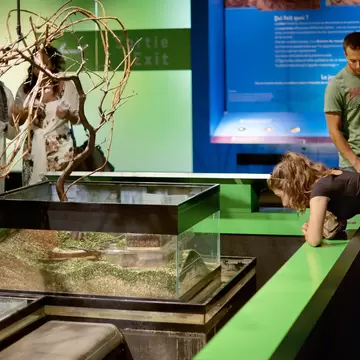
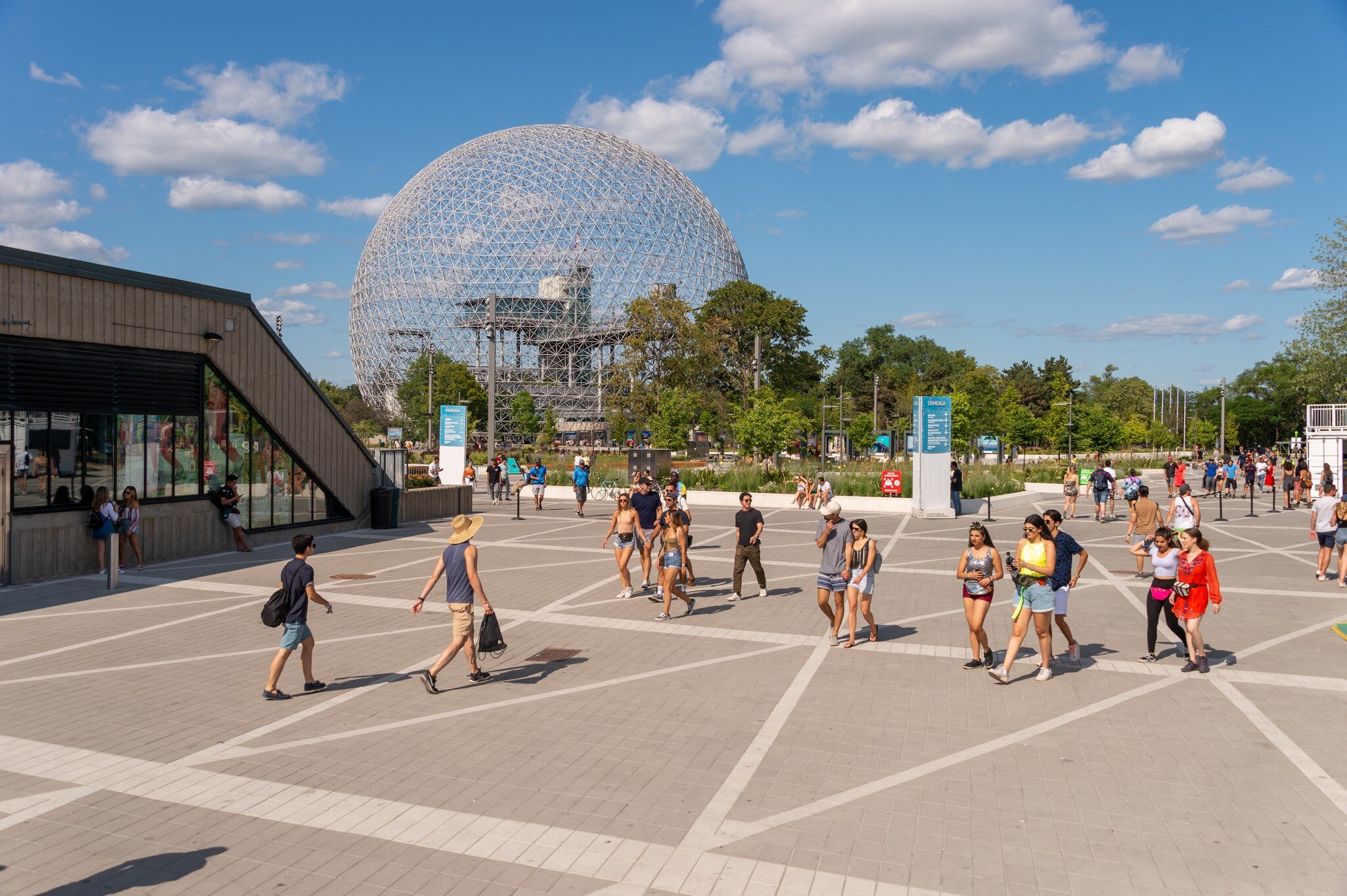
Another remnant of Expo 67 is the Biosphère, Parc Jean-Drapeau's visual pièce de résistance and one of Espace pour la vie's five science museums (espacepourlavie.ca; adult/child $23.75/12.25). American inventor Buckminster Fuller designed the geodesic dome, originally wrapped in an acrylic skin, as the festival's US pavilion. Today the 62m-high dome houses exhibits related to climate change, biodiversity and sustainable living.
Parc Jean Drapeau is also home to 40-ride amusement park La Ronde (sixflags.com/larondeen; from $43). From late June through July, La Ronde hosts L'International des Feux Loto-Québec, a fireworks festival set to music. It also has Circuit Gilles-Villeneuve, a race track for the Formula 1 Grand Prix du Canada (gpcanada.ca) – it's open to speedy cyclists throughout the summer.
Summer Sundays on Parc Jean Drapeau are a sonic celebration thanks to Piknic Électronik (piknicelectronik.com; tickets from $24), a weekly alfresco EDM fête from May to October. In August, Parc Jean-Drapeau is taken over by international music festivals Osheaga Festival Musique et Arts (osheaga.com) and ÎleSoniq (lesoniq.com).