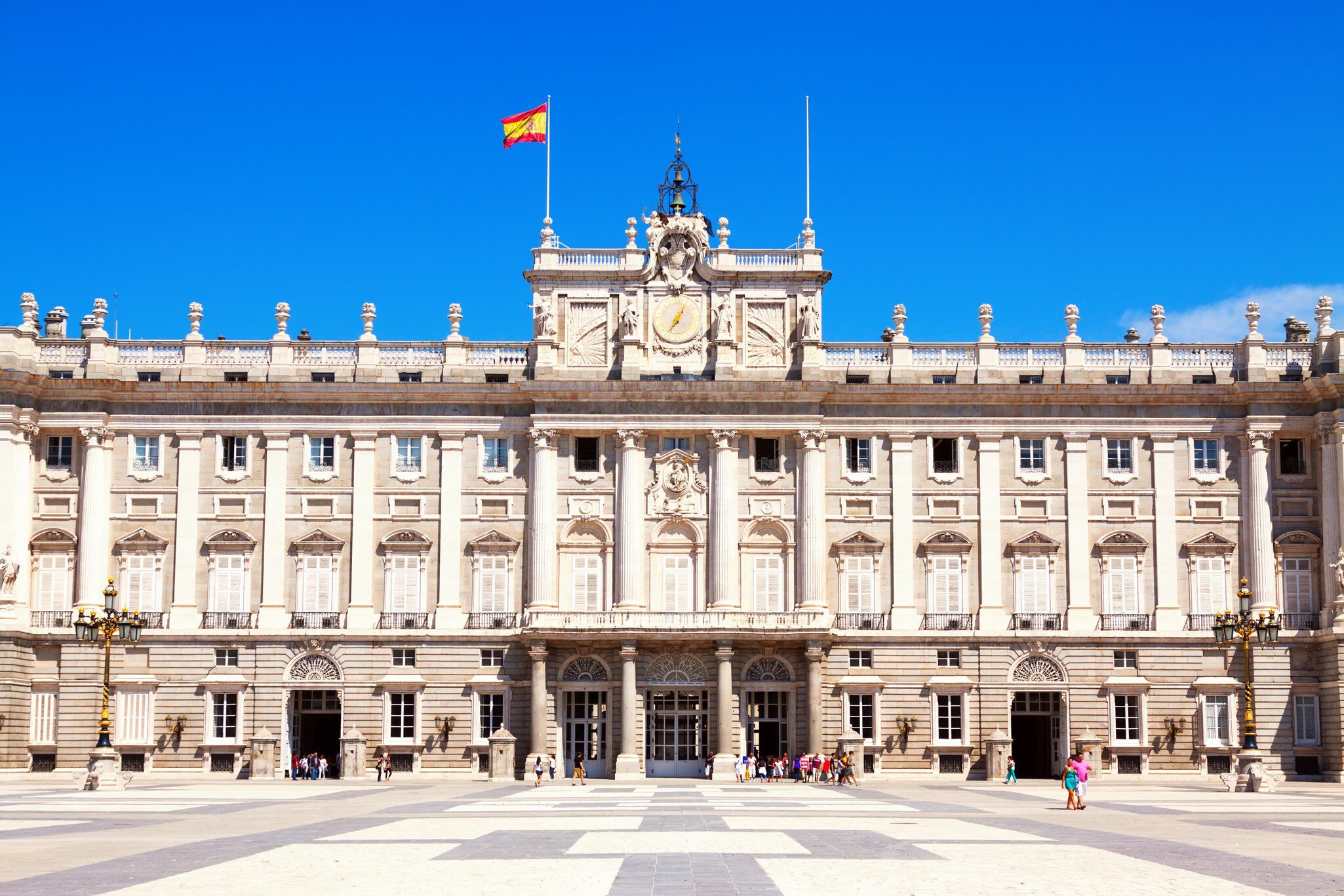
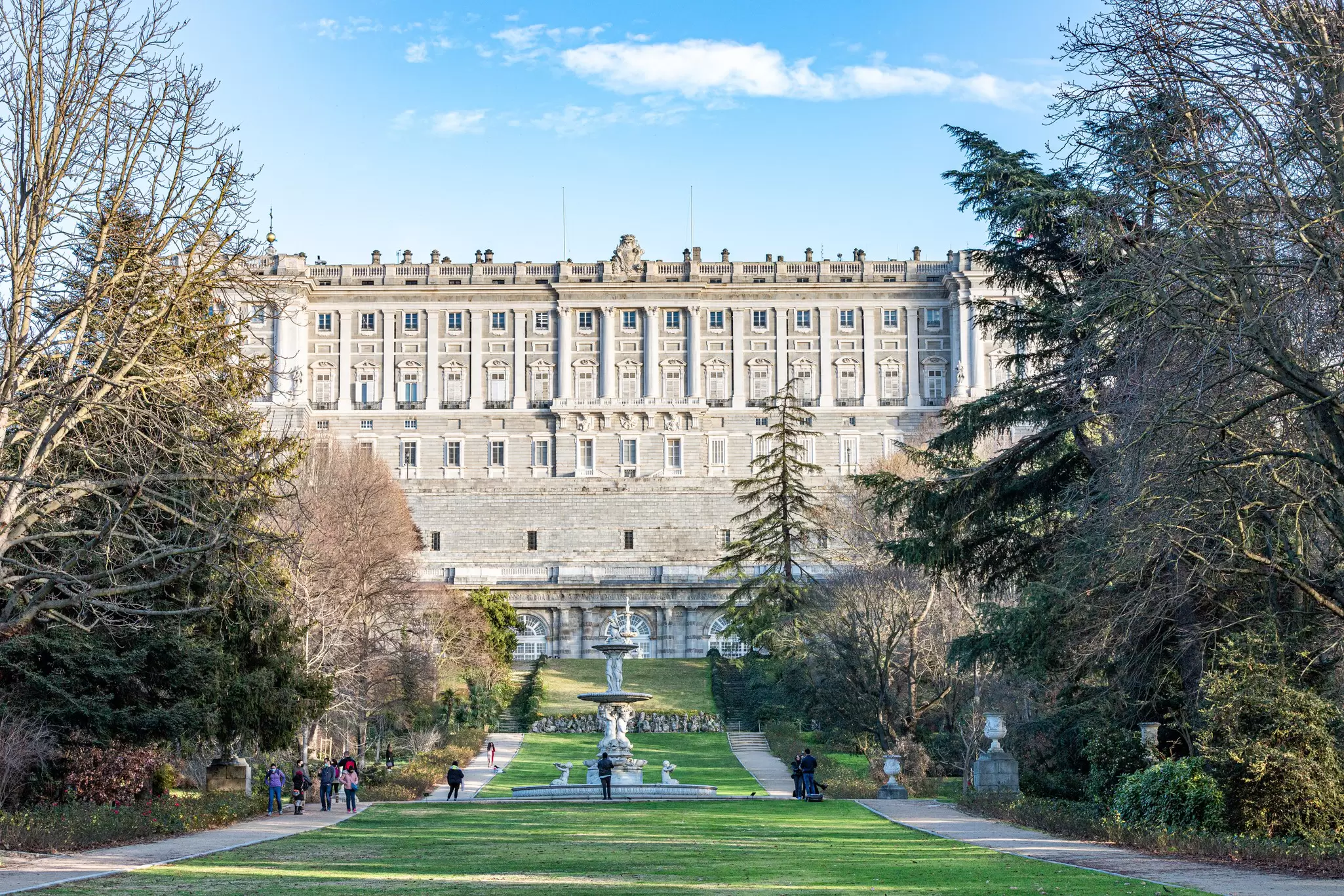
A testament to the enormous wealth of Spain’s royal family, the Palacio Real is one of the largest in Europe. While only a fraction of its 3418 rooms are open to the public, it's more than enough to satisfy those with a taste for opulent excess. However, some might find the over-the-top tastes of 18th-century Bourbons a bit hard to swallow.
Rising from the Flames
On Christmas Eve 1734, a huge fire broke out in Madrid’s royal alcázar. Raging for a total of four days, the blaze destroyed the Muslim-era fortress turned palace. While a few treasures – such as Velázquez’ Las Meninas – were saved, many artworks from the Habsburg collection went up in flames.
For Spain’s new Bourbon ruler, this was an exciting opportunity to sear his mark on Madrid’s skyline. Felipe V commissioned a lavish building modeled after Versailles from Italian architect Juan Bautista Sachetti. This new "eternal" palace of stone and marble would stand the test of time and rival others in Europe on both scale and opulence.
Of course, building a palace takes time, so Felipe V did not live long enough to see the completion of the project in 1764. Neither did his heir, Fernando VI, who died aged only 45, leaving the throne to his half-brother Carlos III. It’s no surprise that Carlos, the son of Isabel Farnese and the former ruler of Naples, chose another Italian architect – this time Francesco Sabatini – to complete this impressive baroque confection. The only part a Spanish architect had a hand in is the lavish Capilla Real, the chapel with decorative touches from Ventura Rodríguez.
The Lavish Tastes of a Prudent King
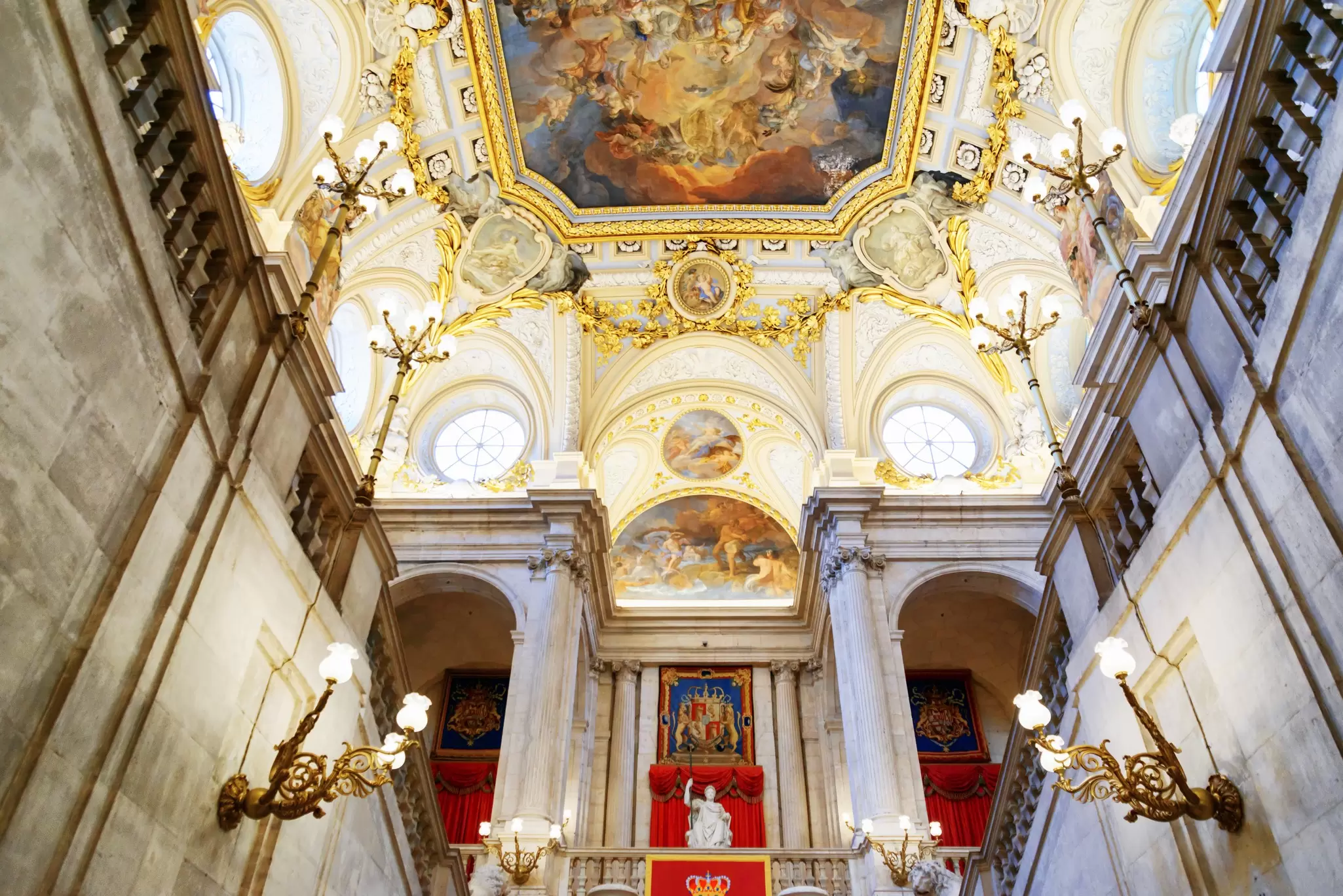
The influence of Carlos III can be felt throughout the palace, as he was the first king to begin the mammoth task of decorating its 3418 rooms. Despite the scale of this job, he decided that no one space should resemble another. Like his French-born father, he wanted to mimic the feel of Versailles, and this is especially evident in the Gasparini Room, with its swirling embroidered silk walls and mosaic marble floors. This dizzying extravagance continues in the Porcelain Room, which features fanciful pieces produced in Retiro Park's now-defunct porcelain factory established by the king himself – one of many innovations he introduced to a country that had fallen behind in the race to modernize.
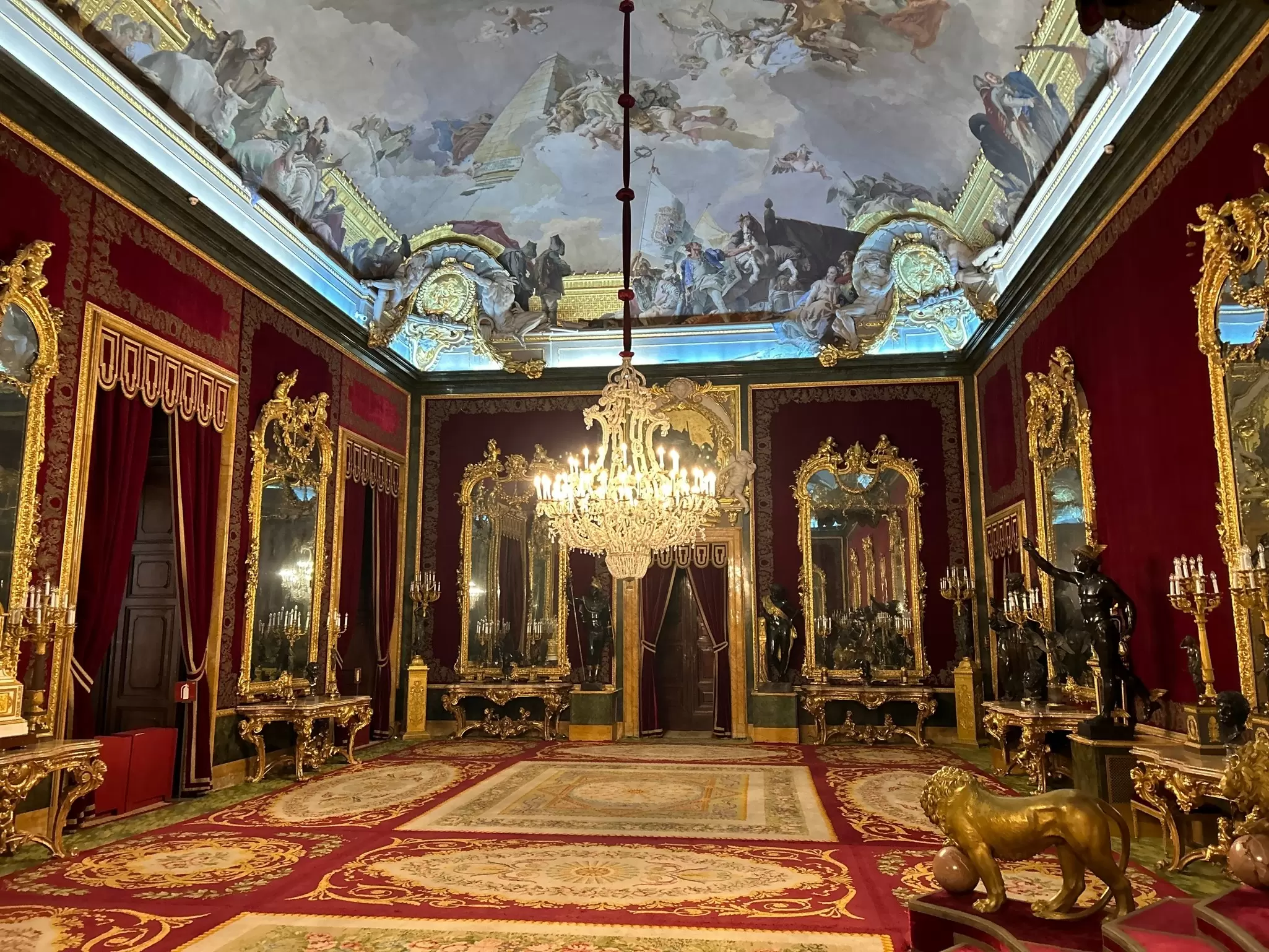
Carlos III is well remembered by locals who affectionately call him "the best mayor of Madrid," and his astute reign is best understood in the antechamber of his lavish Throne Room, which is decorated with tapestries depicting happy peasants in pastoral scenes – art that gave those waiting to petition the king the impression the ruler nursed a great affection for the common man.
The End of an Era
The last king to reside in the palace was Alfonso XIII. Unpopular for supporting the dictatorship of Primo de Rivera, this monarch sloped off under his own steam after the Second Republic was declared in 1931. This is not the only reason why Alfonso is infamous. After very publicly getting the flu, he was the reason the 1918 pandemic was incorrectly named "the Spanish flu." He was also notorious for being a bit of a playboy and for commissioning dozens of pornographic films from a company in Barcelona, a hobby that will not be mentioned if you visit the Band Room, formerly his private screening room. Also worth taking a peek at is his wonderfully kitsch faux-Oriental Smoking Room.
Towards the end of the visit, before you enter the Throne Room, you’ll get a glimpse of Alfonso himself in a full-length painting that stands beside that of his long-suffering wife Victoria Eugenia, the granddaughter of Queen Victoria.
Present Arms
The Armoury sits at the far right-hand side of the courtyard as you leave the palace. It's a must-see, so make sure you allot some time to take in this fabulous collection of late medieval and early modern armor. Running up to the late 17th century, it’s here that you can finally get a feel for Habsburg rule. Carlos I of Spain – that is, the Holy Roman Emperor Charles V, Lord of the Netherlands, Archduke of Austria, and holder of countless other titles – casts a huge shadow over the impressive collection. This king saw a fair amount of action and had the kit to prove it, even down to a cute armored suit custom-made for his beloved hunting dog.
While Carlos’ descendants weren’t quite so keen to engage in real-life combat, they were kitted out in armor from childhood, and you can see diminutive suits downstairs alongside crossbows and early shotguns used for hunting.
There’s an enormous amount on display here and it can be overwhelming, but it’s worth looking out for a sword dating from the time of El Cid, a Nazari dagger thought to have been captured after the siege of Granada in 1492, the spiked gauntlets of Fernando de Aragón and a 16th-century samurai suit.
A Statuesque Mystery
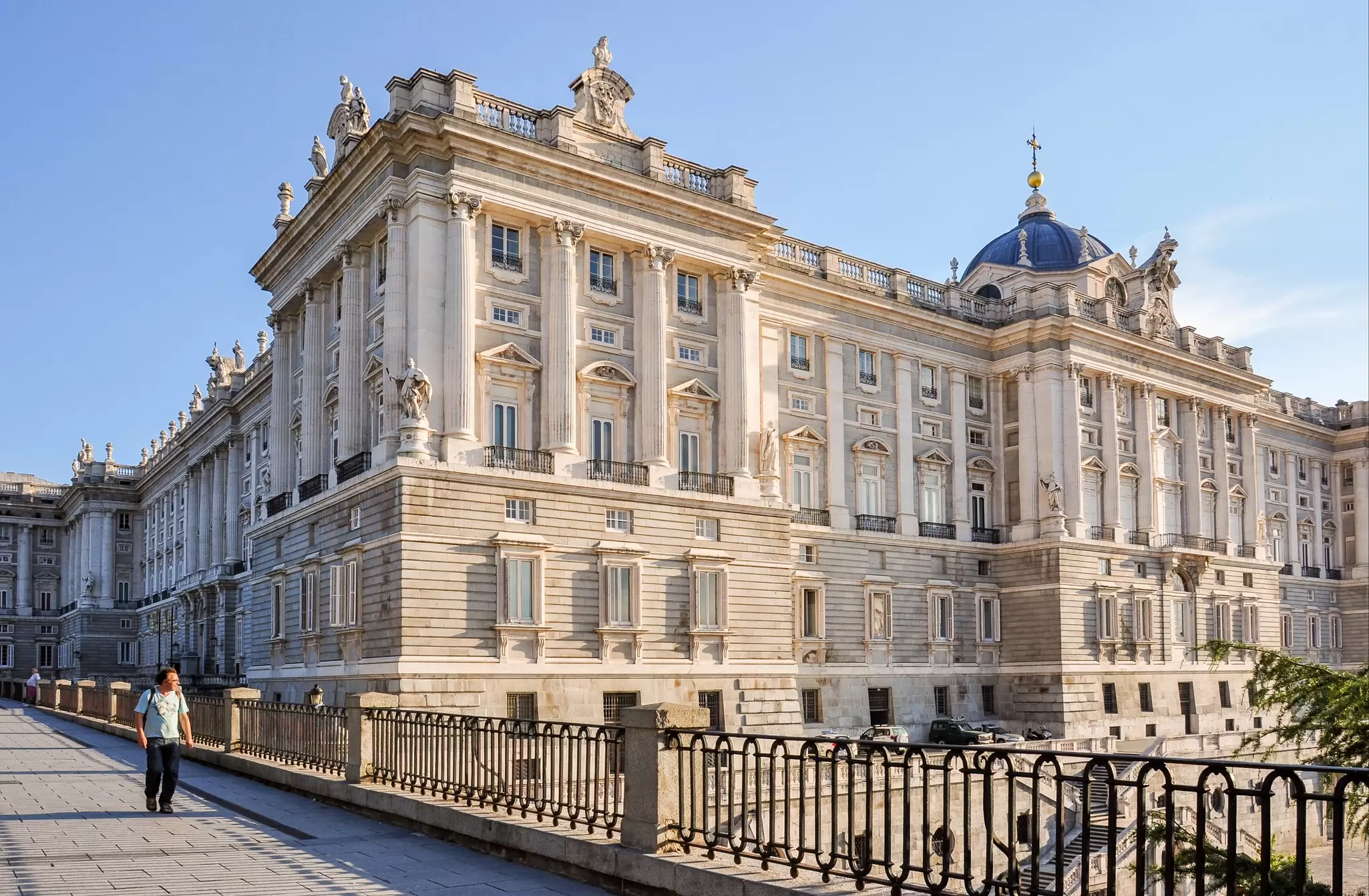
Look closely at the roof of the Palacio Real from the Plaza de Oriente. Ranged along the top are various pedestals, holding statues of past kings. However, you’ll notice something odd about this arrangement, as most of the pedestals are empty. Instead, you can find some of the kings ranged about the gardens, almost as if they got a bad case of vertigo and decided to decamp en masse. In fact, on 8 February 1860, Carlos III ordered the immediate removal of the 108 statues from the roof.
Local legend has it that his mother, Isabel de Farnese, had a dream in which Madrid was rocked by an earthquake and she was crushed beneath a falling statue. However, it’s more likely they were removed for another reason – possibly because their combined weight was simply too much for the structure to bear. Whatever the reason, they languished in the royal basement until the late 19th century before being dusted off during the reign of Isabella II and sent off to grace public spaces all over Spain. Some went to the Plaza de Oriente and Retiro Park. In 1973, a few were returned to the roof, which happily didn’t collapse.
Statue of Felipe IV
Right in front of the palace stands a magnificent equestrian Statue of Felipe IV. Based on a painting by Velázquez, which shows the king’s steed rearing up on its hind legs, this dashing pose was difficult to replicate in bronze. The problem of how to prevent this top-heavy work from falling was solved by Galileo Galilei, who worked out exactly how much of the horse’s legs should be filled in with bronze to keep the thing upright. Cast in Florence, it was brought to Madrid in 1640. And yet, the king was still unhappy as he felt the head didn't do him justice. A new one had to be made to satisfy the king’s vanity. If you visit the Prado, you can see Velázquez’s portrait of court sculptor Juan Martínez Montañés working on this very head.