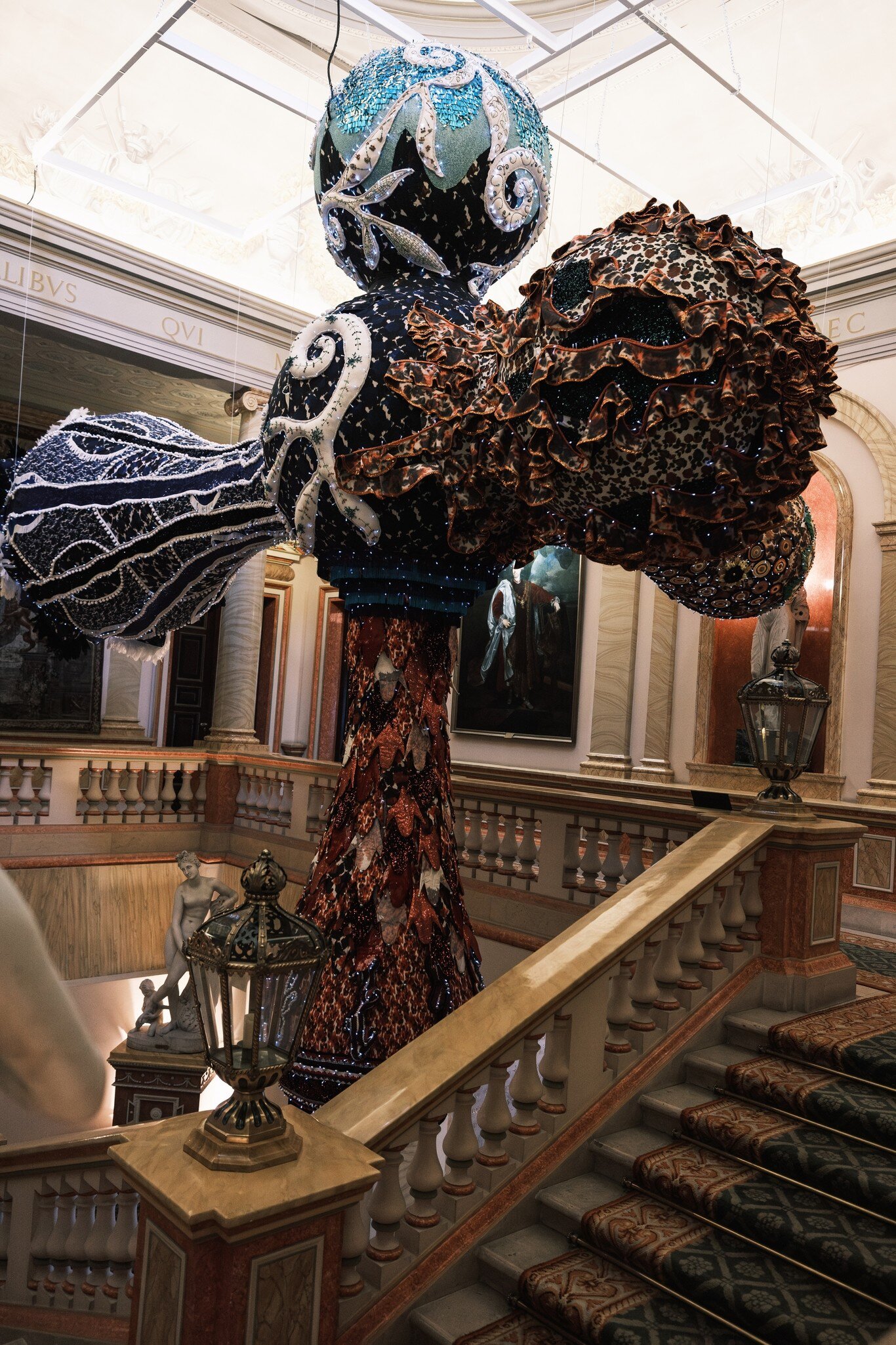
The Palacio de Liria offers a peek into the private residence of the Duke of Alba. Global movers and shakers since the 16th century, the powerful Alba family has close ties not only to Spain’s royals but was also connected to Napoleon III and King James II. Filled with priceless artworks, the palace is a testament to their vast wealth.
Saved from the Flames
On 17 November 1935, the Palacio de Liria went up in flames. All that was left of Ventura Rodríguez’s original design was the 1773 neoclassical facade. Ironically, the radical left managed to save much of the family’s heritage. The Communist Party had taken charge of the palace during the Spanish Civil War, opening it up so that the public could view the treasures inside. When the building was bombed, the resulting inferno couldn’t be contained, and the new custodians raced to save works by masters including Titian, Goya, Rubens and Velázquez.
Rising from the Ashes
The art was shipped out of the besieged city, eventually making its way to the League of Nations in Geneva before being returned to the Duke of Alba. But there were no walls to hang it on, as the fire had destroyed everything. In 1953, the duke had the entire palace rebuilt, redecorated and refurnished.
When you enter through the main hallway and go up the sweeping staircase, it hardly seems possible that the building is a modern replica. However, if you knock your knuckles against the columns, they sound a bit hollow. This is because real marble was in short supply at the time. The art on the walls, of course, is the real deal.
Baroque Treasures
Not to be missed is Titian’s portrait of the third Duke of Alba, placed near Rubens' copy of Titian’s portrait of Carlos I and his wife. In the painting, the duke appears rather weary-looking. Carlos I and his son Felipe II used the "Iron Duke" to suppress the Protestant uprisings in the Netherlands in a military campaign that directly led to the "Black Legend" tarnishing Spain's reputation overseas. Also by Rubens is a portrait of Felipe IV looking a little disgruntled, perhaps because he’s close to losing to the Dutch – but at least this means an end to the 80-year war!
Velázquez’ portrait of Infanta Margarita, Felipe’s daughter, is also of note. Though she’s much younger here, you can recognize her from Velázquez’s Las Meninas, which hangs in the Prado. Fans of Spanish art from the Siglo de Oro will also enjoy El Greco's Christ on the Cross and paintings by José de Ribera, Murillo and Zurbarán.
Early Influencers
The most iconic painting in the building is Goya’s 1797 portrait of the Duchess of Alba. The White Duchess is a life-sized painting of María Cayetana de Silva wearing a dress decorated with bright-red ribbons. Though she has a solemn expression, a sparkle about her eyes hints at a certain naughtiness. Goya painted the duchess so many times that some speculated the two were having an affair.
Another interesting figure in the palace is Eugenia de Montijo, sister of the 15th duke’s wife and once empress of France. The wife of Napoleon III, she ended her days in exile in Madrid. A great beauty and trendsetter in her day, she appears beside her husband in a surprisingly modern French tapestry.