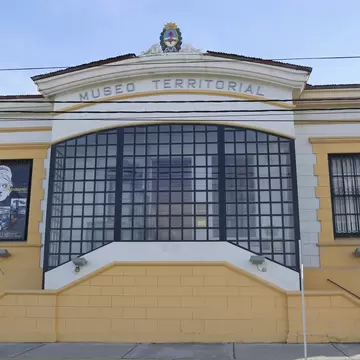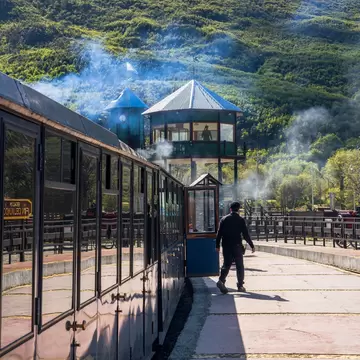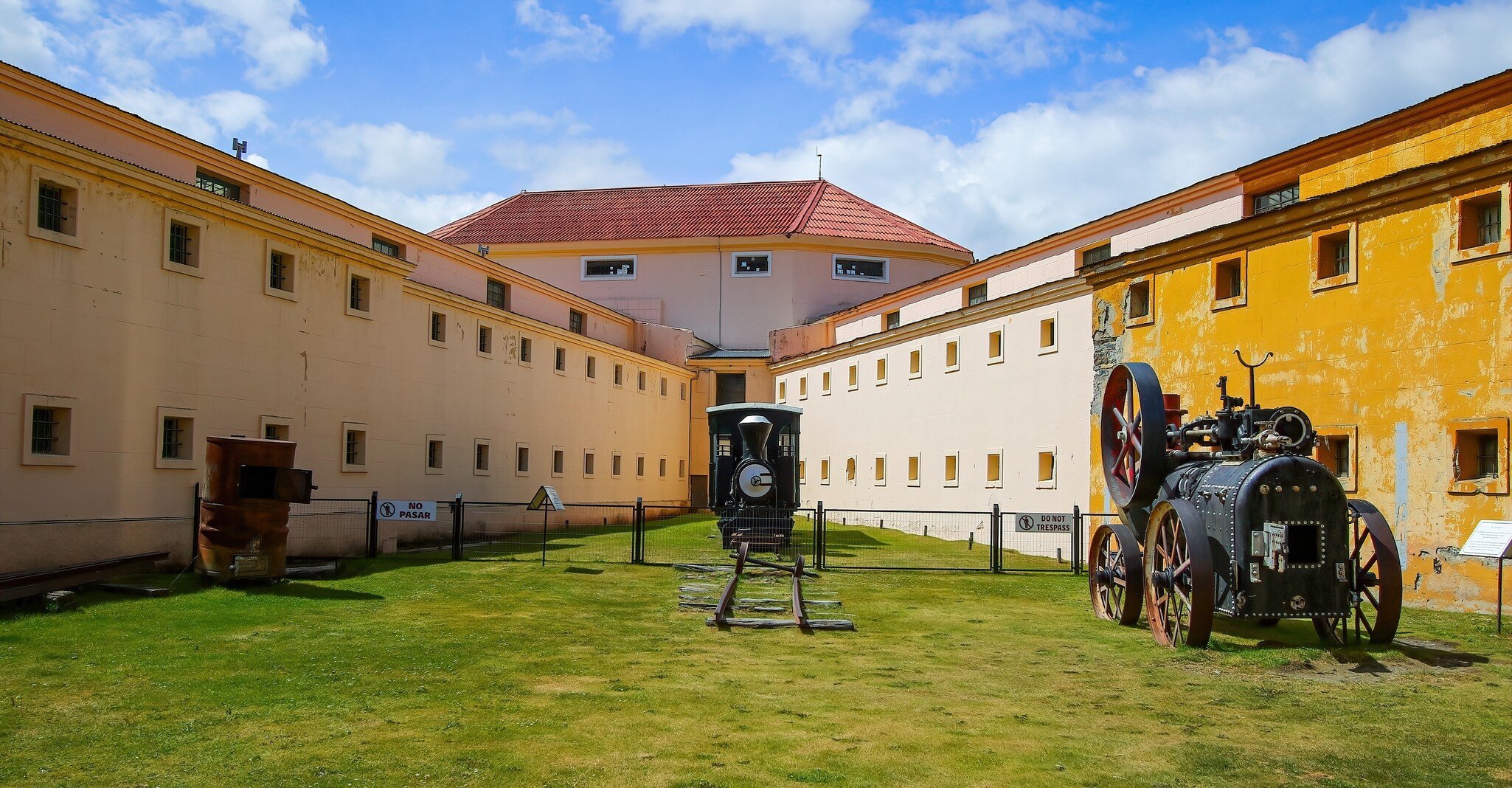
Perhaps Ushuaia’s most (in)famous human-made attraction was once home to Argentina’s most dangerous criminals and political prisoners. The prison was built in 1902, mere years after the city’s founding, and the island’s remote location and inhospitable climate made it ideal to minimize the risk of escape. It closed around 1950, and each pavilion of the half-star-shaped complex is now a different museum covering aspects of the city’s history.
Museo Marítimo
Learn about the naval expeditions that have defined Tierra del Fuego through detailed, handmade scale models of ships that sailed its waters between the 16th and the 20th centuries and dioramas representing the major shipwrecks on its coasts. The Trinidad, for instance, brought Ferdinand Magellan, the first European to reach Tierra del Fuego. The museum is located at the very entrance to the complex and also takes up parts of Pavilion 5 – through the Museo del Presidio and across the central hall – and the 2nd floor of Pavilion 2. Anthropologists also built a life-size model of the single-body canoes used by the nomadic Yahgan, who were expert seafarers familiar with the unpredictable waters, to wander around the archipelago. They would hew close to the coast to avoid the buffeting winds and unpredictable waves, and knew where to find shelter in the archipelago.
Museo del Presidio
Once housing over 500 inmates, the jail was widely feared by criminals (and political prisoners including future president of Argentina Héctor José Cámpora) due to its harsh conditions, which included work chopping trees for wood in what is now Parque Nacional Tierra del Fuego. The inmates provided most of the supplies needed in Ushuaia’s early days. No one ever successfully escaped. Among its most famous inmates was Cayetano Santos Godino (known as "El Petiso Orejudo," or "The Big-Eared Shorty," for his short stature and prominent ears), the notorious serial killer of early 20th-century Argentina. He spent years in the Ushuaia prison after getting caught, and was murdered by fellow inmates after being accused of killing their cat. His reconstructed cell even has a life-size statue of him in the iconic yellow-and-blue-striped suit. Other famous inmates include the anarchist bomb-maker Simón Radowitzky, who assassinated the head of Argentina’s Federal Police in 1909, and Ricardo Rojas, an influential writer and scholar who was banished to the island for political reasons in 1930. Both floors of the central pavilion have been preserved exactly as they were when last used – an eerie reminder of the suffering through which Ushuaia was built.
Museo Antártico
Argentina was among the leading nations exploring Antarctica, with many expeditions making their final stop in Ushuaia before setting off for the frozen continent, and it has a significant territorial claim over the continent to this day (in addition to over a dozen scientific research bases, including seven that are staffed year-round). This pavilion also has an impressive maquette collection, with scale models of the Fram – with which Roald Amundsen became the first person to reach the South Pole – and other ships and planes that have led the exploration of Antarctica.
Museo de Arte Marino
This gallery has a distinctive focus on maritime-themed Argentine art. It features paintings by important artists including Benito Quinquela Martín (1890–1977) – best known for the paintings of his home neighborhood of La Boca, in Buenos Aires – and Antonio Berni (1905–81), the Argentine painter whose epic canvas Manifestación depicted the country’s social movements in the early 20th century.