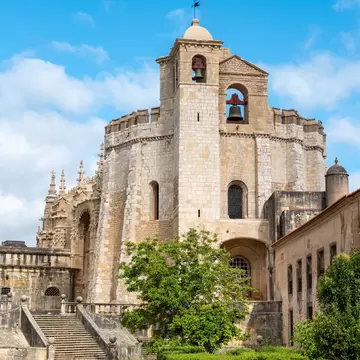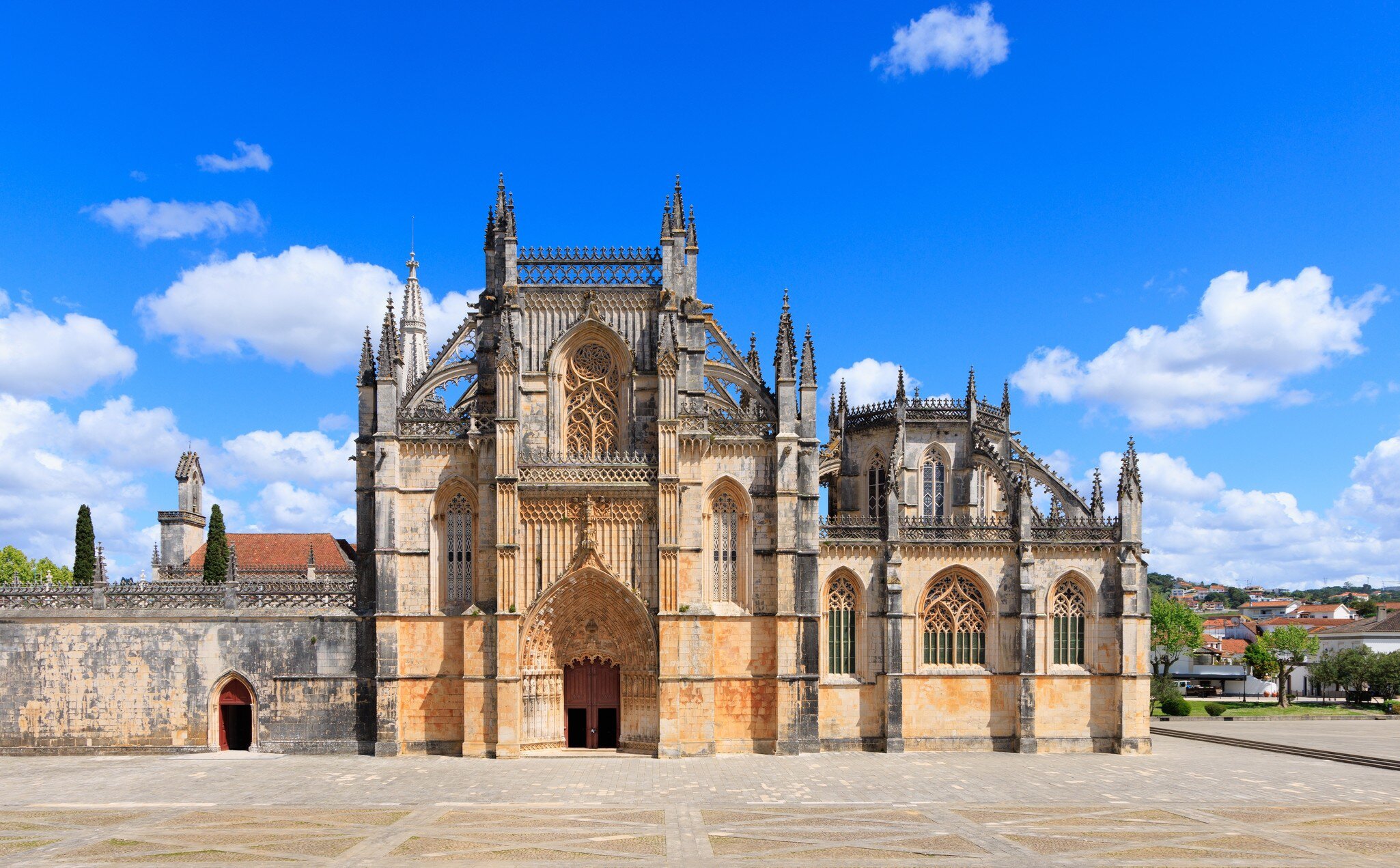
The Mosteiro de Santa Maria da Vitória, or Mosteiro da Batalha, as it is most known, was built in the 14th century by King João I following his triumph in the Battle of Aljubarrota. In this architectural marvel, a symbol of Portugal's independence, every window, column and ceiling is filled with a unique visual richness, with details that will surprise you.
The Monastery Church
A visit to the Mosteiro da Batalha starts right outside, looking at the monument's incredible facade. Whether it's early morning or late afternoon, when the light is softer and the building's limestone takes on a golden hue, its magnificence will not leave you indifferent. As you pass through the large church portal filled with religious iconography, it becomes impossible to disguise the effect this church has, partly because of the verticality of the central aisle, 32m high, and the play of light caused by the incredible stained-glass windows.
Founder's Chapel
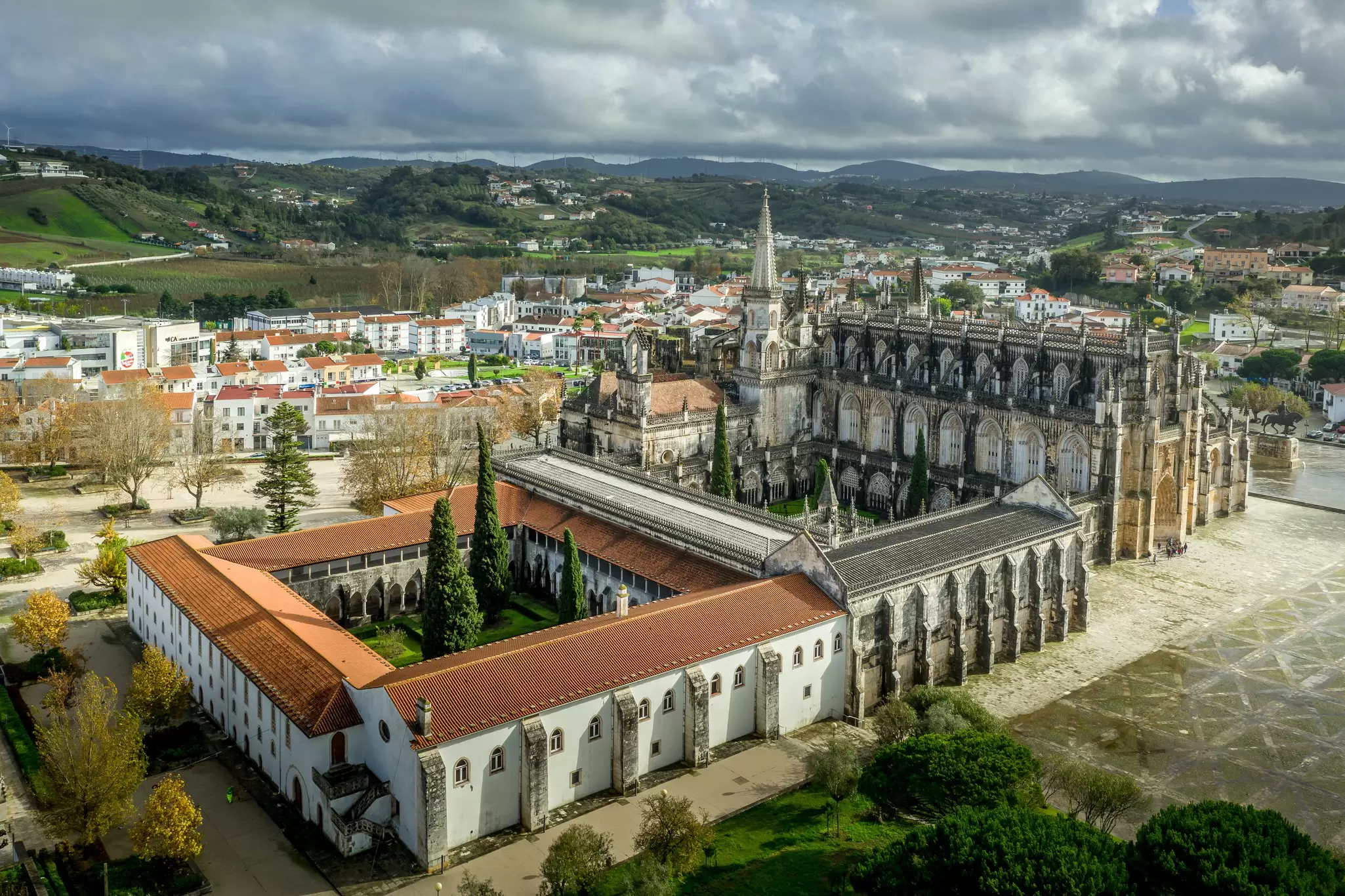
While entry to the church is free, a ticket is required to access the Founder's Chapel. This chapel, a highlight of the monastery, serves as a pantheon, housing the magnificent tomb of King João I and Queen Filipa de Lencastre, along with those of other royal members who have shaped Portugal's history.
Despite its morbid function, the space is filled with light and a serenity that commands respect. In the center, on the large white limestone chest resting on lions, the statues of the former monarchs rest side by side in what was an innovation in the funeral art practiced in the Middle Ages. These, too, are often bathed in color from the stained-glass windows on the walls.
The Cloisters
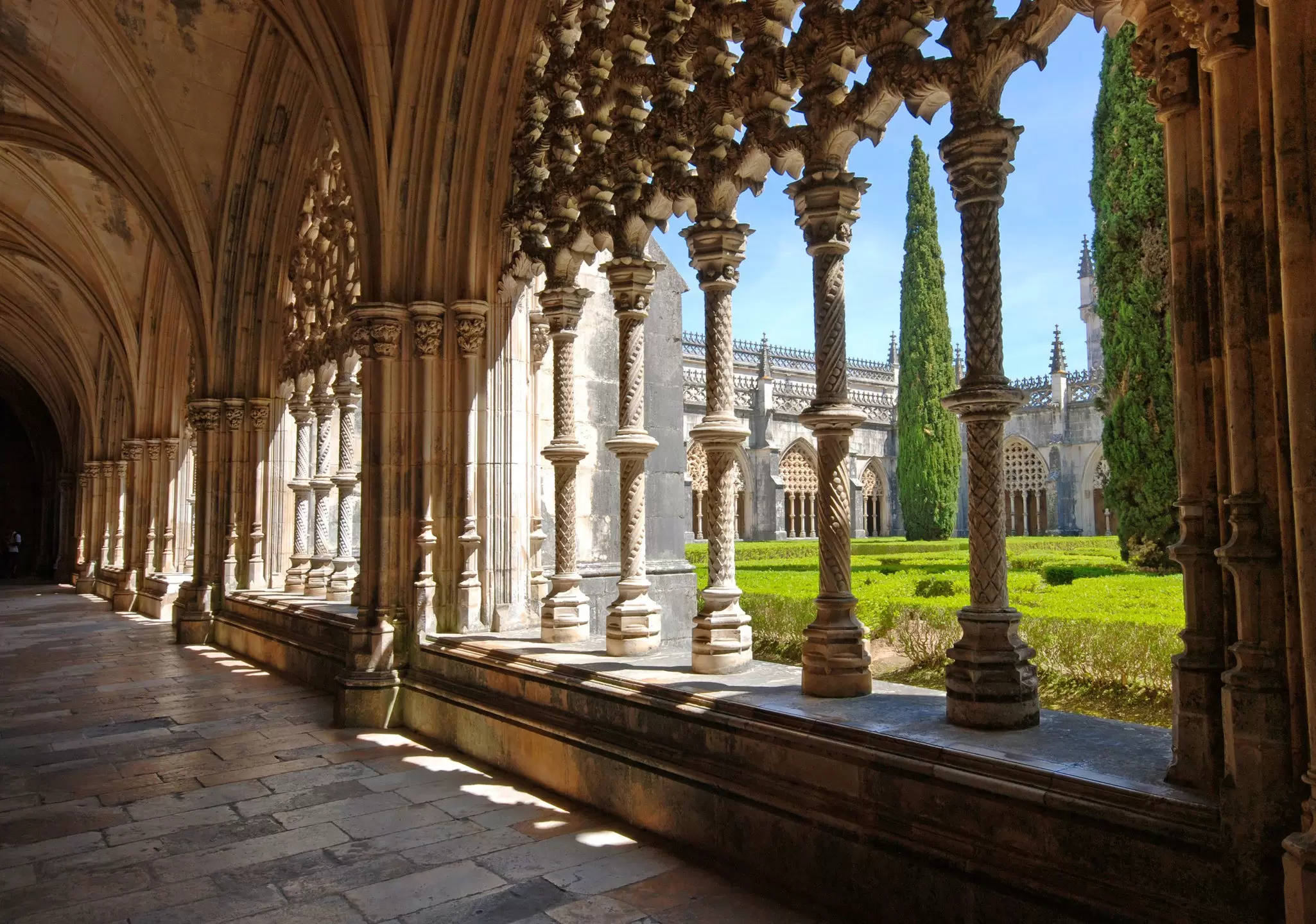
As is characteristic of this type of building, the monastic cloisters were simple places that invited the monks to meditate, pray and socialize. But the Royal Cloister doesn't stand out for its simplicity. Its grandeur, with rich architectural elements and decorative motifs, is based, in this case, on naturalism.
The Afonsino Cloister, more focused on the needs of the Dominican monks who lived there, was also a novelty for its time. It was the first to be built with two floors instead of a simple ground floor. Unlike the first, this cloister takes on a more austere appearance, and you can almost feel the presence of the former monks.
Chapter House
In the middle of the Royal Cloister, just beyond the sacristy, is the Chapter House. In contrast to the brightness you find in many parts of the monastery, around here, you walk in semidarkness, illuminated by a single window containing the best-preserved set of stained-glass windows (dating from the 16th century) in the Mosteiro da Batalha.
Due to its prestige and solemnity, the Portuguese state chose this place to pay homage to the soldiers who died in combat. A permanent military guard keeps the remains of two unknown soldiers from the Great War here.
The Imperfect Chapels
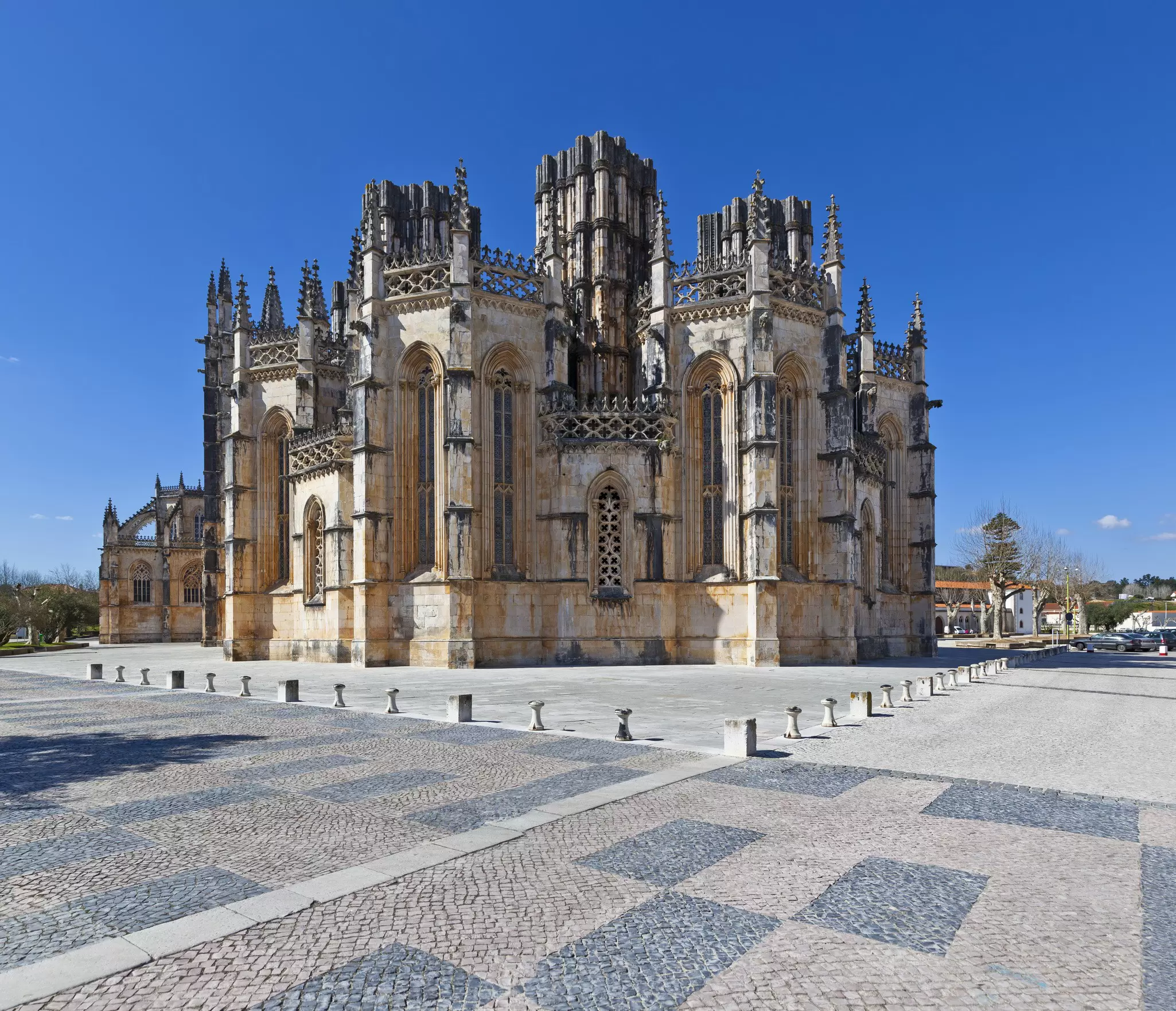
Your visit to the Mosteiro da Batalha leads to one last stop before going back outside. This is where you will find the entrance to the Imperfect Chapels, a newer pantheon, this time commissioned by King Duarte. This unfinished structure (hence the name), aligned with the church, unfolds in an octagon with seven chapels, including the tomb of the monarch himself and his wife, Queen Leonor, where you can see the two statues holding hands.