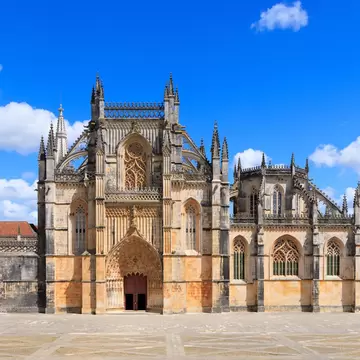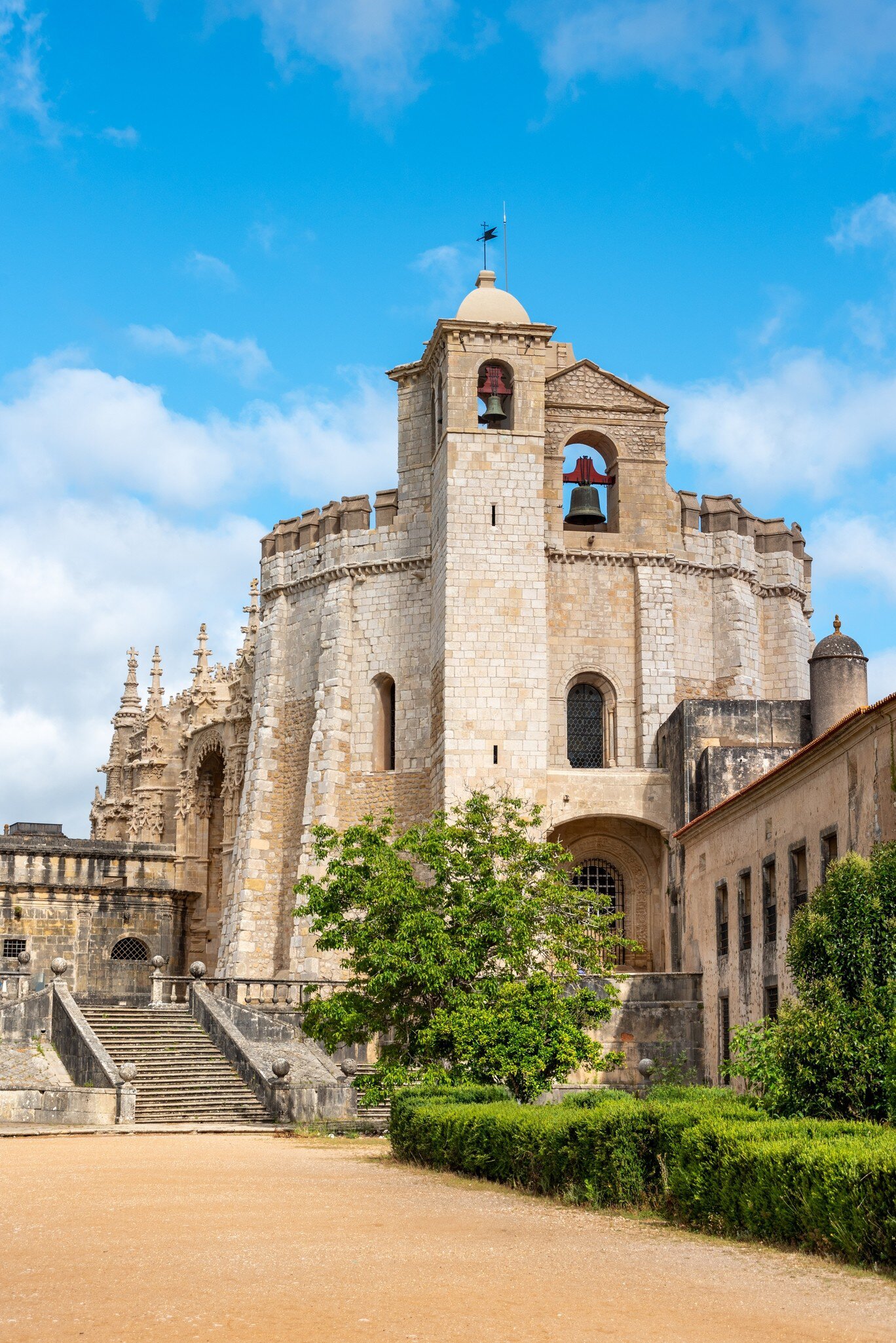
The Convento de Cristo is one of Tomar's most iconic places, as the Order of the Templars established itself here in the 12th century. The impressive architectural complex includes the Templar Castle, the Convento da Ordem de Cristo, the Mata dos Sete Montes and the Pegões Aqueduct. To visit this UNESCO World Heritage Site, set aside a good couple of hours.
Inside the Convent
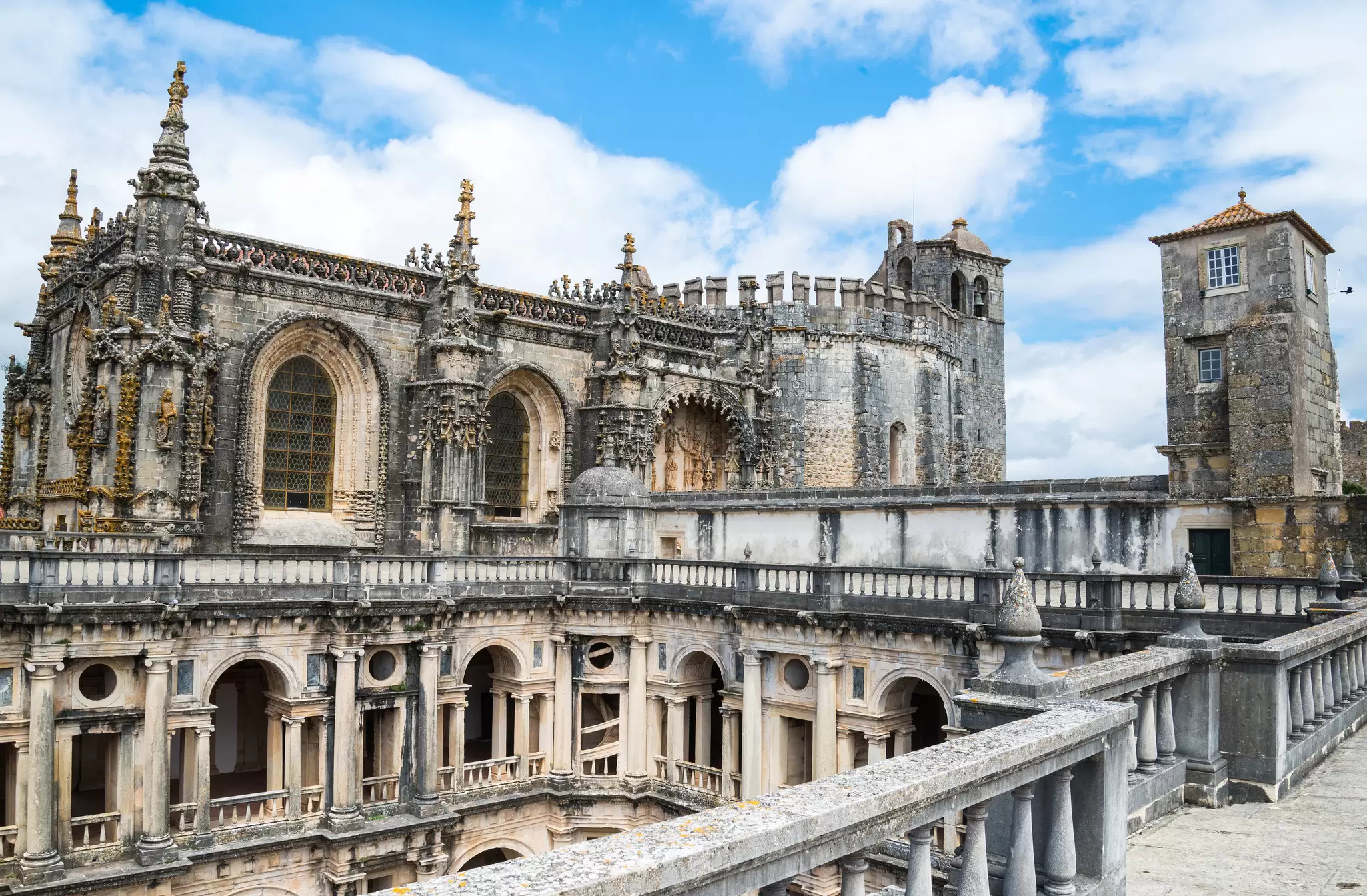
From a very young age, the Portuguese are taken to the Convento de Cristo to see what is now a UNESCO World Heritage Site. And no wonder. There are many stories and architectural styles here that have been engraved forever.
This was the place where, in the 12th century, the Order of the Knights Templar established itself, and it was in these same rooms that Prince Henry the Navigator drew up the first plans that began one of the most famous periods in Portuguese history: the Maritime Discoveries.
When the Templars first settled here, it was little more than a hermitage. Over it, they built the Charola, a Romanesque temple inspired by the Church of the Holy Sepulchre in Jerusalem. Years later, and by order of King Manuel, the Convento de Cristo began to grow around this primitive temple, arriving at the magnificent architectural structure you see today.
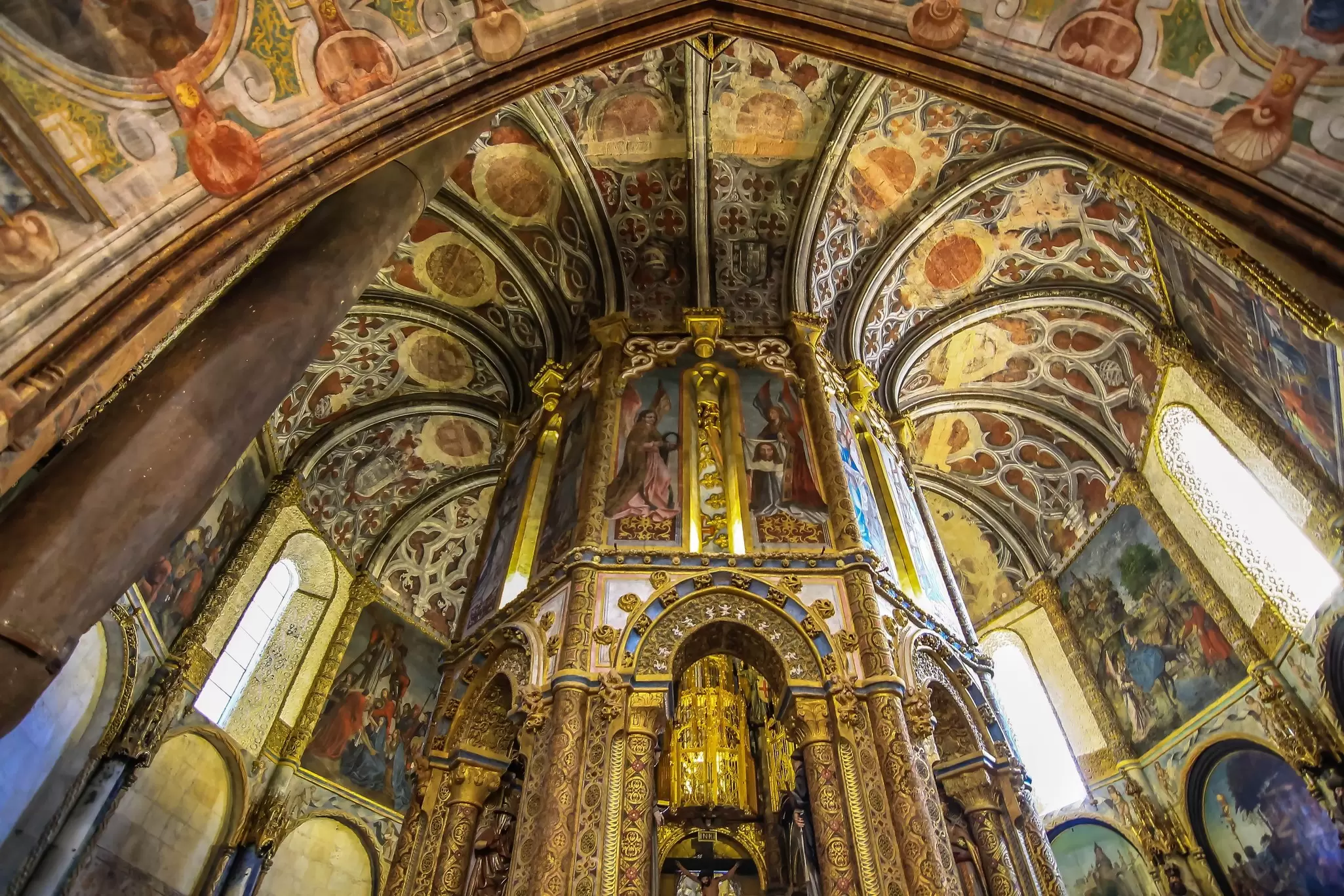
This is still one of the most fascinating places you'll visit inside the convent, even after passing through the New Sacristy and marveling at its size and elaborate ceiling. During the 16th century, the Charola was enriched with altarpieces, murals, carvings and wooden sculptures. The details are impressive, and just as the Templars did, you will be drawn to walk around this octagonal space, not in prayer, but in perfect fascination.
The Chapter House Window
The various architectural styles found in the Convento de Cristo bear witness to the different eras that this monument has lived through. Still, none is more striking than the Manueline window on the church's western facade.
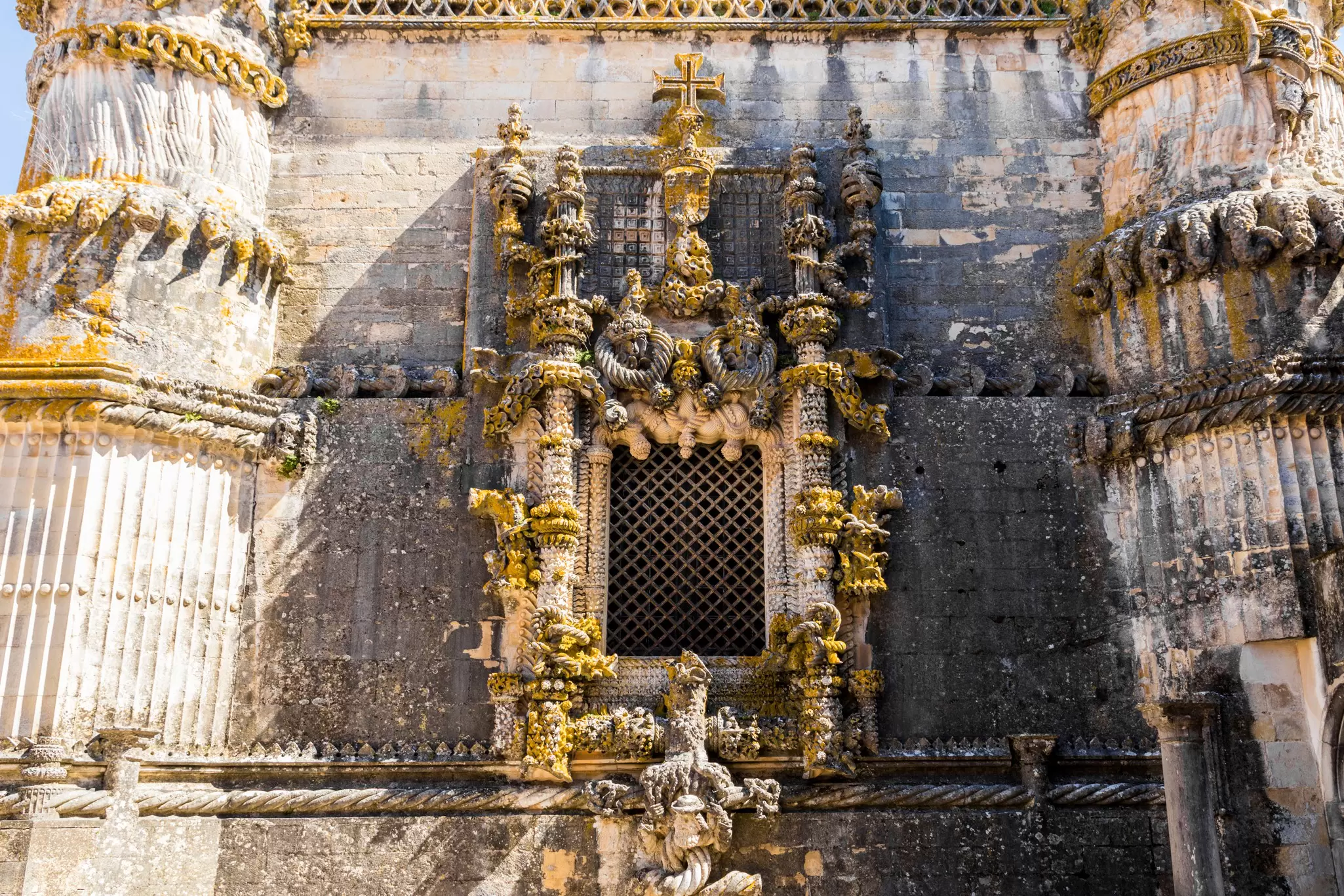
This is one of the most outstanding examples of late Manueline Gothic, dating from the 16th century. Between the weathered stone, you can make out hyperrealistic motifs symbolizing the Tree of Life or other elements from the Holy Scriptures.
Although you can see the window from several balconies around it, you will get the biggest effect in the Great Dormitory from a small cell just opposite, where little more than one person can fit.
Go Outside & Beyond
Convento de Cristo is one of the convents in the world with the most cloisters. There are seven in total, each with its own function. The 16th-century Main Cloister has a large fountain fed by the aqueduct waters and is considered a masterpiece of the European Renaissance.
Following the path of that water will be your next challenge after finishing your visit inside the convent, but only after climbing the walls of the Templar castle and appreciating all the surrounding land that belonged to the complex, and today constitutes the Mata Nacional dos Sete Montes.
The next stop is one of the most imposing aqueducts in the country. Built similarly to the aqueducts of Elvas and Évora, the Convent Aqueduct had the task of bringing to it water from four springs near the city. It stretches for 6km; climb one of the towers to get a glimpse of the size and grandeur of this construction and the Pegões valley that surrounds it.