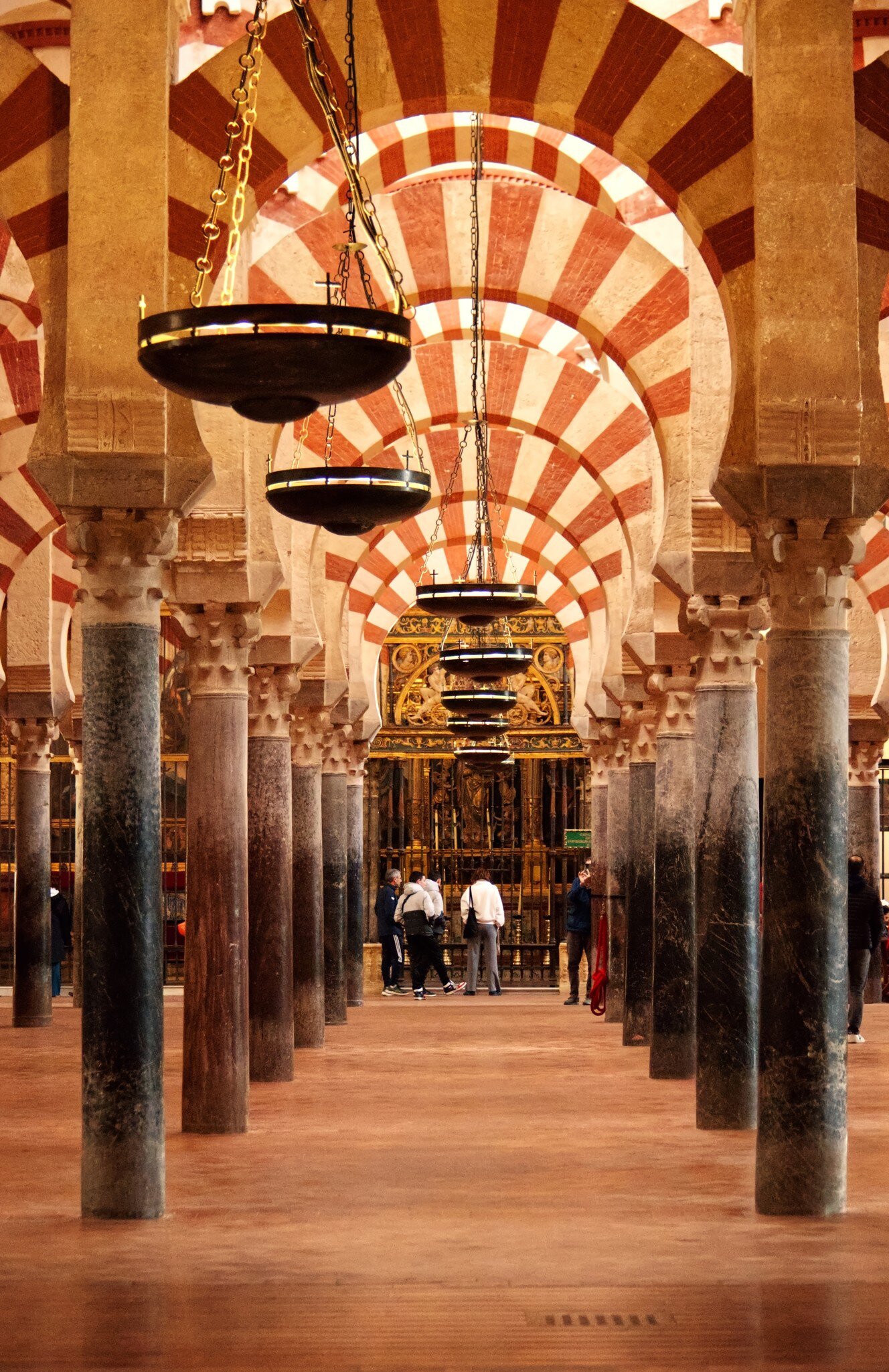
Jewel of the Moorish Caliphate when it was the Grand Mosque of Córdoba, and later one of Spain’s great cathedrals, the Mezquita is one of the world’s most magnificent buildings. Savor the detail beneath the heady canopy of arches, enclosing a Gothic high chapel where every inch of wood, marble and stucco is orchestrated into an exultant celebration of faith.
Patio de los Naranjos
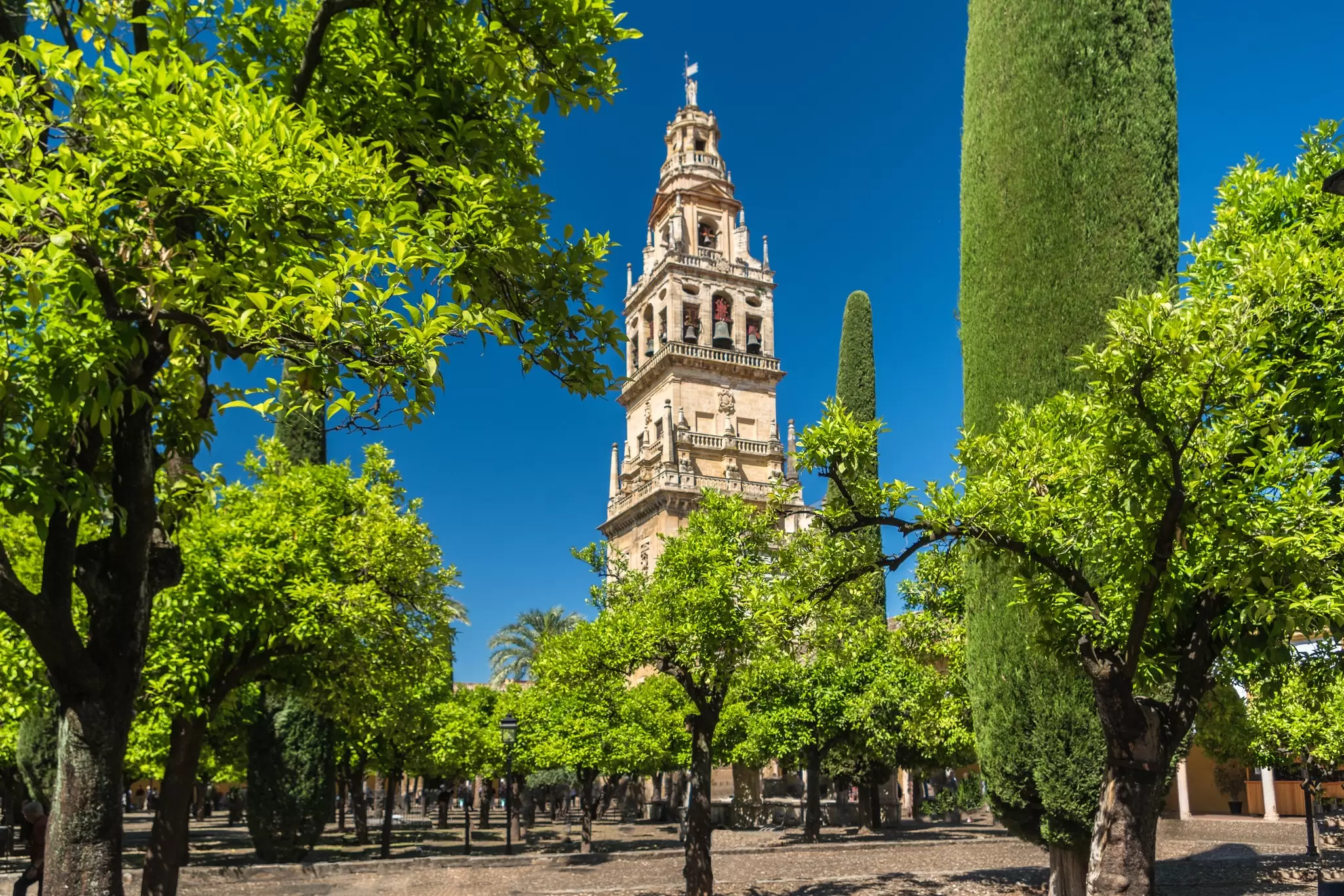
Free to access, the Patio de los Naranjos is the courtyard entrance to the Mezquita, filled with palms, orange trees and ornate fountains. It’s worth returning here at different times of the day. This building was built to be visited regularly for daily prayers, and your appreciation of its intricate beauty will grow with exposure. The horseshoe arch of the 14th-century Puerta del Perdón is the finest of the five entry points.
Bell Tower
Tickets can be bought to the right of the Puerta del Perdón, inside the Patio de los Naranjos. You’ll need a separate ticket for the 54m-high Bell Tower (Torre Campanario), initially the Mezquita’s minaret after its construction in 952. It was strengthened and heightened in the 16th and 17th centuries, when the site was transformed into the present-day Catholic cathedral. Access is limited, so try to buy tickets in advance.
Mezquita Arches
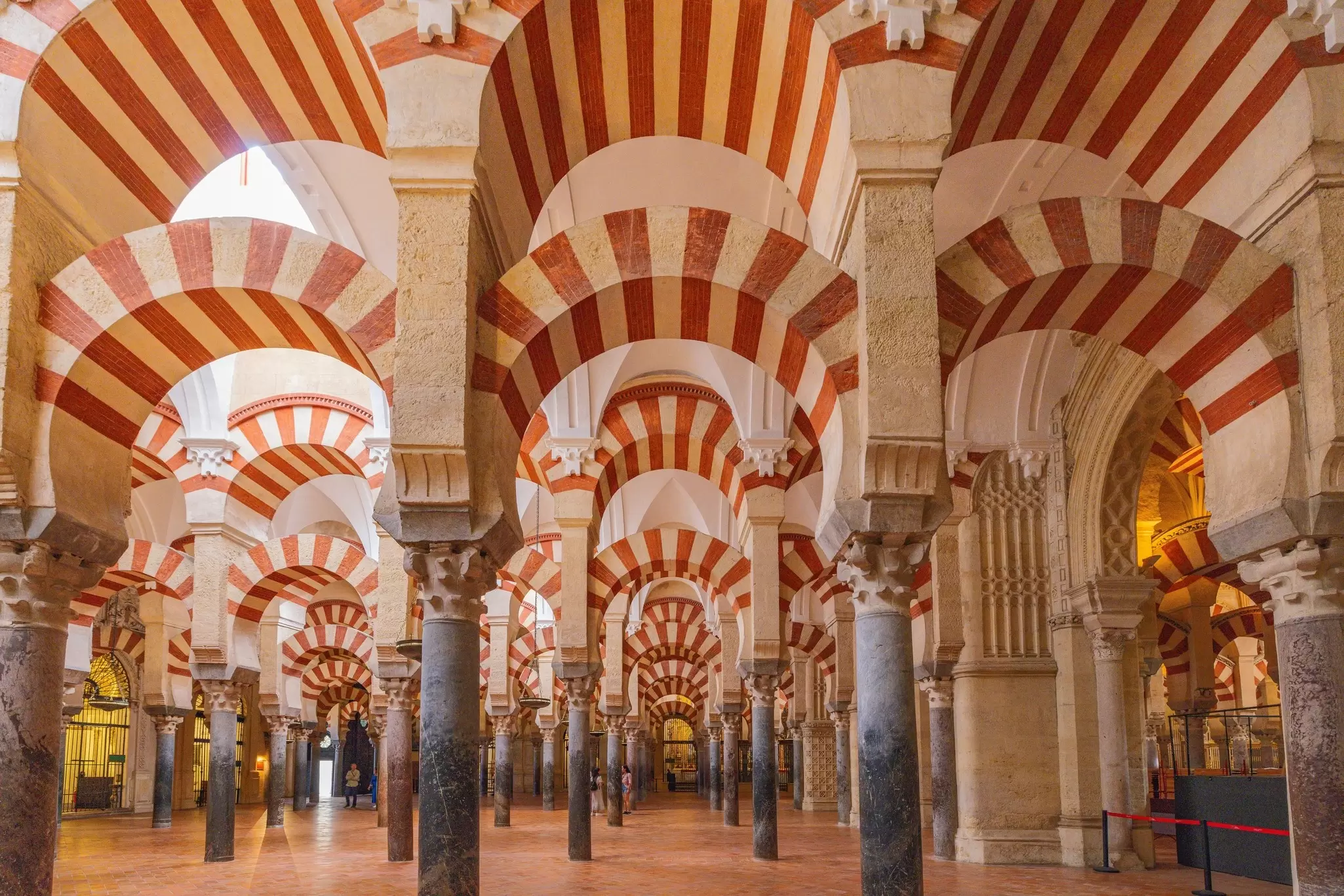
Inside the Mezquita, a forest of arches stacks into the distance as though you’re entering a hall of mirrors. It would have been a truly vast mosque upon its final enlargement in 994. Rather than vertically, it was built outwards, emphasizing the great leveling of people’s status in the eyes of Allah. The arches, resting on 856 columns (there were originally 1293), are striped strawberries-and-cream, mimicking the date palms of northern Africa. The vast open entrance was Abd ar-Rahman I’s prayer hall, separated into 11 "naves," between lines of two-tiered arches, which lift the ceiling higher, creating a space for communing with God.
Maksura & Mihrab
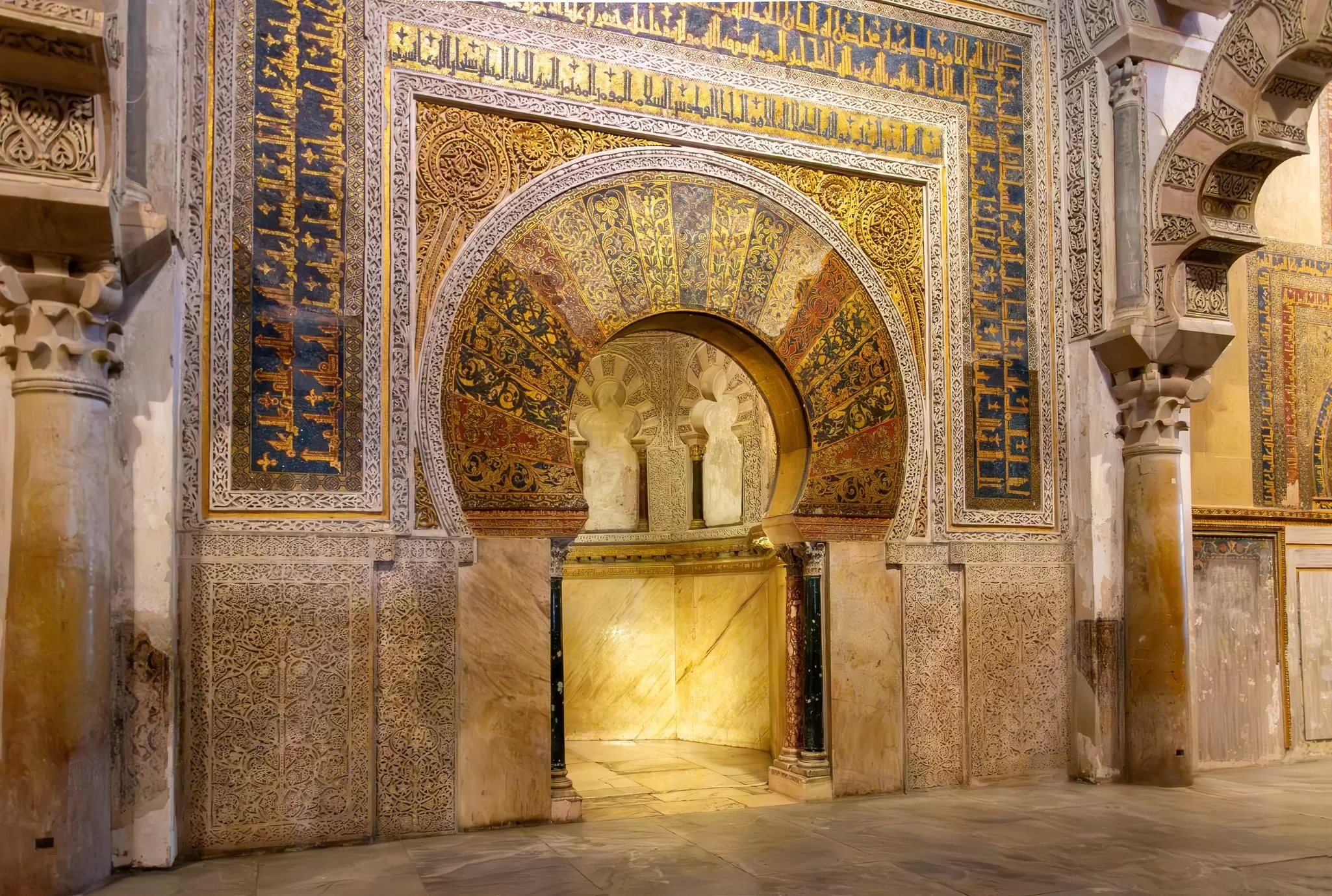
At the southern wall, the opposite end from the entrance, is the building's pinnacle of Islamic-era decoration. The maksura (royal prayer enclosure) somewhat undoes the essence of equality built into the mosque by creating an enclosed space for the caliphs' families to pray. The geometric decoration of the arches and skylit domes is at its most lavish here. On the back wall is the mihrab, the decorative prayer niche facing Mecca, added along with the maksura during the extensions ordered by Al-Hakim II in the 960s. The gold mosaic cubes around its portal were created by a master sculptor from Byzantium.
Capilla Mayor
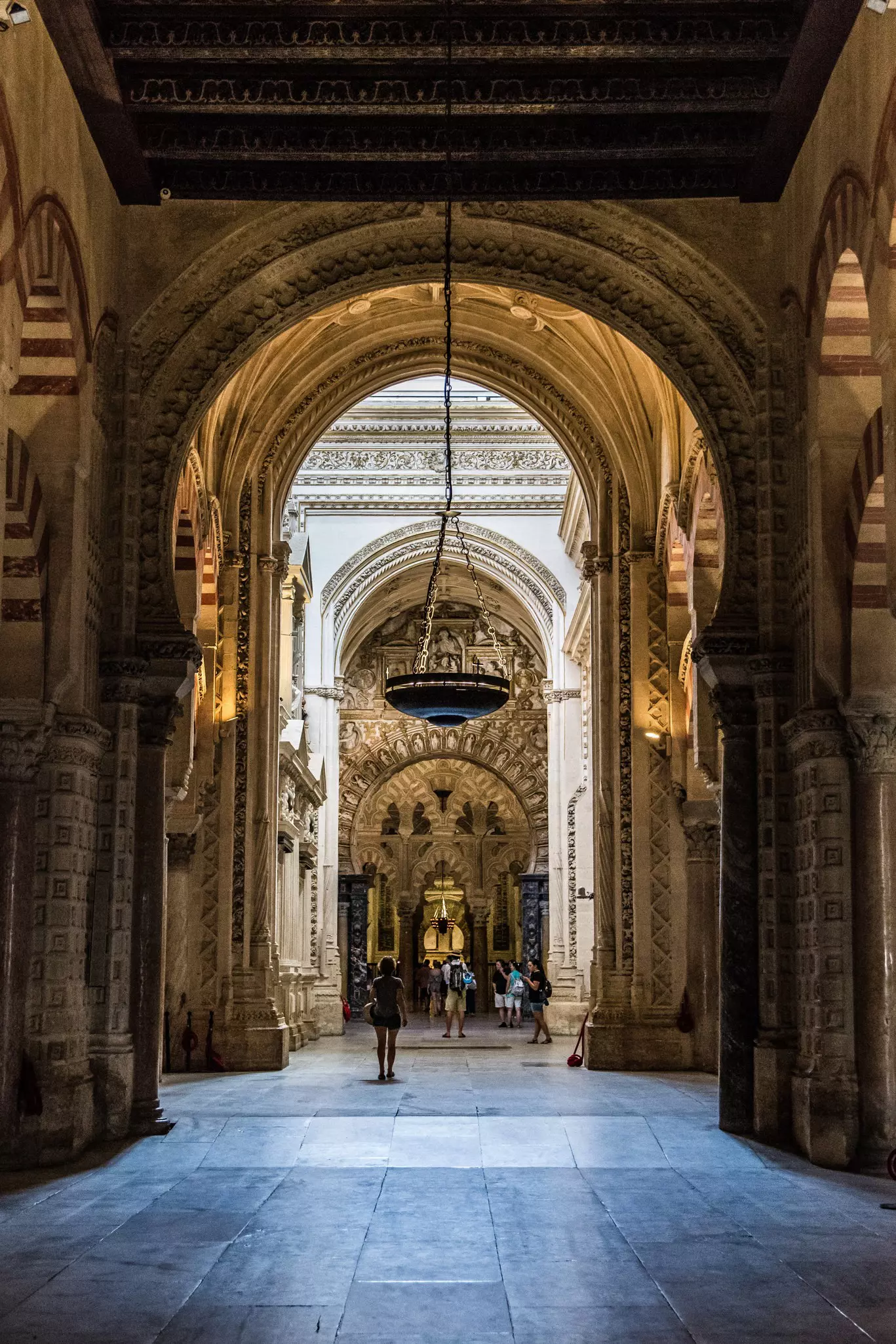
The Capilla de Villaviciosa on the south wall, blending Gothic and Mudéjar sensibilities, was the Capilla Mayor until the early 17th century. The construction of the current Capilla Mayor (main altar) and coro (choir) in the heart of the Mezquita began during the reign of Carlos I (1516–56) and was completed in 1766, with plateresque, Gothic, baroque and Renaissance motifs all at play. The ceiling of the coro is among the most impressive baroque work anywhere. The 18th-century carved mahogany choir stalls depict biblical scenes starting with the story of the Garden of Eden.
A Brief History of the Mezquita
6th century The site hosts a Christian church, Basilica of San Vicente.
786 Abd ar-Rahman I begins to transform the church into a mosque.
9th–11th centuries A series of enlargements add new features like the mihrab.
1236 The Christian conquest turns the Mezquita into a church.
1523 Start of the Mezquita's transformation into a cathedral, building the Capilla Mayor.