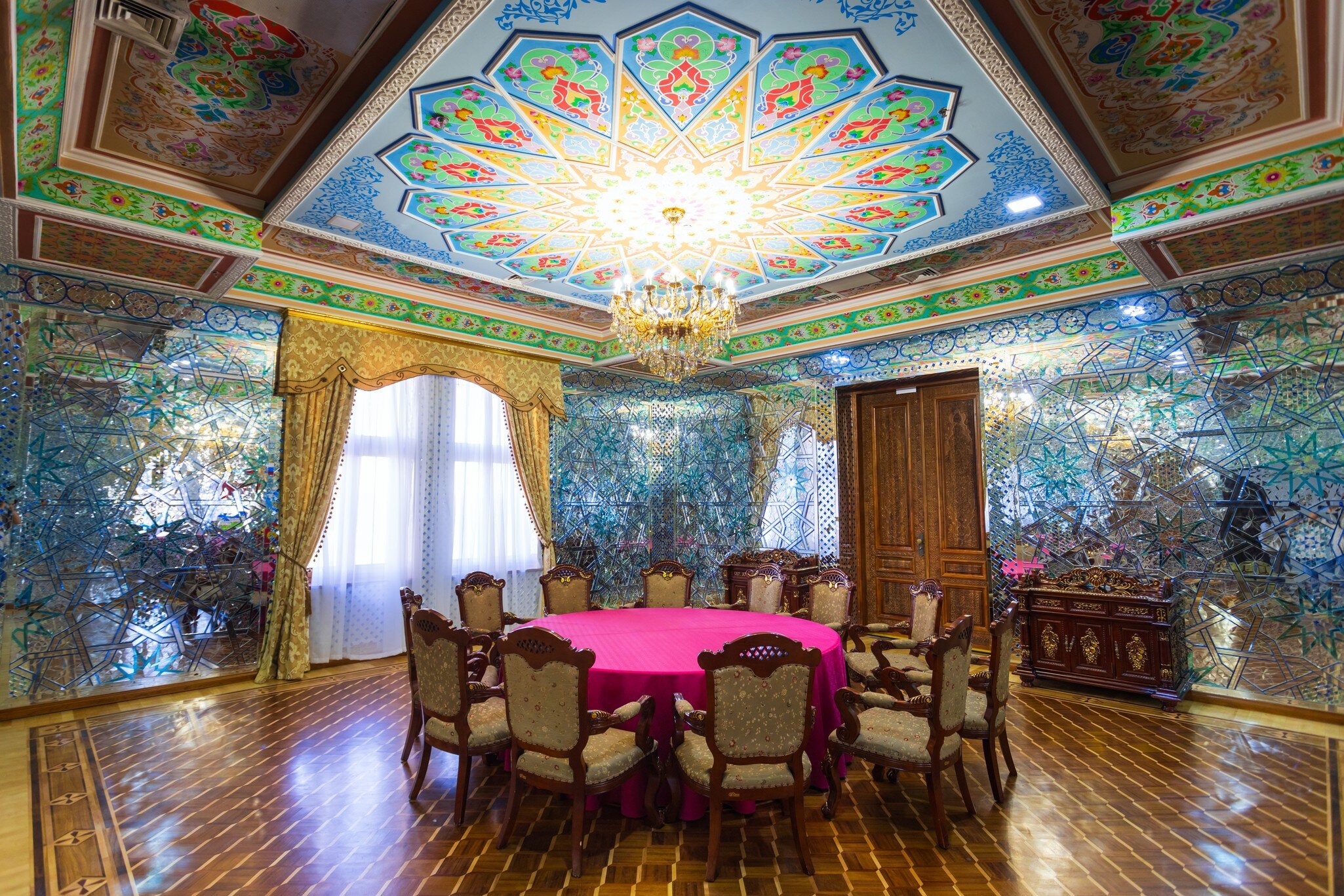
This vast festival of modern architecture, based on traditional architectural design and encompassing some exquisite national motifs, is used for the hosting of foreign dignitaries and delegations. Originally envisaged as the world's largest teahouse, the building can host 3200 guests and is now used more as a conference center and banqueting hall. The interior's four great halls have inlaid marble, carved woodwork work and tiling produced by local craftsmen.
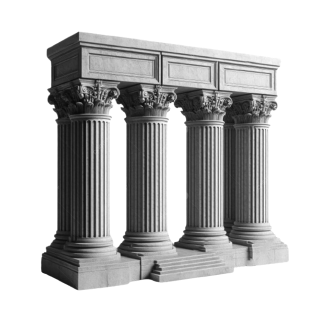
To look around inside is a bit hit and miss. Head for the north-facing stairway with its improbable mountain goat statues on a towering fake waterfall and ask for Barno, the English-speaking guide. If no functions are happening, she’ll whizz you around in around 20 minutes, opening the various locked rooms (50TJS per person, minimum two people). Even if you can’t get in, the place’s Escheresque exterior design is rewarding to explore with heavy carved wooden tea beds, preposterously over-tall stone columns leading to colorfully faceted ceilings complete with Gothic bronze chandeliers.