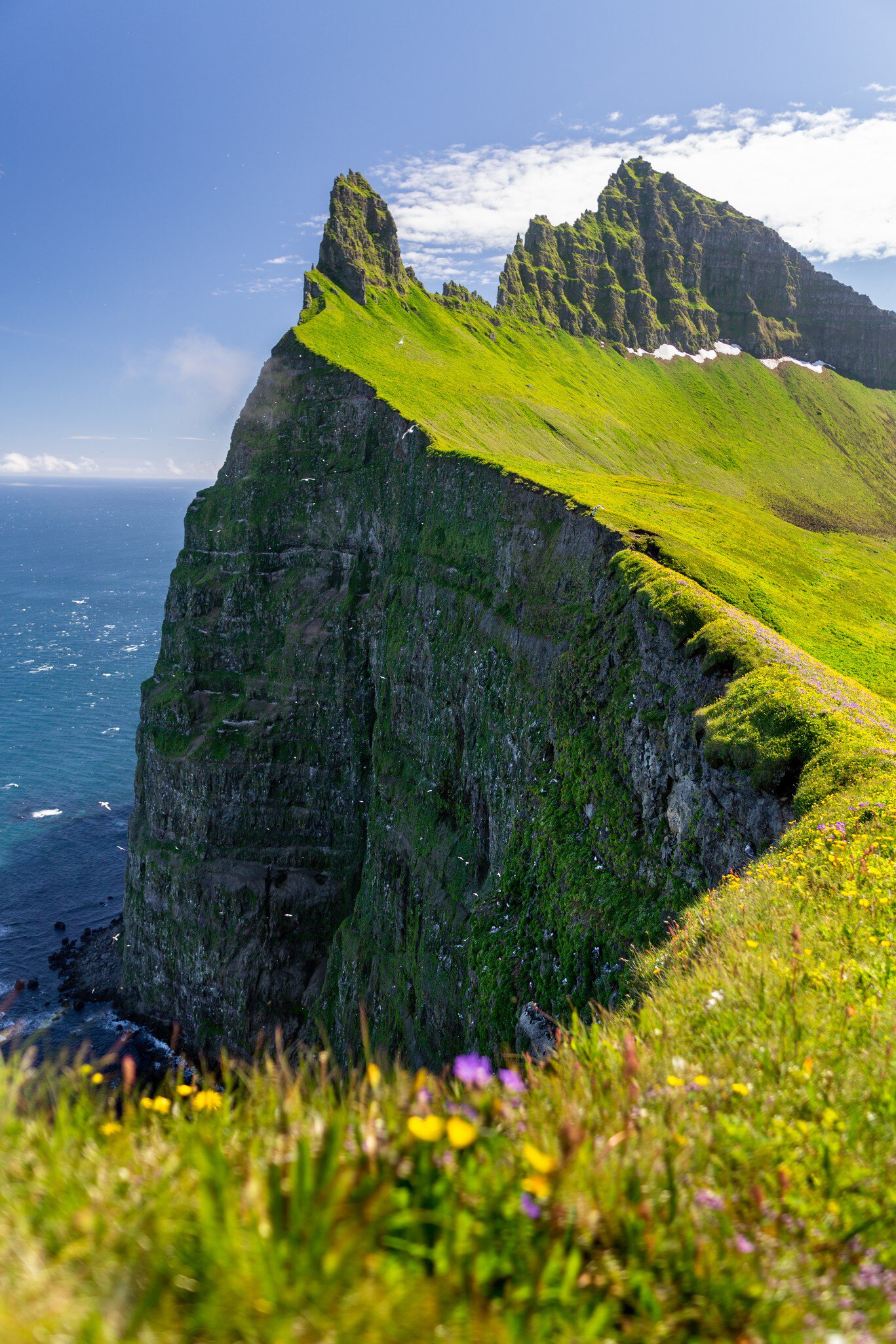
The northernmost tip of the Westfjords, accounting for 0.6% of Iceland’s land mass, is one of Europe’s last wildernesses. Hornstrandir Nature Reserve (ust.is/hornstrandiris, free) is a breathtaking beauty of soaring mountains and precipitous cliffs. A small but steady number of travelers make the journey, moving from one fjord to the next, taking anywhere from two nights to a week. Travelers are guaranteed fickle weather and a sighting of the Arctic fox in its brown summer coat. The foxes living in remote Hornstrandir seem oblivious to the fact that almost everywhere else humans hunt them: some even approach people, eating from the palm of their hand.
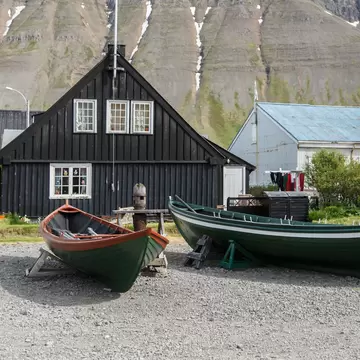
The last full-time human resident of the rugged area moved away in 1952 – it never was an easy place to farm – but many descendants have turned family farmsteads into summer getaways. And the former doctor's house at Hesteyri now serves coffee and cake.
To get to Hornstrandir, you must first head to a harbor; there are no roads. Ísafjörður has daily departures with Borea (borea.is, single fares from 13,900kr) and West Tours (westtours.is, single fares from 14,000kr) from June to mid-August. Hornvík and Hesteyri are the two base camps, staffed by a lone ranger, and most hikes are tailored around the landmark Hornbjarg cliff. The most popular hike is four to five days, known as the the Royal Horn (Hornleið), from Veiðileysufjörður to Hesteyri via the northern strip.
Day tours from Ísafjörður to Hesteyri are available in July and August, with West Tours (history day trips from 17,900kr), around five hours. Arctic Adventures (adventures.is) runs 11-hour day hikes between June and September (from 58,900kr per person including ferry transfers). The Hornstrandir Visitor Center on the main square in Ísafjörður offers practical travel information and a small exhibit on the Arctic fox.
To see Hornbjarg without a multiday hike, book a boat with Strandferðir (strandferdir.is, fares from 15,000-18,000kr), departing from various points including Norðurfjörður near Gjögur and Strandir on the eastern end of the Westfjords, a four-hour drive from Ísafjörður.
It is essential to plan ahead and get local advice, as vast snow drifts with near-vertical faces can develop on the mountain passes, rivers can become unfordable. The area has some of the strictest preservation rules in Iceland, thanks to its incredibly rich, but fragile, vegetation. Always keep to marked trails, stick to designated campgrounds and carry out all rubbish.