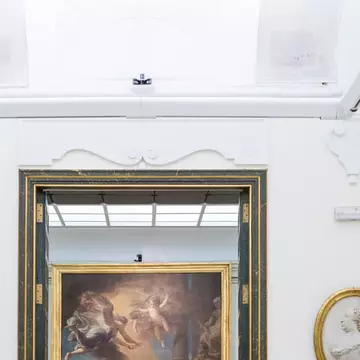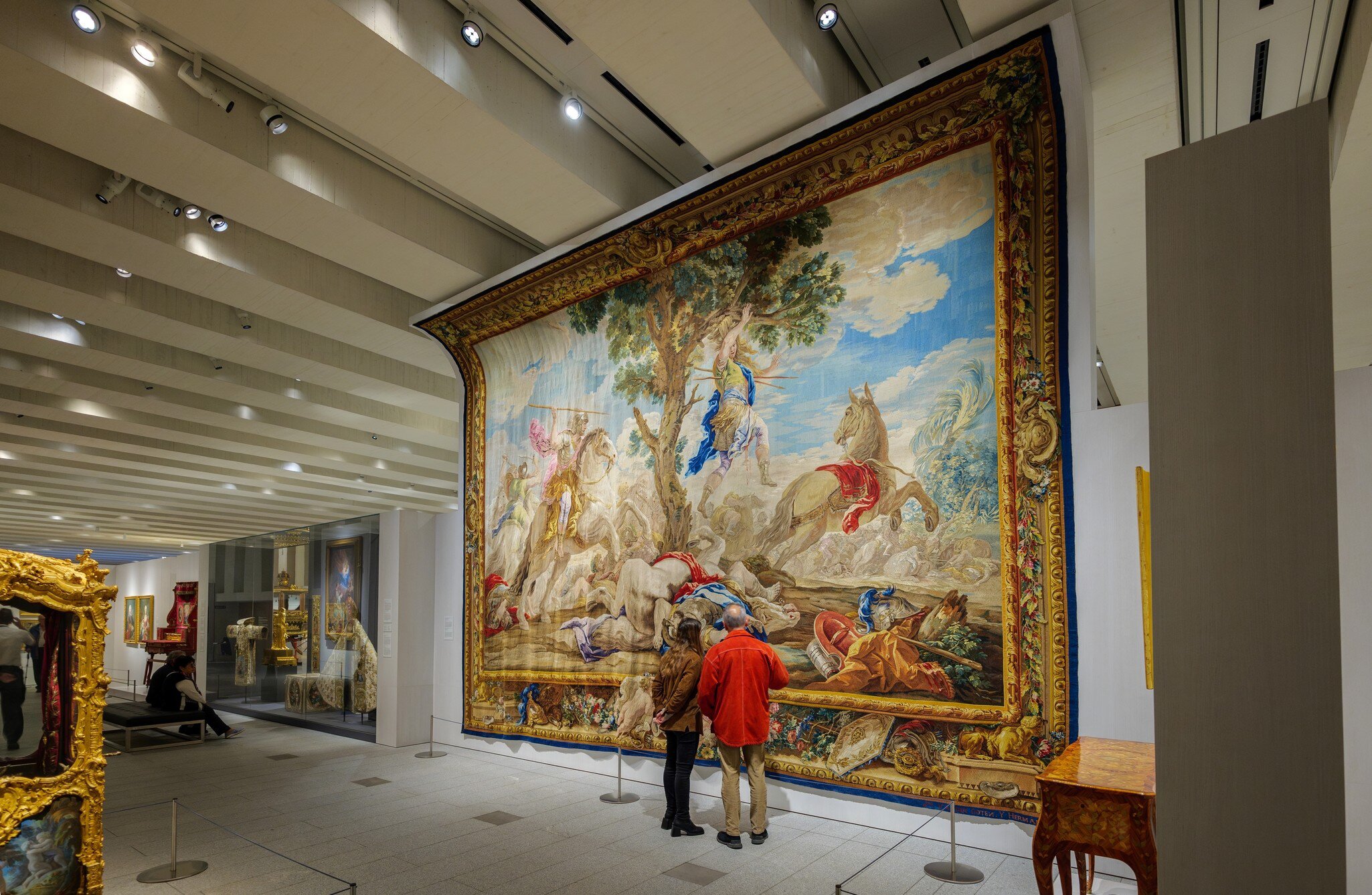
Opened in 2023, this new museum brings together the best pieces from the Spanish royal family’s vast collection of treasures. It's an excellent overview of the history of Spain’s monarchy via the trappings of extreme wealth, including paintings by Velázquez, Caravaggio and Goya, Flemish tapestries, armor, fabulous furniture and ornate carriages.
The Habsburgs
Start by descending to floor -1, a vast area mostly dedicated to the Habsburgs that covers two centuries of history from the mighty Carlos I of Spain through various Felipes before finishing with Carlos II. Everything is displayed in consecutive order, kicking off with magnificent tapestries, which you may want to selectively skim over. Look out for Bruegel’s intricate rendering of Bosch’s Garden of Earthly Delights.
Take a moment to marvel at the collection of armor, particularly the specially made suit donned by Carlos I in the battle of Mühlberg. Soon after this victory, the ailing Carlos I handed the Spanish throne on to Felipe II, a learned king who generally avoided the battlefield in favor of his precious library in El Escorial. Many of the medieval texts the king studied are on display, including a marvelous Arabic treatise on zoology illustrated with gold leaf.
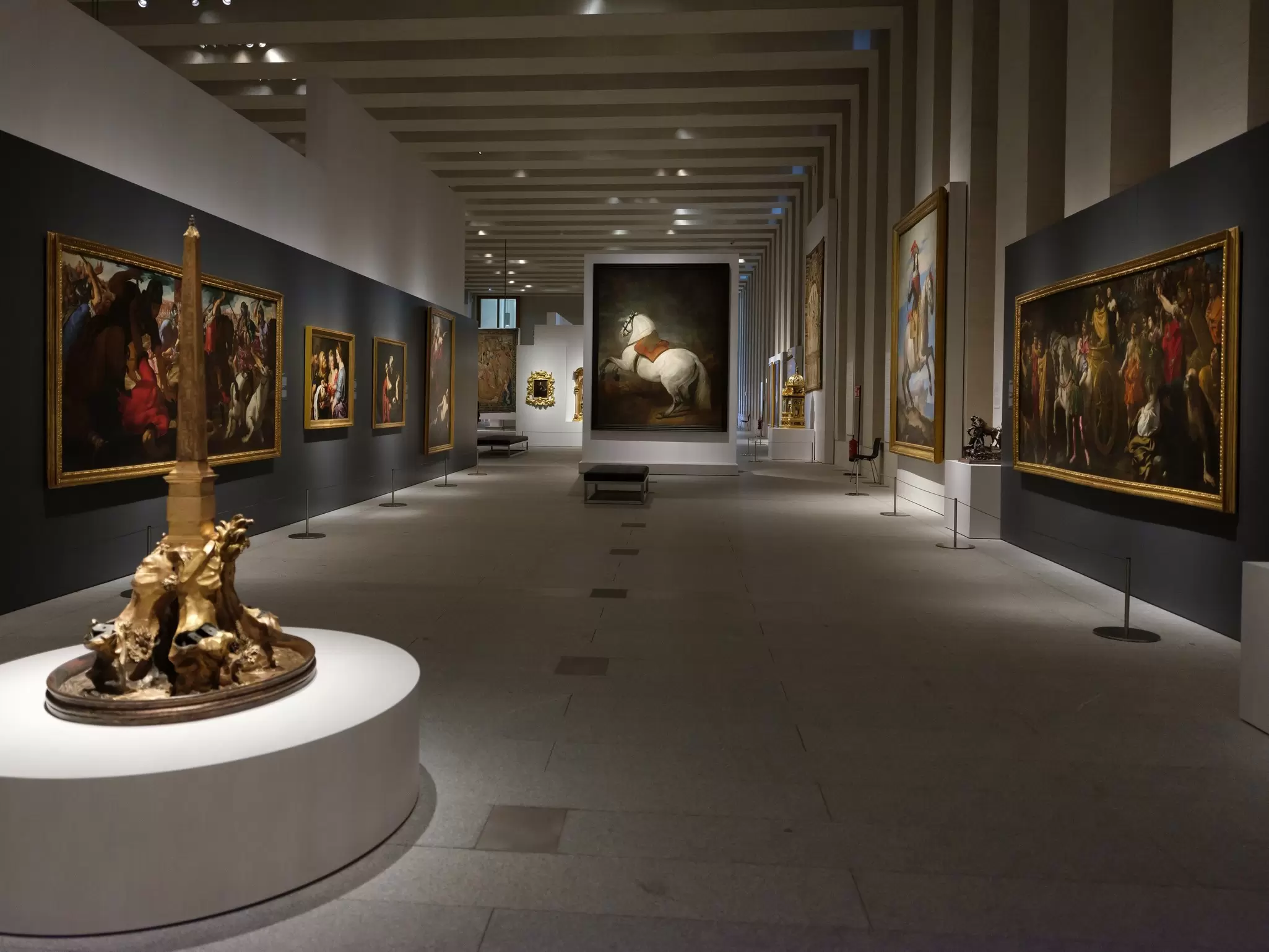
While the kings from this point on become less competent, a flourishing of the arts on Spanish soil accompanies this gradual decline. Representing this golden era is a first print of Don Quijote and Velázquez' marvelous White Horse painting. Nearby is El Greco’s hallucinatory Adoration of the Name of Jesus and Caravaggio's darkly brooding Salome with the Head of John the Baptist.
Medieval Wall
In a separate room on the same floor is a section of the city’s original 9th-century wall, built by Mohamed I of Córdoba to protect Al-Andalus from Christian invaders to the north. These remains were found during the construction of the museum along with other artifacts from the time, which are oddly not on display. Instead, this era is brought to life through an informative video that gives an overview of how this outpost at the edge of the Muslim world was transformed into a royal palace at the center of a Christian empire.
The Bourbons
Descend further to floor -2, a space dedicated to the Bourbon dynasty. The change in ambiance from the dour Habsburgs is immediately noticeable, with massive portraits of Felipe V and his wife Isabella Farnese by Van Loo dominating the entrance. Rich in sumptuous detail, this sets the tone of things to come with the Bourbon taste for unbridled splendor evident throughout. Particularly prominent is the neoclassical influence introduced by Carlos III, who was king of Naples before taking the crown on home turf.
While this king’s enlightened rule stands out for its attempts to introduce industry – such as porcelain manufacturing – to Spain, his successor, Carlos IV, was a rather befuddled figure. Goya’s brilliant picture of this king and his famously debauched wife is one of the highlights of this floor, along with a large equestrian portrait of a spectacularly arrogant Alfonso XIII by Ramón Casas y Carbo. This king was the last to rule Spain before the Second Republic dispensed with the monarchy altogether, and this marvelous collection of riches fell into public hands.