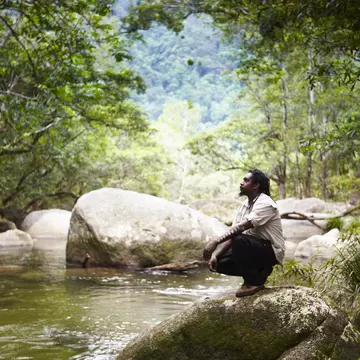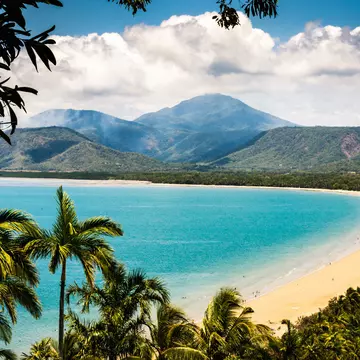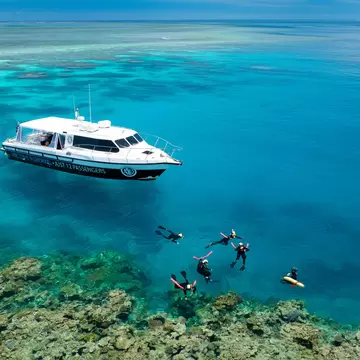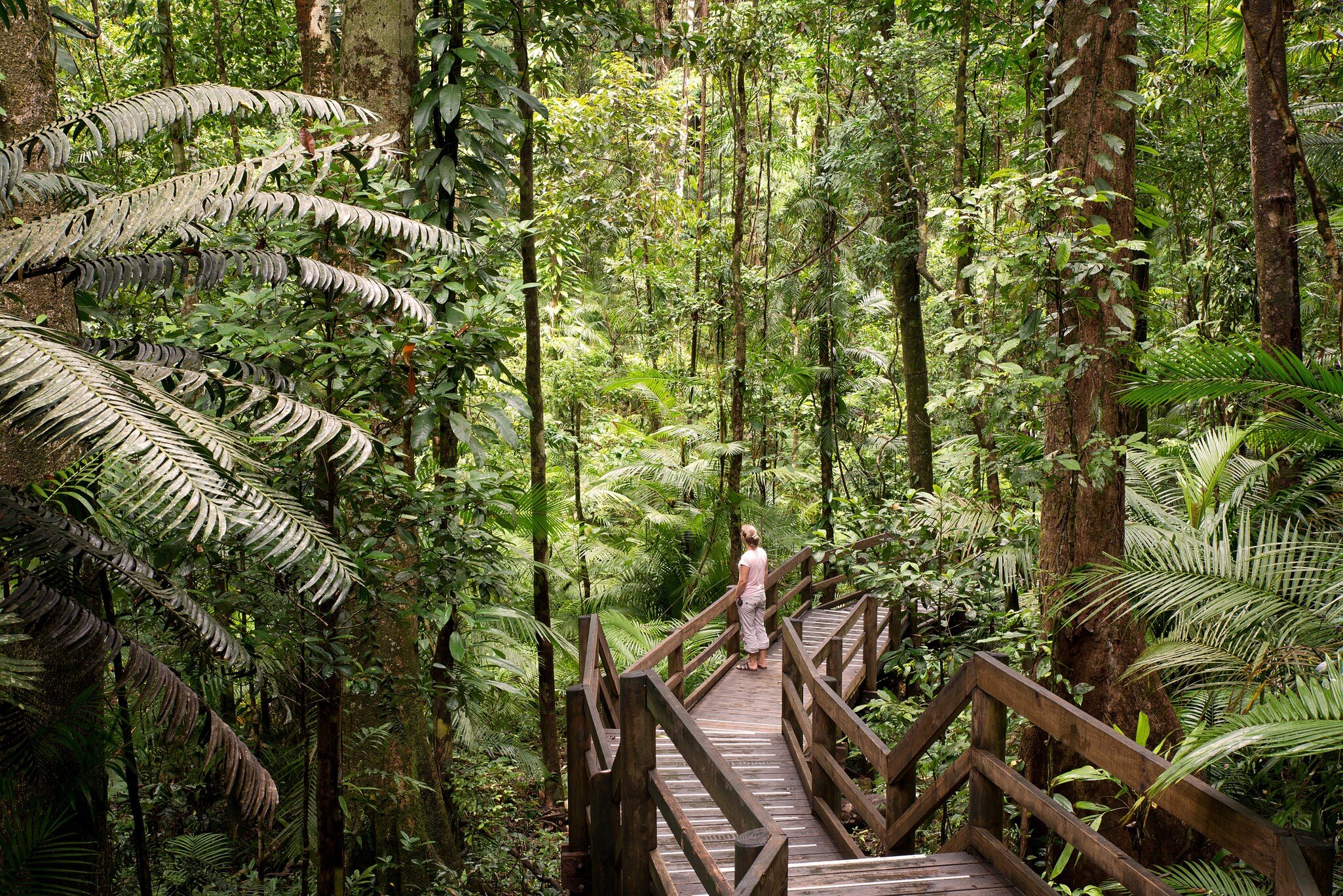
Older than the Amazon, the Daintree is a living link to earth’s deep past – a refuge for some of the planet’s earliest flowering plants. Logging and development threats in the 1970s and ’80s sparked fierce protests, leading to its inclusion in the Wet Tropics World Heritage Area in 1988. Today, joint management with Eastern Kuku Yalanji Traditional Owners helps safeguard its future.
Accessibility
Located between 80km and 150km north of Cairns, Daintree National Park has two main visitor gateways: Mossman Gorge and Cape Tribulation. Each offers a very different rainforest experience.
Mossman Gorge
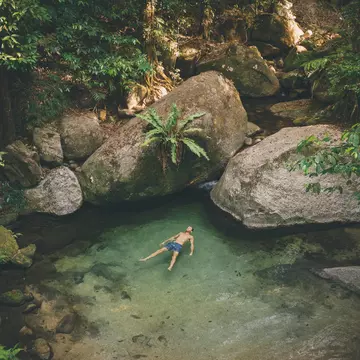
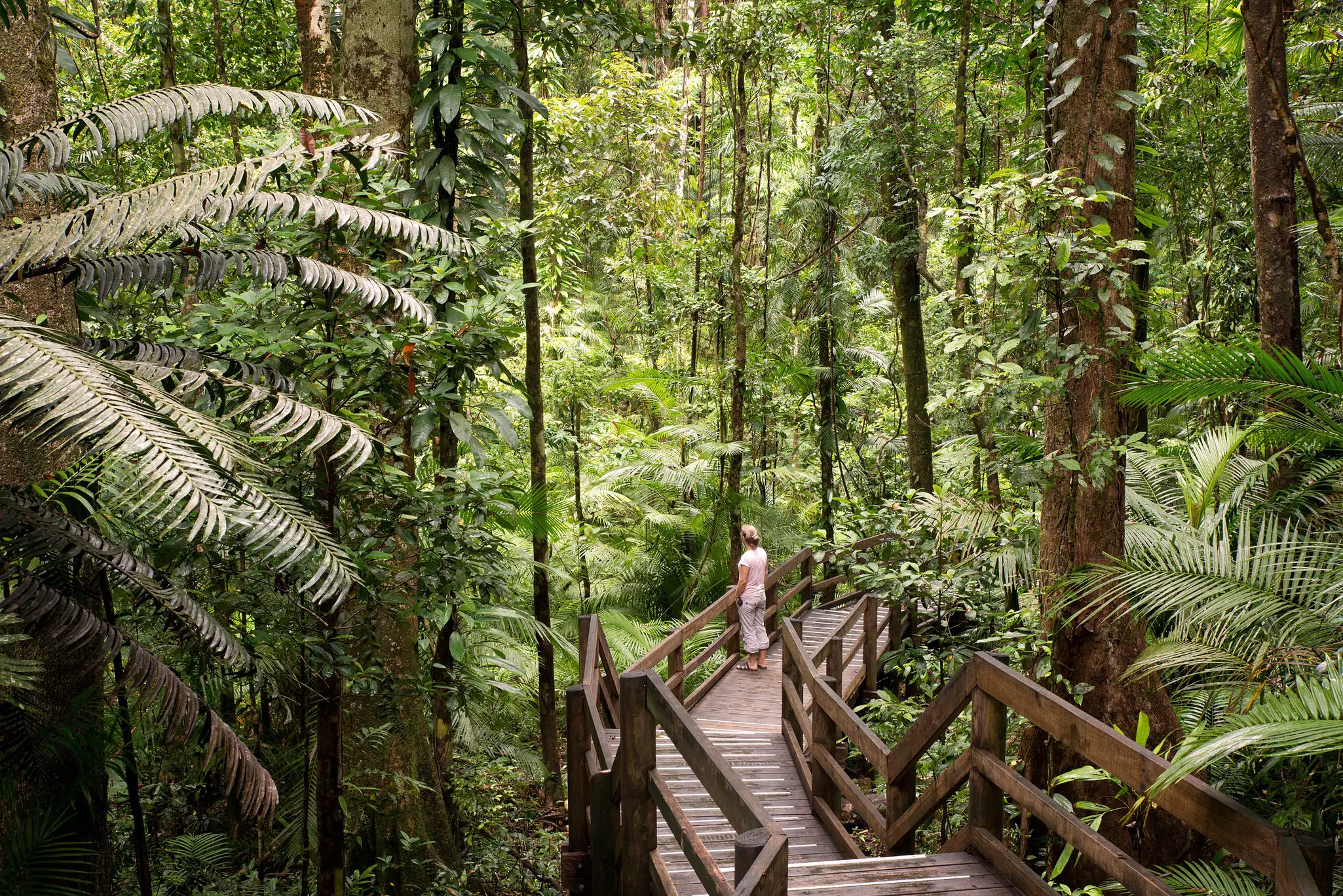
Just 20 minutes north of Port Douglas, Mossman Gorge is a boulder-strewn valley with clear, ice-cold swimming pools and walking trails through dense rainforest. Entry is via the Kuku Yalanji–managed Mossman Gorge Culture Centre (mossmangorge.com.au), with buses running every 15 minutes from 8am to 4.30pm, and from where you can park and catch the 10-minute shuttle to the gorge (no walk-in access; adult/child $15/7.50). Wander the 2.4km rainforest circuit or simply relax and swim in the river. Note: Mossman River conditions can change quickly, especially during the Wet.
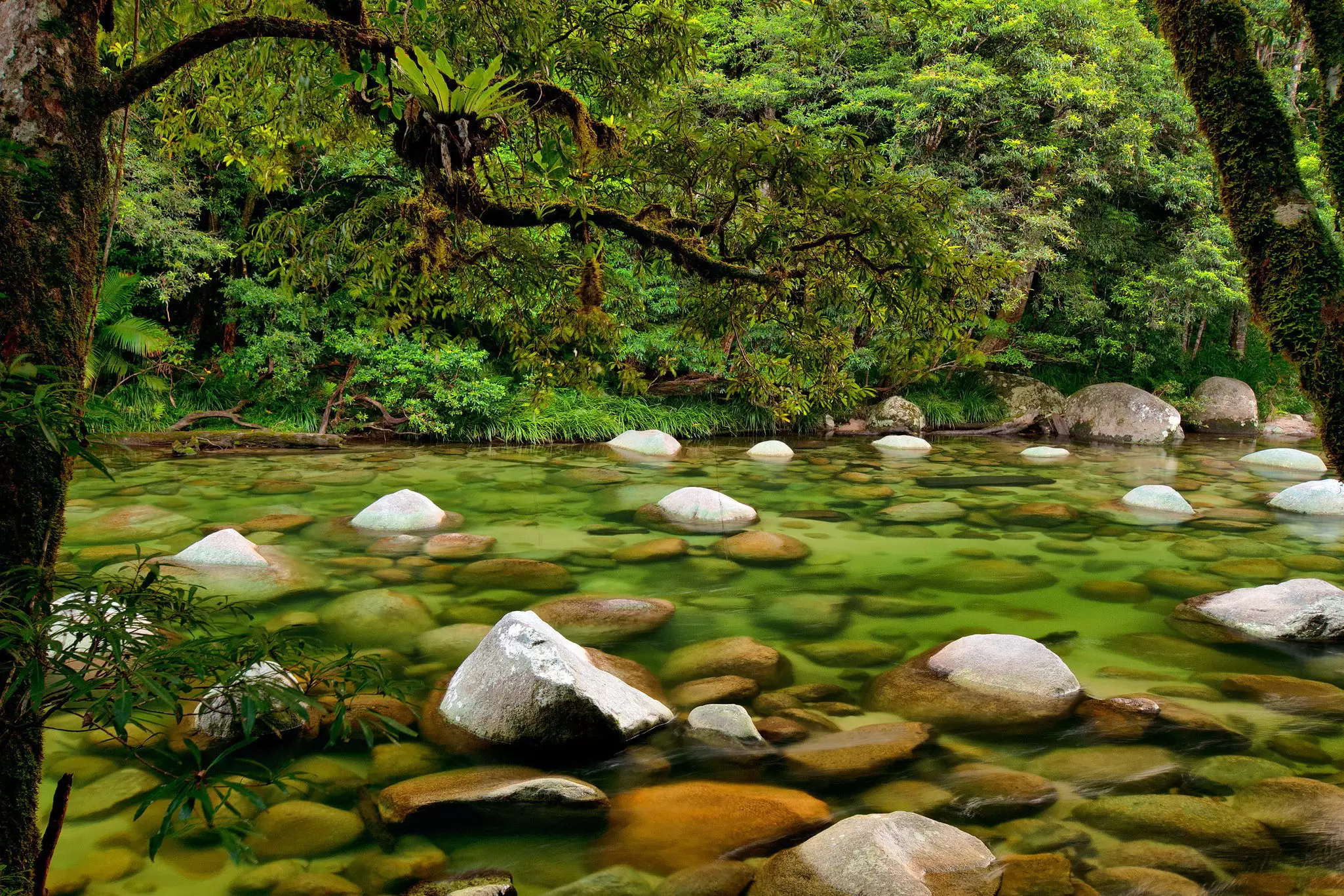
To deepen your experience, the 1½-hour Ngadiku Dreamtime Walk (mossmangorge.com.au/things-to-do/dreamtime-walks; adult/child $100/50) is highly recommended. Local Indigenous guides prepare a smoking ceremony, tea and damper and accompany you through the rainforest. There are four tours daily; book ahead.
For a splash of adventure, Back Country Bliss (backcountrybliss.com.au) offers a two-hour River Drift Experience (adult/child $145/110) where you float down the river, snorkeling with turtles, water dragons and platypuses. Children aged four and up can join when river levels are low; during the Wet, the tour suits fit swimmers aged 14 and older. Bookings essential. Their Mossman Gorge Adventure Day (adult/child $270/225) combines river drift, walks, lunch and a smoking ceremony in one day.
Cape Tribulation
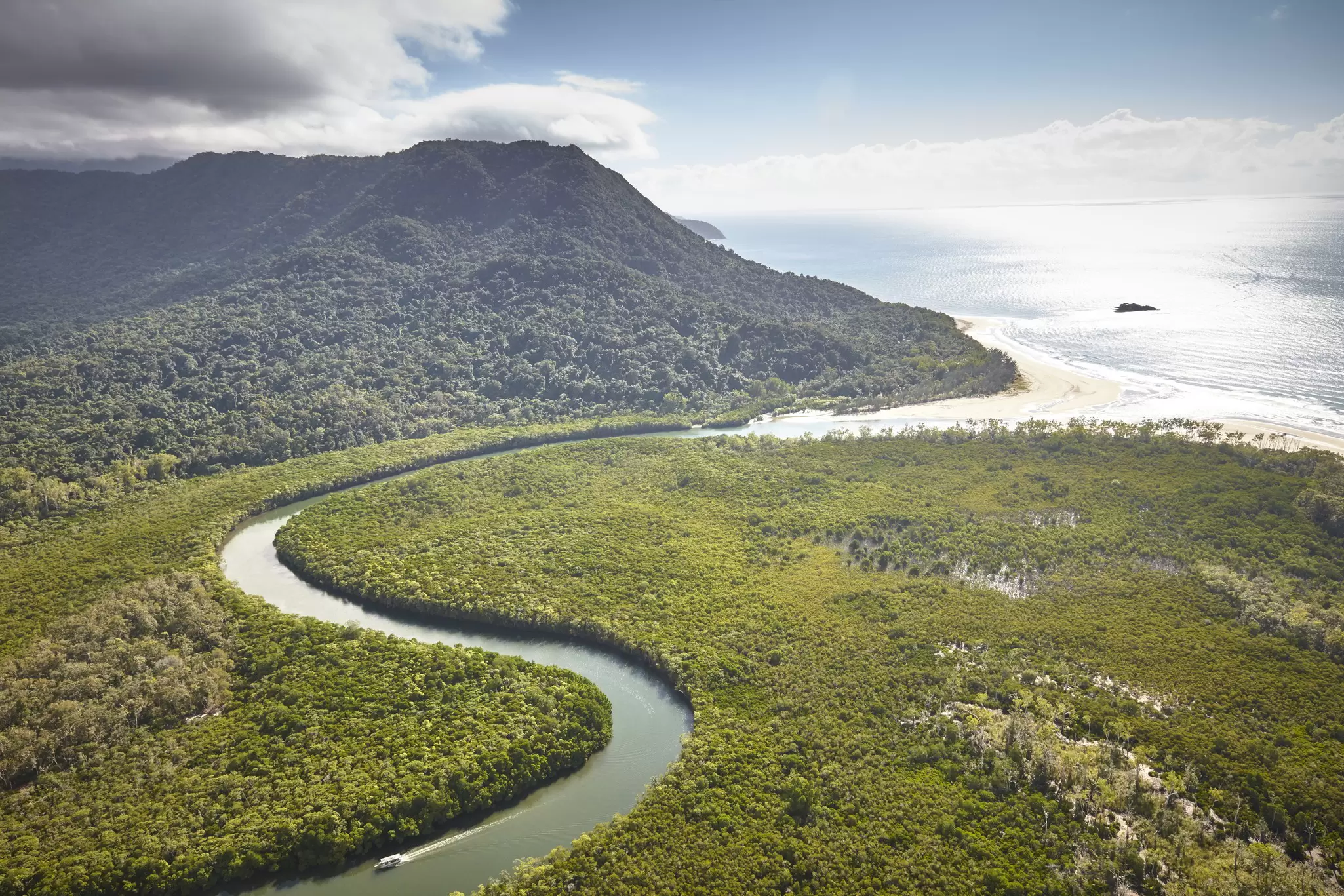
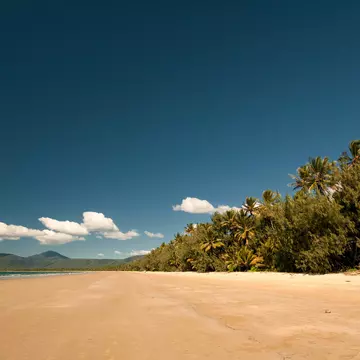
North of the Daintree River (and Mossman Gorge) the rainforest becomes more remote. The only way to access the Cape Tribulation section of the Daintree National Park from the south is to cross the river via the Daintree River Ferry. Here, rainforest-clad mountains meet long sandy beaches, and although the winding 38km road from the ferry crossing to Cape Tribulation can be driven in under an hour, you’ll find that you will want to stop often. Do allow time for the Daintree Discovery Centre, and then there are plenty of boardwalks to wander along and tropical treats to eat. Allow at least half a day (or better still, a full day or overnight) to enjoy this part of the park.
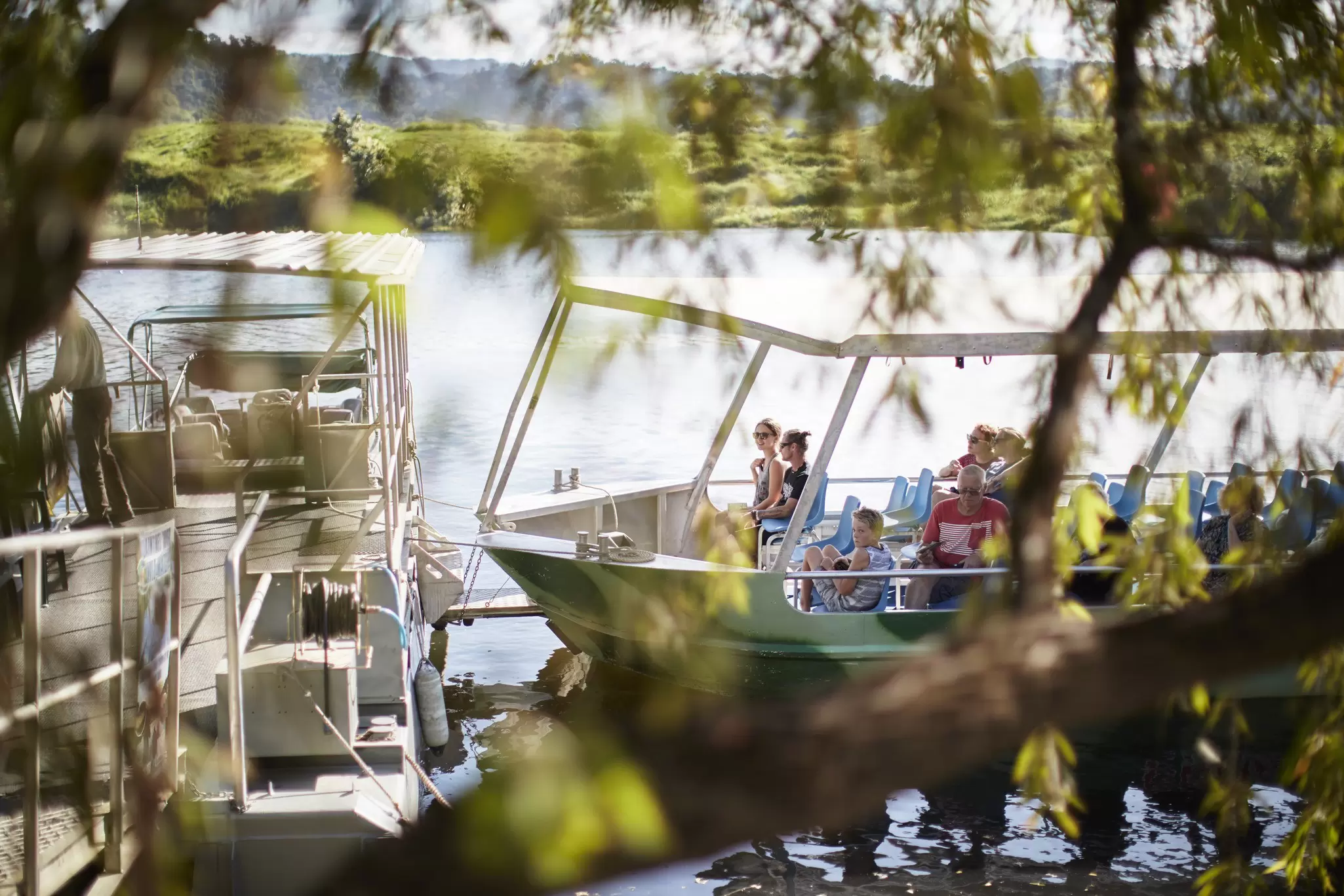
Cape Trib is the area to stay in if you’re looking to get away from it all, with options ranging from luxury retreats to simple camping grounds. One thing they all have in common is the fact that there is no mains-grid electricity supply north of the Daintree River. Everyone relies on generators or solar power.
Wildlife-Spotting
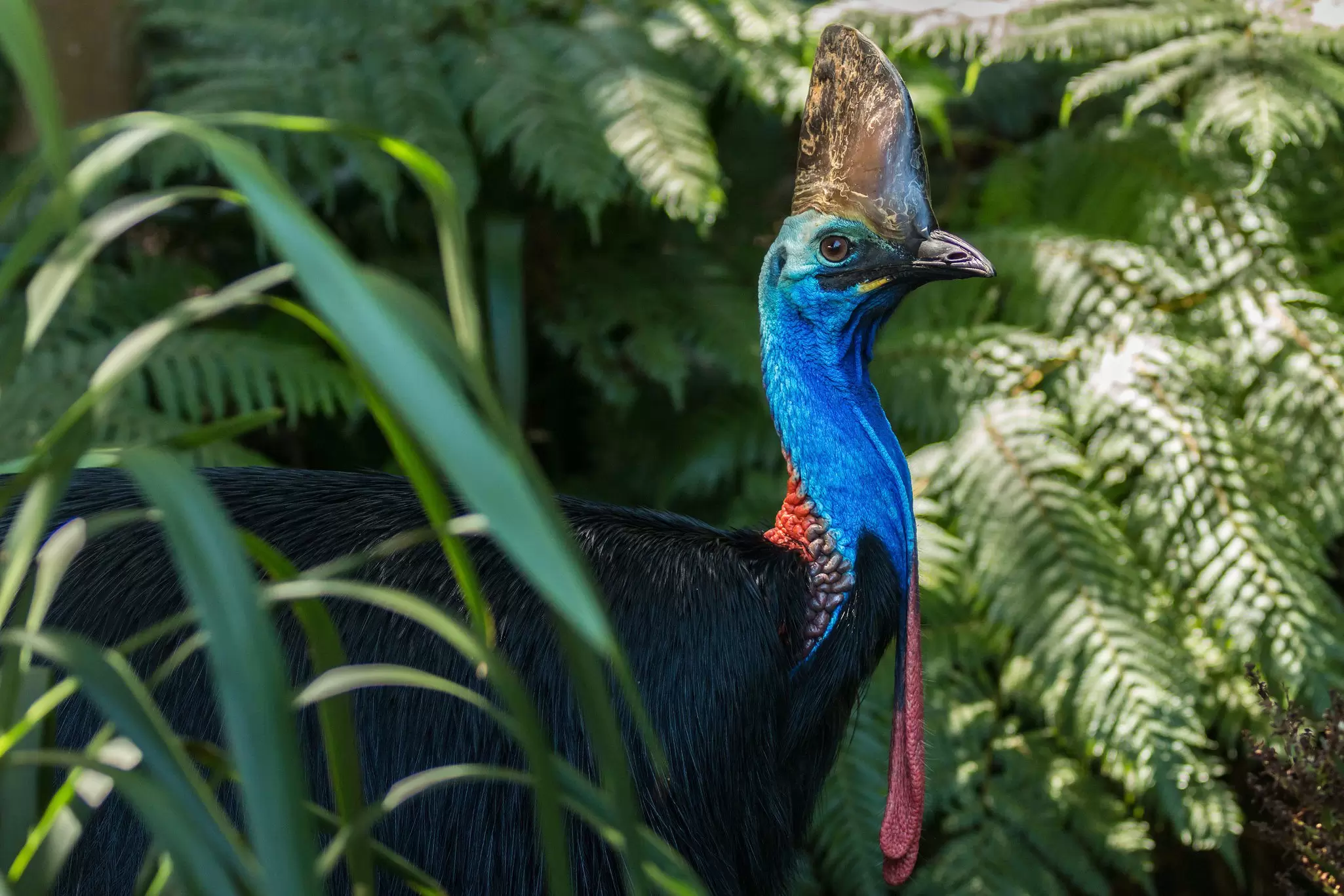
The Daintree is a critical stronghold for the endangered southern cassowary, with one of the highest remaining populations in Australia. While sightings are never guaranteed, patient visitors have a genuine chance, particularly in the early morning or late afternoon. Try the Jindalba Boardwalk or Buchanan Creek Rd at Cow Bay.

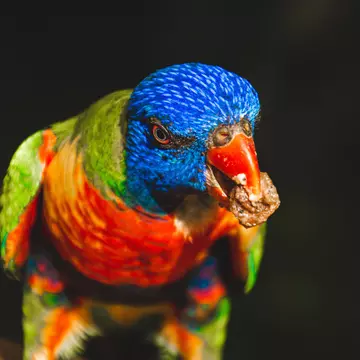
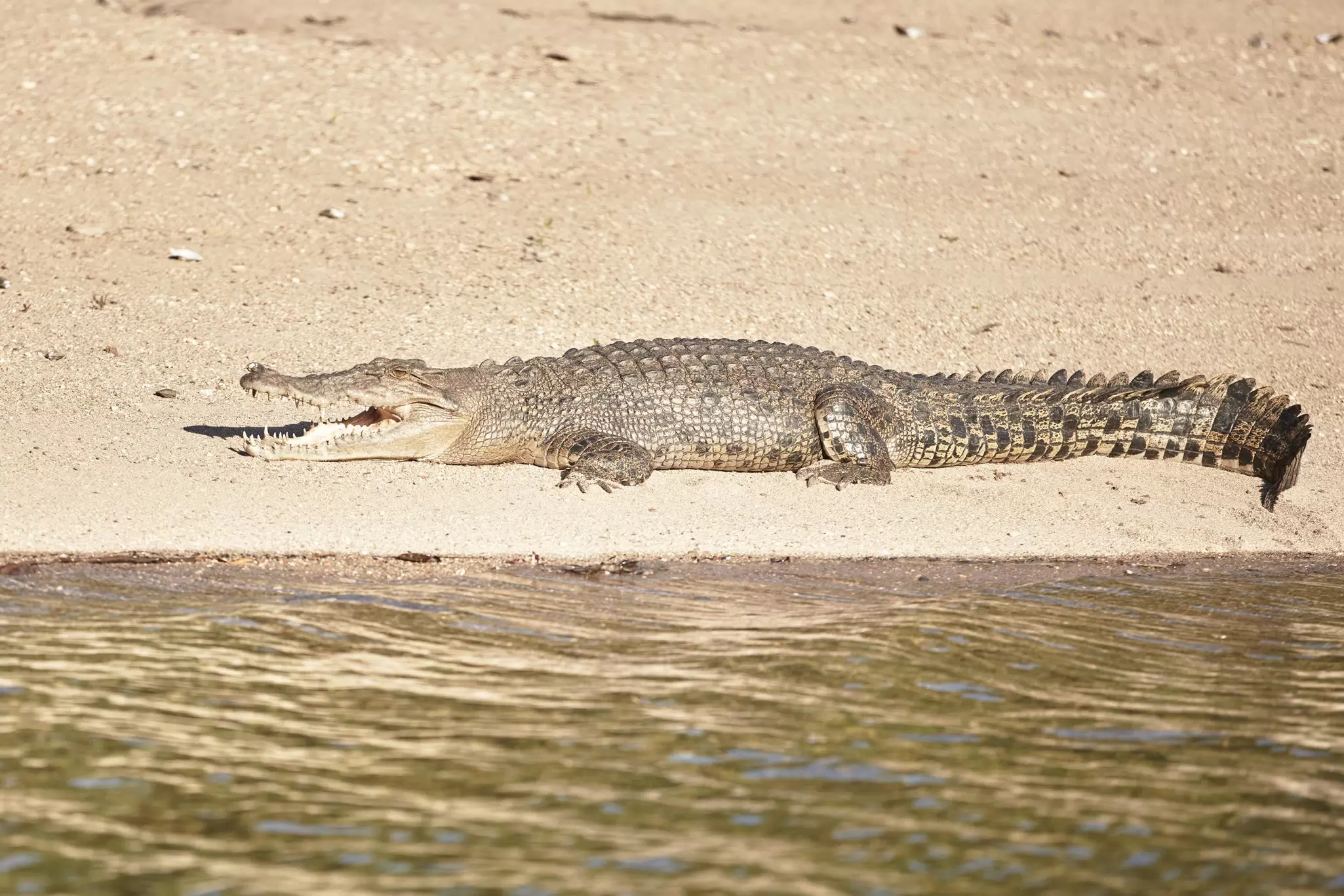
Other commonly seen wildlife include Boyd’s forest dragon, often seen clinging motionless to tree trunks, and the brilliant blue Ulysses butterfly, on sunny mornings. The birdlife is prolific, while tree kangaroos are particularly hard to spot. A guided night walk is highly recommended – you’ll be amazed at the abundant nocturnal life in this ancient rainforest.
Slow Down
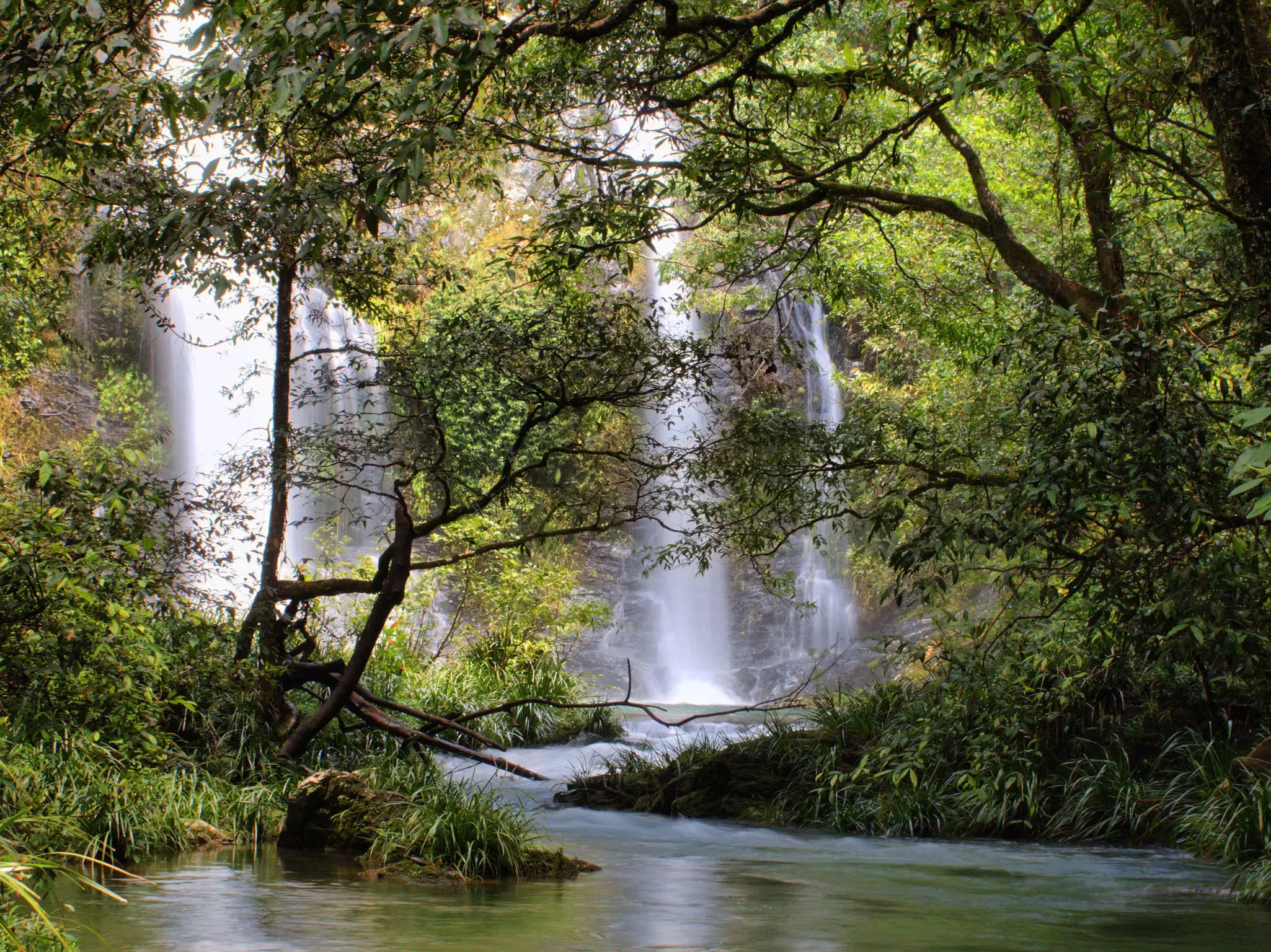
The Daintree rewards patience. Don’t race from lookout to lookout – linger at the Madja Boardwalk or at the canopy at the Daintree Discovery Centre. The key is to listen first: to the soft slap of fruit falling or the sudden rustle that might be a tiny frog. The Daintree isn’t a sight to see but a state to slip into – slow, sensory and alive.