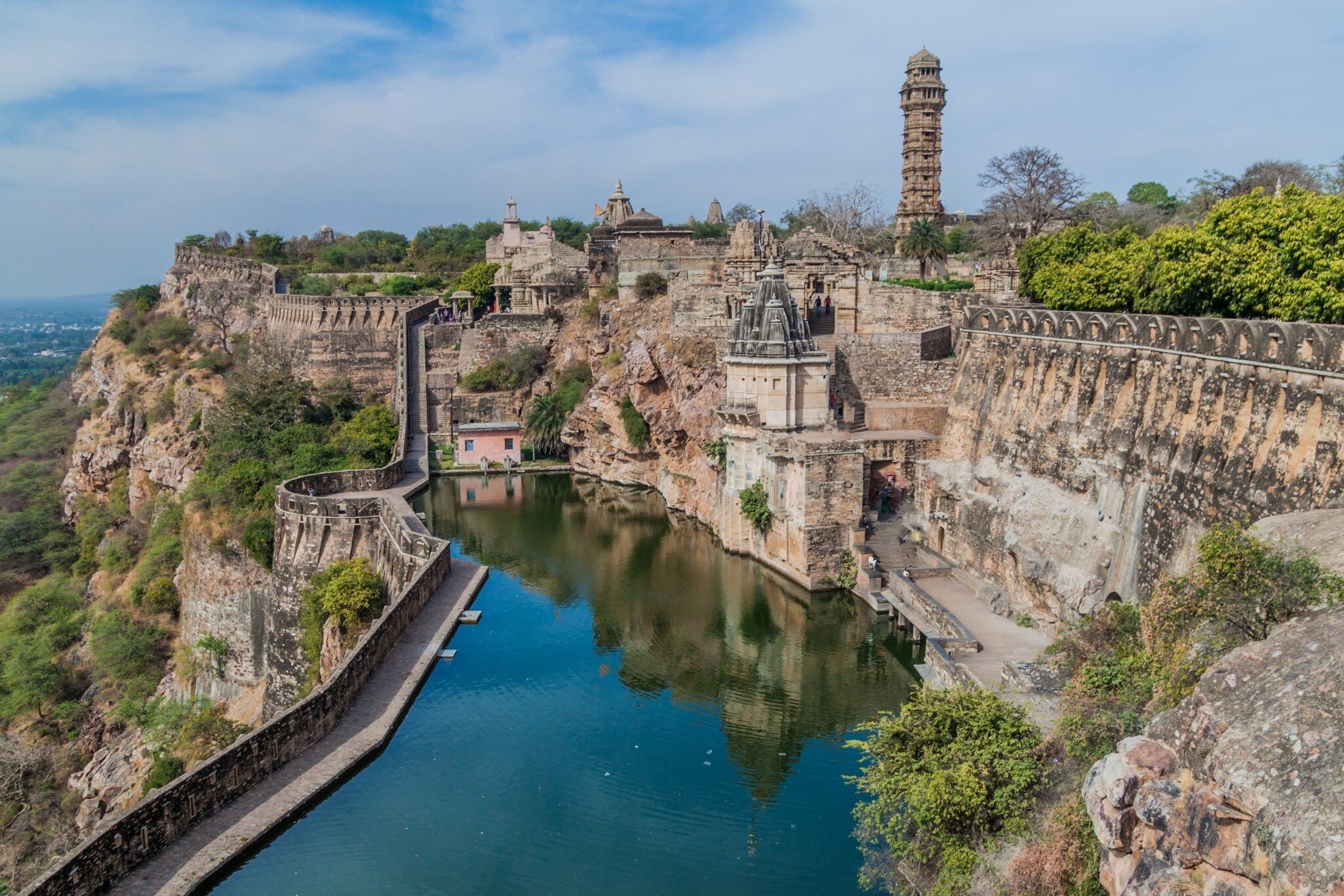
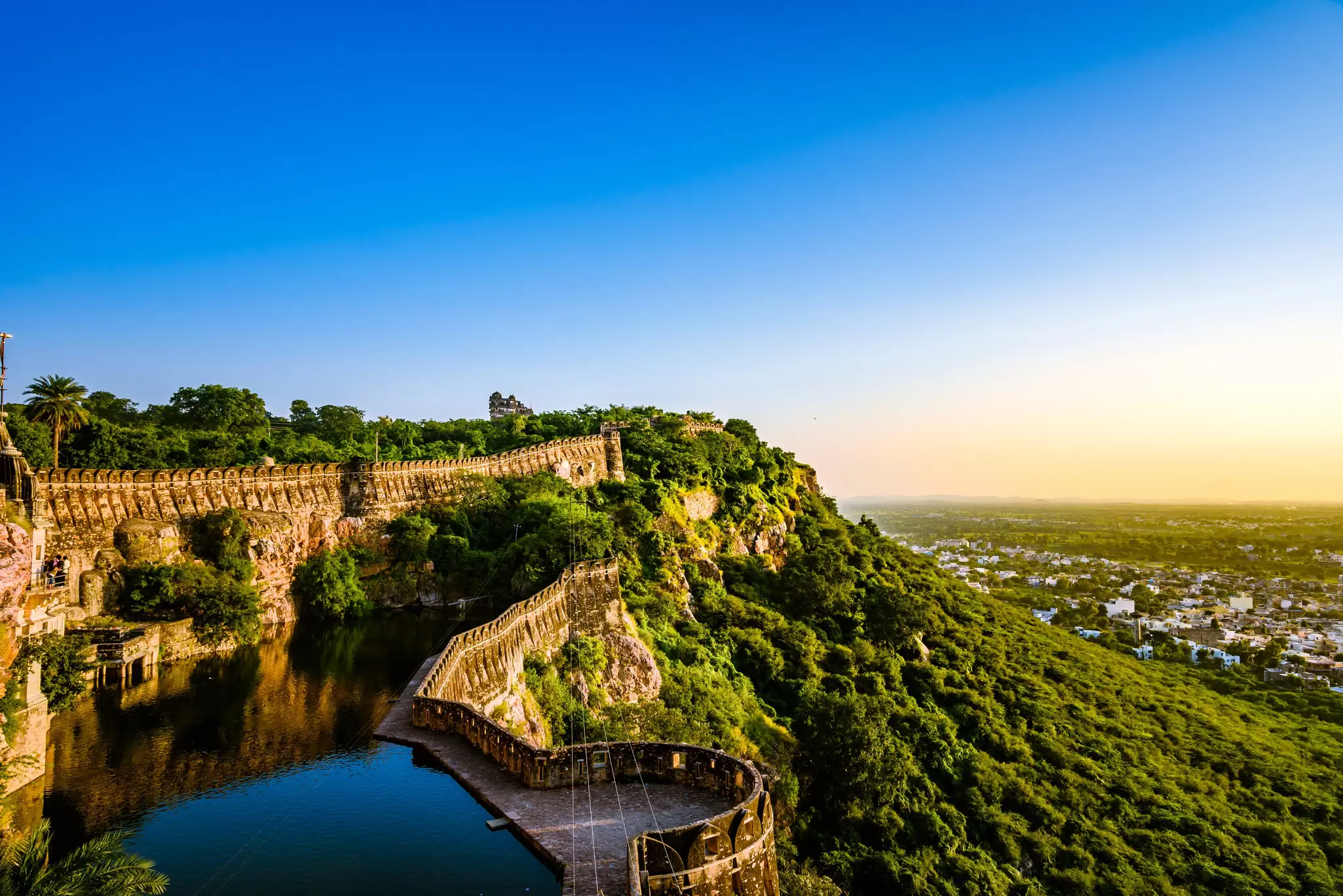
The dusty town of Chittorgarh (Chittor) feels like a mere appendage to the gigantic fortress draped along the cliffs west of the train station. Rocky cliffs soar above the floodplain of the Berach River, crowned by impenetrable-looking walls and a forest of temples and towers. A looping road encircles the plateau and autorickshaw drivers offer three-hour tours of India's largest fortress for ₹600 to ₹800.
The Fort Gates
The zigzagging fort access road climbs for over a kilometer from the Padal Pol gate at the bottom of the cliffs, passing through six further gateways to reach Ram Pol, marked by a small, temple-studded village and the overlooked, bat-filled ruins of the Rana Ratan Singh Palace.
Rana Khumba Palace
Following the walls south, the 15th-century Rana Kumbha Palace marks the site of one of three ritual mass suicides that took place in Chittorgarh, as the city fell under siege from Ala-ud-din Khilji in 1303. The time-scarred walls are the setting for a sound-and-light show at dusk (₹300), and nearby are two deity-encrusted temples, absorbed into the fort walls.
Meera & Khumba Shyam Temples
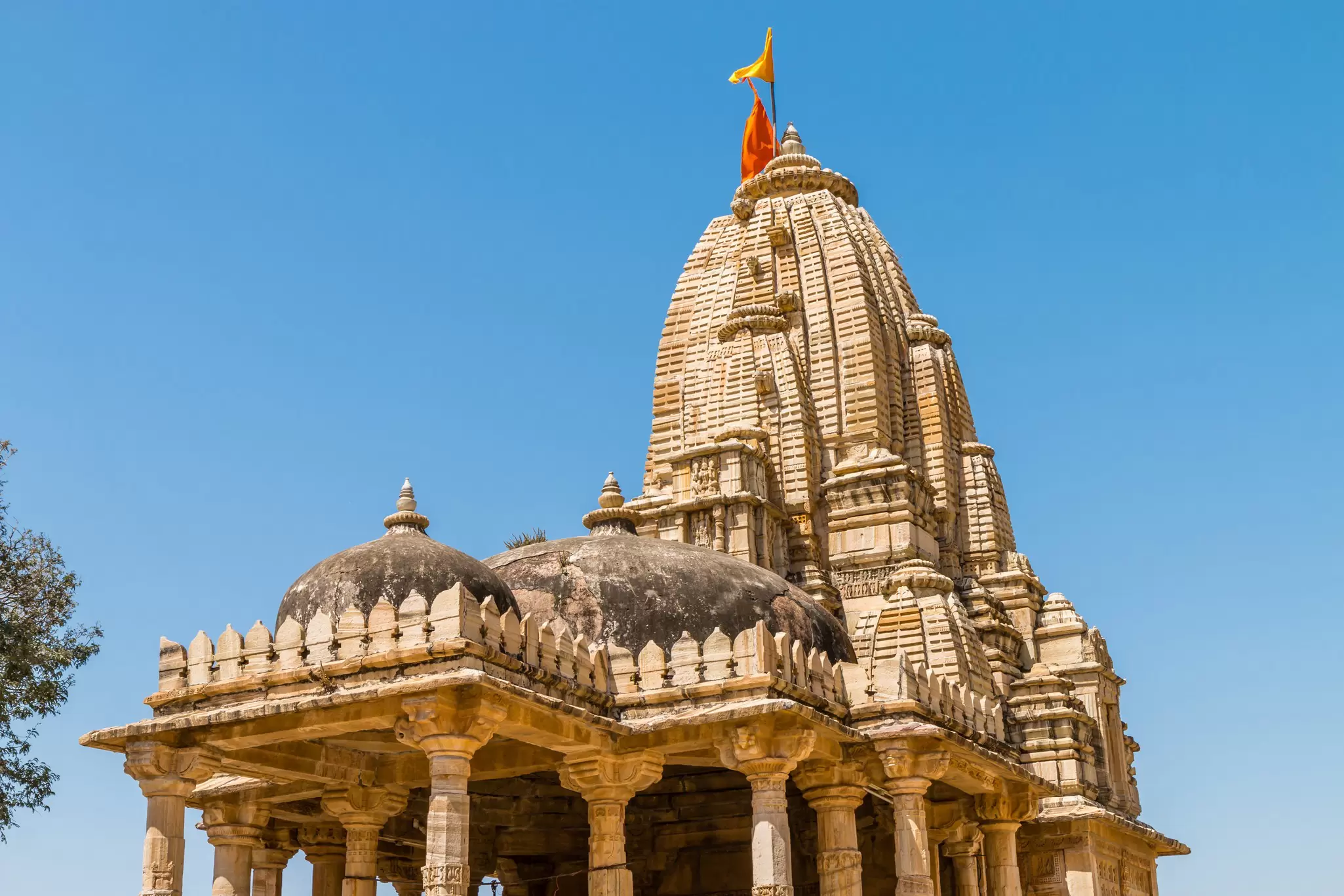
Further south are two dramatic 15th-century Indo-Aryan temples, erected by Rana Kumbha. The smaller Meera Temple is associated with the mystic poet Meerabai, a 16th-century Mewar princess who was poisoned by her brother-in-law but miraculously saved by Krishna.
Fronted by a statue of Garuda, the enormous Kumbha Shyam Temple is dedicated to Vishnu and carved with scenes of medieval life. See more delicate carvings at the Jateshwar Mahadev Temple on the edge of the fort walls.
Tower of Victory & Samidheshwar Temple
Passing a ruined step-well, you'll reach the 37m-high Tower of Victory(Vijaya Stambha), erected by Rana Kumbha in the 1440s – most likely to commemorate victory over Mahmud Khilji. Every fabulous millimeter of its nine stories is covered in carvings but visitors are no longer allowed to climb to the top.
Below the tower is the Mahasati, where many royal widows died on their husbands' funeral pyres, dotted with the ruins of temples ransacked by Ala-ud-din Khilji and Akbar. Some 13,000 women and children perished here during a mass jauhar (ritual suicide by immolation) in 1535.
Steps drop to a deep, fish-filled tank known as the Gaumukh Kund fed by a sacred spring emerging through a cow's head spout. Beside the steps is the 6th-century Samidhisvara Temple, enshrining a striking three-faced image of Shiva as Trimurti, the Creator, Preserver and Destroyer.
Padmini Palace & Kalika Mata Temple
Pass more wells to reach the monkey-thronged, 8th-century Kalika Mata Temple, originally consecrated to Surya, the sun god, but rededicated to the goddess Kali in the 14th century. Further south is the graceful 14th-century Padmini’s Palace, with royal apartments flanking a walled garden beside the tower-like Rani Padmavati Mahal floating in a lotus- and lily-filled pool. The original bronze gates to this palace were carried off by Akbar to Agra Fort.
Suraj Pol & the Tower of Fame
On the east side of the fort, the restored Suraj Pol was the fort's original entrance, offering epic views towards the misty hills. Just north, attached to the Sri Digambar Jain Temple, is the ornately carved, 24m-high Tower of Fame(Kirti Stambha), dating from 1301 and built to honor Rishabhadeva (Adinath), the first Jain tirthankar (teacher).
Fateh Prakash Palace & Satbis Deori Temple
In the center of the fort, the gleaming white Fateh Prakash Palace contains Chittorgarh's State Museum (adult/student ₹102/52) with an extensive armory and informative displays on Chittorgarh's history. Nearby is the 11th-century Satbis Deori Temple – a collection of fabulously decorated, deity-covered stone shrines, sacred to Adinath.
