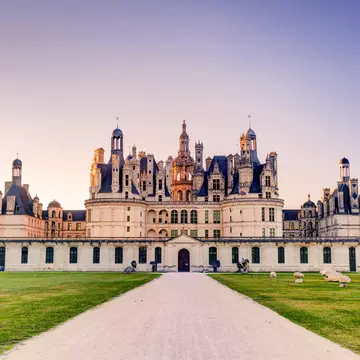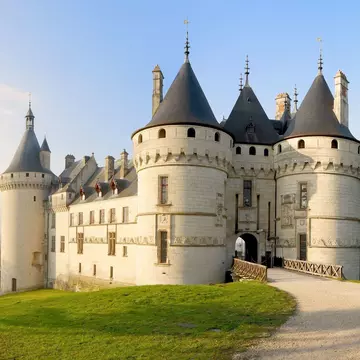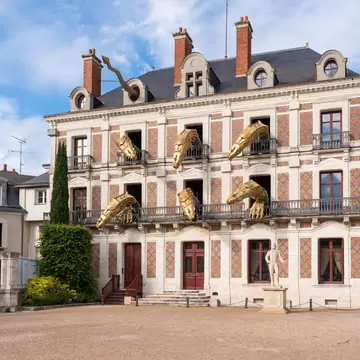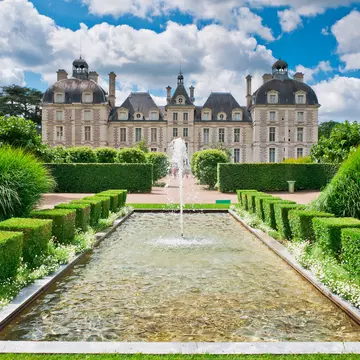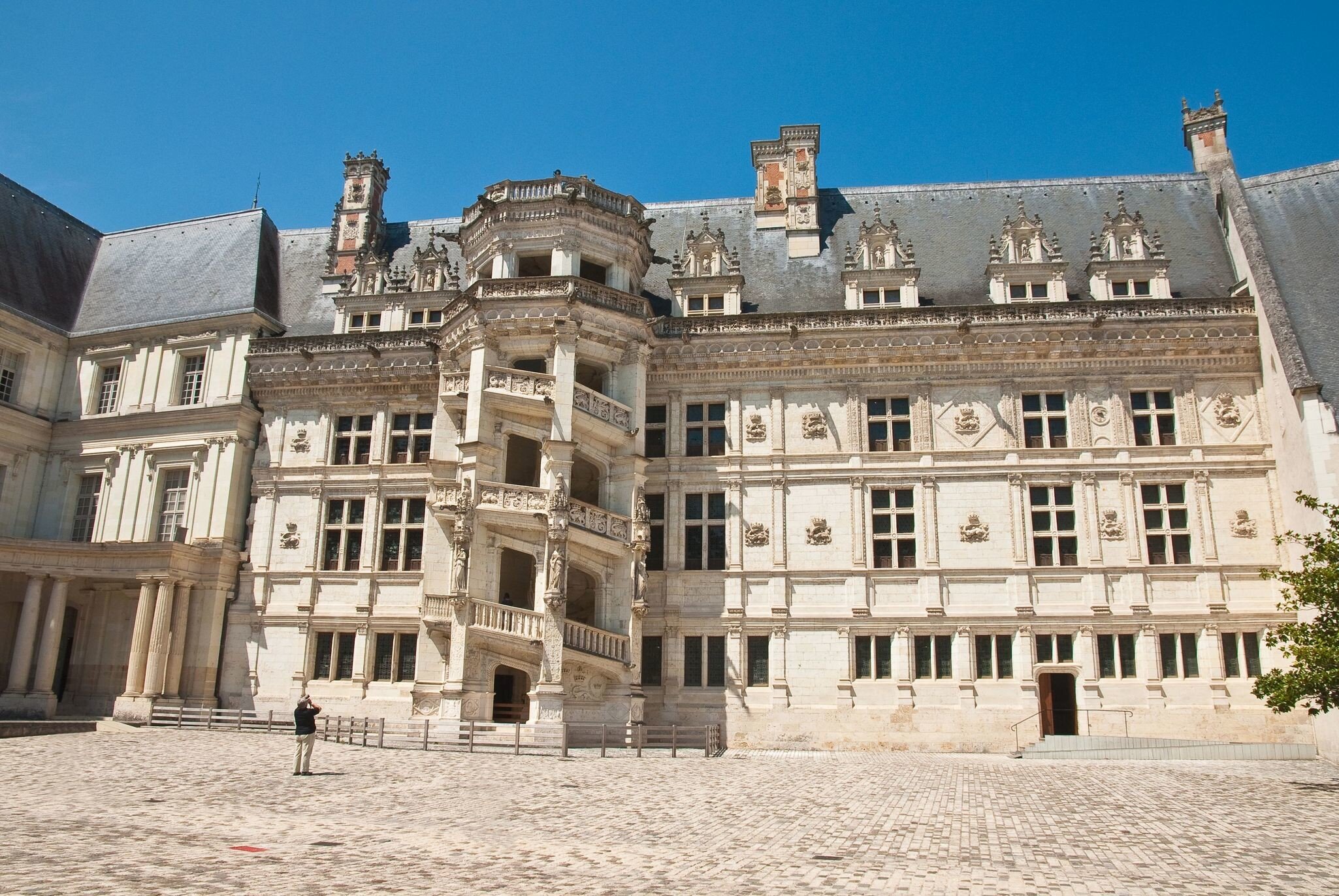
Seven French kings lived in the Blois' royal château (chateaudeblois.fr; adult/child €14.50/7.50), whose four grand wings were built during four distinct periods in French architecture: Gothic (13th century), Flamboyant Gothic (1498–1501), early Renaissance (1515–20) and classical (1630s). You can easily spend a half-day immersing yourself in the château’s dramatic and bloody history and its extraordinary architecture. An informative audioguide costs €3; a HistoPad, offering augmented-reality views, can be picked up for free at the consigne (checked-luggage facility).
The most sumptuous part of the Gothic wing is the richly-painted Estates General Room, from the 13th century. In the Renaissance wing you’ll find the extraordinary spiral loggia staircase, decorated with fierce salamanders and curly Fs, heraldic symbols of François I.
Other highlights include the Queen's Chamber, in which Catherine de Médicis (Henri II’s Machiavellian wife) died in 1589, and the King’s Chamber, the setting for one of the bloodiest episodes in the château’s history. In 1588 Henri III had his arch-rival, the ultra-Catholic Duke Henri I de Guise, murdered by royal bodyguards (the king is said to have hidden behind a tapestry while the dastardly deed was done). He had the duke’s brother, the Cardinal de Guise, killed the next day. The bloodletting of the Wars of Religion continued when Henri III himself was murdered just eight months later by a vengeful friar. Dramatic and very graphic oil paintings illustrate these gruesome events next door in the Council Chamber.
In the Flamboyant Gothic Louis XII wing (look for his heraldic emblem, the porcupine), the Musée des Beaux-Arts (Fine Art Museum) – up the spiral staircase from the State Room – displays 300 16th- to 19th-century paintings, sculptures and tapestries.
Every night from early April to late September, a 45-minute Son et Lumière (adult/child €12/7.50), held in the interior courtyard, brings the château’s history and architecture to life with dramatic lighting and narration.