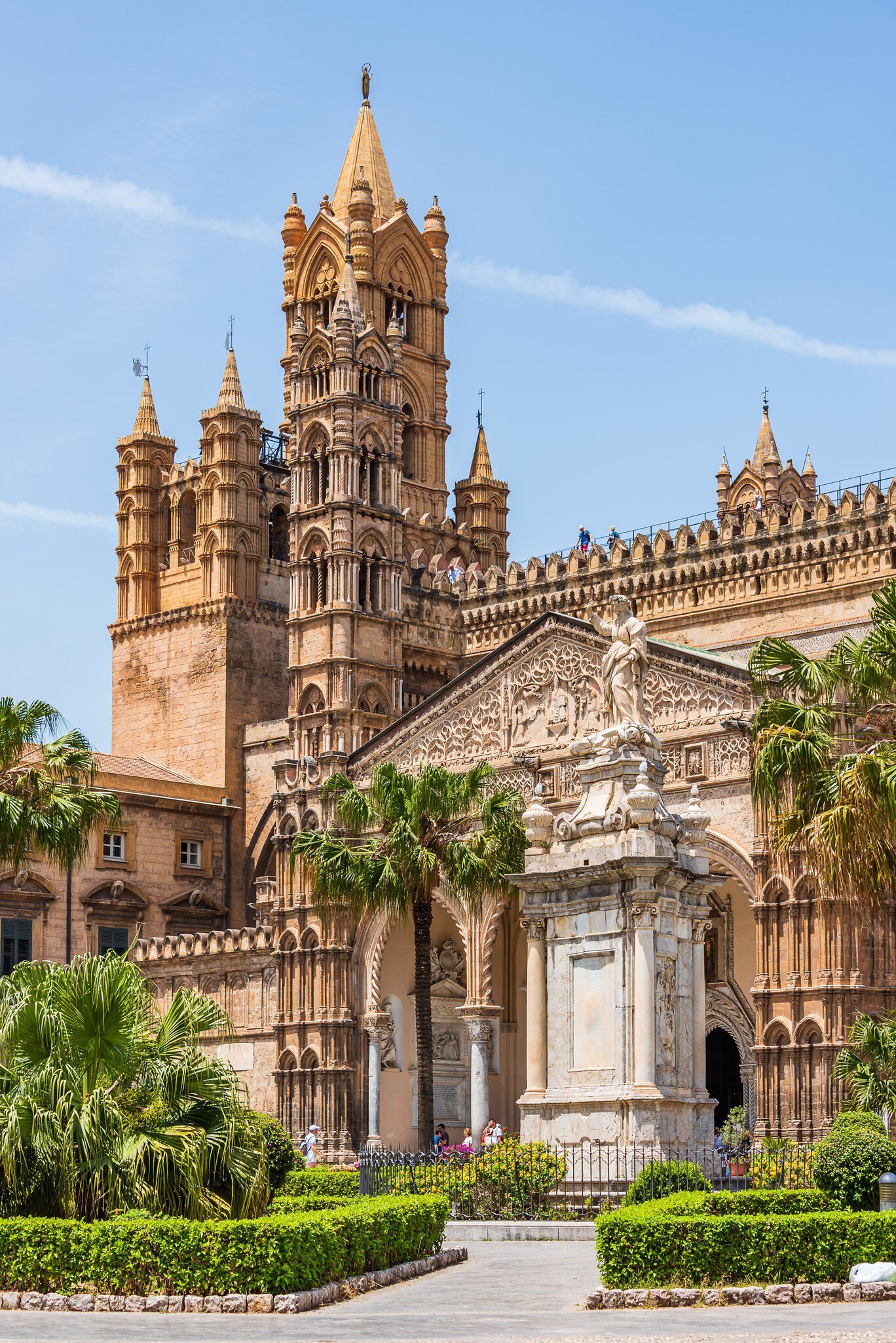
A sensual feast of geometric patterns, ziggurat crenelations, majolica cupolas and blind arches, Palermo's 13th-century cathedral is a larger-than-life example of Sicily's unique Arab-Norman architectural style.
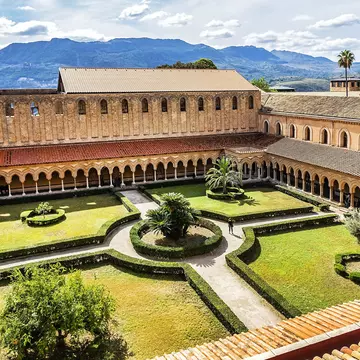
Fronted by lush, beautifully landscaped gardens, and crowned by the city’s most spectacular rooftop, the complex at the western end of main street Via Vittorio Emanuele is as much a summertime hangout zone as a heavyweight historical site.
Seek Out Architectural Milestones
On the cathedral's southern porch, look for a column inscribed with a passage from the Koran – all that remains of the 9th-century mosque on which construction of the cathedral began in 1184.
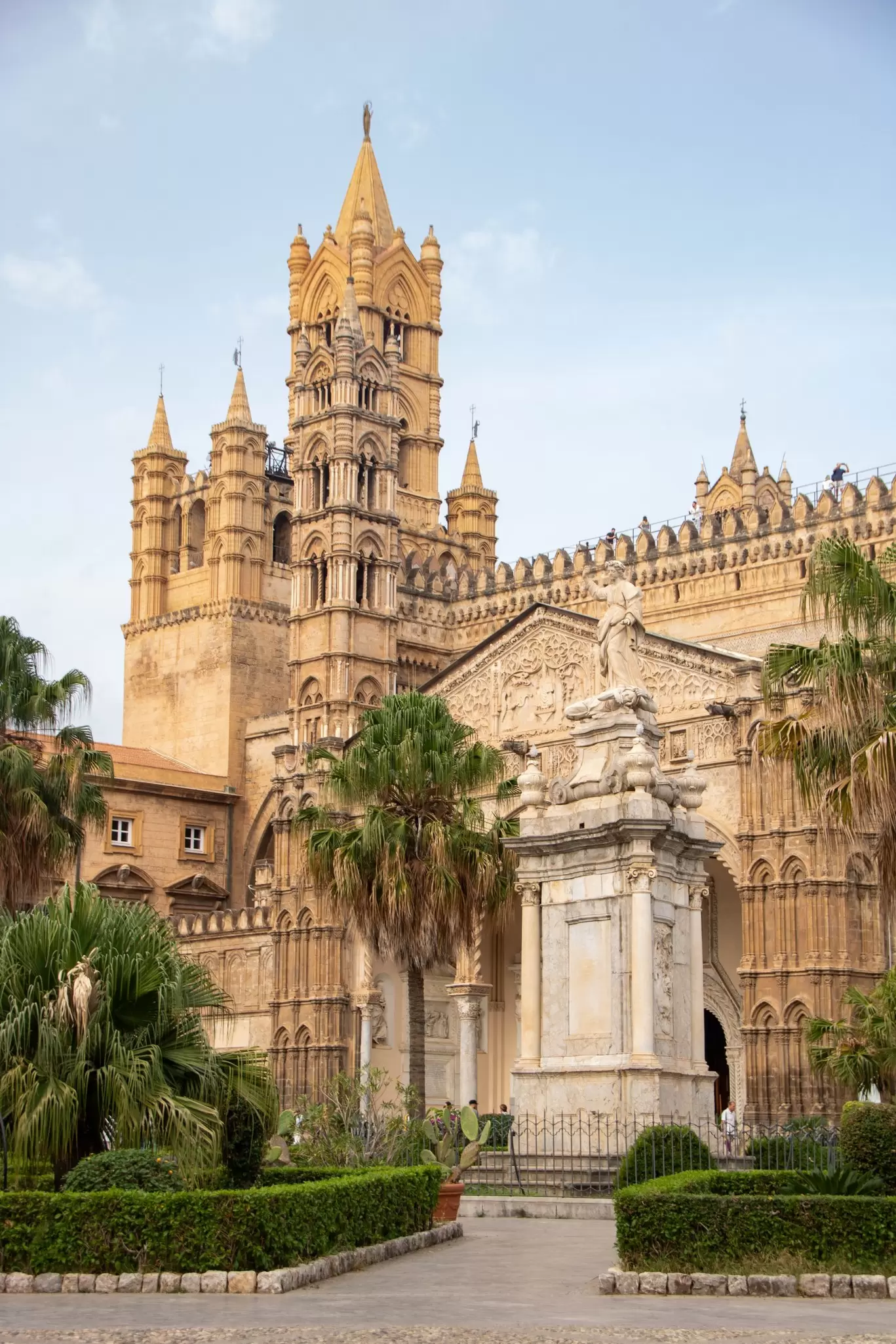
Over time the building has been altered, sometimes with success (as in Antonio Gambara's 15th-century three-arched portico that took 200 years to complete and became a masterpiece of Catalan Gothic architecture), and sometimes not (Ferdinando Fuga's clumsy dome, added between 1781 and 1801).
Pay Respects to Kings & Saints
The cathedral interior is essentially a marble shell safeguarding royal Norman tombs (to the left as you enter) containing two of Sicily's greatest rulers – Roger II and Frederick II of Hohenstaufen – alongside Henry VI and William II. Silver reliquaries preserving a tooth and ashes of the city's beloved patron saint, Santa Rosalia, are venerated in the treasury.
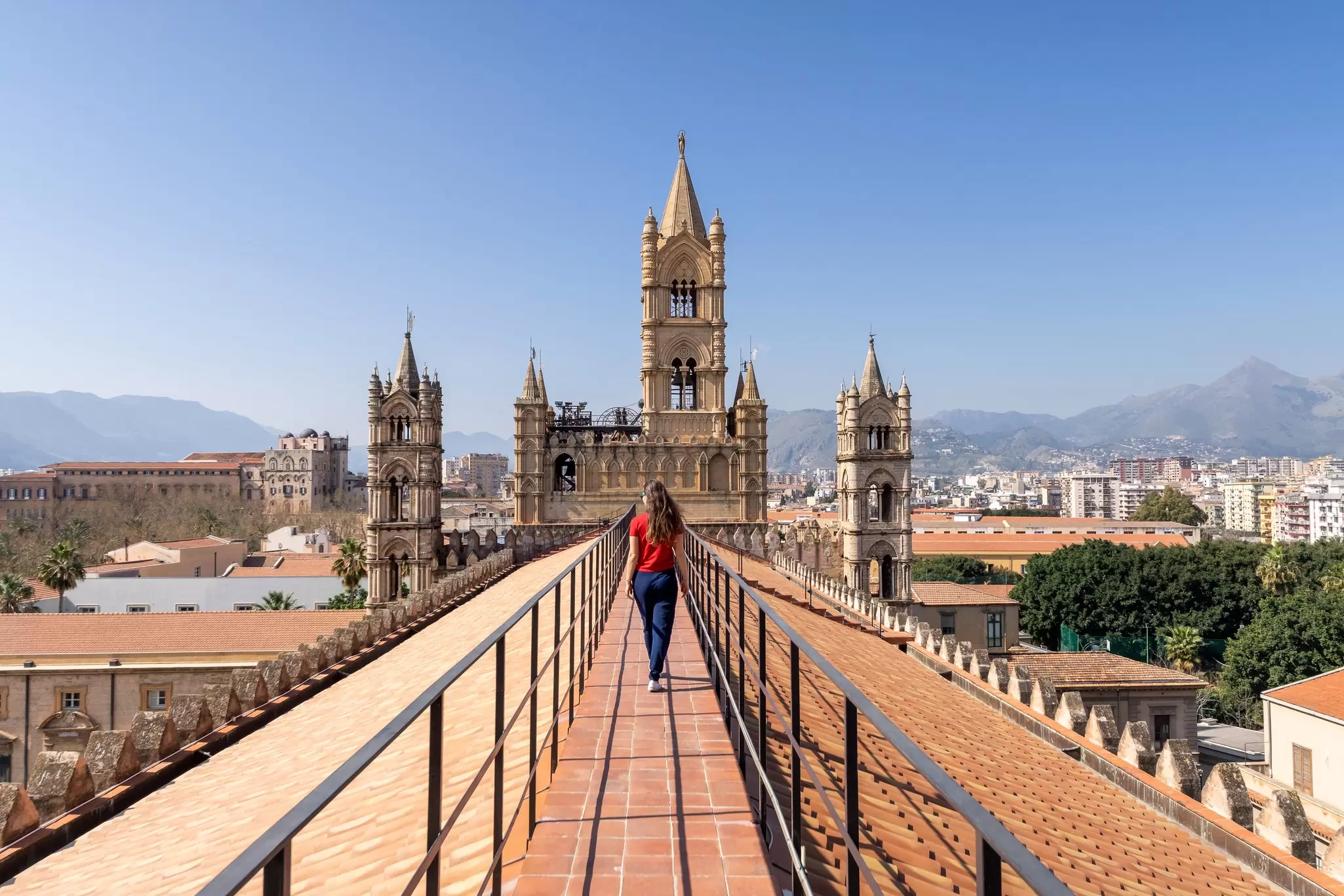
Spiral up to Sunset Heaven
Save the best for last: the cinematic spiral up 110 steep stone steps to the cathedral's expansive roof terraces, with an unmatched city panorama. Visit at the end of the day to savor the setting sun recasting the city in spectacular pink.