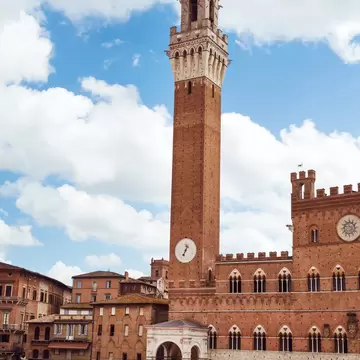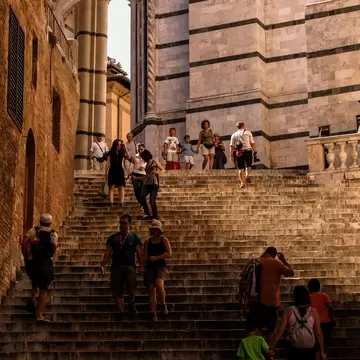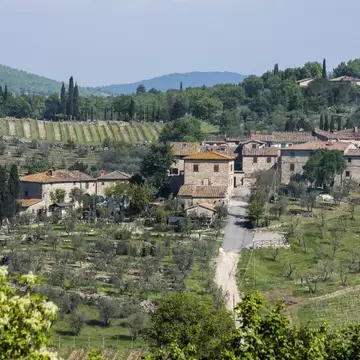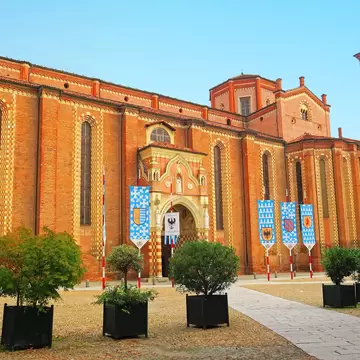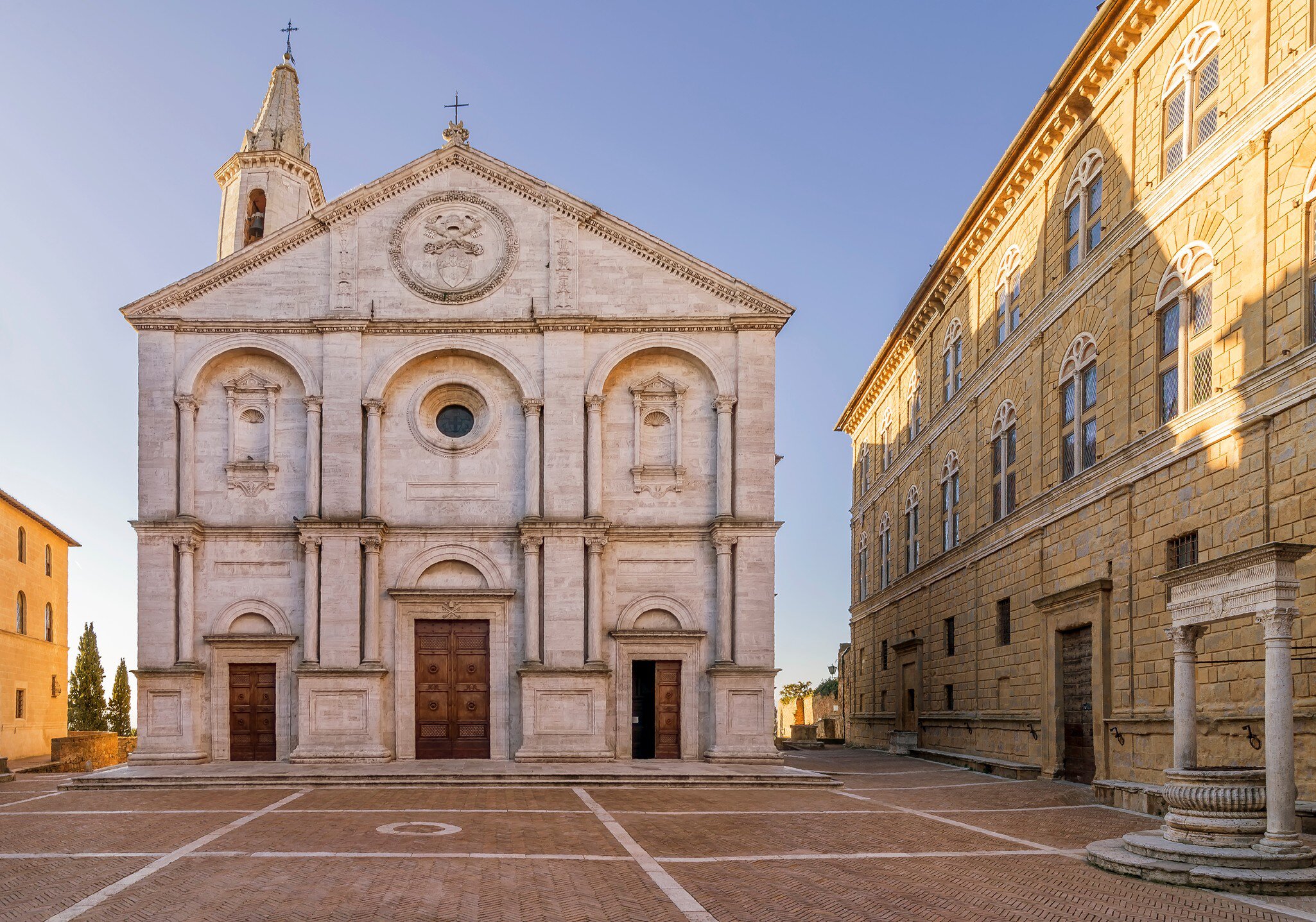
Completed in only three years between 1459 and 1462 by Bernardo Rossellino, the finely carved travertine facades, Ionic stone columns and opulent palaces that compose Pienza’s historic heart are compressed in the small area surrounding Piazza Pio II, steps away from the hamlet’s gate at Porta al Murello.
Cattedrale dell’Assunta
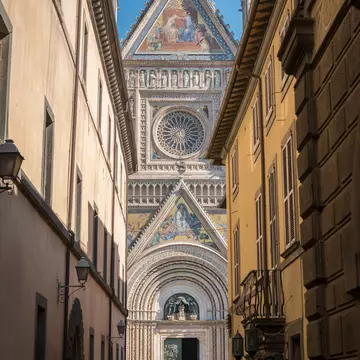
The striking Cattedrale dell’Assunta (the Duomo) dominates the square. Look up to see the coat of arms of the Piccolomini family embedded in the tympanum; look down to notice the grid formed by travertine stripes on the square – twice a year the church’s shadow fills the piazza’s nine rectangles exactly, marking the spring and autumn equinoxes as once indicated on the Julian calendar.
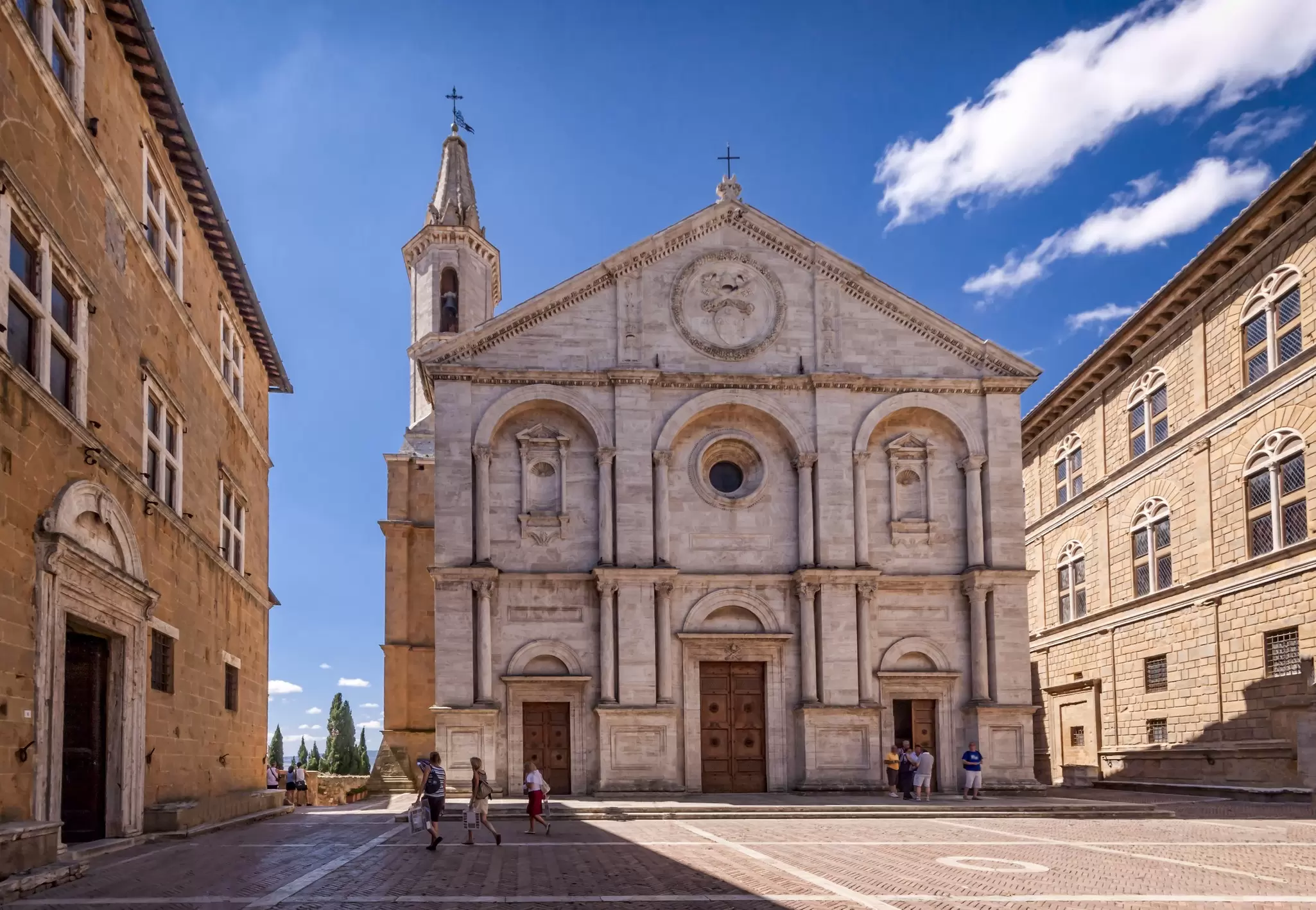
The solemn interior showcases part of Piccolomini's personal art collection, including works by Il Vecchietta and Giovanni di Paolo.
Palazzo Borgia
More art is found in the 11 halls of the Museo Diocesano housed inside Palazzo Borgia (or Palazzo Vescovile), the palace Pope Pius II donated to Cardinal Borgia. Exhibits in a collection of Sienese 14th-century paintings next to rare tapestries, goldwork and sacred vestments dating back to the Middle Ages.
Palazzo Piccolomini
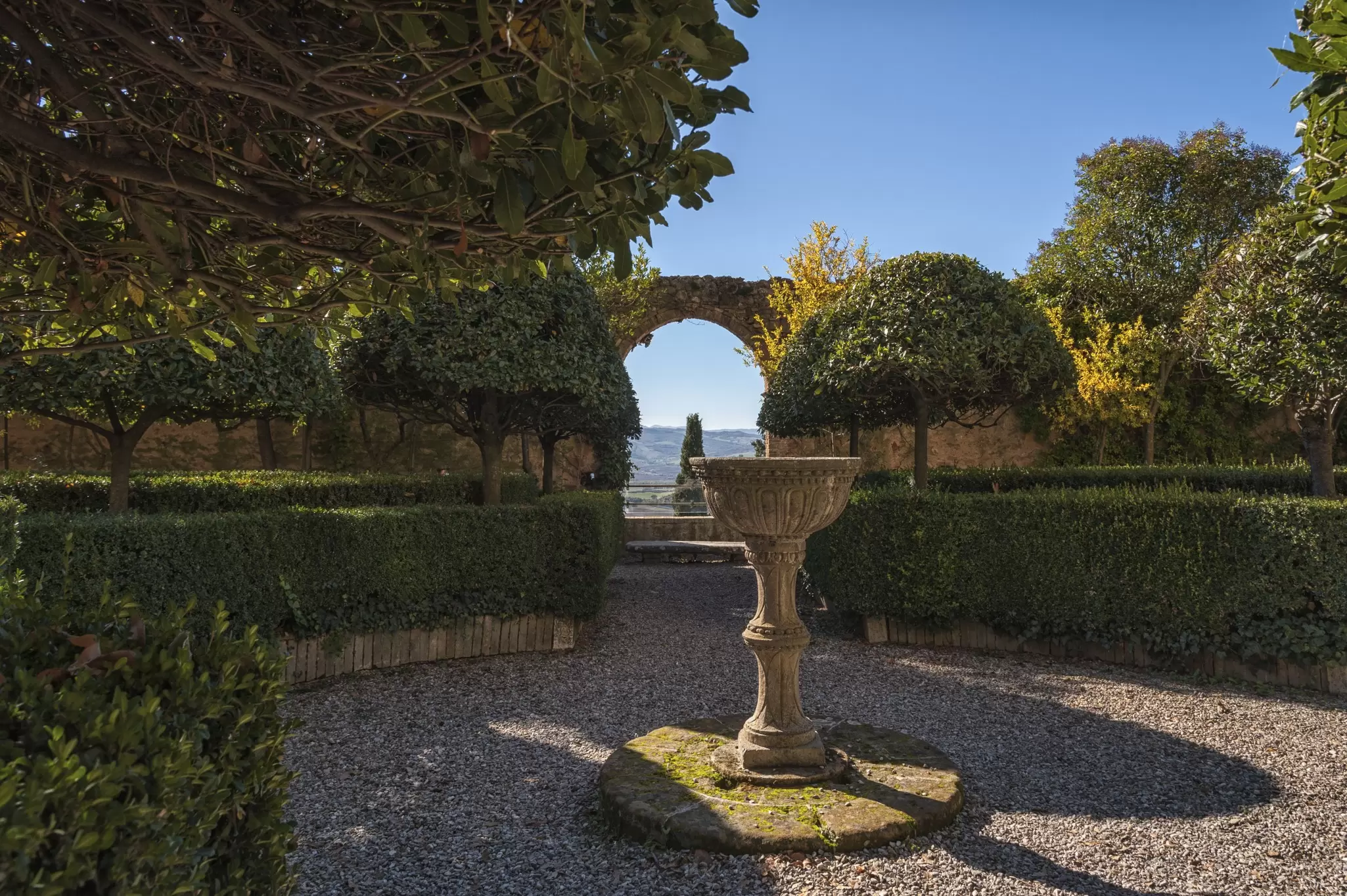
Facing the cathedral is Palazzo Piccolomini, the Pope's former summer residence. It hides an elegant Italian garden with a beautiful view on the Monte Amiata. Designed by architect Bernardo Rossellino as a prime example of Renaissance harmony, the palace still houses the Piccolomini family's original furniture.