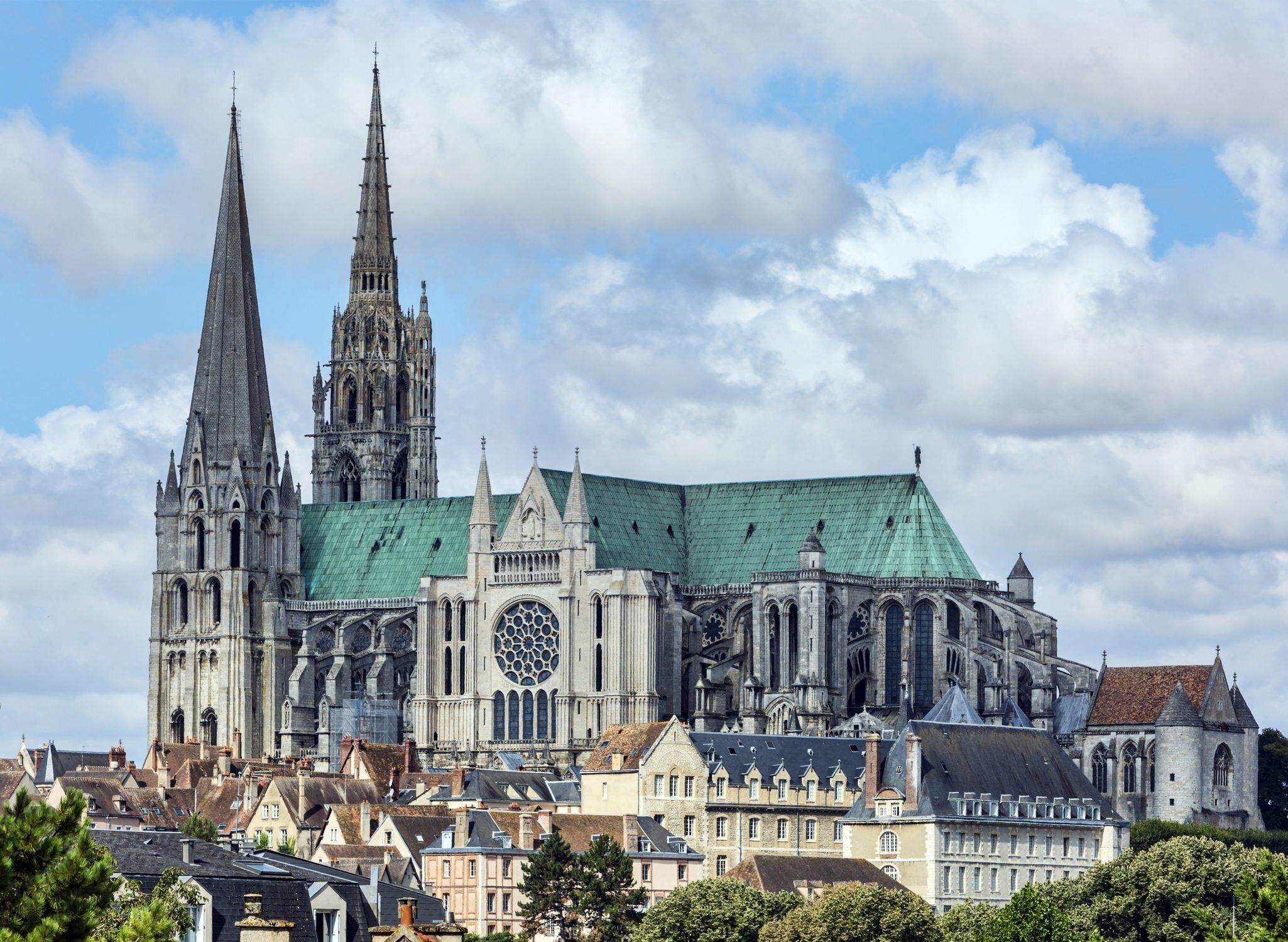
Step off the train in Chartres and the two very different steeples – one Gothic, the other Romanesque – of its glorious 13th-century Cathédrale Notre Dame loom above. Follow them to check out the cathedral’s dazzling, world-renowned blue stained-glass windows, the collection of relics and the dazzling array of carved stone statuary and decor inside and out. Afterwards, explore the town.
History
One of Western civilization’s crowning architectural achievements, the 130m-long Cathédrale Notre Dame de Chartres is renowned for its brilliant-blue stained-glass windows and sacred holy veil. It was built in the Gothic style in the early 13th century (replacing a Romanesque cathedral that had been devastated by fire – along with much of the town – in 1194). Today, it is France’s best-preserved medieval cathedral, having been spared post-medieval modifications, the ravages of war and the Reign of Terror.
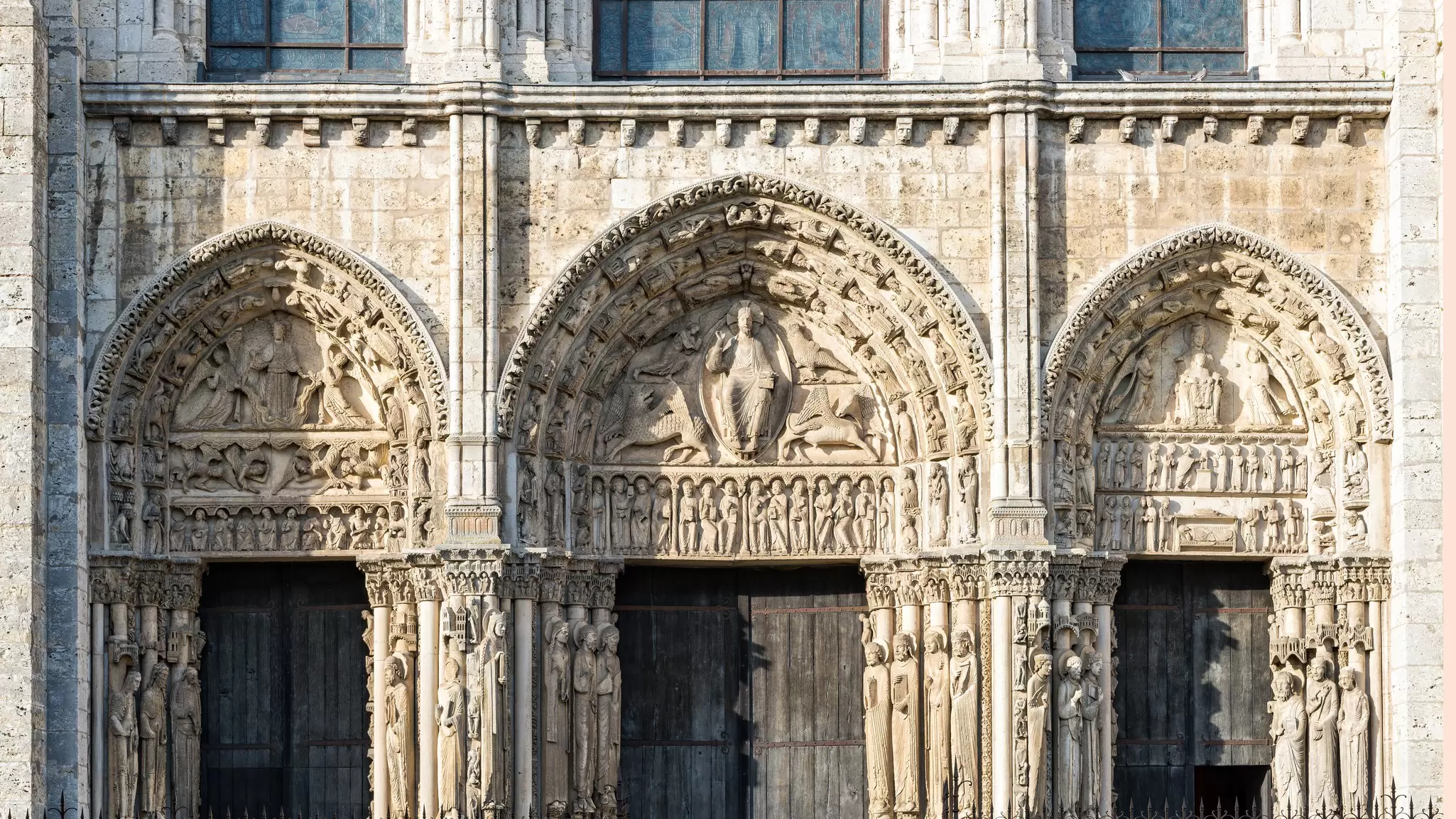
Entrancing Entrances
The cathedral’s west, north and south entrances have superbly ornamented triple portals, but the west entrance, the Portail Royal, is the only one that predates the fire. Carved from 1145 to 1155, its splendid statues, whose features are elongated in the Romanesque style, represent Christ in the center, and the Nativity and the Ascension to the right and left, respectively. The structure’s other main Romanesque feature is the 105m-high Clocher Vieux, also called the Tour Sud (South Tower). Construction began in the 1140s; it's the tallest Romanesque steeple still standing.
Get up High
The climb (200 steps) up the spiral staircase to the north transept is worth the ticket price. Get top-flight views of the three-tiered flying buttresses and the 19th-century copper roof. This seasonal guided tour is only in French.
The Treasury
Closed for nearly a quarter-century, the Treasury reopened in 2024 after a massive, seven-year restoration of the Chapelle St-Piat. The remarkable collection of relics and precious objects includes shell wampums offered as diplomatic gifts in the 17th century by North American tribes. A ticket is required – book yours online or pay at the booth inside the cathedral. The 45-minute guided tours (French only) are excellent
Stained-Glass Windows
The cathedral’s 176 extraordinary stained-glass windows, almost all of which date to the 13th century, form one of the world's most important ensembles of medieval stained glass. The three most exquisite windows, from the mid-12th century, are in the wall above the west entrance and below the rose window. Survivors of the 1194 fire, the windows are revered for the depth and intensity of their tones, famously known as "Chartres blue."
Choir Screen Drama
Turn your back on the windows (!) and behold the carved-stone statuary of the choir screen that presents the life of Mary in 41 scenes. Some capture poignant moments, such as number 28, which shows her holding the lifeless body of her son Jesus.
Mary's Holy Veil
The venerated Saint Voile (Holy Veil) – a yellowish bolt of silk draped over a frame, which is believed to have been worn by the Virgin Mary when she gave birth to Jesus – is displayed in a glass case in the Chapelle du St-Coeur de Marie.
The relic originally formed part of the imperial treasury of Constantinople but was offered to Charlemagne by Empress Irene when the Holy Roman Emperor proposed marriage to her in 802. Charles the Bald presented it to the town in 876; the cathedral was built because the veil survived the 1194 fire.
Deep in the Crypt
The cathedral’s 110m crypt, a tombless Romanesque structure built in 1024 around a 9th-century predecessor, is the largest in France. Tours start at the cathedral-run shop, inside near the west entrance.
