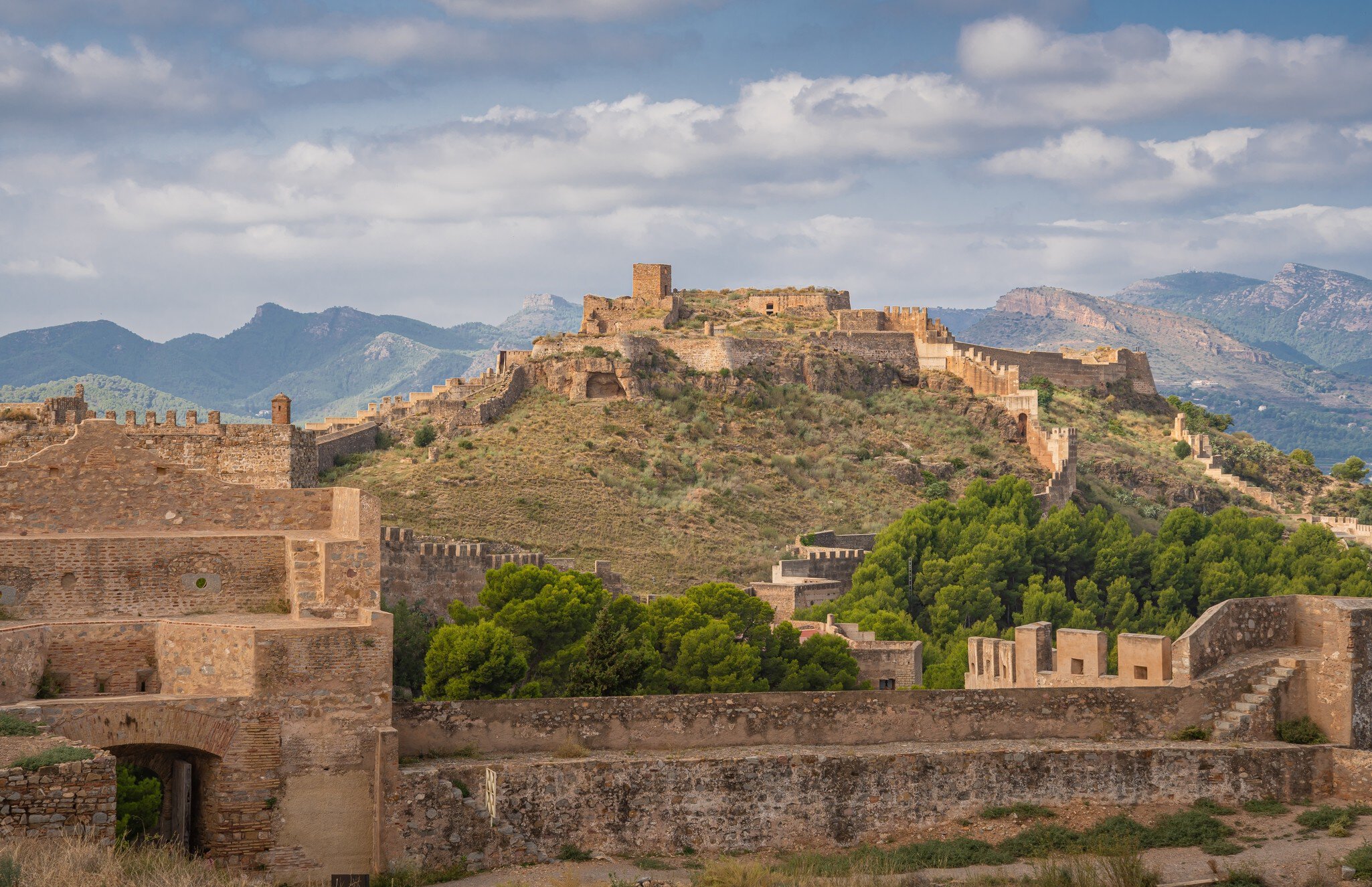
Sagunto's castle is majestically located, with 1.5km of stone walls girdling twin hilltops. Its several mostly ruinous sections speak of many different periods in Sagunto’s very long history. The fortress could do with a bit of a facelift, but at least a new visitor center, finally opened in 2022, is a big help in understanding what you see – and the magnificent vistas along the coast compensate for the lack of interpretative panels or an audio guide.
Sagunto's fabulous history began with a thriving Iberian community (called – infelicitously, with hindsight – Arse) that traded with Greeks and Phoenicians. In 219 BCE Hannibal besieged and destroyed the town, sparking the Second Punic War between Carthage and Rome. Rome won, named the town Saguntum and set about rebuilding it. The Moors gave the castle its current form; it was later embellished by the Christians and fought hard over in the Peninsular War.
Pick up a map-leaflet in the visitor center so you can understand what's what as you explore the castle. The path up from the visitor center leads into the middle of the castle. Turn right for the western hilltop, which was the site of the original Iberian town. What you see here today is mostly later fortifications from the 18th and 19th centuries. The vistas are stirring. An easy-to-miss path leads round the right side of the Penó tower bastion to Plaza del Dos de Mayo, the westernmost part of the castle.
Between the two hilltops, the Anticuario Epigráfico is a collection of engraved stones found on the site. There are Latin funerary and honorary inscriptions and a few stones inscribed in Hebrew from the medieval era. There's some quite interesting information on Roman customs, but it's not in English.
The Roman town and the Moorish citadel were on the eastern hilltop. In the Plaza de Armas, which was also the heart of the medieval Christian castle, the ruins of the Roman forum have been excavated and laid bare. Disappointingly, the columned building on its west side is not Roman! (It was erected in the 20th century as a military museum.) The impressive Almenara gate leads into the area called Plaza de Almenara, which was the citadel in the Moorish period.
Below the castle you can visit the Roman theater. An overzealous restoration has resulted in an enormous new stage and backdrop, and plastic seating, which are great for staging performances, but rather devoid of historical atmosphere.
Car access to the castle is difficult because of a residents' zone, so be prepared to walk up.