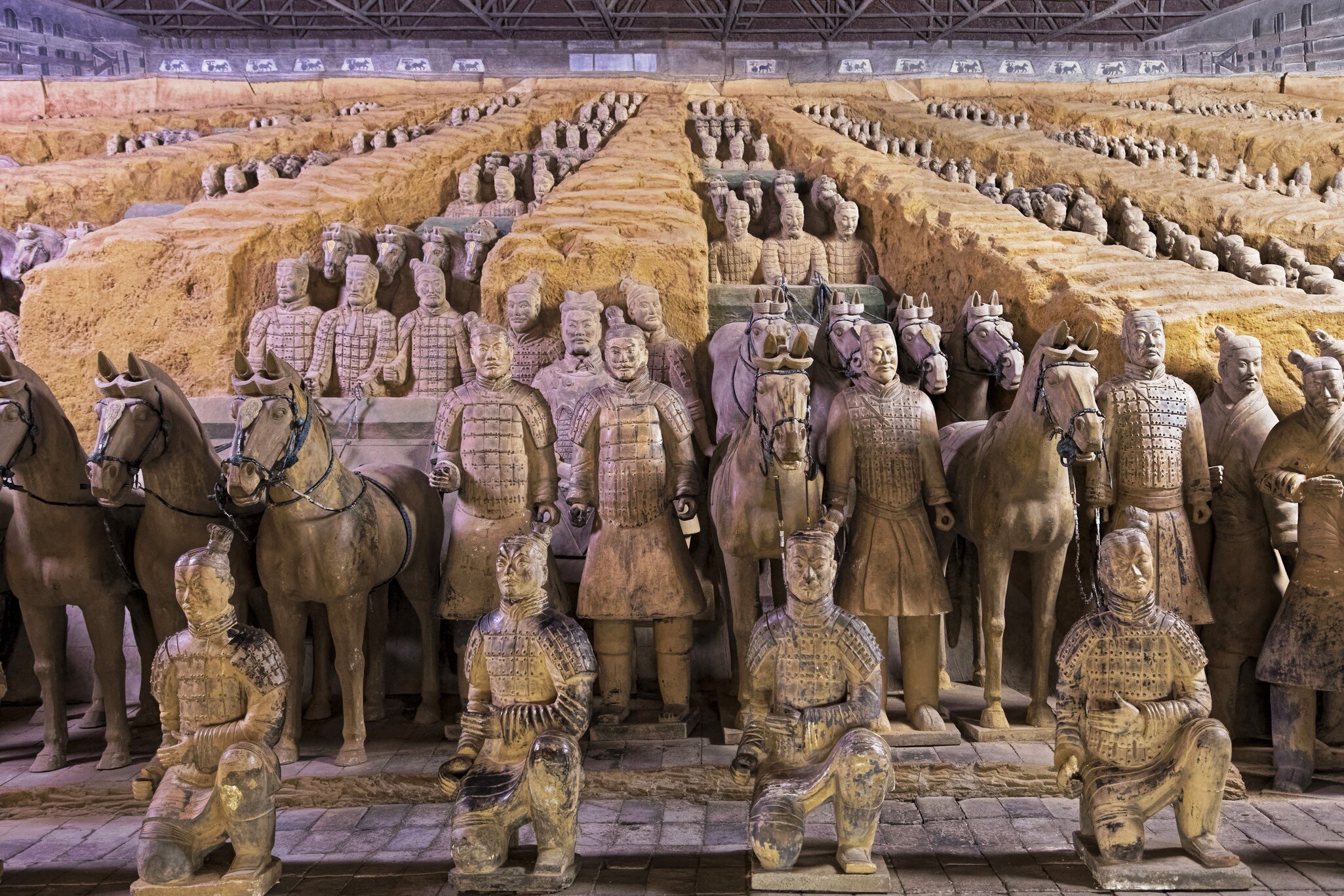
One of the most famous archaeological finds in the world, this subterranean life-size army has silently stood guard over the soul of China's first unifier for more than two millennia. Either Qin Shi Huang was terrified of the vanquished spirits awaiting him in the afterlife or, as most archaeologists believe, he expected his rule to continue in death as it had in life.
Site History
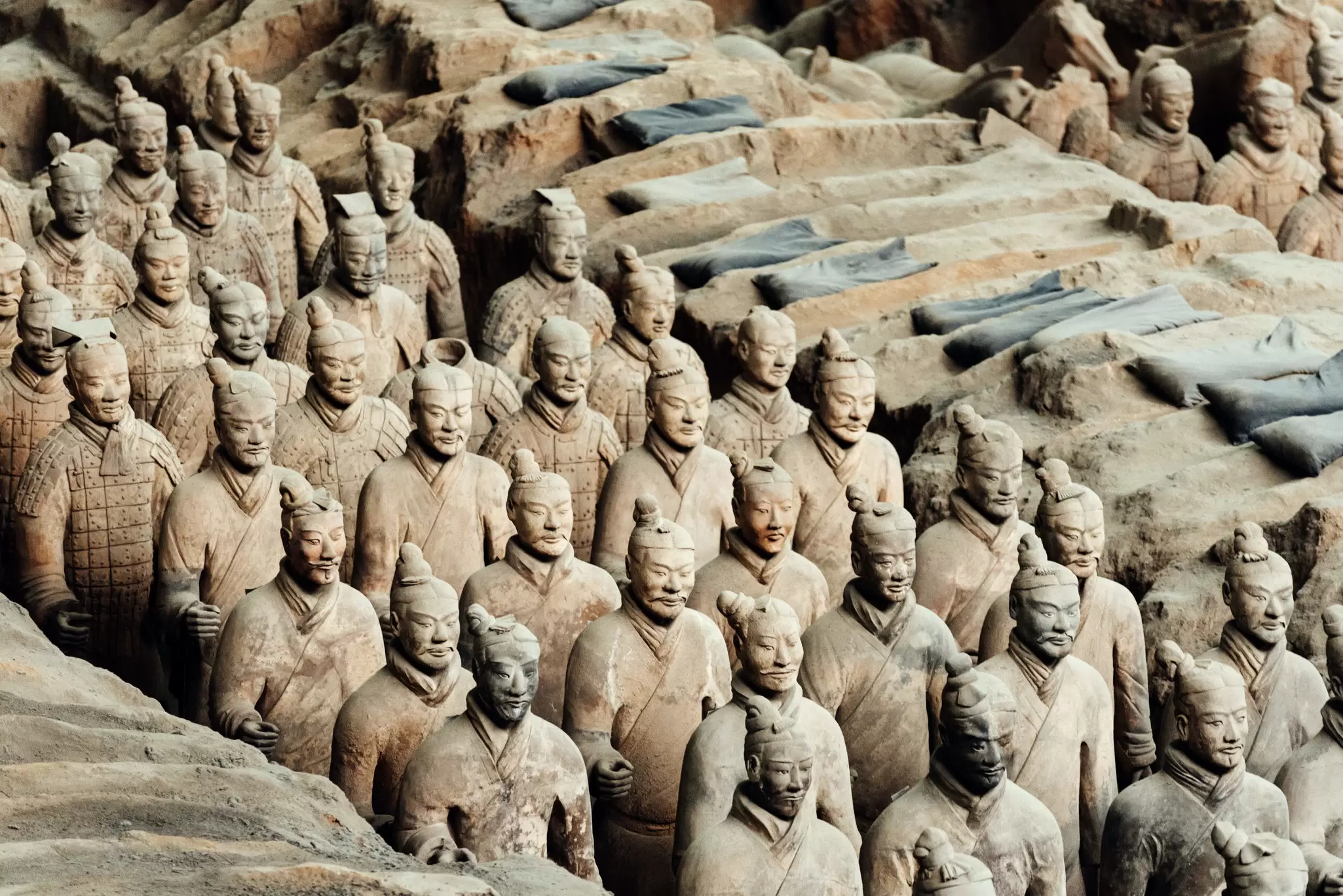
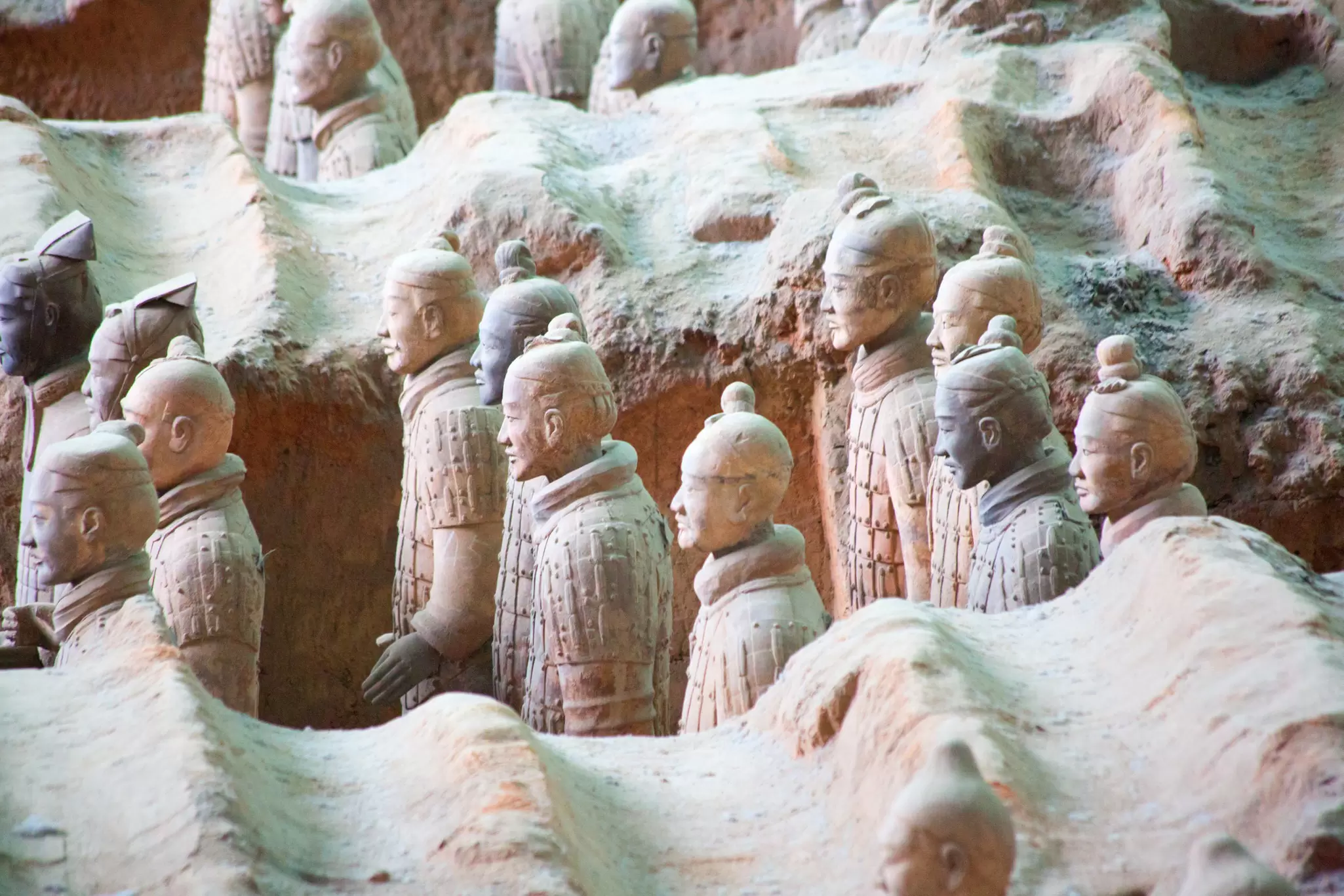
The discovery of the army of warriors was entirely fortuitous. In 1974 local farmers drilling a well uncovered an underground vault that eventually revealed thousands of terracotta soldiers and horses in what appeared to be battle formation. Throughout the years the site became so famous that many of its unusual attributes are now well known; in particular, the fact that no two soldier's faces are alike.
To date, some 2000 warriors and horses have been carefully excavated and meticulously pieced back together. It is still an active excavation site, with an estimated 6000 statues yet to be uncovered.
Together with other incredible finds from the Mausoleum of Qin Shi Huang, the 3rd-century-BCE guardians of the tomb offer remarkable insights into the cultural practices and technological wonders of ancient China.
Pit 3
You can visit the pits in any order, but one approach is to go from 3 to 1, leaving the most impressive pit for a grand finale.
Discovered in 1976, U-shaped Pit 3, is the smallest one at 530 sq meters. From here, 68 human sculptures, four horse sculptures and the remains of a chariot have been excavated. It's believed the pit served as the army headquarters, due to the number of high-ranking officers unearthed.
Pit 2
This L-shaped pit, also discovered in 1976, contains around 1300 warriors and horses, but most of them are either in pieces or covered by centuries of mud awaiting excavation – you'll likely see archaeologists at work as you circulate the pit.
Off to the side of the building, in glass cases, you can examine five of the reconstructed soldiers up close: a kneeling archer, a standing archer, a soldier in the cavalry and his horse, a mid-ranking officer and a general. The level of detail is extraordinary: the expressions, hairstyles, armor and even the tread on the footwear are all unique.
Pit 1
Housed in a building the size of an aircraft hangar, Pit 1 was the first to be discovered and is the largest, at 62m wide and 230m long. It's believed that some 6000 warriors and horses are buried here, of which around 1000 have currently been excavated.
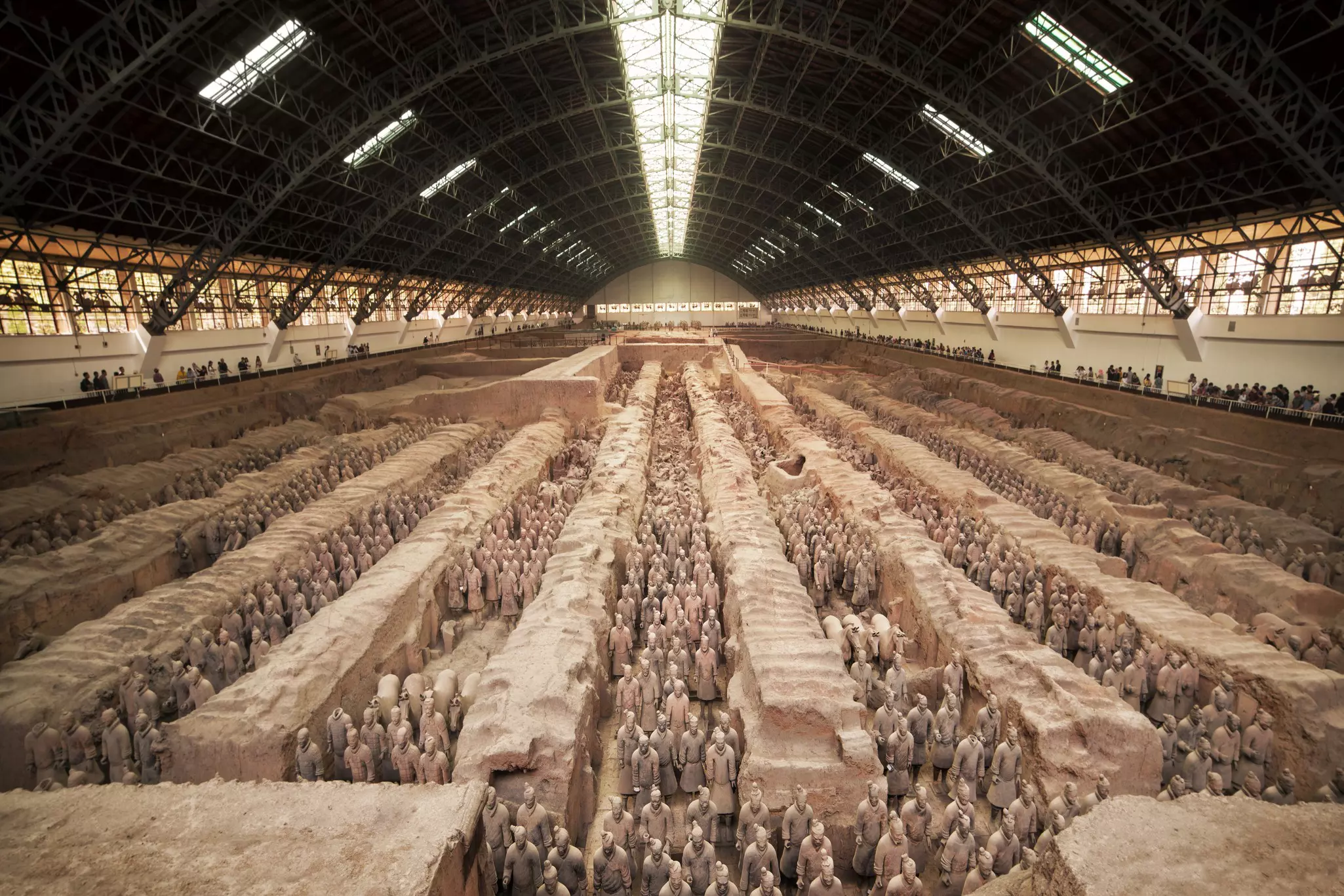
The vanguard of three rows of archers (both crossbow and longbow) is followed by the main force of soldiers, who originally held spears, swords, dagger-axes and other long-shaft weapons. The infantry were accompanied by 35 chariots, though these, made of wood, have long since disintegrated. A variety of weaponry, including bronze swords, spears, crossbows, arrows and billhooks, has also been discovered here.
Exhibition Hall
Before leaving, take a look at what's showing at the site's Exhibition Hall. Displays here focus in more detail on the warriors and the wider site of the Mausoleum of Qin Shi Huang. You may get to see other terracotta statues and some of the 50,000 other cultural relics, including stone armor and elegant bronze cranes.
There is also a cinema at the site, but at the time of research it was out of commission.