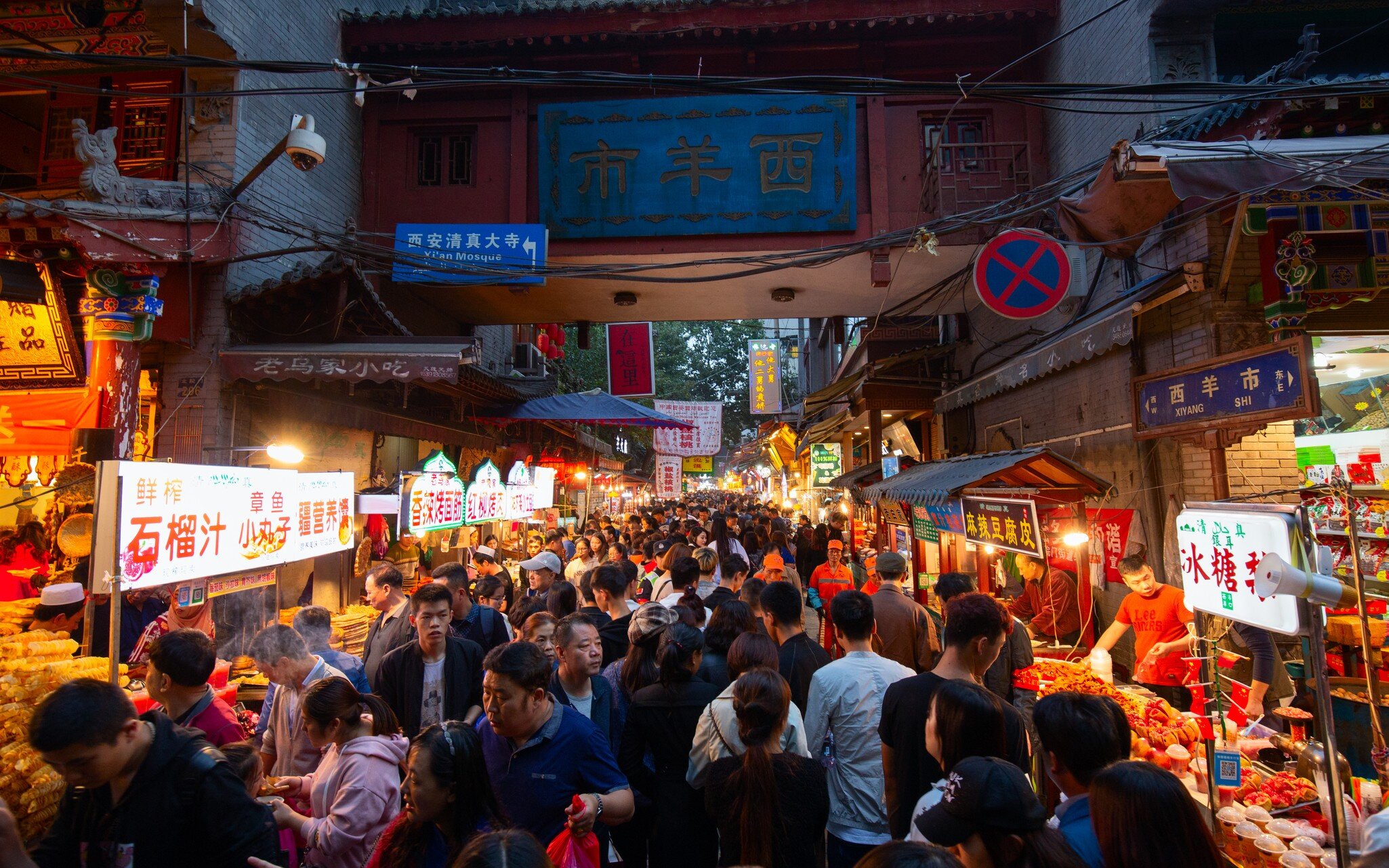
The backstreets leading north from the Drum Tower have been home to the city’s Hui community (non-Uyghur Chinese Muslims) for centuries, perhaps as far back as the Ming dynasty or further still. It’s an atmospheric place to wander, shop and dine on tasty food, especially so at night. The main drag is Beiyuanmen but also be sure to wander down Huajue Lane (化觉巷, Huàjué Xiàng), an alley lined with stalls selling embroidered Muslim skullcaps, silk pajamas, Mao memorabilia and other touristy souvenirs. Other good streets to stroll down are Xiyang Shi, Dapi Yuan and Damaishi Jie, which runs north off Xi Dajie through an interesting Islamic food market.
The quarter's spiritual heart is the Great Mosque (清真大寺, Qīngzhēn Dàsì), a gorgeous blend of traditional Chinese and Islamic architecture. Though the mosque was founded in 742 CE, the present buildings are mostly Ming and Qing. The central minaret is cleverly designed as a stumpy pagoda, while the main Prayer Hall (off limits to visitors) shelters beneath a turquoise tiled roof. Look out for the beautifully engraved stelae mounted on the backs of stone bìxì (赑屃), mythical tortoise-like creatures usually found in Confucian temples.
An oasis of tranquillity in a busy area of the city, the mosque's beauty is enhanced in spring, when white and pink magnolia trees in its courtyards burst into bloom.