May 7, 202610 min read
Ultimate Weekend in Scottsdale, ArizonaNov 3, 2026
9 MIN READ

Writer
Rock formations in Chiricahua National Park. Lauren Keith/Lonely Planet
Writer
Lonely Planet may earn a commission from affiliate links on our site. All recommendations and reviews reflect our own independent opinions.
In October 2026, the US designated its 64th national park, one that relatively few travelers have heard of. Pronounced "cheery-cow-ah," Chiricahua, previously a national monument, is the fourth national park in Arizona. In 2025, it saw just 70,000 visitors – by comparison, the Grand Canyon, at the other end of the state in northern Arizona, welcomes that many people in under 6 days.
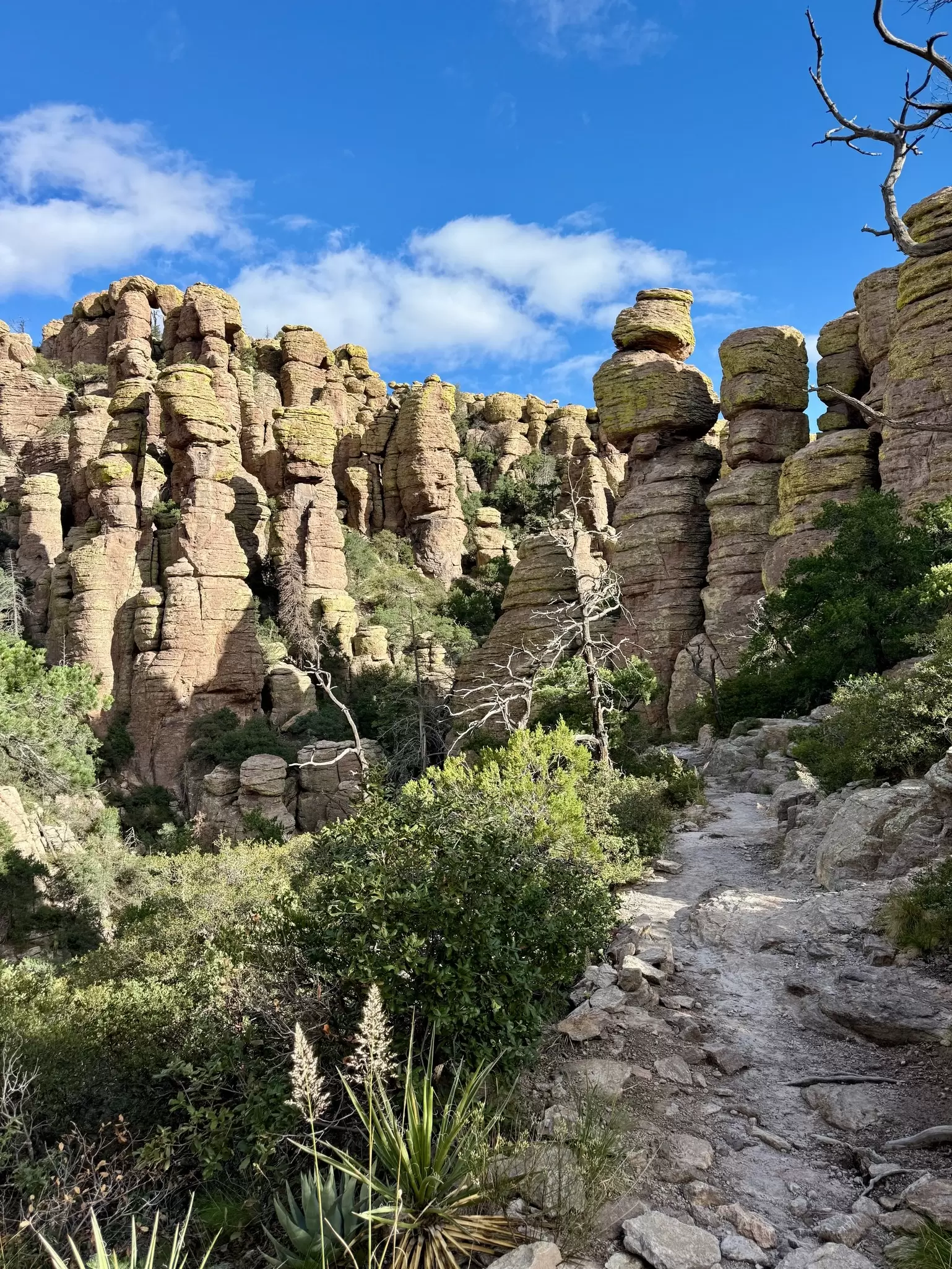
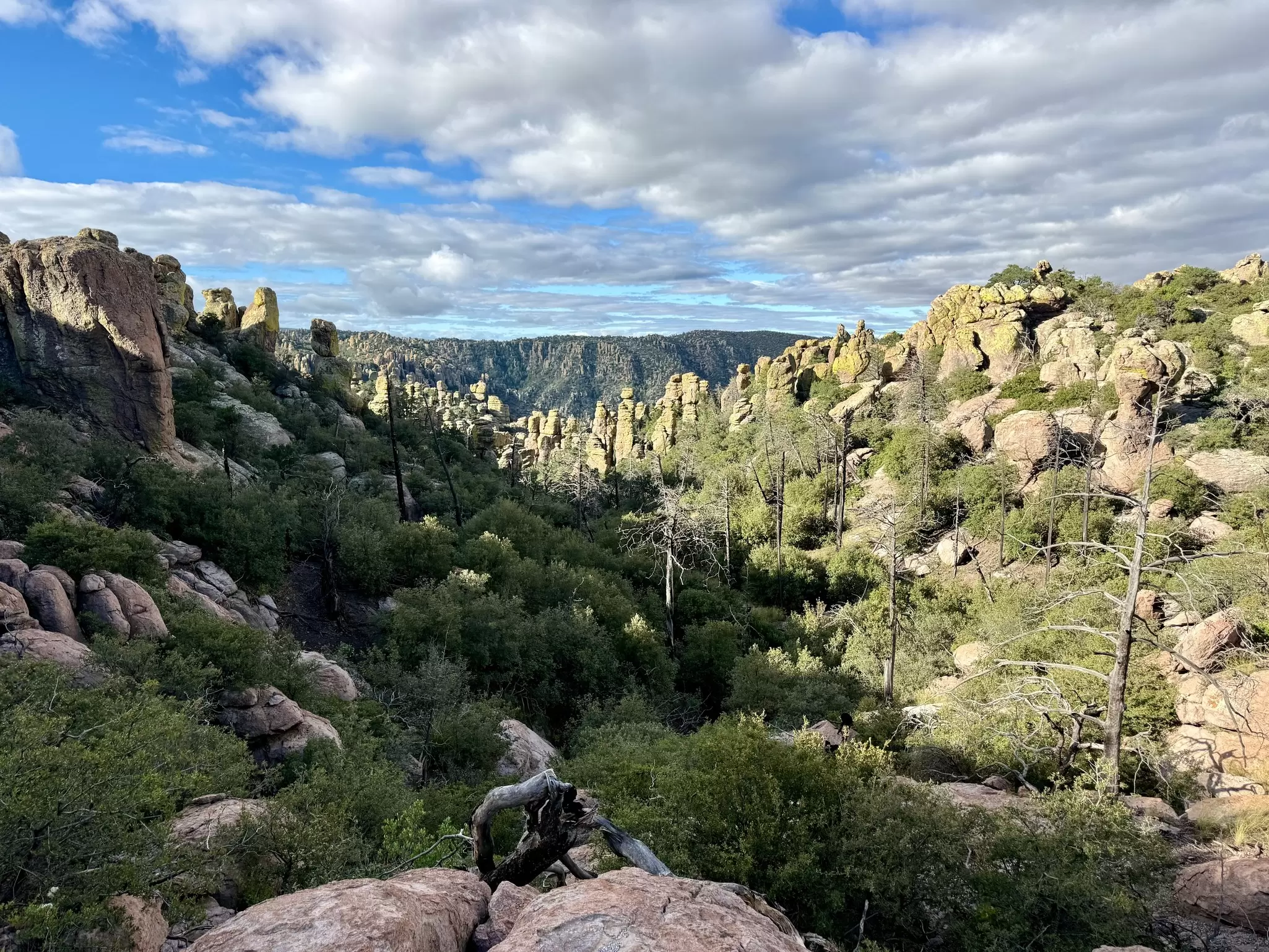
Nicknamed the “Wonderland of Rocks,” Chiricahua is a surreal landscape of towering volcanic pinnacles, enormous balanced boulders and narrow canyons. The strange formations are the result of a volcanic eruption some 27 million years ago, which blanketed the region in ash and debris that eventually hardened into rhyolite tuff. Erosion has since carved the rock into columns, spires and gravity-defying sculptures, some reaching hundreds of feet into the sky. Hiking trails wind among the formations, while an 8-mile scenic drive climbs through oak and pine forest to panoramic views at 6870ft-high Massai Point.
Spring (April and May) and fall (October and November) are the best times to visit, with generally mild temperatures and plenty of sunshine for good hiking. Spring can bring out colorful wildflower blooms. March is another good month weather-wise, but it’s also the park’s busiest, particularly during school vacations.
Unlike the desert landscapes elsewhere in southern Arizona, Chiricahua’s higher elevations make summer more manageable than you might think, although temperatures can still climb into the 90°Fs (32°C+). Afternoon thunderstorms during the summer monsoon season bring the risk of lightning and flash floods, so start hikes early. Winter can be beautiful, with occasional snow dusting the rock formations, but freezing temperatures and icy trails are possible. No matter the season, bring layers: conditions can be much cooler at the park’s higher elevations.
Set aside at least one full day to explore Chiricahua. Although it’s one of the smaller national parks, you’ll want time to get out of the car and wander among the extraordinary rock formations. In a day, you can cruise the 8-mile Bonita Canyon Scenic Drive, enjoy the views from Massai Point and tackle the 3.3-mile Echo Canyon Loop, one of the park’s most rewarding hikes.
Keen hikers could easily fill a second day exploring more of Chiricahua’s 17 miles of trails, including the challenging Heart of Rocks Loop, which leads past some of the most unusual formations. Staying overnight also lets you enjoy the park’s spectacular night skies. For most visitors, one full day is enough to experience the highlights.
You need your own wheels to visit Chiricahua, which lies about 120 miles southeast of Tucson, home to the nearest major airport. The closest gateway town is Willcox, about 36 miles northwest of the park, and there’s no public transportation or rideshare service.
If you’re planning a longer hike, consider riding the park’s free seasonal hiker shuttle, which typically runs on selected weekends in the cooler months. It departs from Faraway Ranch at 9am and drops hikers at Echo Canyon or Massai Point, letting you walk 5.7 to 9 miles back to your vehicle instead of retracing your steps. Seats are first-come, first-served – check the NPS calendar to see if it’s running. Cell service is limited, so download offline maps in advance.
If you have time for only one hike in Chiricahua, make it the Echo Canyon Loop Trail. This 3.3-mile route takes you right into the heart of the park’s extraordinary landscape, weaving among the teetering rhyolite rock stacks. The highlight is the Grottoes, a series of natural rock chambers and passageways. They’re just half a mile from the Echo Canyon trailhead, making this a good option if you’re short on time. The full loop combines the Echo Canyon, Hailstone and Ed Riggs Trails, passing through pine forest and open hillsides with sweeping views – hike counterclockwise to enjoy the best of them. Allow 2 to 4 hours.
The most adventurous hike in Chiricahua takes you deep into this landscape of whimsically shaped rock formations that wouldn’t look out of place in a Dr Seuss book. Many have adorable names, including Duck on a Rock and Punch and Judy. Reaching the 1.1-mile Heart of Rocks Loop requires a strenuous hike of about 7.5 miles round trip from the Echo Canyon trailhead, with more than 1000ft of elevation change. Allow 4 to 6 hours and carry plenty of water.
You don’t have to be an enthusiastic hiker to appreciate Chiricahua’s remarkable scenery. The paved Bonita Canyon Scenic Drive winds 8 miles from the park entrance to Massai Point, climbing through oak, cypress and pine forest, with pullouts offering glimpses of the rock formations along the way. The road is narrow, and trailers and vehicles longer than 24ft are prohibited beyond Bonita Canyon Campground.
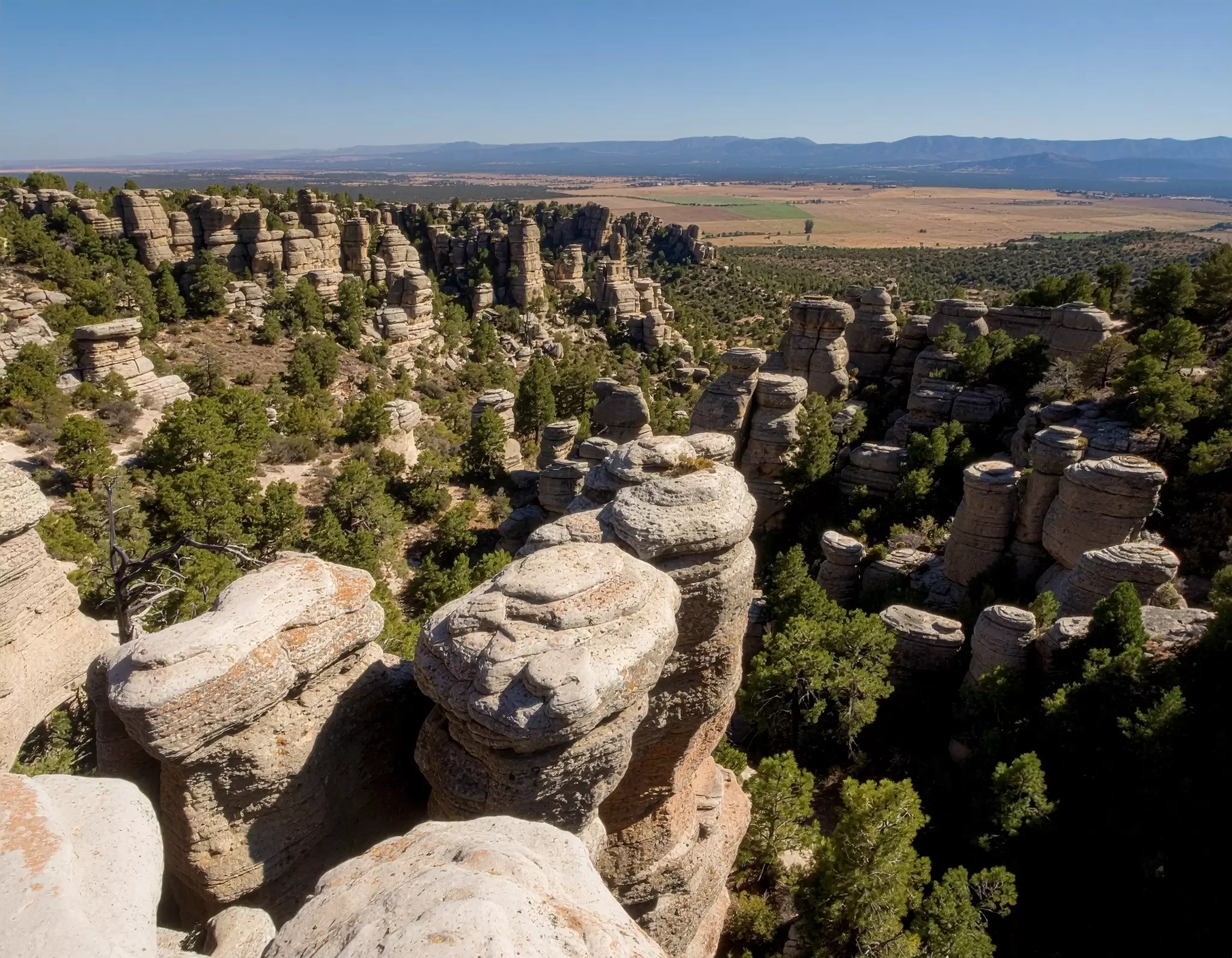
At 6870ft, Massai Point provides some of the park’s most spectacular scenery, with thousands of stone spires rising from the surrounding slopes like a petrified army. Beyond them, mountains and valleys stretch toward the horizon, revealing the dramatic contrast between Chiricahua’s forested highlands and the desert grasslands below. The half-mile Massai Point Nature Trail loops around the overlook, with interpretive exhibits explaining the area’s volcanic origins.
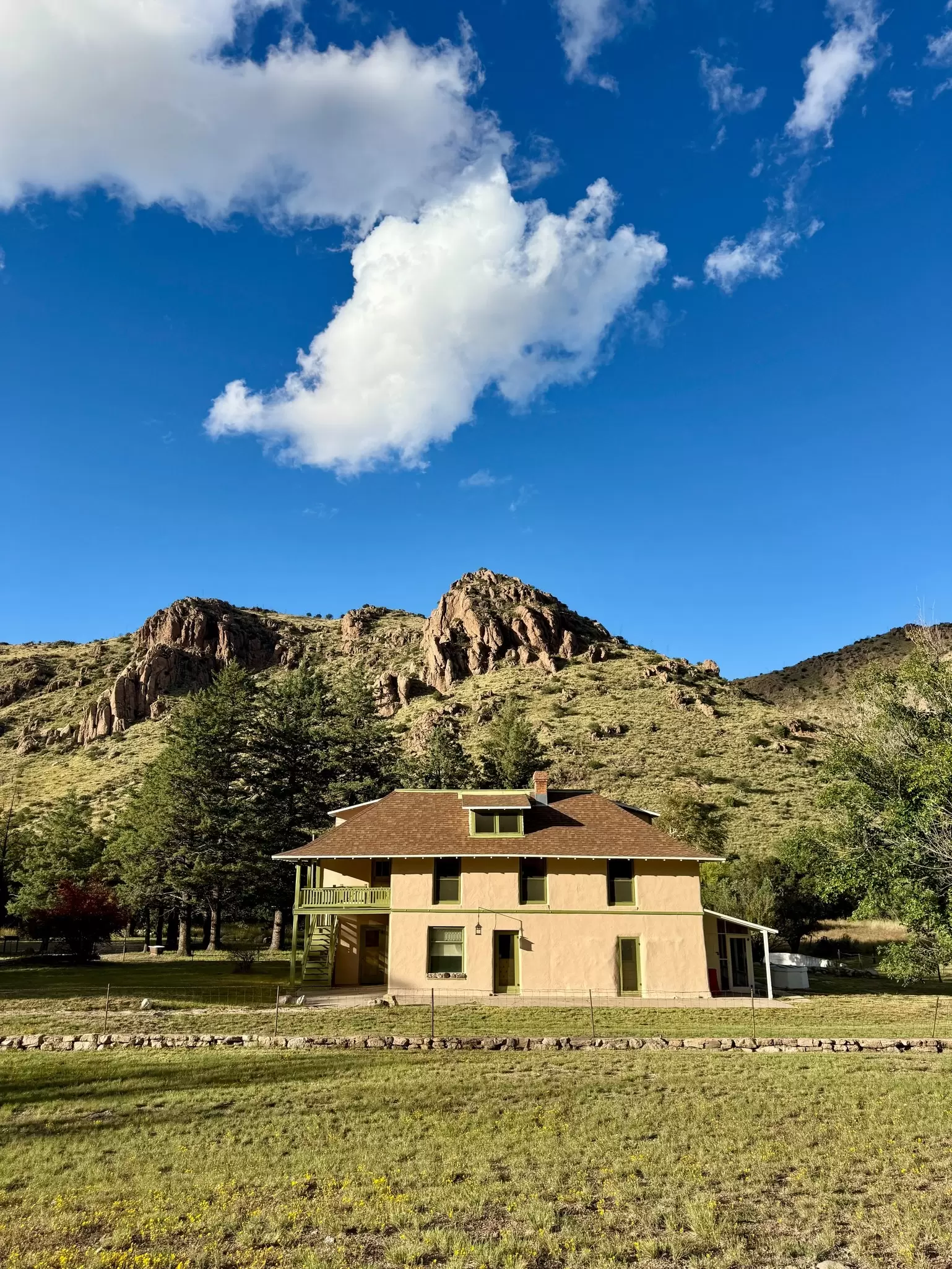
Near the park entrance, Faraway Ranch has a more complicated history than its peaceful setting suggests. In 1885–86, Buffalo Soldiers (Black troops serving in segregated US Army regiments) were stationed in Bonita Canyon during a campaign against the Chiricahua Apache, who were subsequently forcibly removed from their ancestral homeland. In December 1886, Swedish immigrant Emma Peterson bought a cabin on the site. She married Neil Erickson the following month, and together they established a homestead.
Their daughters later turned the property into a guest ranch that welcomed intrepid travelers. Lillian Erickson and her husband, Ed Riggs, helped develop the area’s earliest hiking trails and campaigned to have the land protected as a national monument, a designation Chiricahua received in 1924. During the Great Depression, Riggs also supervised trail construction for the Civilian Conservation Corps (CCC), which established a camp on the property.
Today, a short walk from the Faraway Ranch parking area leads to the historic house, surrounded by outbuildings and remnants of its working-ranch past. The house is generally closed, but occasional ranger-supervised open houses offer a peek inside. For a longer walk, follow the Silver Spur Meadow Trail through the historic district, past the Stafford Cabin (built in 1880 and one of the oldest surviving log cabins in southeastern Arizona) and the stone fireplaces added to the former CCC mess hall when the property operated as a guest ranch.
Chiricahua’s spectacular geology isn’t its only natural attraction. Rising above the surrounding grasslands, the Chiricahua Mountains form a “sky island,” where changes in elevation create habitats that support an astonishing variety of wildlife. Black bears, mountain lions and bobcats roam the mountains, though you’re much more likely to spot Coues’ white-tailed deer, javelinas or a band of curious white-nosed coatis, relatives of the raccoon with long, ringed tails.
Bird-watchers are particularly spoiled. More than 200 species have been documented in the park, including Mexican jays, acorn woodpeckers and canyon wrens, and migratory birds passing through southeastern Arizona add to the diversity. The easy, paved 0.2-mile Bonita Creek Loop is one of the best places to spot wildlife, particularly in the early morning. Nearby Silver Spur Meadow is another good option, especially for coatis, which often forage in groups during fall and winter.
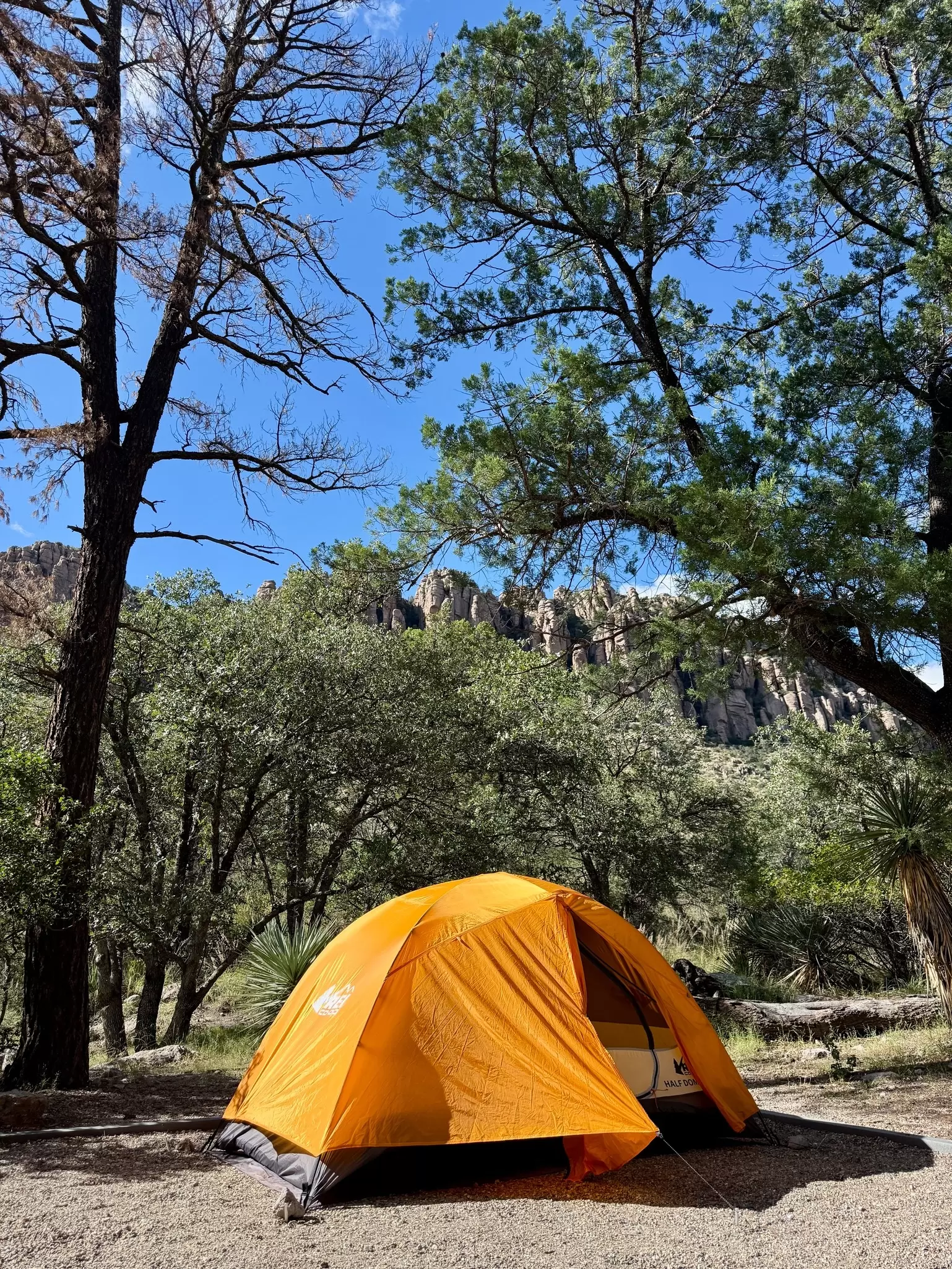
One of my favorite outdoor activities requires zero athleticism: sleeping in a tent under a blanket of stars. Chiricahua is an unbelievably beautiful place for it. Tucked among the trees with “organ pipe” rock formations as a distant backdrop, the 23-site Bonita Canyon Campground feels more intimate than those in many other national parks. Several of its sites are better suited to tents than RVs, a welcome change from the enormous vehicles that dominate so many campgrounds. Staying in the park after dark makes you feel like you’ve been let in on a secret after-hours visit, and the Milky Way certainly isn’t shy about dancing across the heavens. Before Chiricahua became a national park, it was designated as an International Dark Sky Park in 2021.
Book your site as early as possible on recreation.gov. Even before Chiricahua was redesignated a national park, sites often sold out weeks in advance in spring and fall.
If you can’t snag a campsite or don’t feel like pitching a tent, head to Willcox. It’s a workaday town on Interstate 10 with a compact but cute downtown and several wine-tasting rooms. The surrounding Willcox American Viticultural Area (AVA) is one of three in Arizona, and the region produces most of the state’s wine grapes. Arizona Sunset Inn & Suites is your best bet: a smartly renovated roadside motel that includes a cooked breakfast.
Chiricahua is one of those rare national parks where exploring costs nothing: admission, parking and even the seasonal hiker shuttle are free. Your main expenses are getting there and spending the night, whether camping or staying in nearby Willcox. Bring your own food and a full tank of gas because there are no restaurants or gas stations in the park.
National park entrance and parking: free
Bonita Canyon Campground: $25 per night
Basic motel in Willcox: from $65 per night
Wine-tasting flight in Willcox: $10–15
If you have an extra half day, combine your visit to Chiricahua with Fort Bowie National Historic Site, which tells the turbulent history of the 19th-century Apache Wars. Established in 1862 to secure the strategically important Apache Pass, the fort became a center of US military operations against the Chiricahua Apache, including followers of Cochise and Geronimo. A 3-mile round-trip hike leads past the ruins of a stagecoach station, an old cemetery and Apache Spring before reaching the crumbling fort buildings. Access from Hwy 186 is via an 8-mile unpaved road, so check conditions with rangers at Chiricahua before setting out.
Book your United States trip with Lonely Planet Journeys
See United States how it's meant to be seen
Accommodations, activities and ground transportation all taken care of, so you can focus on the fun part. Tell us what your dream trip to United States looks like, and our local experts will build it from scratch. Or start with one of our itineraries and make it your own.

Explore related stories


