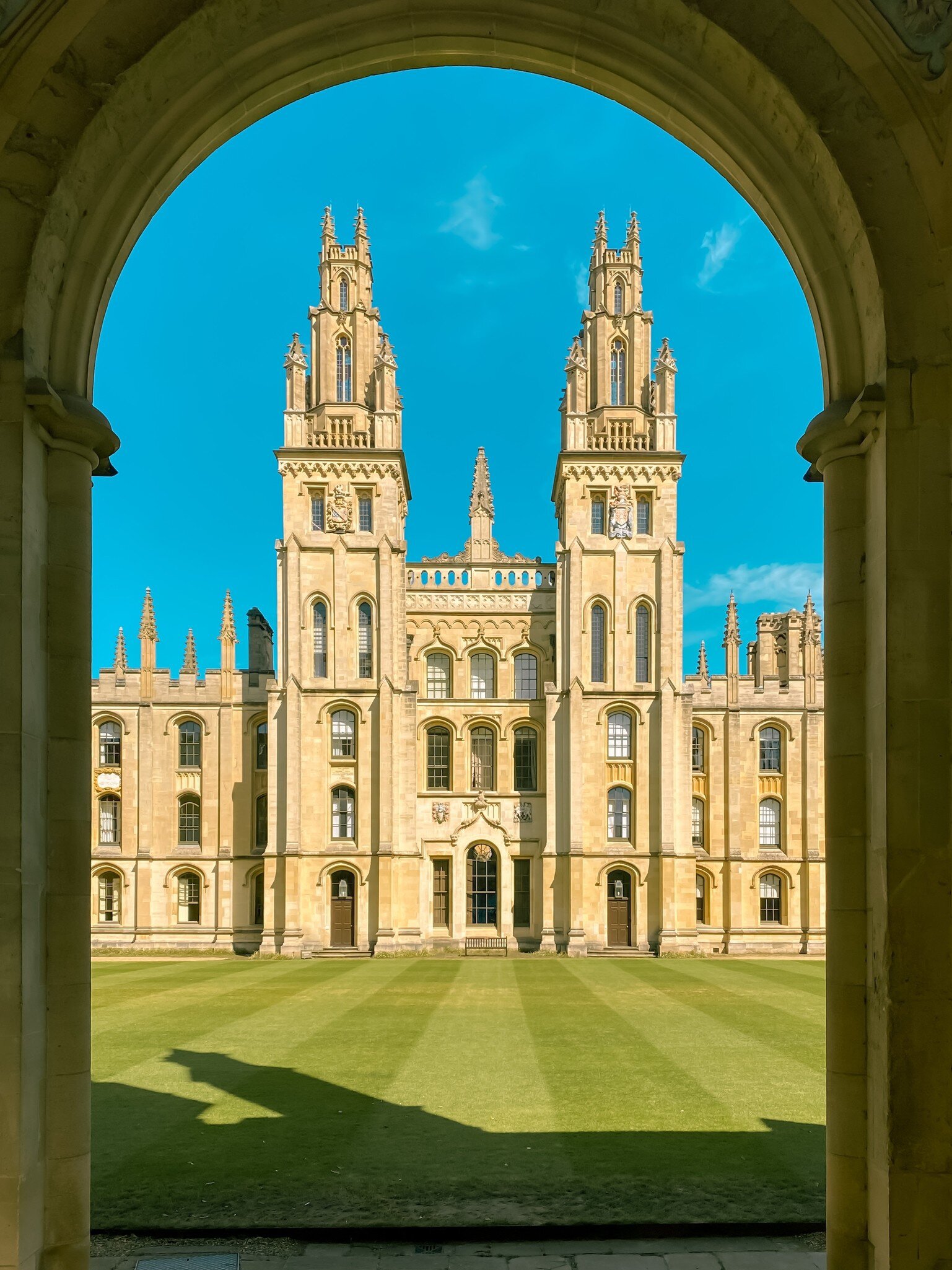
The oldest university in Britain and the English-speaking world was founded in the 11th century, and by the 13th century, it had taken shape as an association of independent colleges.
It's the University of Oxford's (ox.ac.uk) medieval institutions – many still in their original buildings – as well as shared university resources, such as the magnificent Bodleian Library and world-class Ashmolean Museum, that attract tourists. Many colleges are free to visit, but some sights charge entry.
The Colleges
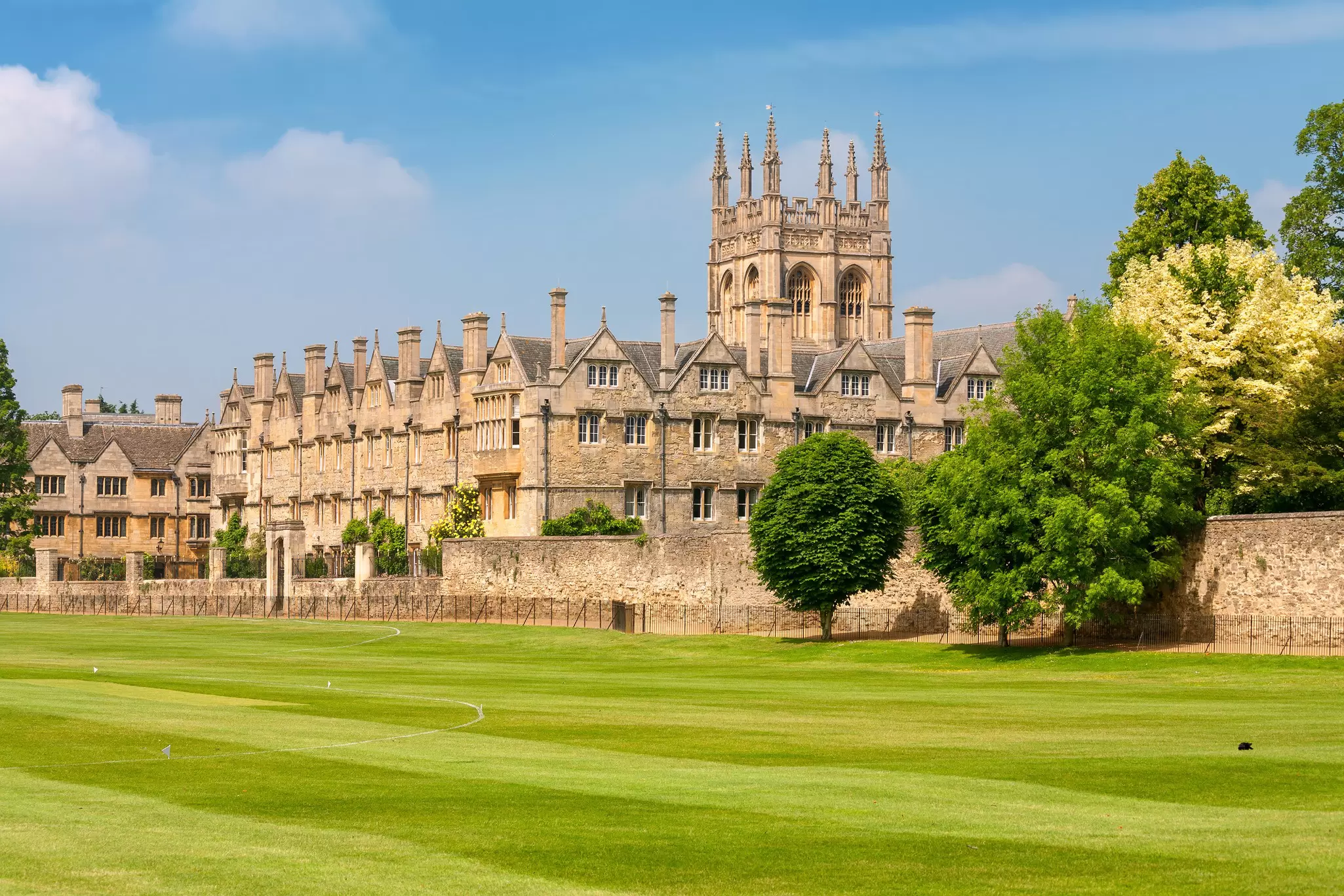
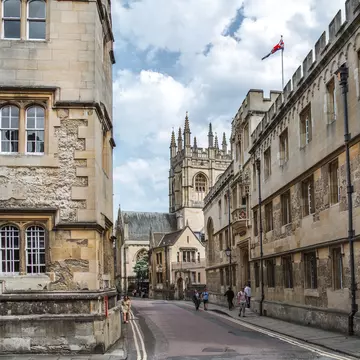
The university has 38 colleges, but not all can be visited and those that can usually charge a fee and restrict access to specific areas. Also, with visiting hours varying seasonally, it's best to check online before arriving. The two oldest colleges, Merton and Balliol, date to the second half of the 13th century. Merton is home to the university’s first quad (quadrangle courtyard) and the charming 14th-century Mob Quad and is very popular with Middle-earth fans coming to see its medieval library, where JRR Tolkien wrote much of The Lord of the Rings.
Balliol is the oldest Oxford college, and though its current buildings largely date from the 19th century, the scorch marks on the huge Gothic doors between the inner and outer quads are reportedly from the public burning of three Protestant bishops, including the Archbishop of Canterbury, in 1556.
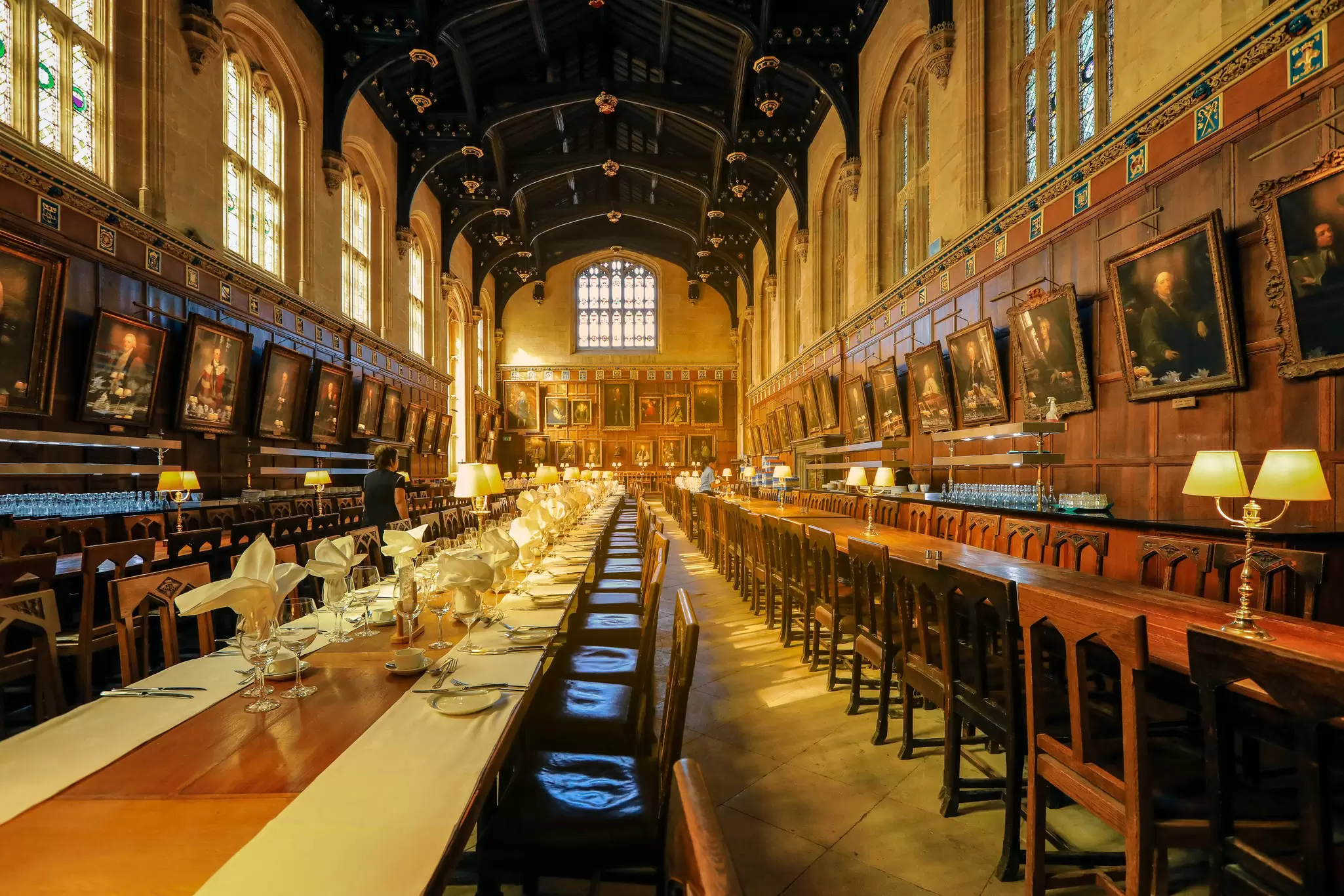
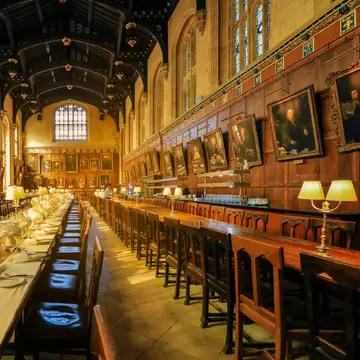
For heritage and sheer grandeur, the quintessential Oxford college, Christ Church, tops most visitors lists. Its centerpiece, the dramatic Great Hall, inspired the Hogwarts dining room in the Harry Potter films, and it's also home to Oxford’s largest quad, overlooked by a Sir Christopher Wren tower, a gallery of Renaissance masterpieces and its very own 12th-century cathedral.
To glimpse what Oxford’s colleges looked like during the Middle Ages, check out the historic buildings of New College. The buildings of All Souls College mostly date from its foundation in 1438, except for a series of pseudo-Gothic towers by Nicholas Hawksmoor and a beautiful Wren sundial. This is a graduate college, where entrants have to first top the university’s finals and then sit what is said to be the hardest entrance exam in the world. Exeter College’s 19th-century French-Gothic chapel displays former student William Morris’s tapestry, The Adoration of the Magi.
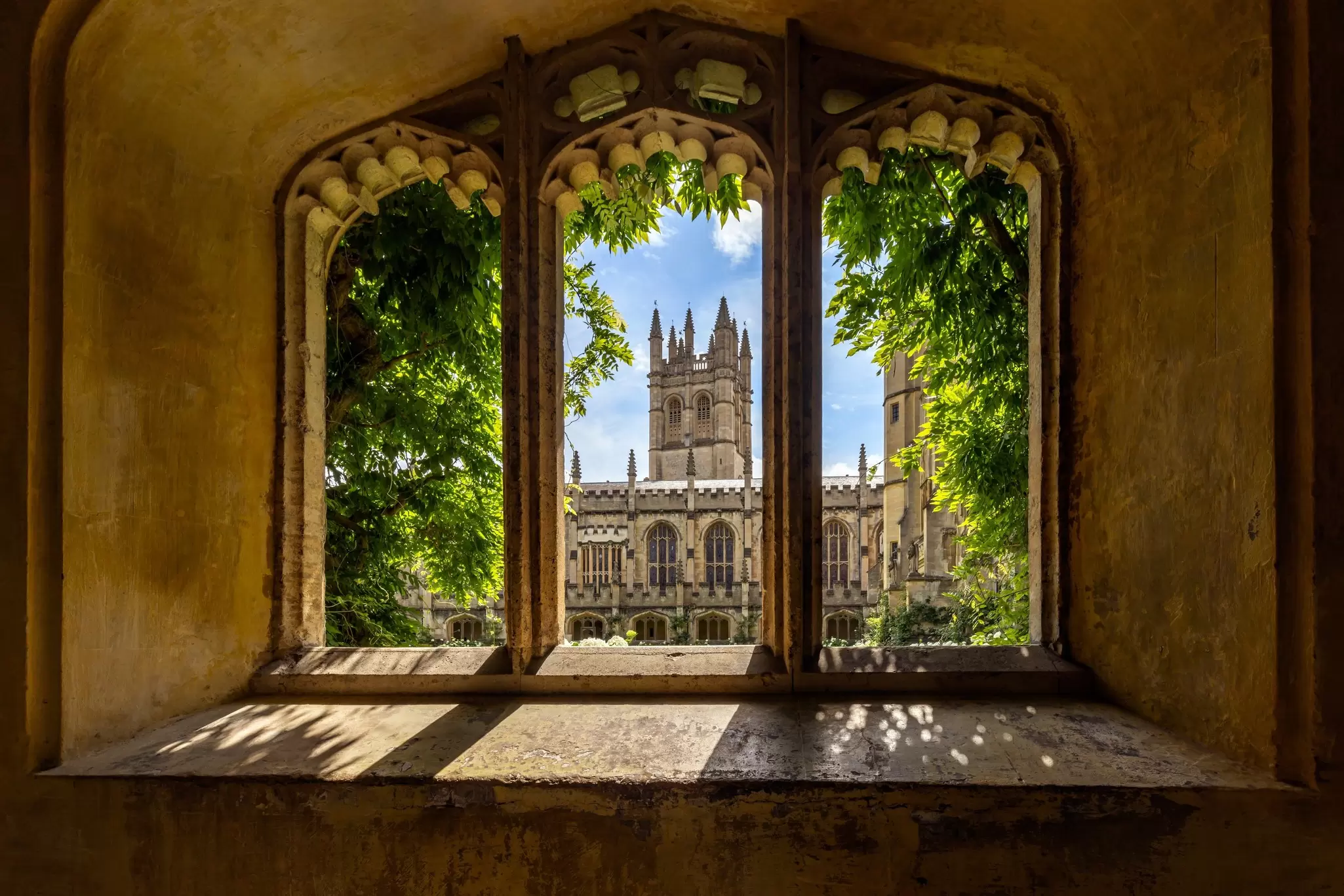
For a vision of idyllic student life in Oxford, make for majestic Magdalen College with its ensemble of architectural treasures and extravagant open spaces – meadows alive with rare wildflowers, wooded riverine islands and parkland where the college’s private deer herd grazes. Founded in 1555, Trinity College boasts a lovely 17th-century garden quad, designed by Sir Christopher Wren, and an exquisite chapel that is a masterpiece of English baroque.
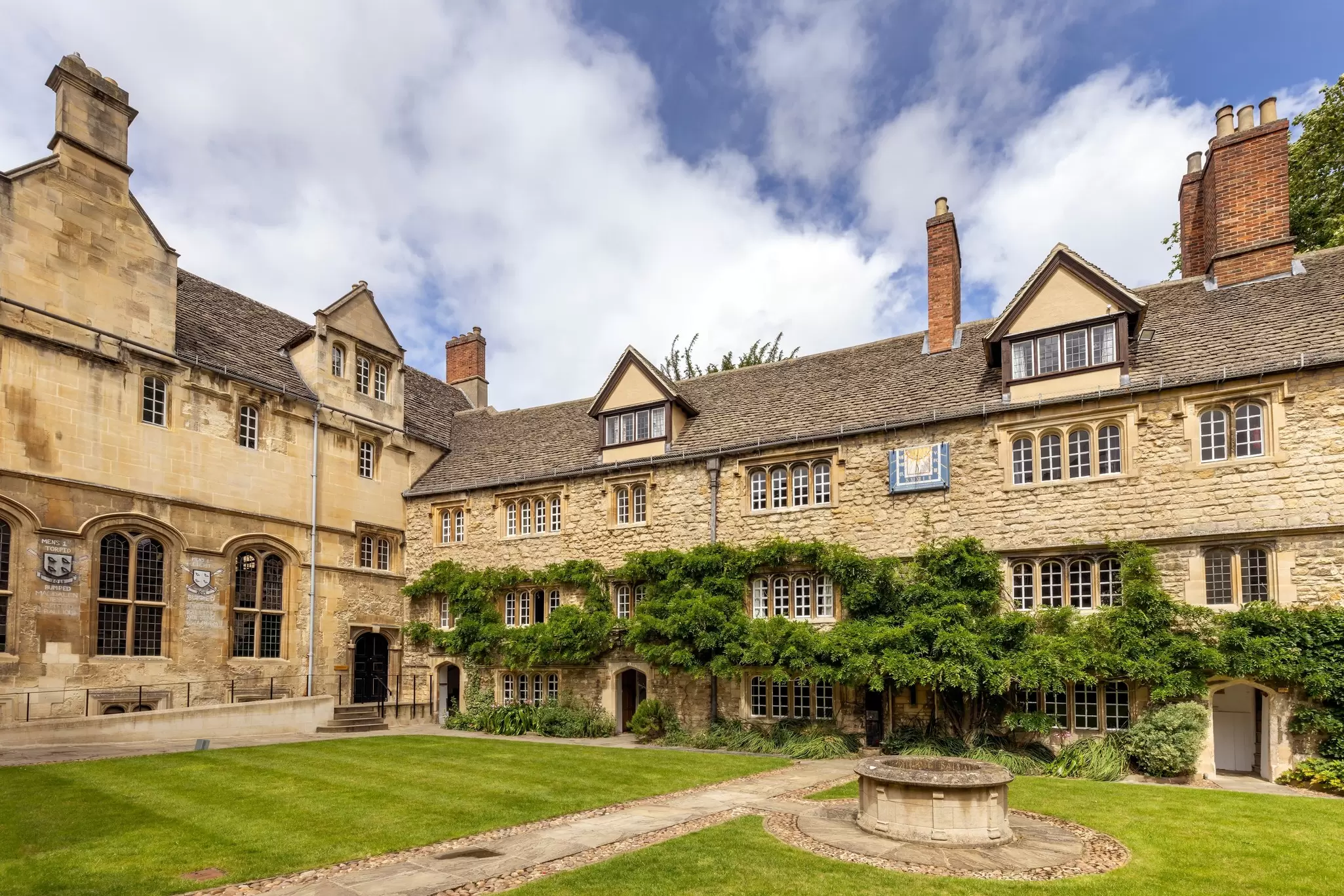
Founded around 1317, St Edmund College’s Hall is the sole survivor of Oxford’s original medieval halls, the teaching institutions that preceded the colleges, and its chapel was decorated by William Morris and Edward Burne-Jones. Queen’s College is known for its musical excellence and was founded in 1341, with its main claim to architectural fame being its wonderful examples of neoclassical architecture from the 17th and 18th centuries. Brasenose College is small, select and elegant. Founded in 1509, its star attraction is the chapel, with its fine, painted, fan-vaulted ceiling.
Galleries
Founded on the bequeathed collection of 18th-century former student General John Guise, Christ Church Picture Gallery (chch.ox.ac.uk/visit/picture-gallery; adult/child £6/3) sits in a purpose-built modern space that is home to more than 2000 drawings and 300 paintings, including a number of masterpieces from Renaissance Italy by the likes of Tintoretto, Filippino Lippi, Michelangelo and Leonardo.
Among the highlights are Lippi’s The Wounded Centaur and Botticelli’s Five Sibyls Seated in Niches. Housed in an industrial-chic red-brick building, the bright and spacious Modern Art Oxford (modernartoxford.org.uk; free), temporarily closed at the time of writing, is home to stimulating exhibitions that shine a spotlight on contemporary artists from across the globe, such as Marina Abramović and Ruth Asawa. These are always accompanied by immersive talks and workshops.
Museums
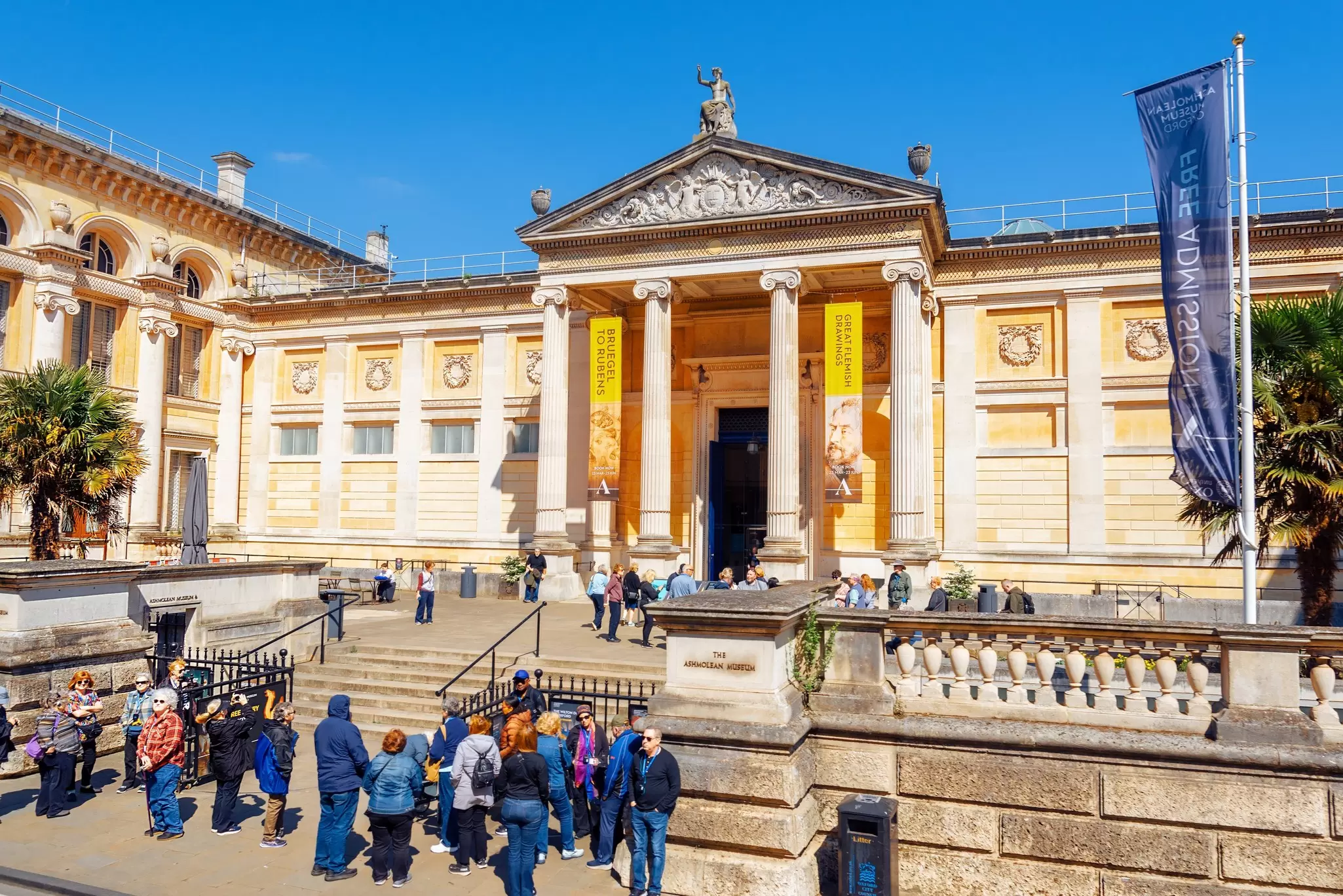
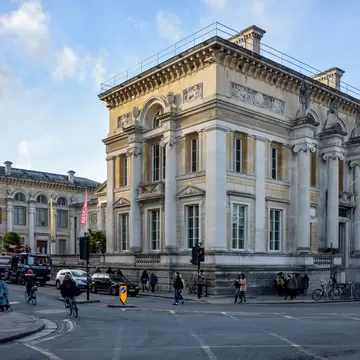
The Ashmolean Museum (ashmolean.org; free) is Britain’s oldest public museum, founded in 1683. Now modern and well-lit, it’s a jaw-dropping showcase of art, artifacts and archaeological wonders from around the world, including the exquisite Anglo-Saxon Alfred Jewel, a fascinating Mughal gallery and even Lawrence of Arabia’s actual robes. The museum also has a selection of paintings by the likes of Goya and van Gogh, and exhibits that do deep dives into Oxford history.
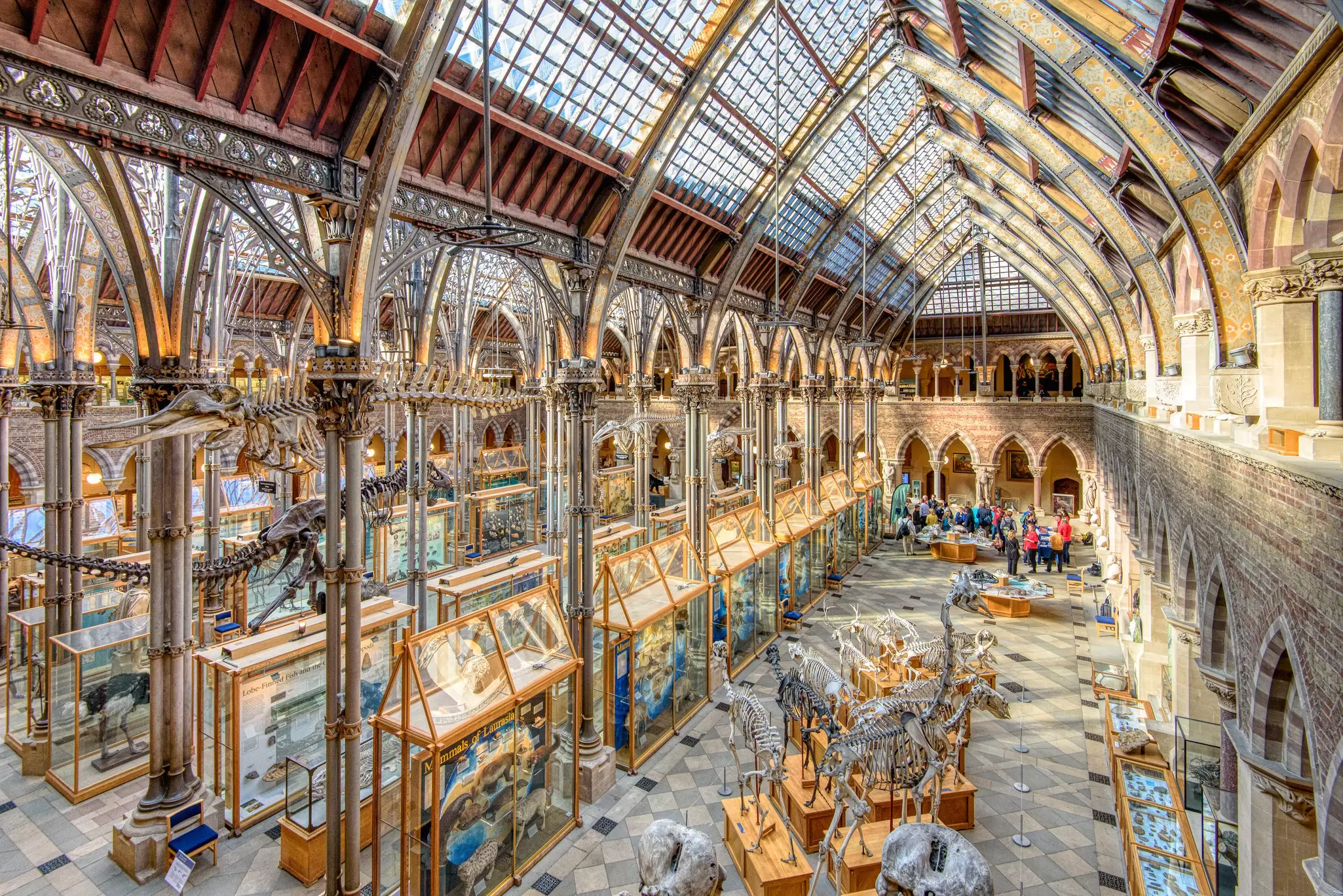
The flamboyant Victorian conservatory that houses the Oxford University Museum of Natural History (oumnh.ox.ac.uk; free) is a splendid setting for the wide-ranging exhibits that make this such a hit with kids, especially the amazing dinosaur fossils, which include the Oxford brontosaur, an iguanodon and various plesiosaurs. Students of science love the Museum of the History of Science (hsm.ox.ac.uk; free) which is filled to the rafters with astrolabes, orreries and early electrical apparatus, including cameras that belonged to Lewis Carroll and Lawrence of Arabia.
Libraries
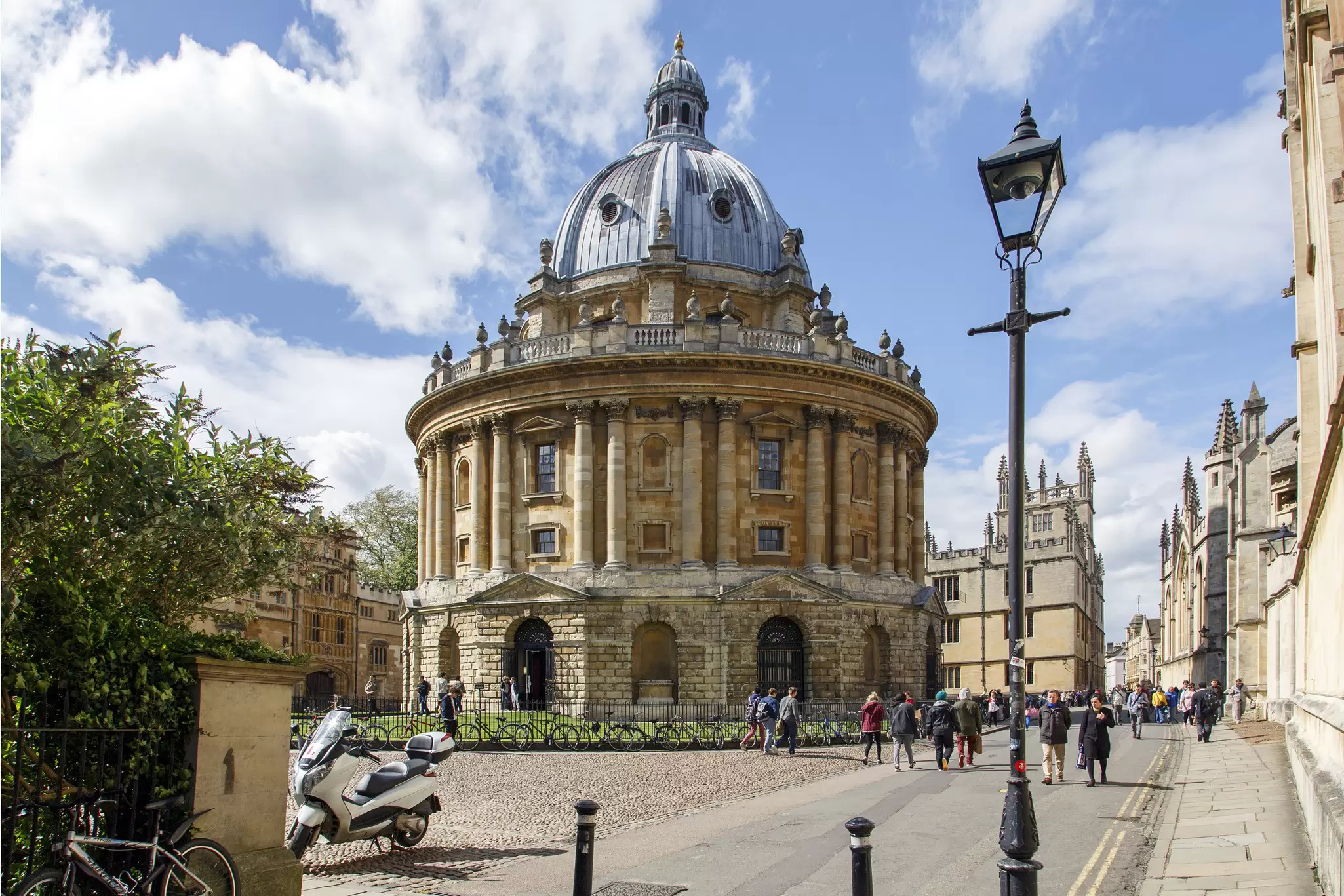
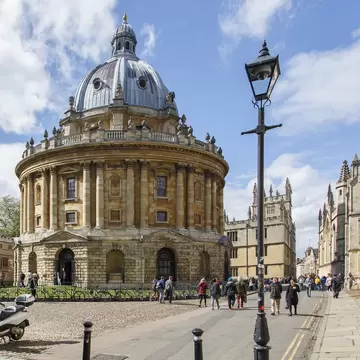
More than six centuries old and thrice the seat of English Parliament, the Bodleian Library (visit.bodleian.ox.ac.uk; admission from £2.50) is a must for bibliophiles. To see beyond the ornate Divinity School where it all began in 1423, visitors must join a guided tour that takes them upstairs to admire Duke Humfrey’s Library – Hogwarts library in the Harry Potter movies – and potentially, via an underground tunnel, into what might well be the world’s most beautiful reading room: the domed Radcliffe Camera.
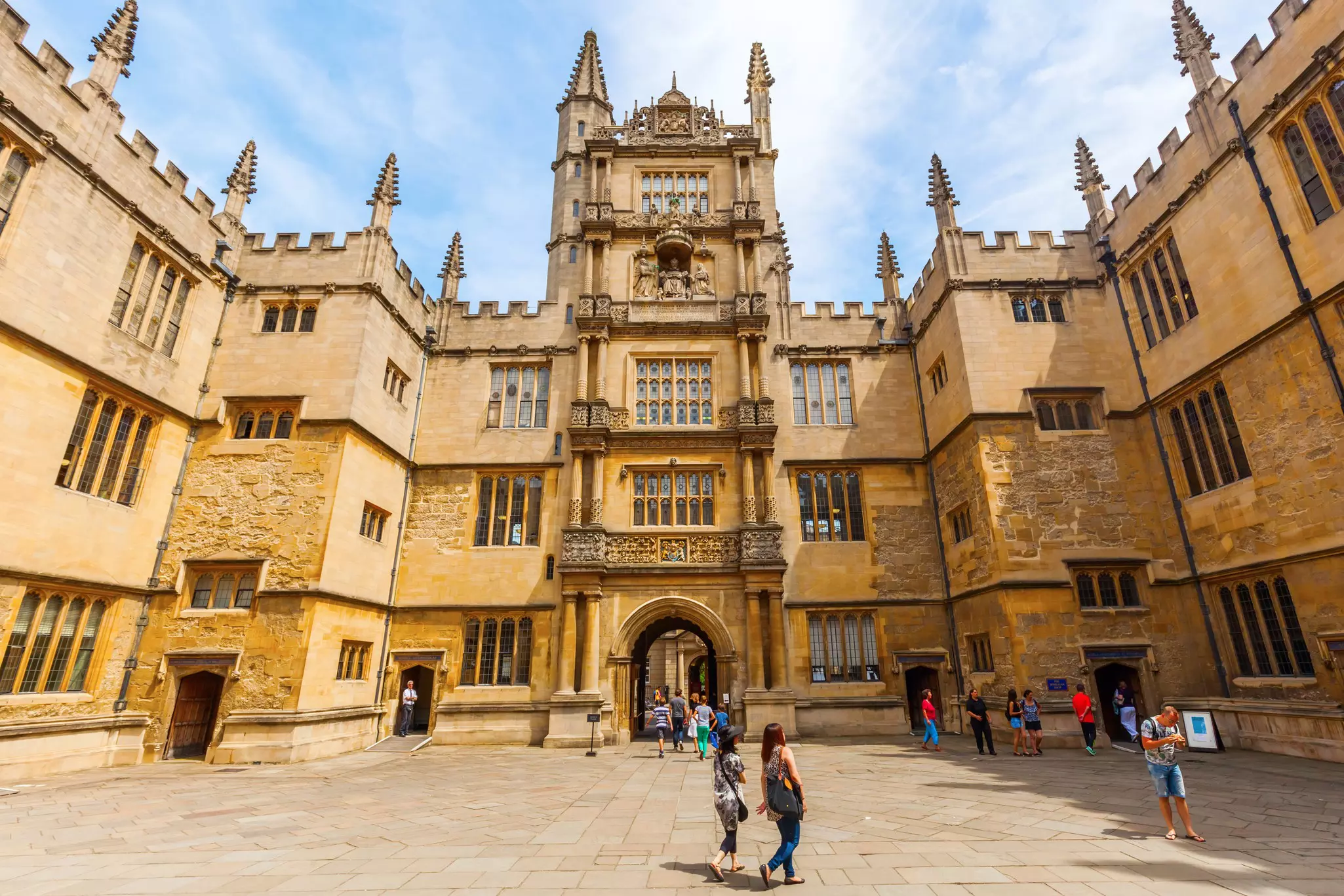
Weston Library (visit.bodleian.ox.ac.uk/plan-your-visit; free) was opened as the New Bodleian Library by King George VI in 1946. It remains an extension of the Bodleian and its two free galleries often display selected treasures from the Bodleian collection, including the Sheldon Tapestry. Previous exhibitions have seen original works by JRR Tolkien and Jane Austen on display.
The Oxford Union Old Library (oxford-union.org/pages/old-library; £5) was where the famous debating society used to meet. It's housed in a beautiful Victorian building adorned with marvelous pre-Raphaelite murals painted between by Dante Gabriel Rossetti, William Morris and Edward Burne-Jones. These depict scenes from the Arthurian legends and can be tricky to see on bright days, as they surround the flower-shaped windows.
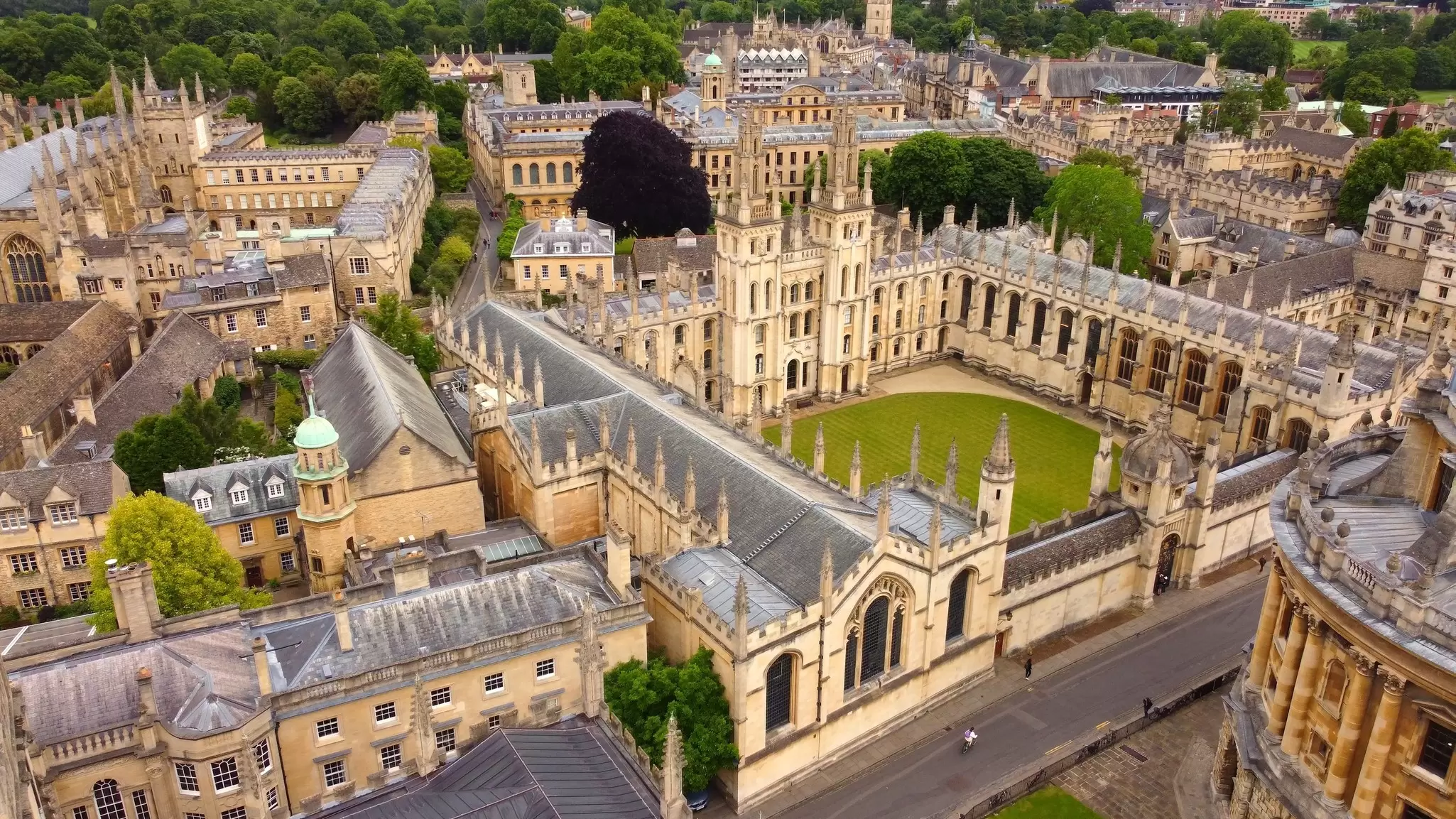
The Historic Upper Library (merton.ox.ac.uk; adult/under-13/child £5/3/free) at Merton College is the oldest medieval library still in use, complete with chained books. Visitors can only enter it on the summer-only guided tours, and it was here that Merton English professor JRR Tolkien sat to write much of The Lord of the Rings. It is said the trees in the Fellows’ Garden inspired the ents of Middle-earth.
University Church of St Mary the Virgin
The ornate 14th-century spire of Oxford’s university church is arguably the dreamiest of the city’s legendary "dreaming spires." The church is famous as the site where three Anglican bishops, including the first Protestant Archbishop of Canterbury, Thomas Cranmer, were tried for heresy in 1556, during the reign of Mary I. All three were later burned at the stake on Broad St.
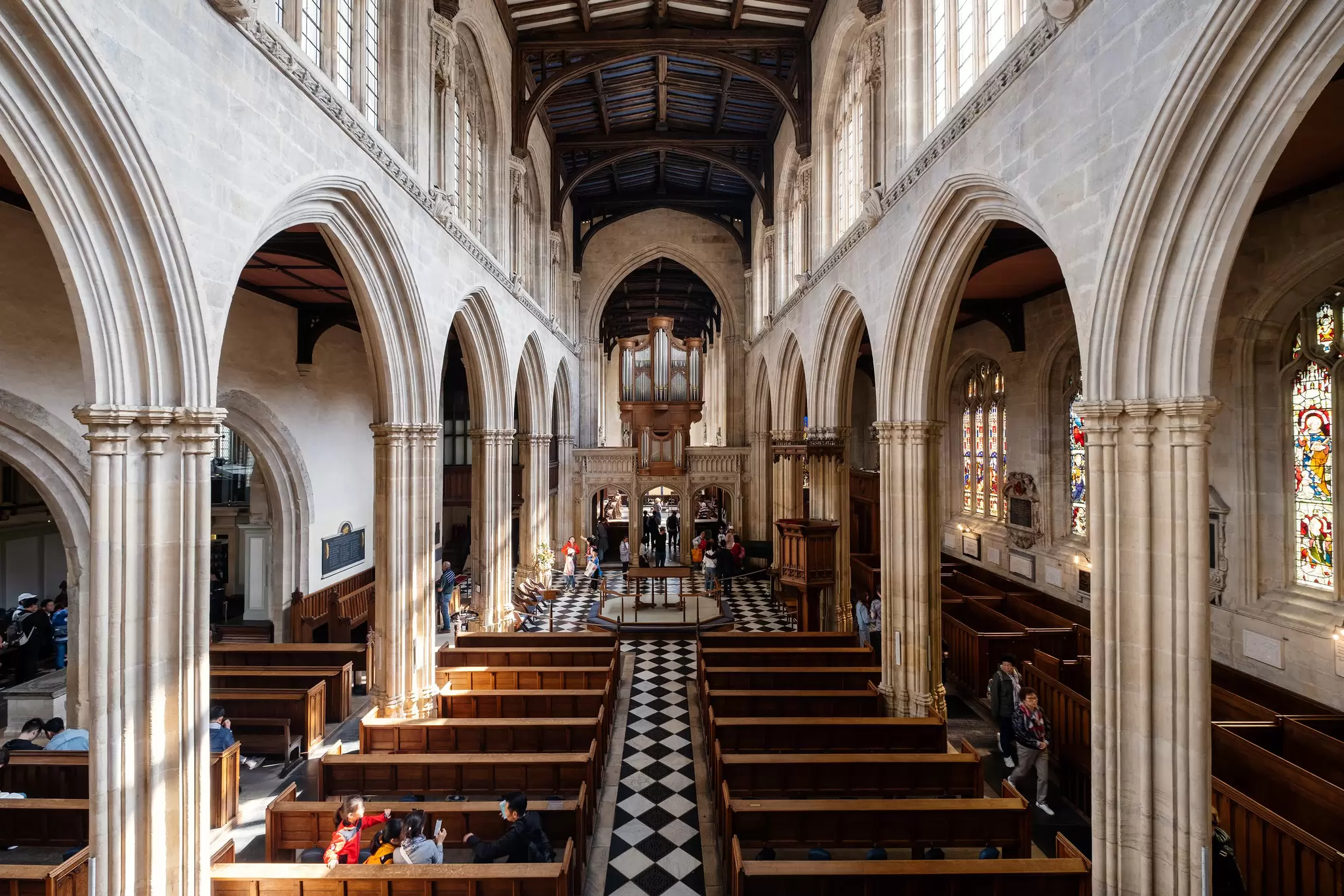
Visitors can climb the church’s tower, built in 1280, for excellent views of the adjacent Radcliffe Camera. Other notable features of the church include its 17th-century twirly-pillared porch, a 19th-century stained-glass window showing the Tree of Jesse and a memorial to the victims – both Protestant and Catholic – of the Reformation.
Top Tips
Oxford is a fully functioning university and a major tourist site – a difficult balancing act. Add to this the fact that each university college has its own website, admission fee (or not), visiting hours (often affected by season, lunch hours etc) and tour days and times, and you begin to appreciate that the key to seeing everything you want on a day trip to Oxford is to ensure you have the most up-to-date information available on each college, library and museum. Do this by visiting the main university website and, where available, the colleges' own individual websites.