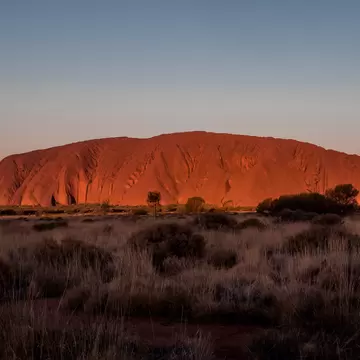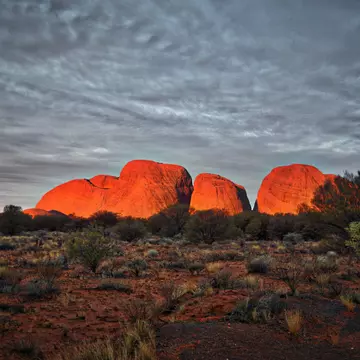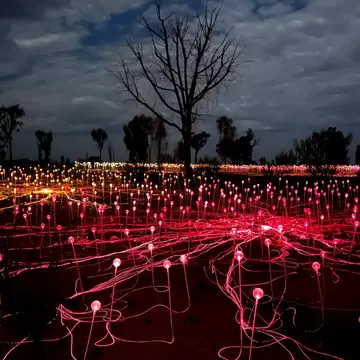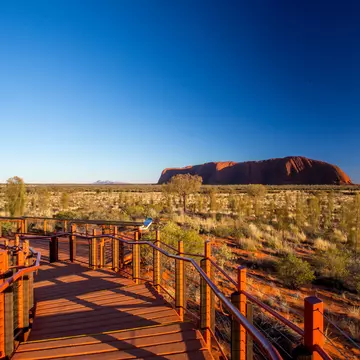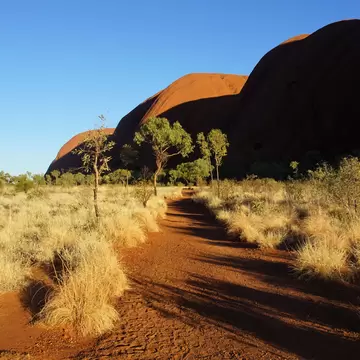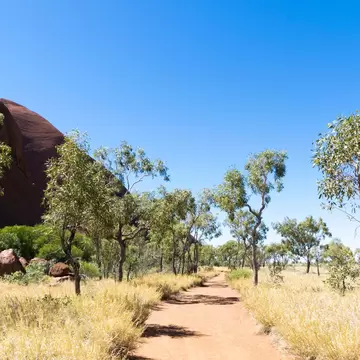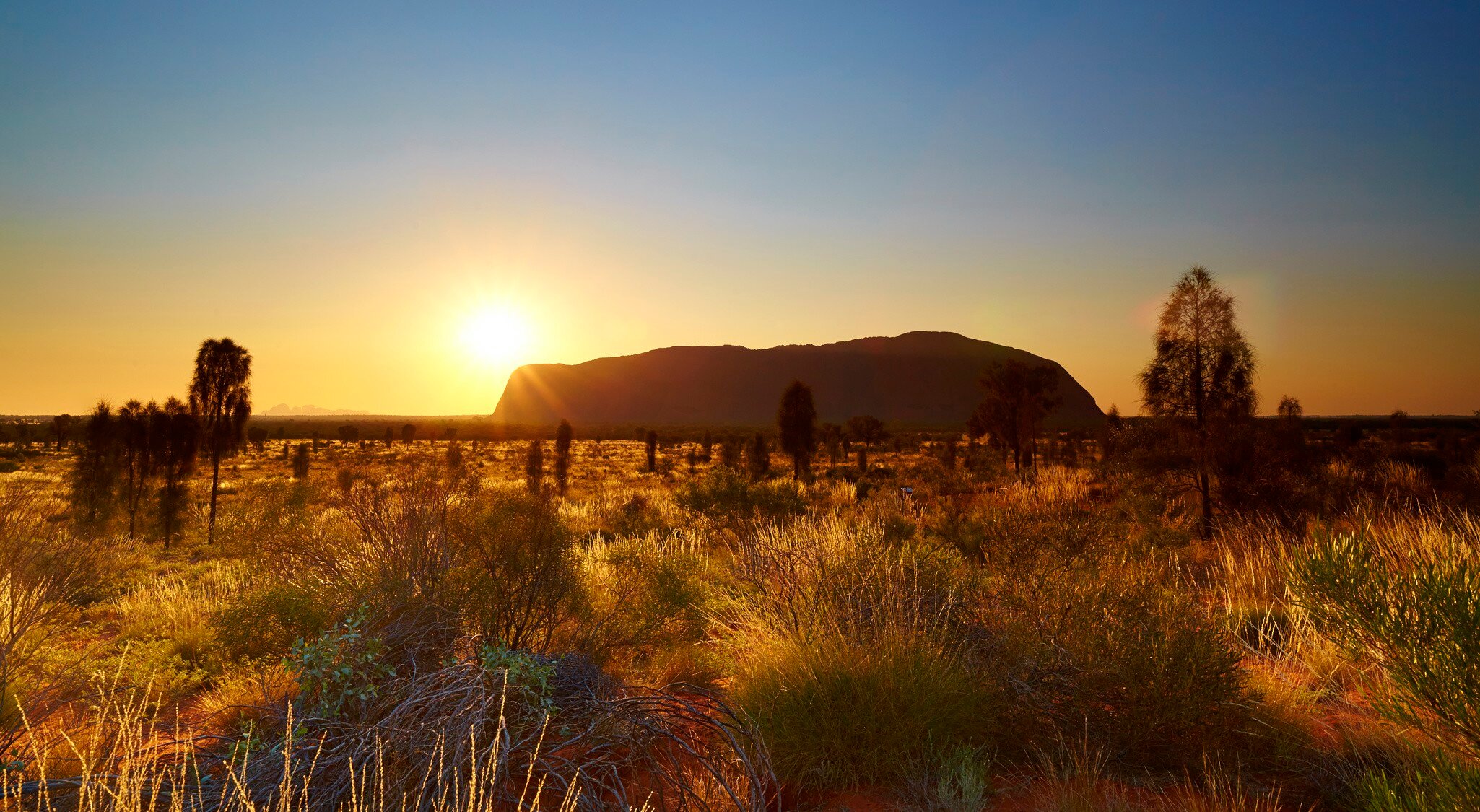
Standing sentinel over the endless horizons of Australia's Red Centre, soulful Uluṟu and Kata Tjuṯa seem filled with mysterious drama. Together, they have become icons of the outback: ancient and timeless, Uluṟu and Kata Tjuṯa are even more special in reality than what you've heard, and they really do have to be seen to be believed.
First Nations Culture
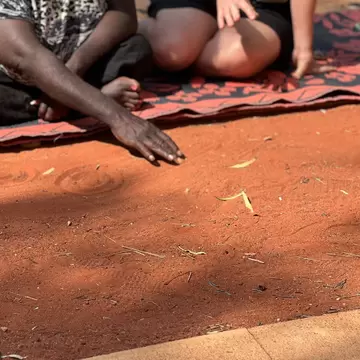
A guided tour with Seit Outback Australia (seittours.com; adult/child from $389/220) – especially the immersive seven-hour Patji tour – offers a deeper understanding of Aboriginal culture through a local Aṉangu lens, with access to areas closed to other tours. It's an Indigenous perspective on bush tucker, life on the land and the history of the national park. Departure times and rates vary by season.
The national park has two galleries showcasing Aṉangu artworks and sculpture at the cultural center – Walkatjara Art Centre (walkatjara.com; free) and Maruku Arts (maruku.com.au; free). Watch the artists as they create, browse and learn from the creations including puṉu (uses wood as the medium) dot paintings and more from over 500 artists in 20-plus remote communities.
Hike Uluṟu
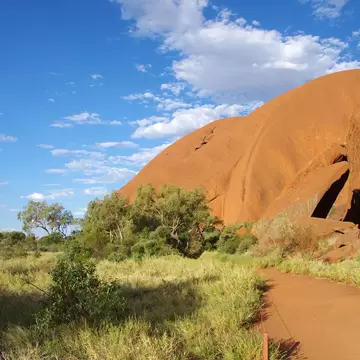
The Liru Walk (4km return, 1½ hours) links the Uluṟu-Kata Tjuṯa Cultural Centre with the main Uluṟu car park. The fascinating, free, 1½-hour Ranger-Guided Mala Walk begins every morning from 8am October to April, and 10am May to September, and requires no booking. The other walks – the Mala Walk (2km return, one hour) and Kuniya Walk (1km return, 45 minutes) are part of an overarching circumnavigation of the Rock: the Uluṟu Base Walk (10.6km, three to four hours).
Aside from a shadeless stretch on the Base Walk’s north side (start early), you'll love the chance to examine the rich textures of the rock faces – Uluṟu's caves, waterholes (including Mutitjulu, home of the ancestral water snake), fissures, and enigmatic rock formations laden with spiritual meaning.
Valley of the Winds Walk
Over at Kata Tjuṯa, the 7.4km, two- to four-hour Valley of the Winds Walk is one of the great outback hikes. Following the inner gorges and dwarfed at every step by the surreal domes surging above you, this trail climbs to a saddle where you can return the way you came or – much better – continue on into the broader valleys of the range before looping back to where you began. Start at first light; if the weather is forecast to reach 36°C, trail access is closed, usually by 11am.
If you can't make the full walk, try the Walpa Gorge (Tatintjawiya) Walk (2.6km return, 45 minutes); look for rock wallabies.
Sunrise & Sunset Freebies
Few places in Australia flaunt a more spectacular sunset. Choose from the Bus Sunset-Viewing Area and Car Sunset-Viewing Area, both wonderfully chosen (and free); bring refreshment and watch Uluṟu turn shades of red you never knew existed.
For Kata Tjuṯa, the Kata Tjuṯa Sand Dune Lookout is magnificent, with an unrivaled panorama of the anything-but-desolate range, although it's shadowed for the final half-hour. For another fine angle, drive 2km out on the Kaltukatjara (Docker River) road and simply park by the roadside as you watch while nature does its thing.
For sunrise, it simply must be Talinguru Nyakunytjaku Lookout with Uluṟu in the foreground and Kata Tjuṯa in the same frame. It's one of the best ways to start a day out here.
Bike the Base Track
Follow the Uluṟu Base Walk on a bike from Outback Cycling (outbackcycling.com: adult/child $80/65), which operates alongside the Uluṟu–Kata Tjuṯa Cultural Centre. Although the trails are not paved, they're flat, well maintained and usually in excellent condition except after heavy rains. Including the trip to/from the rental point, a full circumnavigation should be an easy 11km to 12km. Allow three hours.