Coming out of La Paz 72km toward sacred Lake Titicaca, and turning down a dirt road, not much is visible but a typical, modern altiplano village.
Hidden behind are the ruins of Tiwanaku, a civilization which dominated the region in the first millennium CE and came to a halt rather suddenly around 1000 CE, in unknown circumstances. Its temples, stone carvings and pottery shards tell tales still unfolding, with much conjecture remaining.
A Typical Visit
A typical tour will depart La Paz around 8 or 9am, arrive at the site two hours later, and tour the two museums first before breaking for a traditional altiplano lunch. In the afternoon, you'll visit a couple of the temples before heading back to the city for a late afternoon arrival. One of the more experienced companies for this itinerary is Buhos Tours (buhostours.com).
What Was It?
Tiwanaku is thought to have been an ancient ceremonial center, with an elite population protected by a moat, or perhaps a bustling city of as many as 40,000 with complex terraced crops, fish ponds, and aqueducts connecting to Titicaca. Its close-fitting stonework is a marvel of masonry; the extensive pottery collection spans four distinct eras; and evidence of architectural and astronomical wisdom abounds. How its massive stones were moved into place and carved is still a puzzle.
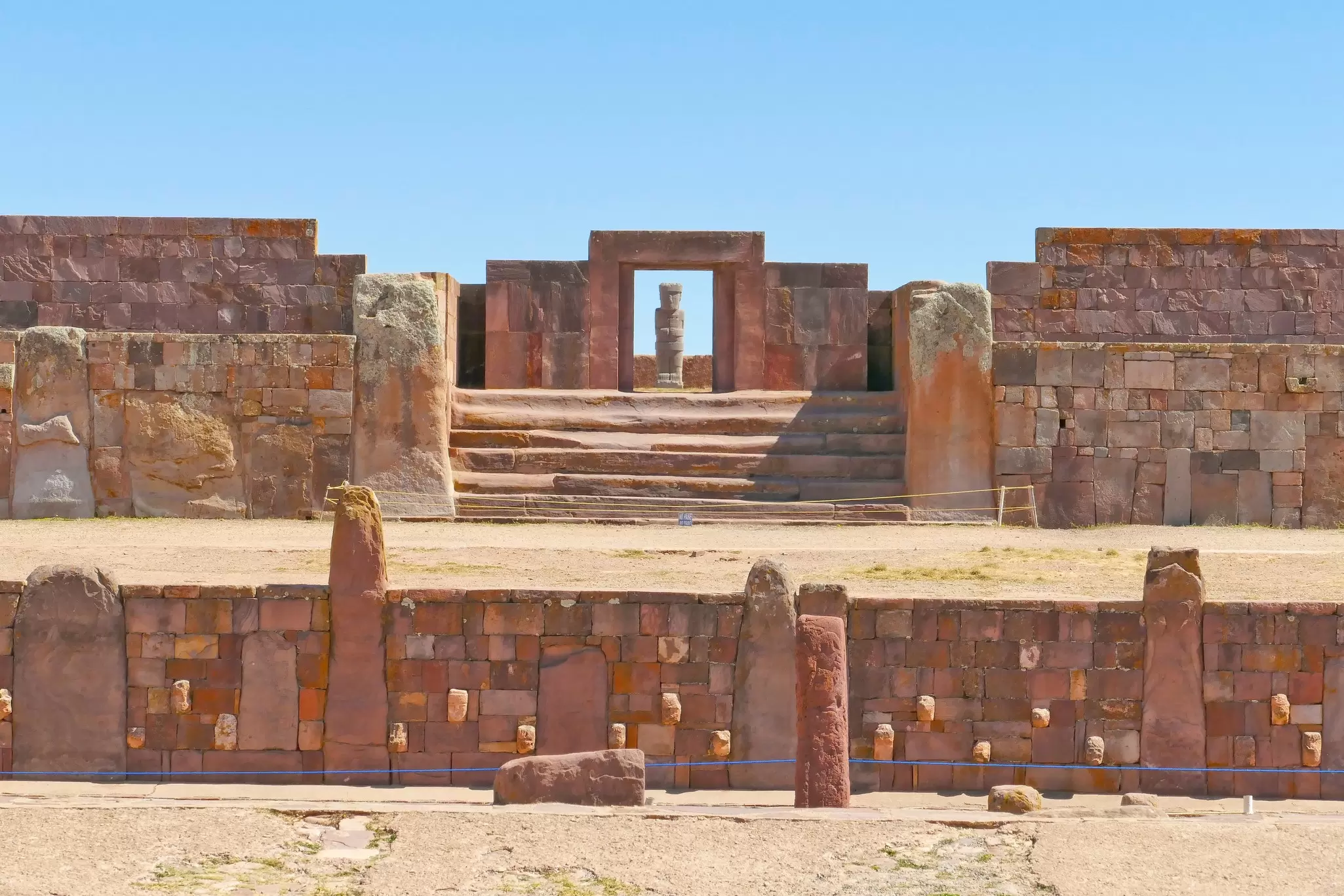
It's surmised that the stone for the various temples, courtyards and other structures was quarried far away and moved long distances to the site. The idea that these stones, some weighing tons, were also carved with mathematical precision has led some outside of the main body of anthropology to conjecture that extraterrestrial intervention was involved – these same theorists have noted similarities in the "Andean cross" patterns between Tiwanaku's stones and those of other sacred sites across the globe.
Whatever it took to move these stones, modern efforts showed how hard it is: in 1966 the Bolivian army tried to shift one of the ancient monolithic stones with ropes and manpower, and failed to move it more than a few inches. The sandstone and antecite blocks of Puma Punku were cut so precisely that they interlock without any mortar, and were moved from quarries at least 10km from Tiwanaku. English anthropologist Ephraim Squier called Tiwanaku 'South America's Stonehenge.' Mysterious indeed.
Climb the Akapana
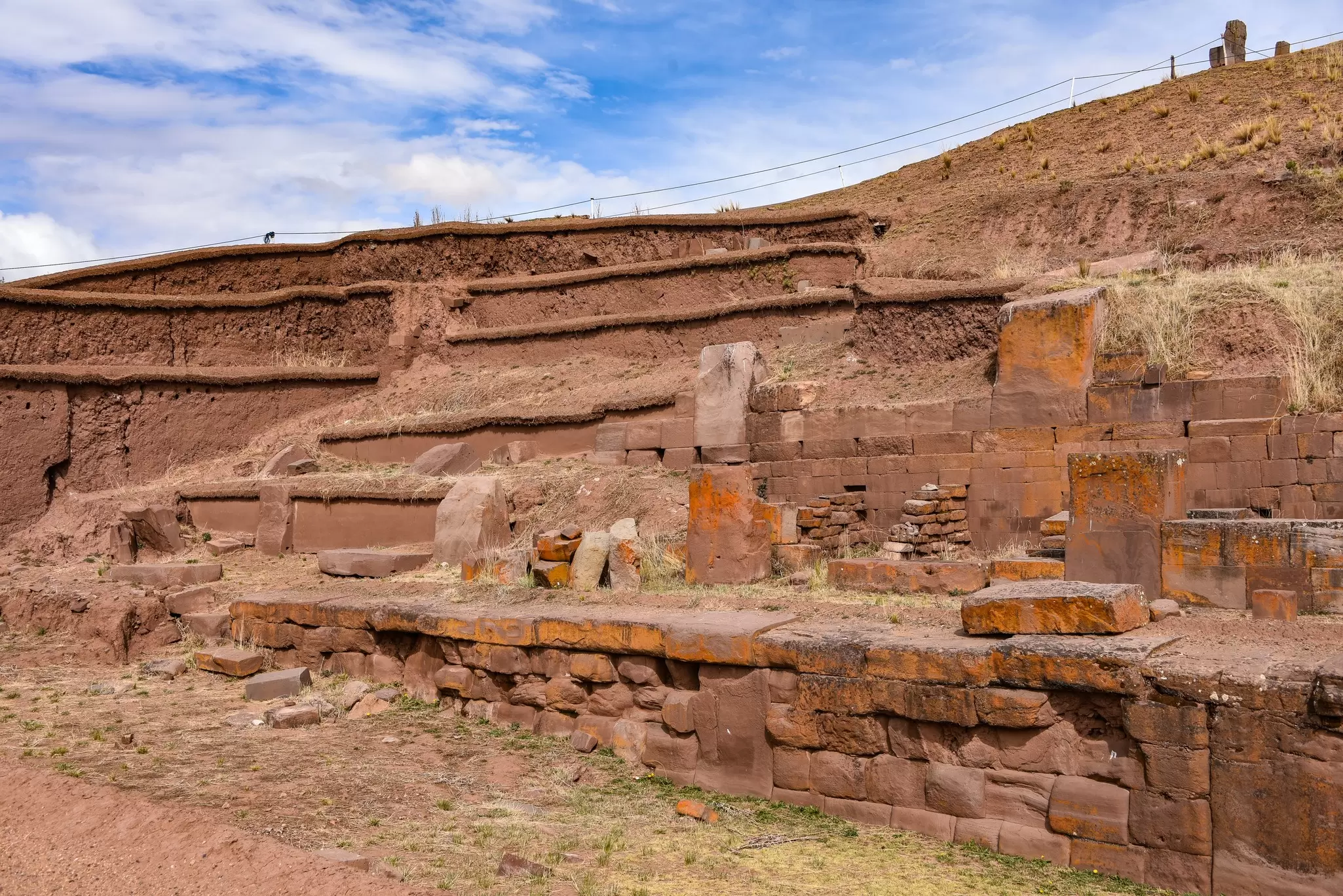
The Akapana Pyramid is a terraced platform, and its top level was a sunken court, covered with blue-green gravel brought all the way from the Quimsahata Range, south of Titicaca. As you stand at the top, imagine that there was once a cleverly engineered drainage system which ran through Tiwanaku all the way to Lake Titicaca.
Gates of the Sun and Moon
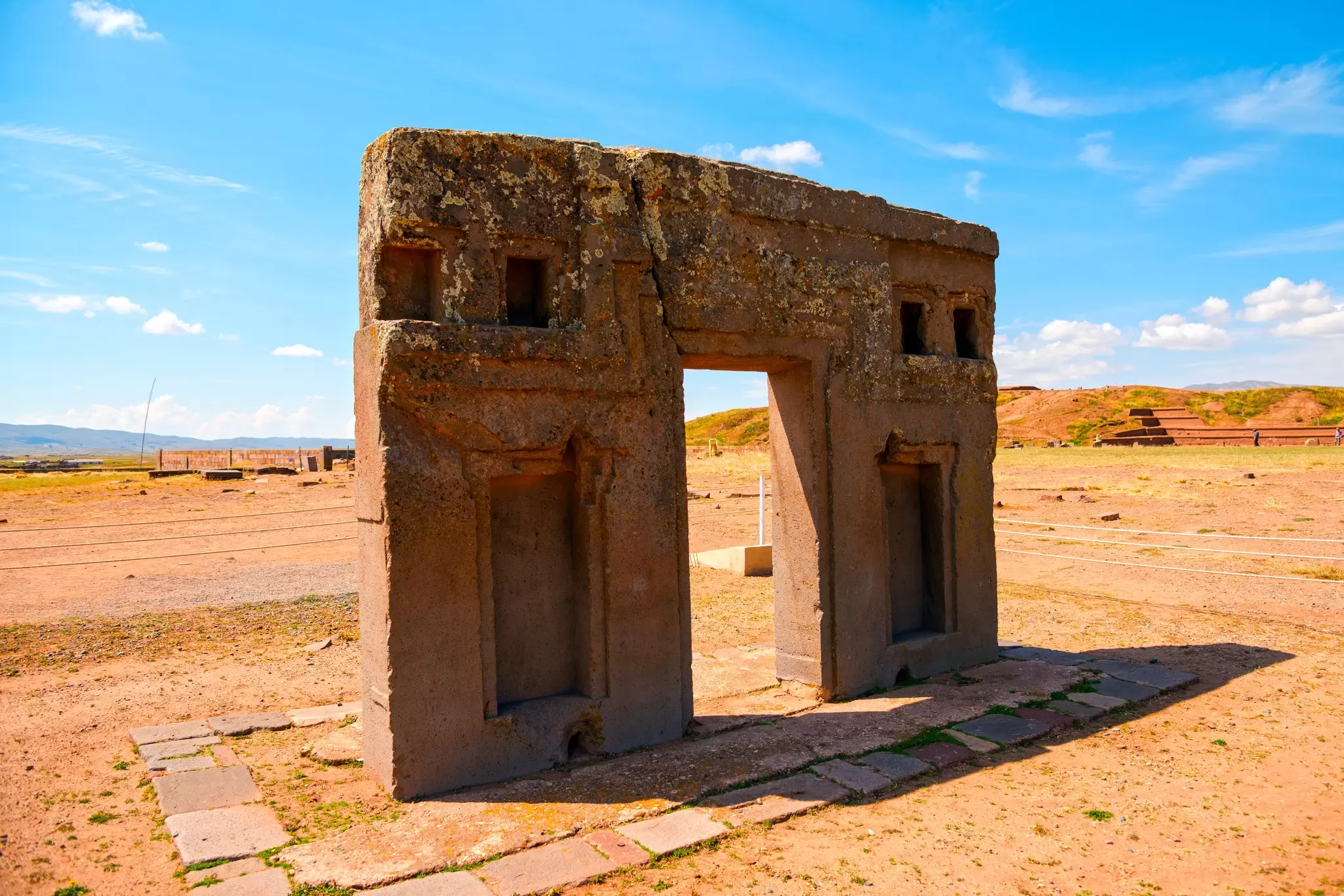
President Evo Morales tried to imbue his initial election in 2005 with the Aymará spirit of his ancestors by holding his presidential swearing in ceremonies at the Puerta del Sol in Tiwanaku. The site's largest gate, it was carved from a single massive stone 3.82m by 2.85m.
Ringing in the New
Although the equinoxes of March 21 and September 21 draw many visitors to Tiwanaku, June 21, South America's winter solstice and the Aymará New Year, is the most important date on the local calendar. Up to 5000 people come from all corners of the globe to watch the rising sun's beams illuminate the eastern temple. Locals don colorful ceremonial dress and visitors are invited to join the party: offerings are made and traditional food is prepared; there's also revelry fitting the occasion, with much singani (brandy) drinking, coca chewing, and spirited dancing.
Special buses leave La Paz around 4am to arrive in time for sunrise on these dates. Dress warmly because the pre-dawn hours are bitterly cold.
Lloka Lloka Mirador
Fifteen kilometers from the main Tiwanaku site is where many pilgrims gather on the June Aymará New Year, trekking from Tiwanaku to make offerings to Pachamama (Mother Earth) and eat a collective meal. It's the highest point on the altiplano, save the surrounding Andean Cordillera of which it offers spectacular views. Some tours will stop here and it's highly recommended to do so if you can.
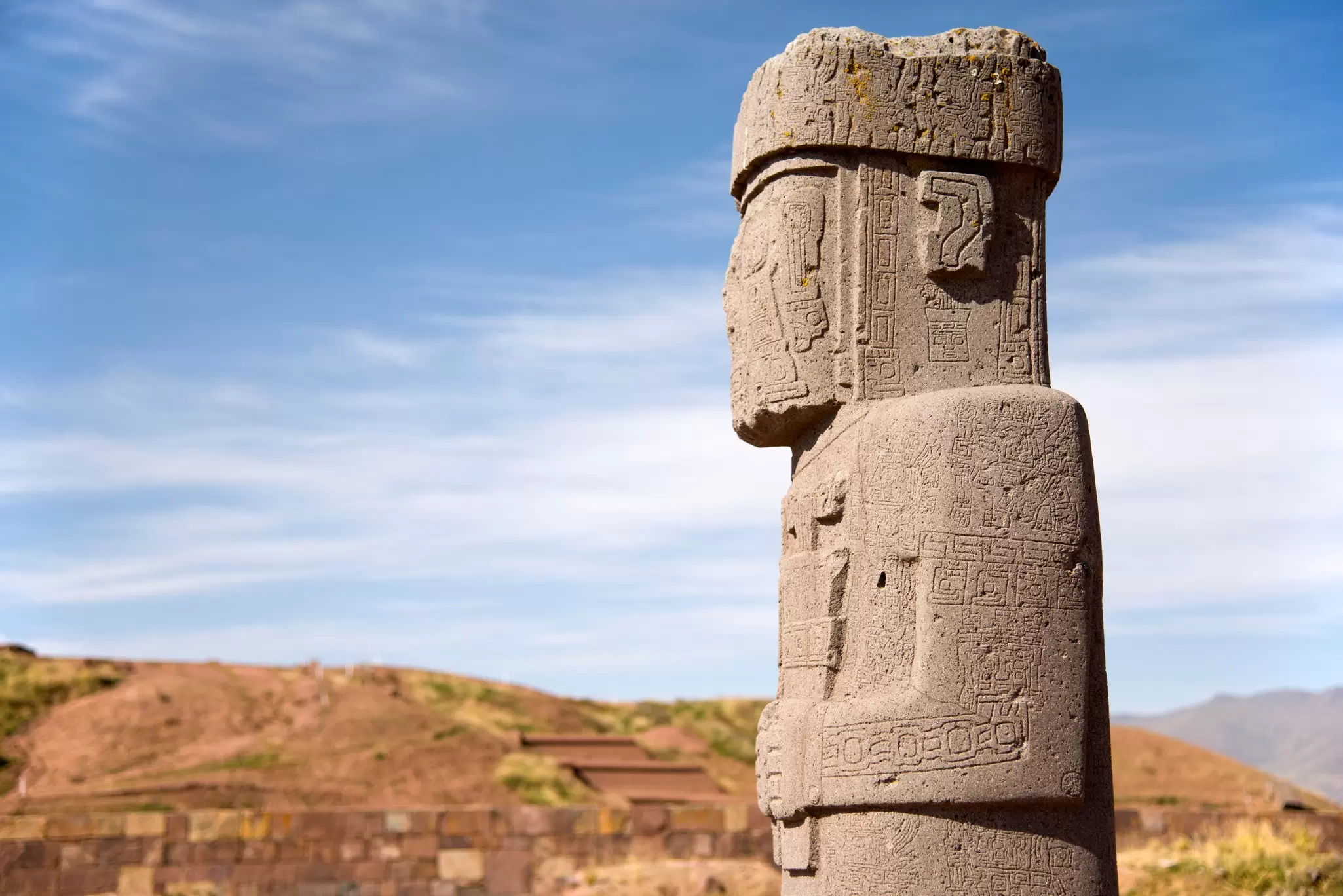
Monoliths on the Move
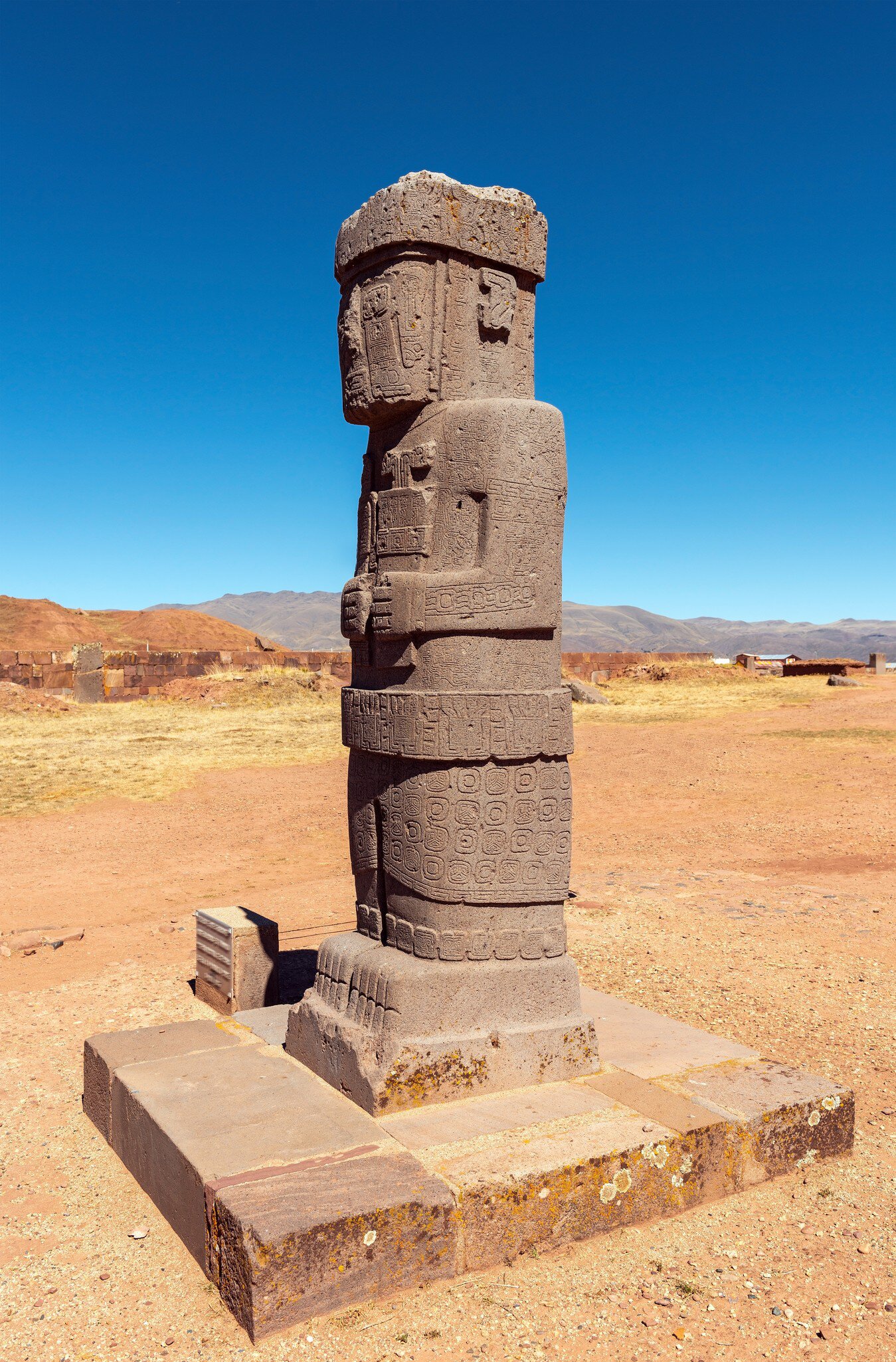
Giant monoliths built in honor of the Tiwanakans' mythical giant ancestors and named after personages in the (recent) history of Tiwanaku dominate the landscape and the visitor's imagination: the Bennett monolith, uncovered by American archeologist Wendell Bennett in the 1930's, is the largest at 7.3m high. It moved around a bit: first to El Prado in La Paz, then to a plaza next to the city's main football stadium and now finally back "home" in Tiwanaku.
The Ponce monolith, still impressive at 3m tall, is named for Bolivian archeologist Carlos Ponce Sanguines, a key researcher from the 1970s to 1990s, who uncovered it in 1957.
Another 3m giant, the Estela Fraile, or Monolito Fraile, is named for the priests who came to the region, and stands inside of Kalasasaya.
The Bennett monolith resides in the Museo Litico, which houses many stone sculptures including the Chacapuma. The Ponce monolith was placed in the center of the Kalasasaya, the "place of standing stones," which is also home to the 3m-high Fraile monolith, named for the early Spanish priests who came to the region.