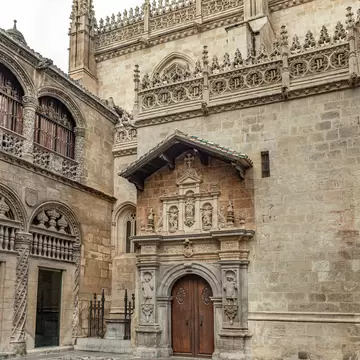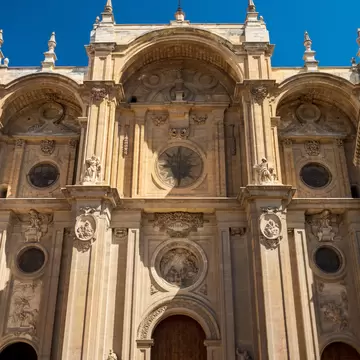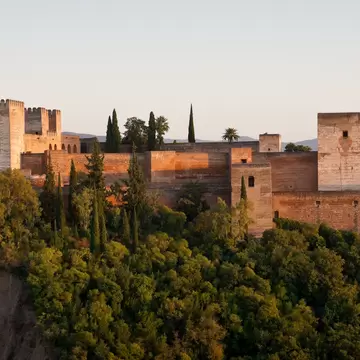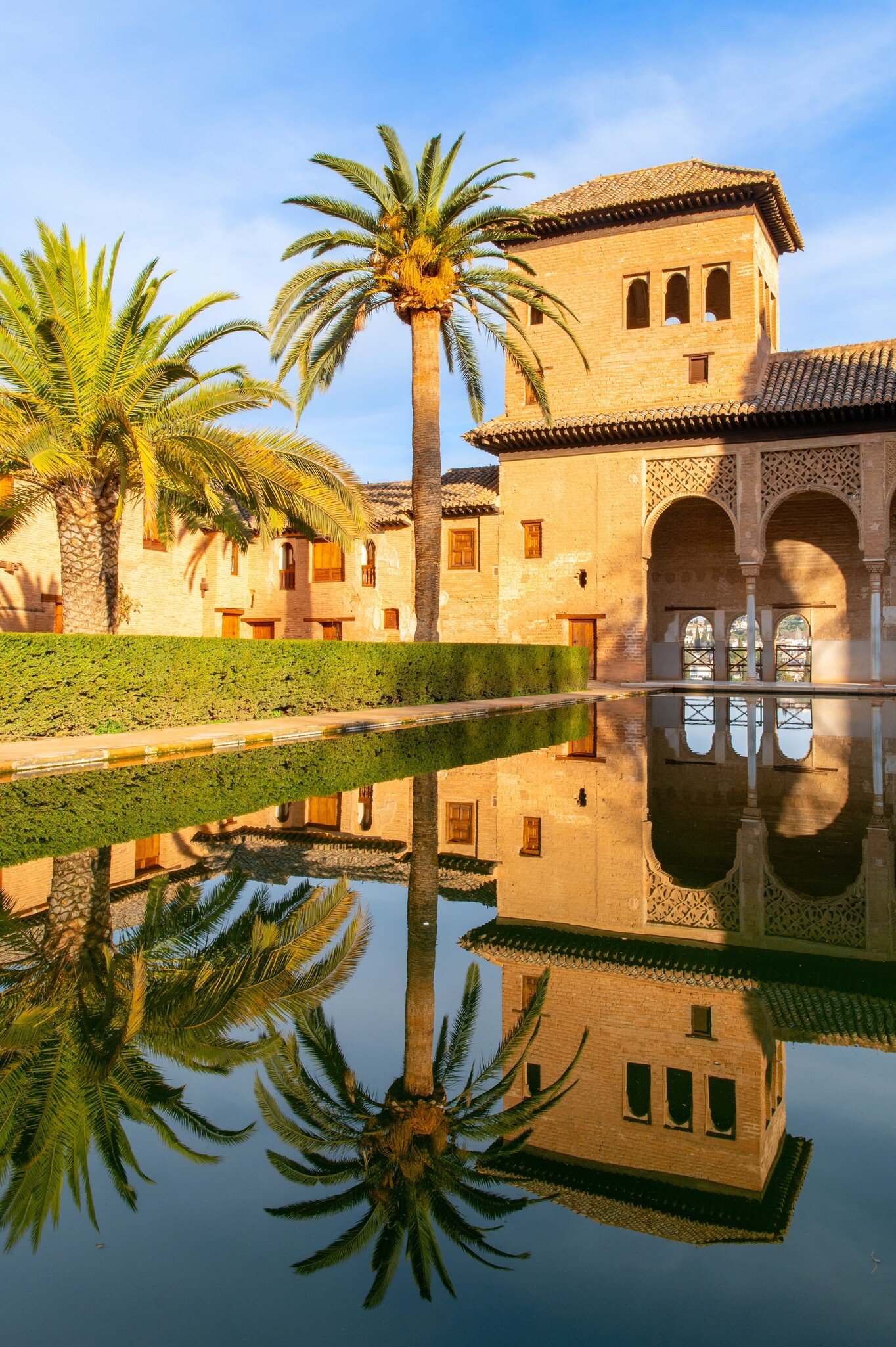
One of the most architecturally perfect buildings in existence, the Moorish palace-fortress of Alhambra sits high above Granada; its name derives from the Arabic al-qala’a al-hamra (the Red Castle). The 9th-century Alhambra was transformed during the 13th and 14th centuries by Granada’s Nasrid rulers into the magnificent royal residence you see today.
Alcazaba
Occupying Alhambra’s western tip, the 13th-century Alcazaba is the oldest part. From the top of Torre de la Vela – the tower where the cross and banners of the Reconquista were raised in January 1492 – are unparalleled views of Albayzín, the Sacromonte hills and Granada's rooftops.
Palacios Nazaríes
Its walls carved with elegant Arabic inscriptions, this remarkable palace complex was originally divided into three parts: the Mexuar, Serallo and Harem.
Mexuar
Enter through the Mexuar, the 14th-century hall where the sultans would adjudicate citizens' appeals and meet with ministers; beyond is the Patio del Cuarto Dorado, where they gave audiences. Opposite the Cuarto Dorado is the entrance to the Palacio de Comares, with its splendid tile, stucco and carved-wood facade.
Serallo
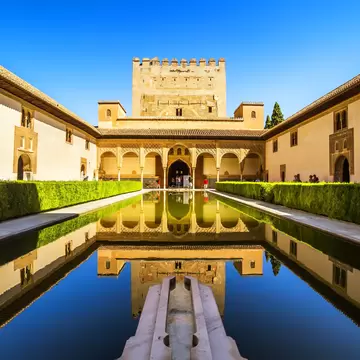
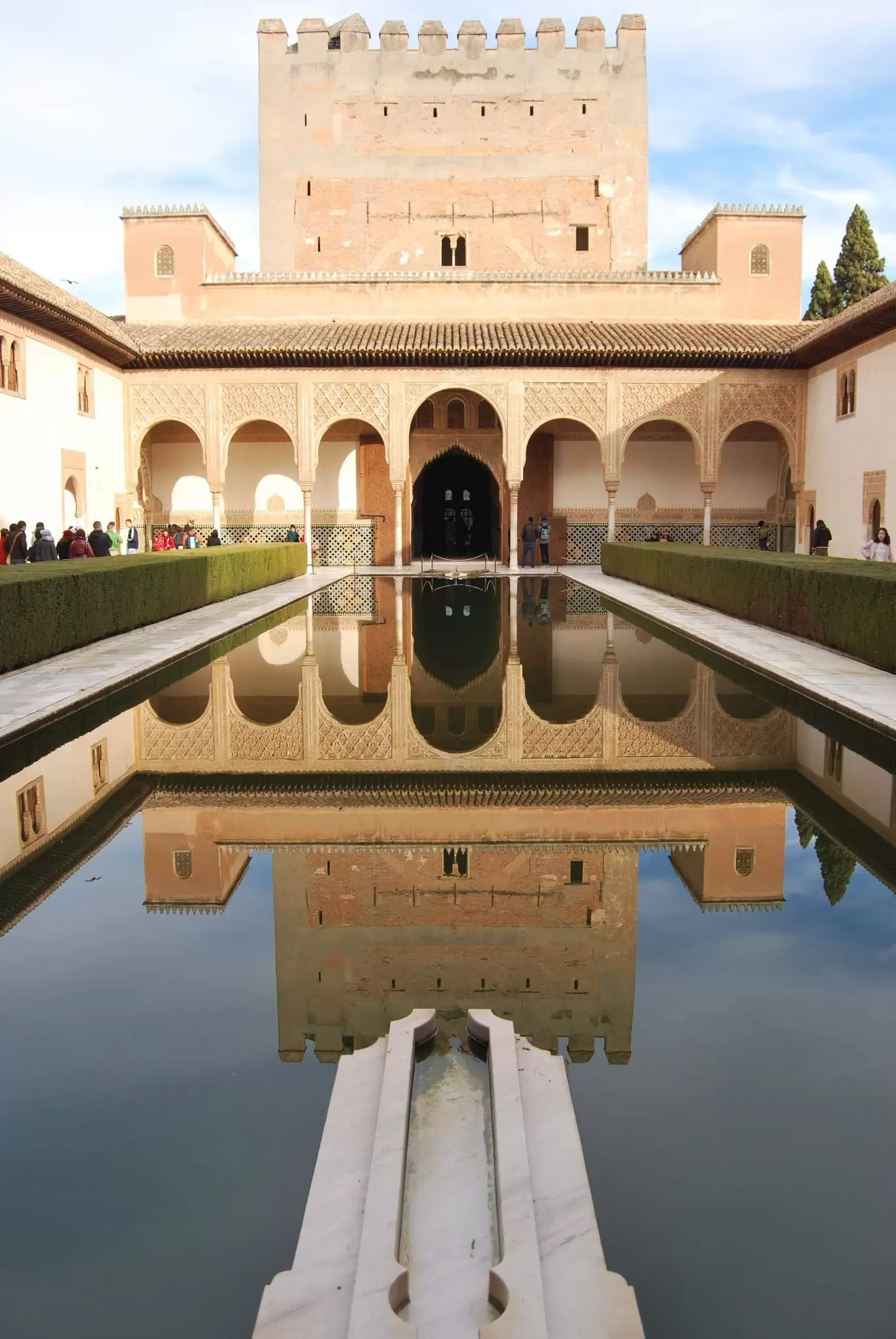
At the heart of the Serallo, where sultans conducted negotiations with Christian emissaries, is the Patio de los Arrayanes, named after the myrtle hedges around its rectangular pool and surrounded by marble-columned arcades. To the north, the Sala de la Barca, with a copy of its original cedar ceiling, leads into the Salón de los Embajadores – the largest, most striking chamber, with a domed marquetry ceiling symbolizing the seven heavens of Islam.
Harem
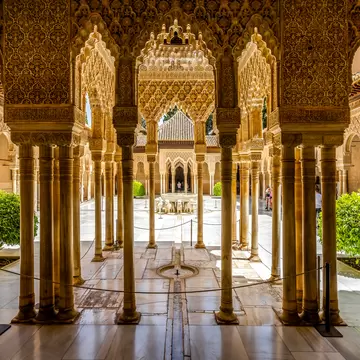
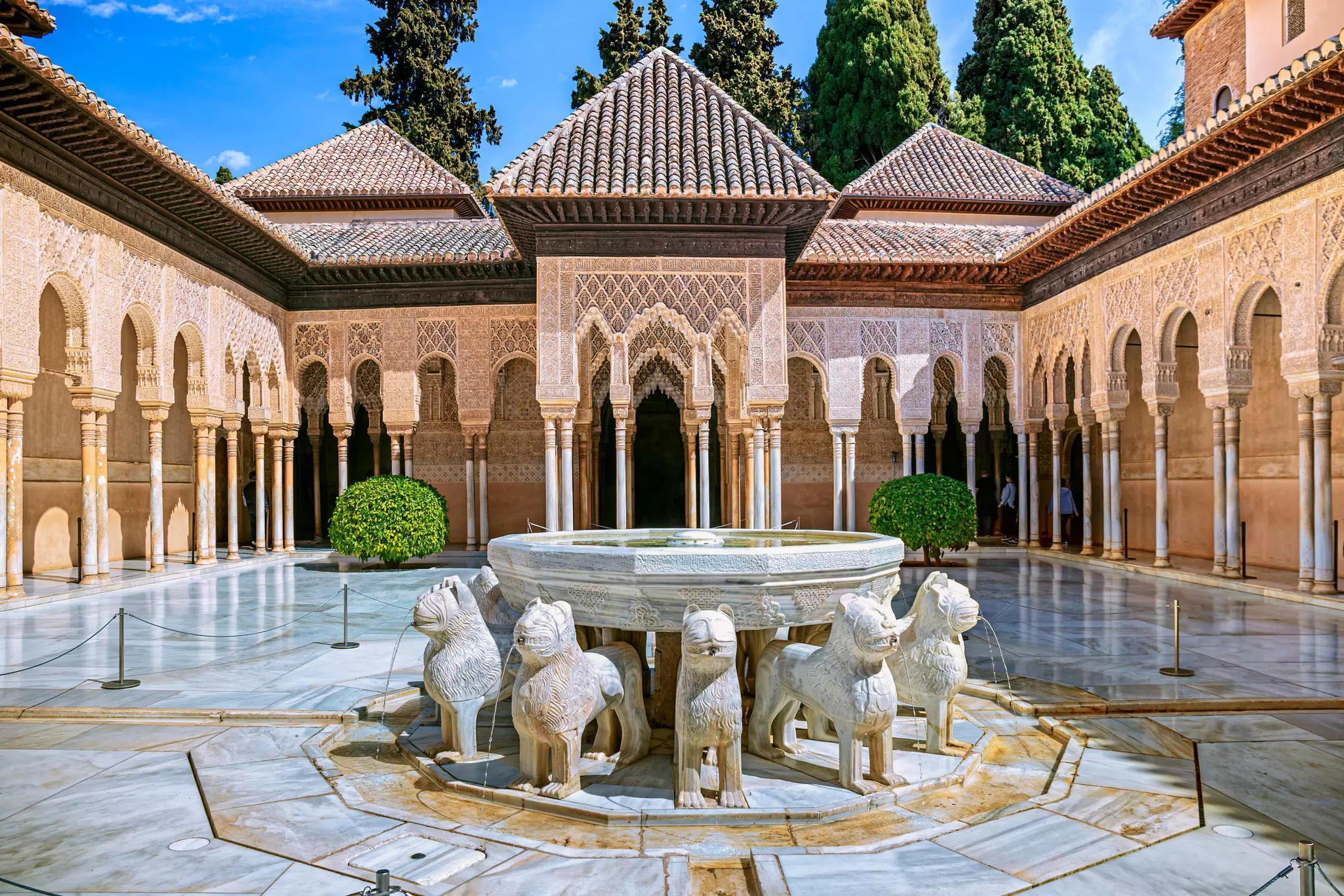
Continue to the Patio de los Leones, centered on an 11th-century fountain channeling water through the mouths of 12 marble lions. To the south, the Sala de los Abencerrajes features a mesmerizing octagonal stalactite ceiling. At the eastern end, the Sala de los Reyes has three leather-lined ceiling alcoves painted by 14th-century Christian artists. To the north, the Sala de Dos Hermanas features a dizzying muqarnas (honeycomb-vaulted) dome. Above, the carved wood screens enabled women to peer down from hallways without being seen. Look out over the gardens from the Mirador de Daraxa. The 16th-century Patio de la Lindaraja brings you to the tile-clad Baño Real de Comares, lit by star-shaped skylights. You'll eventually emerge into the terraced gardens of the Jardines del Partal, replete with reflecting pool.
Palacio de Carlos V
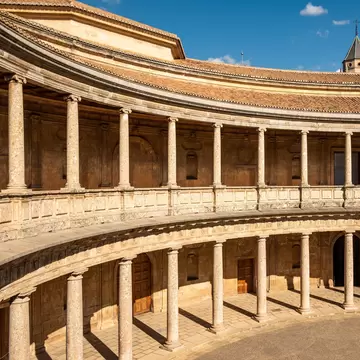
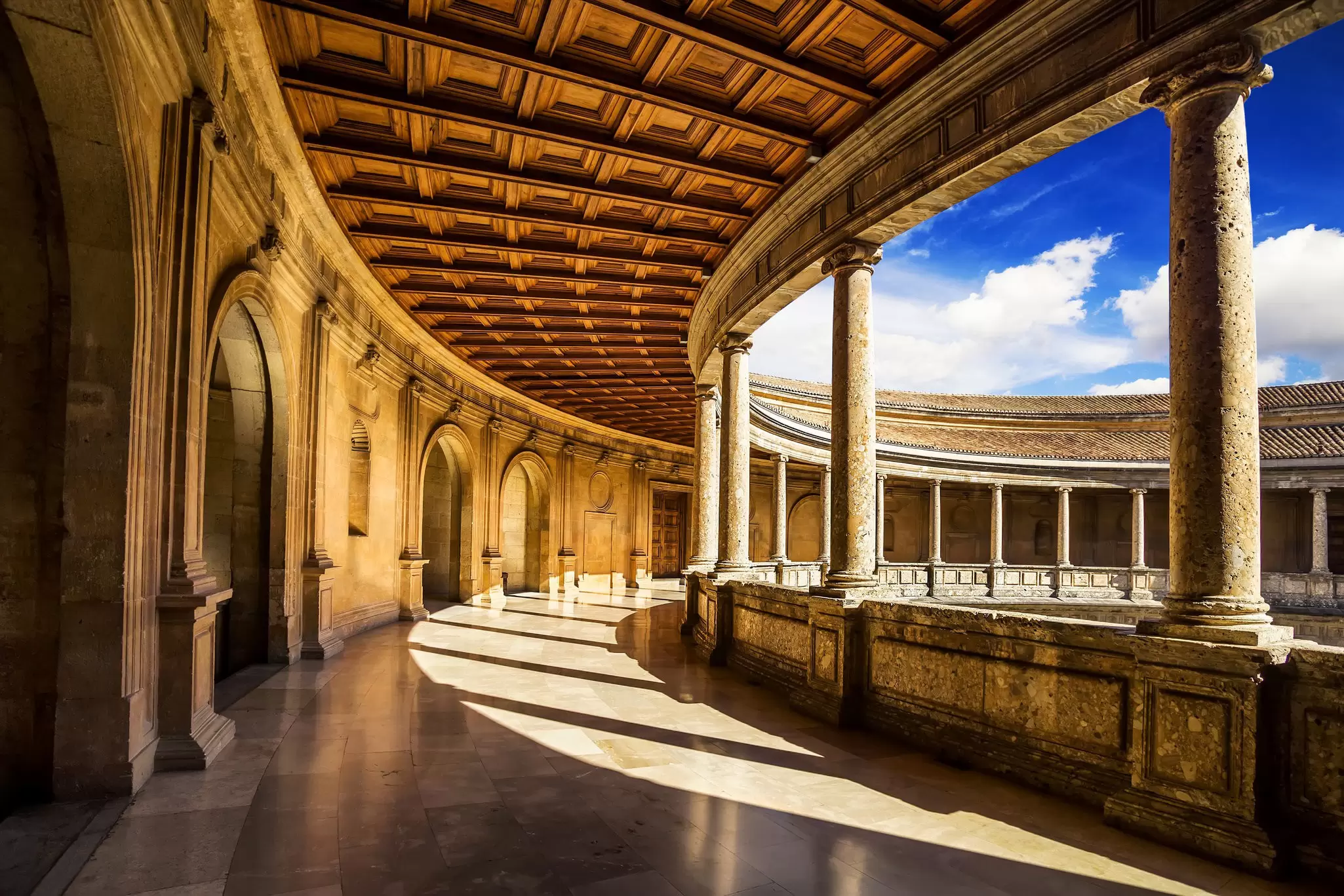
In stark contrast to its surroundings, the round Palacio de Carlos V, begun in 1526 by Toledo architect Pedro Machuca, features a Renaissance facade and a two-tiered circular courtyard ringed by 32 columns.
Museo de la Alhambra
This museum features superb tile work, the elaborately carved wooden door from the Sala de Dos Hermanas, and the excavated remains of the Acequia Real (Royal Water Channel). Its tour de force is the 15th-century Jarrón de las Gacelas, a 1.5m-tall red clay vase covered in blue-and-gold enamel and embossed with leaping gazelles.
Museo de Bellas Artes
Standouts include the 17th-century works of granadino artist Alonso Cano, sculpture by José de Mora and abstract 20th-century paintings by another granadino, José Guerrero.
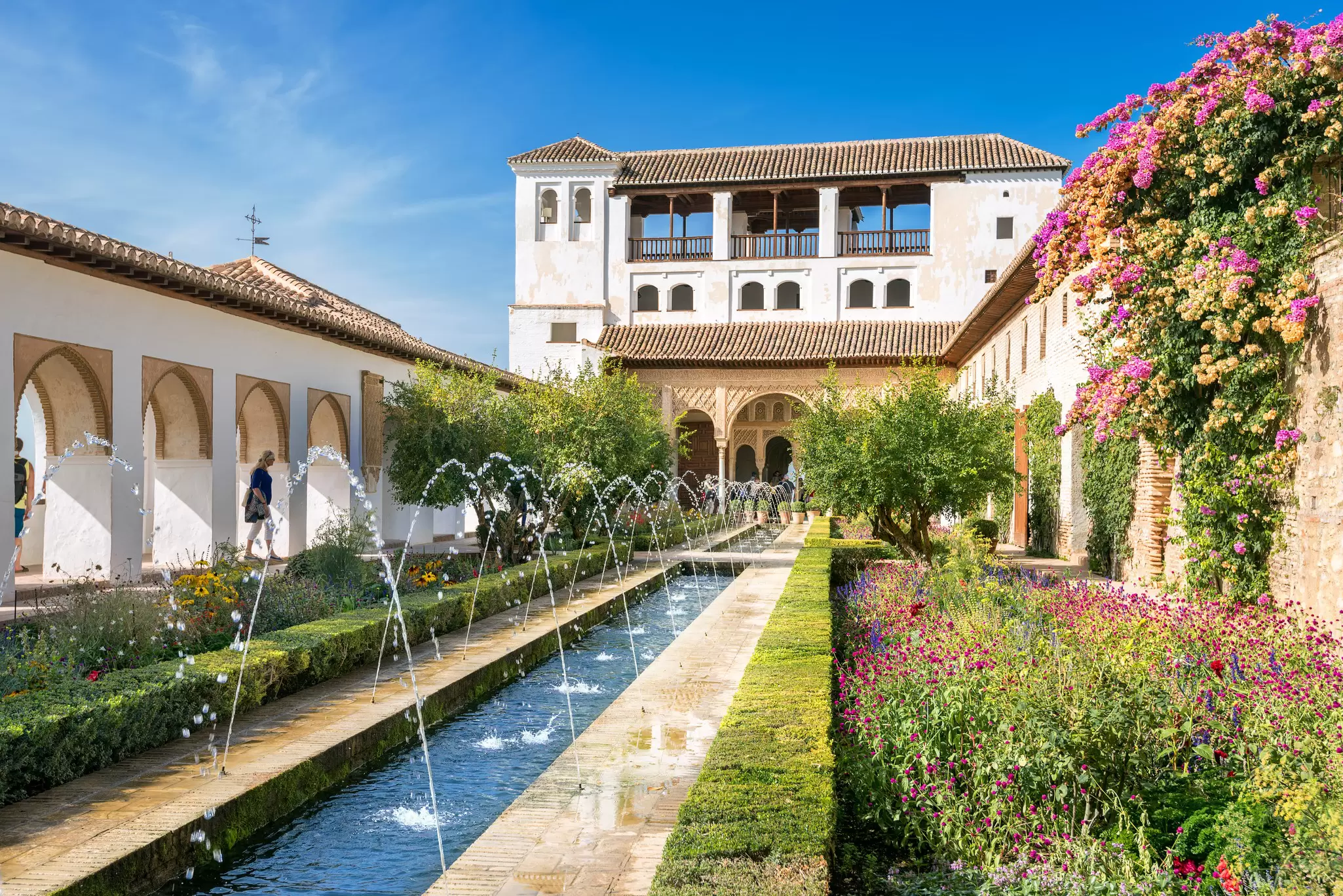
Generalife
The Nasrid rulers’ summer estate takes its name from the Arabic jinan al-‘arif, meaning "the overseer’s gardens." The Patio de la Acequia features immaculately tended gardens and distant views of the Palacios Nazaríes; in the Patio de la Sultana, the trunk of a 700-year-old cypress tree marks the spot where Sultana Zoraya allegedly met with her lover Hamet. Nearby, the Escalera del Agua is a marvel, with water channels running down the staircase's stone balustrades.