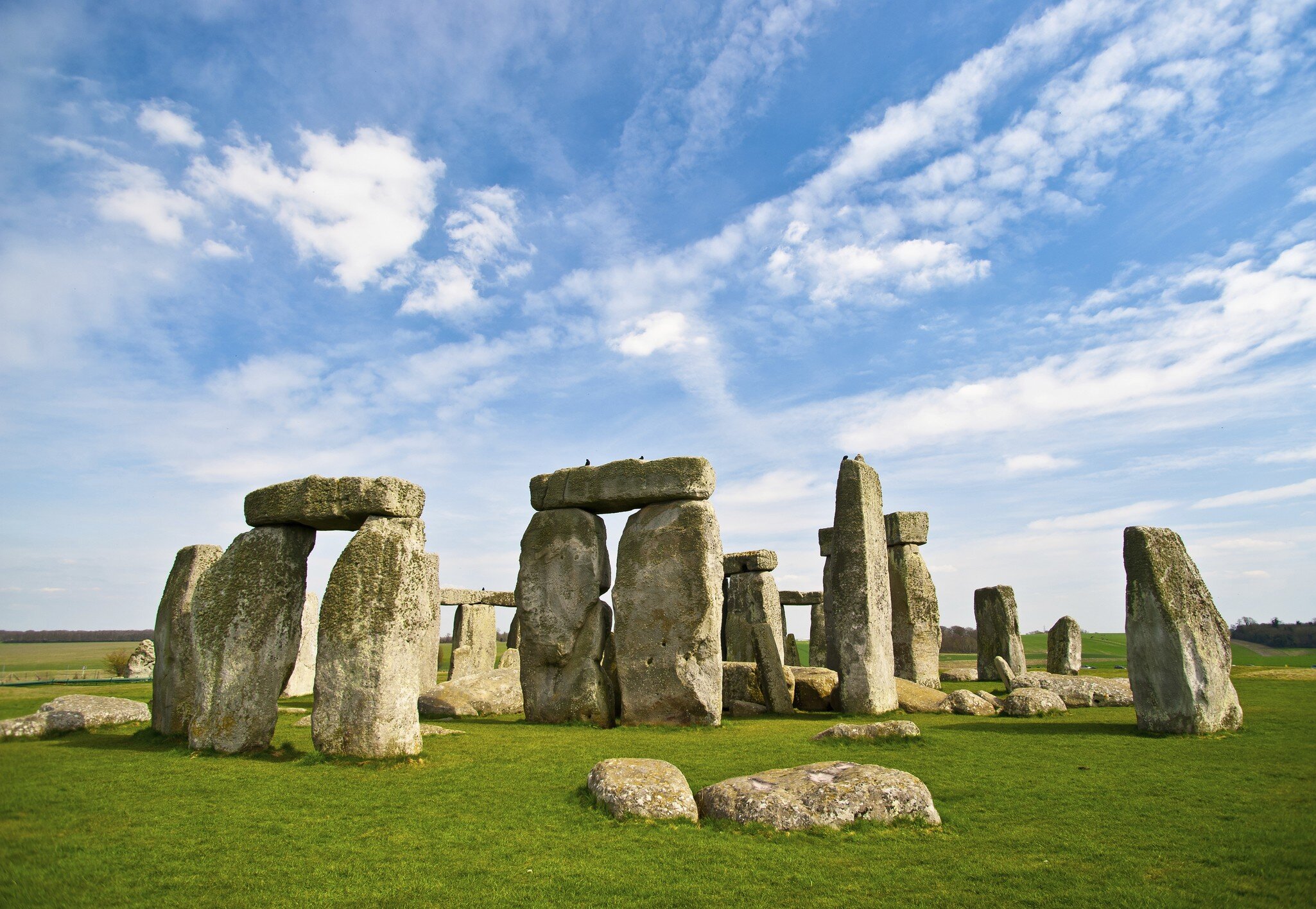
An ultramodern makeover at ancient Stonehenge has brought an impressive visitor center and the closure of an intrusive road (now restored to grassland). The result is a strong sense of historical context, with dignity and mystery returned to an archaeological gem.
Stonehenge operates by pre-booked, timed tickets – secure yours well in advance. At the time of research, opening hours were reduced; check whether summertime early evening visits have resumed. The VIP Stone Circle Experience, where you walk within the stone circle itself, is highly recommended.
Stonehenge is one of Britain's great archaeological mysteries: despite countless theories about the site's purpose, from a sacrificial center to a celestial timepiece, no one knows for sure what drove prehistoric Britons to expend so much time and effort on its construction, although recent archaeological findings show the surrounding area was sacred for hundreds of years before work began.
The first phase of building started around 3000 BCE, when the outer circular bank and ditch were erected. Within this were 56 pits called Aubrey Holes, named after John Aubrey, who discovered them in the 1600s. Cremations were buried around these pits; it's thought they may also have held timber posts or stones.
About 500 years later, Stonehenge's main stones were dragged to the site, erected in a circle and crowned by massive lintels to make the trilithons (two vertical stones topped by a horizontal one). The 30 huge slabs of stone were worked carefully to ensure they locked together. The sarsen stones were cut from an extremely hard rock found on the Marlborough Downs, 20 miles from the site. It's estimated that dragging one of the 50-tonne stones across the countryside would have required about 600 people.
Two curving rows of smaller "bluestones" were also added. The four Station stones were probably set up at around the same time. Then in around 2300 BCE the central bluestones were rearranged forming inner circles and ovals, which were later rearranged to form a bluestone horseshoe.
It's thought some of the mammoth 4-tonne bluestone blocks were hauled from the Preseli Mountains in South Wales, some 250 miles away – an extraordinary feat for Stone Age people equipped with only the simplest of tools. Although no one is entirely sure how the builders transported the stones so far, it's thought they probably used a system of ropes, sledges and rollers fashioned from tree trunks – Salisbury Plain was still covered by forest during Stonehenge's construction.
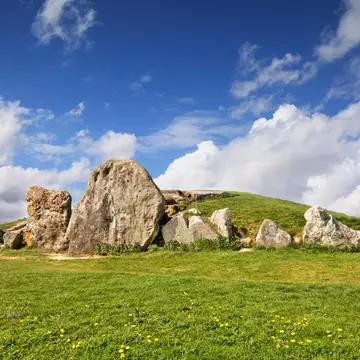
Today, three of the five sets of stones in the trilithon horseshoe are intact; the other two have just a single upright. Of the major sarsen circle of 30 massive vertical stones, 17 uprights and six lintels remain.
Just inside this circle are the South and North Barrows, each originally topped by a stone. Like many stone circles in Britain (including Avebury, 22 miles away), the stones are aligned to coincide with sunrise at the midsummer solstice, which some claim supports the theory that the site was some kind of astronomical calendar.
Prehistoric pilgrims would have entered the site via the Avenue, whose entrance to the circle is marked by the Slaughter Stone and the Heel Stone, located slightly further out on one side.
A decision on long-standing plans to turn parts of the main A303 road, which runs close to the site, into a tunnel has been repeatedly delayed. The proposed tunnel aims to reduce traffic around Stonehenge, although opponents fear it could damage other monuments in the area.
Stonehenge's visitor center is some 1.5 miles from the stones. A fleet of trolley buses makes the 10-minute trip, although it's more atmospheric to walk, via a 2.6-mile circular trail through the ancient landscape.
Visiting the site is free for English Heritage and National Trust members, but they still have to secure a timed ticket. If social-distancing measures are in place, visitor numbers and hours will be reduced, making it harder to secure a time slot – book well ahead.
Trains run from London Waterloo to Salisbury station (£27, 1½ hours, every half hour), nine miles from Stonehenge. Stonehenge Tour buses depart from Salisbury station frequently when Stonehenge is open.