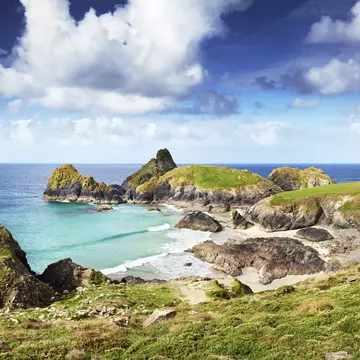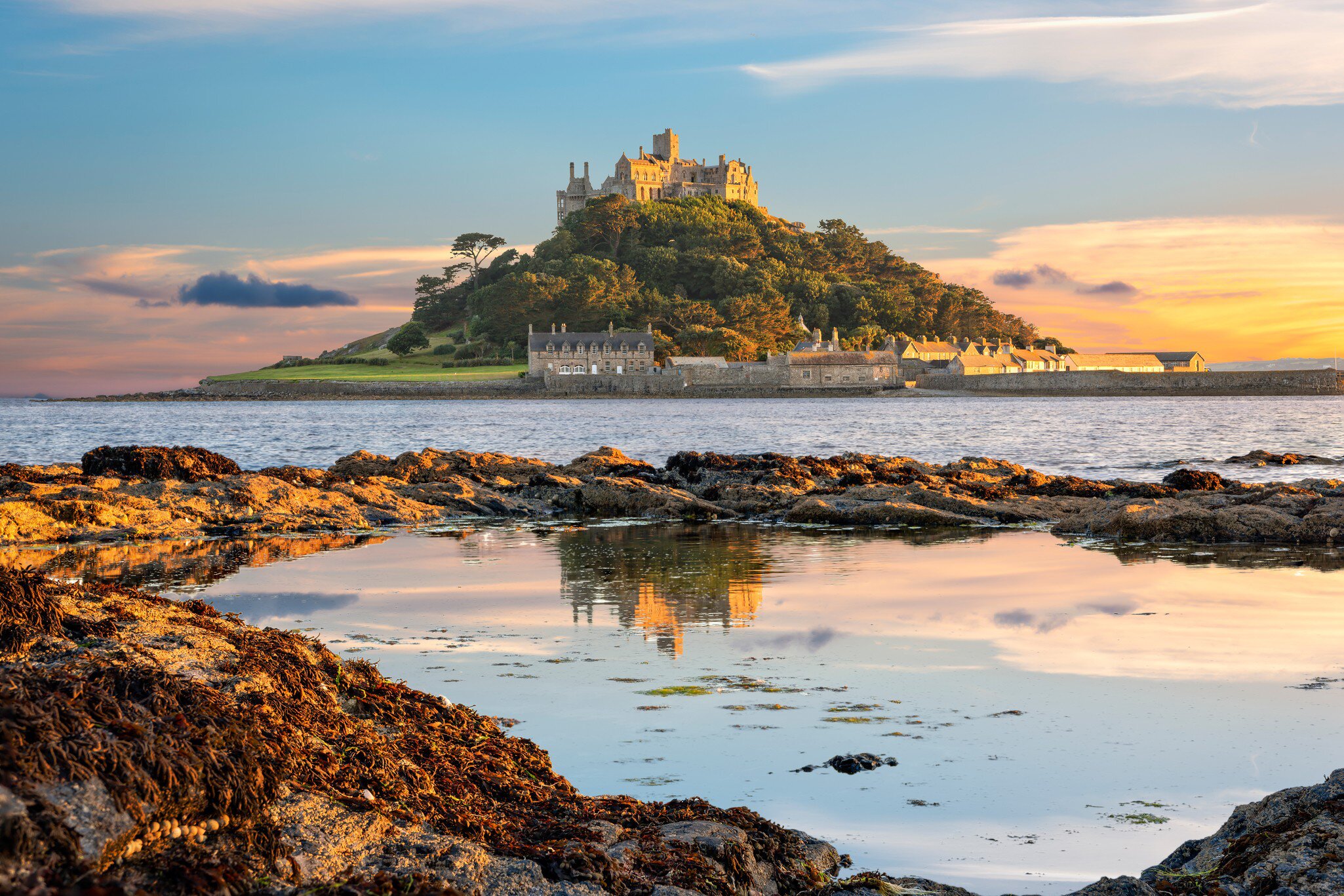
Looming up in the middle of Mount's Bay and connected to the mainland by a cobbled tidal causeway, this iconic abbey-crowned island is an unforgettable sight. Initially a Benedictine monastery, and later the seat of the St Aubyn family, it's a must-visit. Check the website to see whether you have to book a timed visiting slot, and if you have to walk to the island via the causeway at low tide or can hop on a boat (adult/child £2/1) at high tide.
There's been a monastery here since at least the 5th century, but the present abbey was mostly built by Benedictine monks (the same religious order that also constructed the island's sister abbey at Mont St-Michel in France) during the 12th century. Highlights of the main house include the rococo drawing room, the armoury and the 14th-century church, but it's the amazing clifftop gardens that really steal the show. Thanks to the local subclimate, many exotic flowers and shrubs flourish here, and it's all a riot of color in summer.
Though it's still owned by the St Aubyn family, the abbey is run these days by the National Trust. The house has served many roles down the centuries, including castle and prison. It's thought to have been occupied since ancient times – recent excavations, including an axe head, a dagger and a metal clasp, have proved the island has been inhabited since at least the Bronze Age, but it was almost certainly used by prehistoric people long before. According to some scholars, the island may have been used as a trading post for locally mined copper and tin for several thousand years.
The island's Cornish name, Karrek Loos yn Koos ("the gray rock in a wood"), is thought to commemorate a much earlier time before Mount's Bay was flooded – at very low tides, the fossilised trunks of trees sometimes appear from the surrounding sands.
Walking across on the causeway is a magical experience; there's a useful guide to the causeway's opening hours on the website (www.stmichaelsmount.co.uk/plan-your-visit/causeway-opening-times).