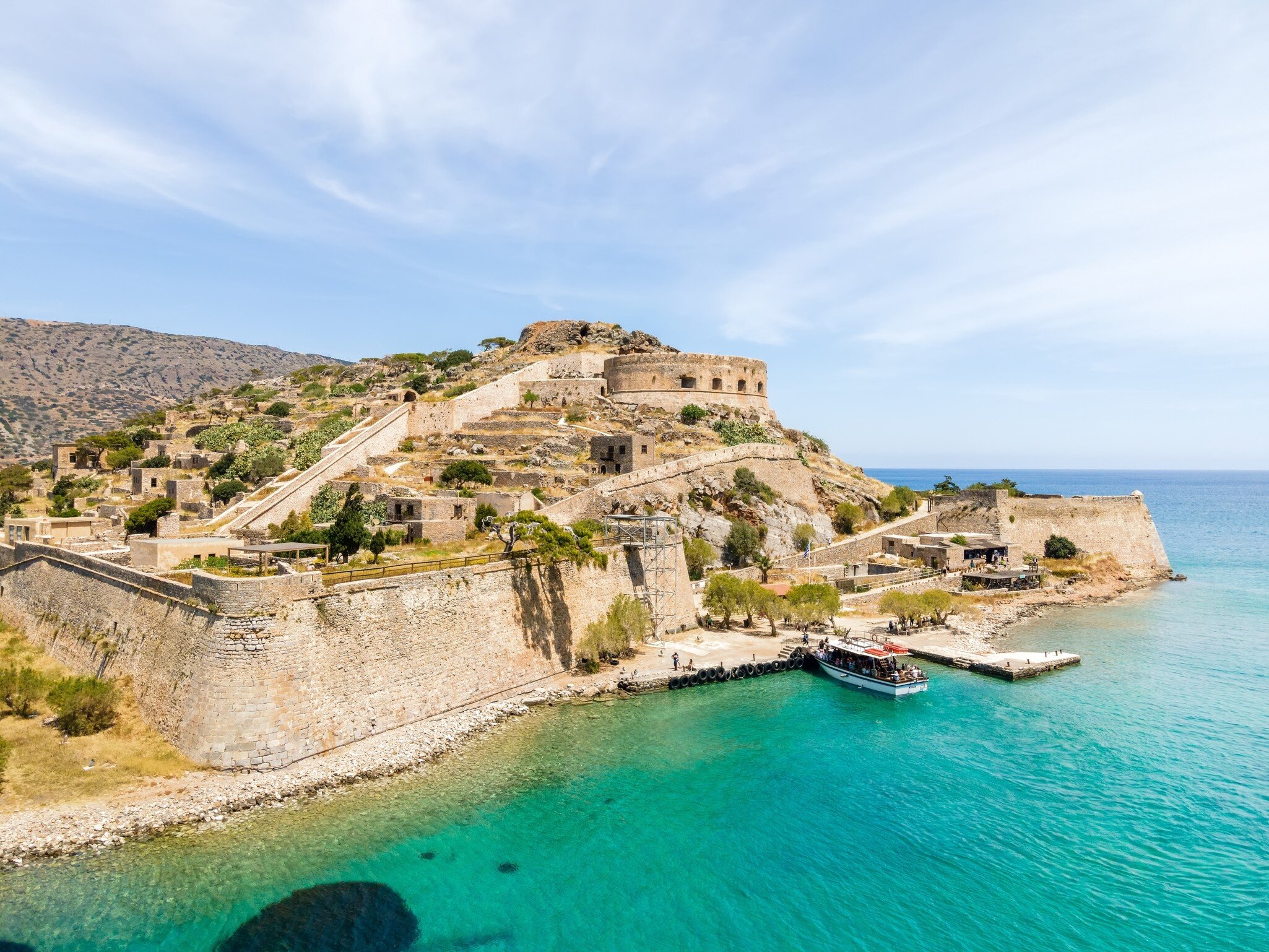
Once a Venetian and Turkish stronghold, little Spinalonga Island is still an imposing fortress today. It's an ideal day trip with a spectacular walk around its perimeter that takes in stellar views and history. Inescapable is the island's role for 53 years in the 20th century as a refuge for people with leprosy. Excursions here are a highlight of a stay in Agios Nikolaos and the region.
Venetian Fortress
Spinalonga Island was a stronghold of the Venetians, who built the massive fortress here in 1579 to protect the bays of Elounda and Mirabello. In 1715, the island fell under Ottoman control. For over 200 years, under various occupiers, the island protected the nearby ports from the many pirates that roamed the Mediterranean and preyed on the coast of Crete.
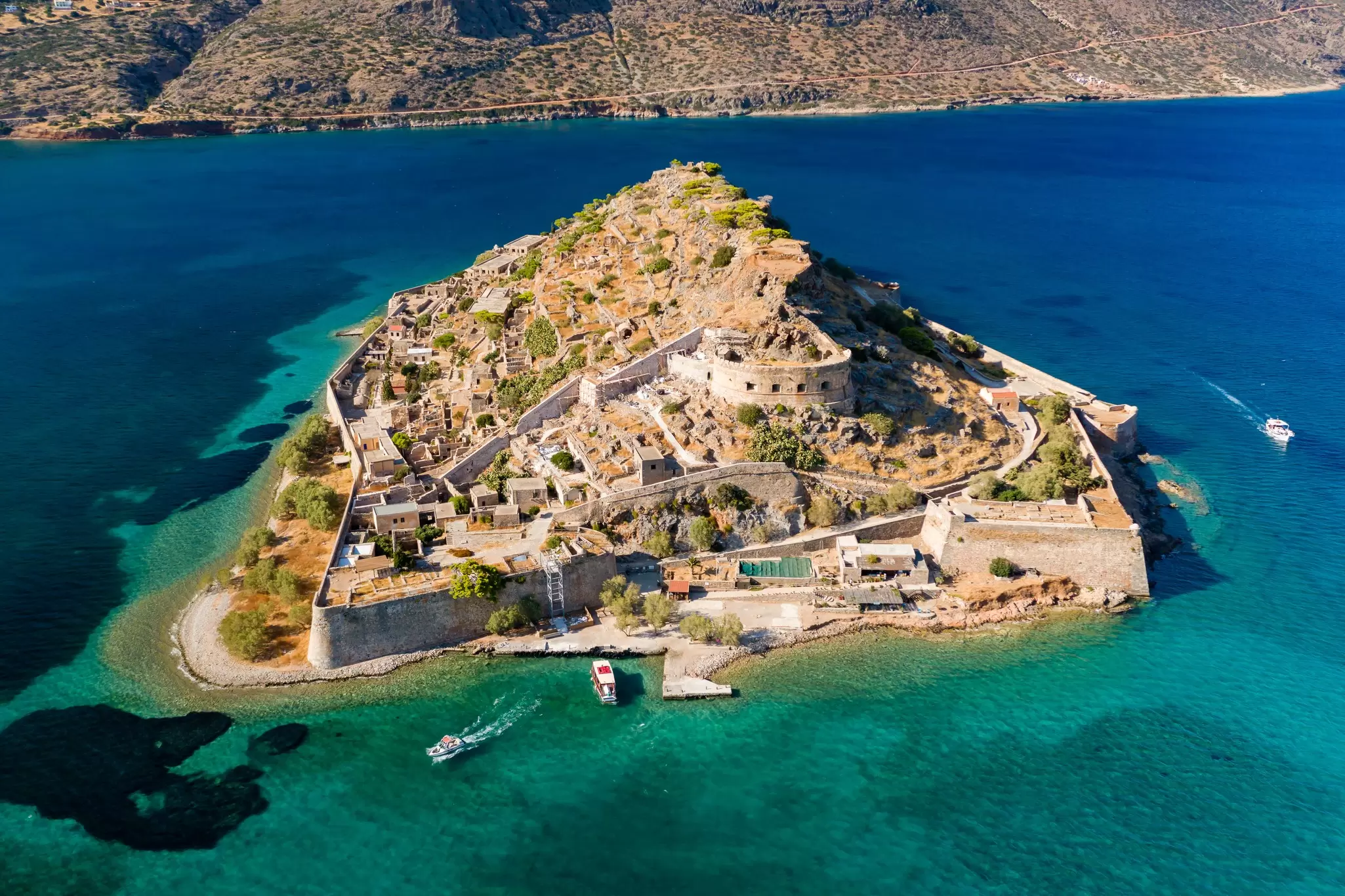
Even today, as you arrive by water, you're struck by the sheer size of the fortifications, which have been undergoing a series of reconstructions. Few will not be chilled, both figuratively and physically, by Dante's Gate, the 20m-long tunnel under a bastion through which patients were brought when they first arrived.
Forced Refuge
Spinalonga Island became one of Europe’s last colonies for people with leprosy in 1903. The island's isolated location off the northern tip of the Spinalonga Peninsula made it an appealing leprosy quarantine zone for a bureaucracy that didn't understand the disease and preferred to literally make people afflicted with it "go away." Besides, it was uninhabited and largely derelict.
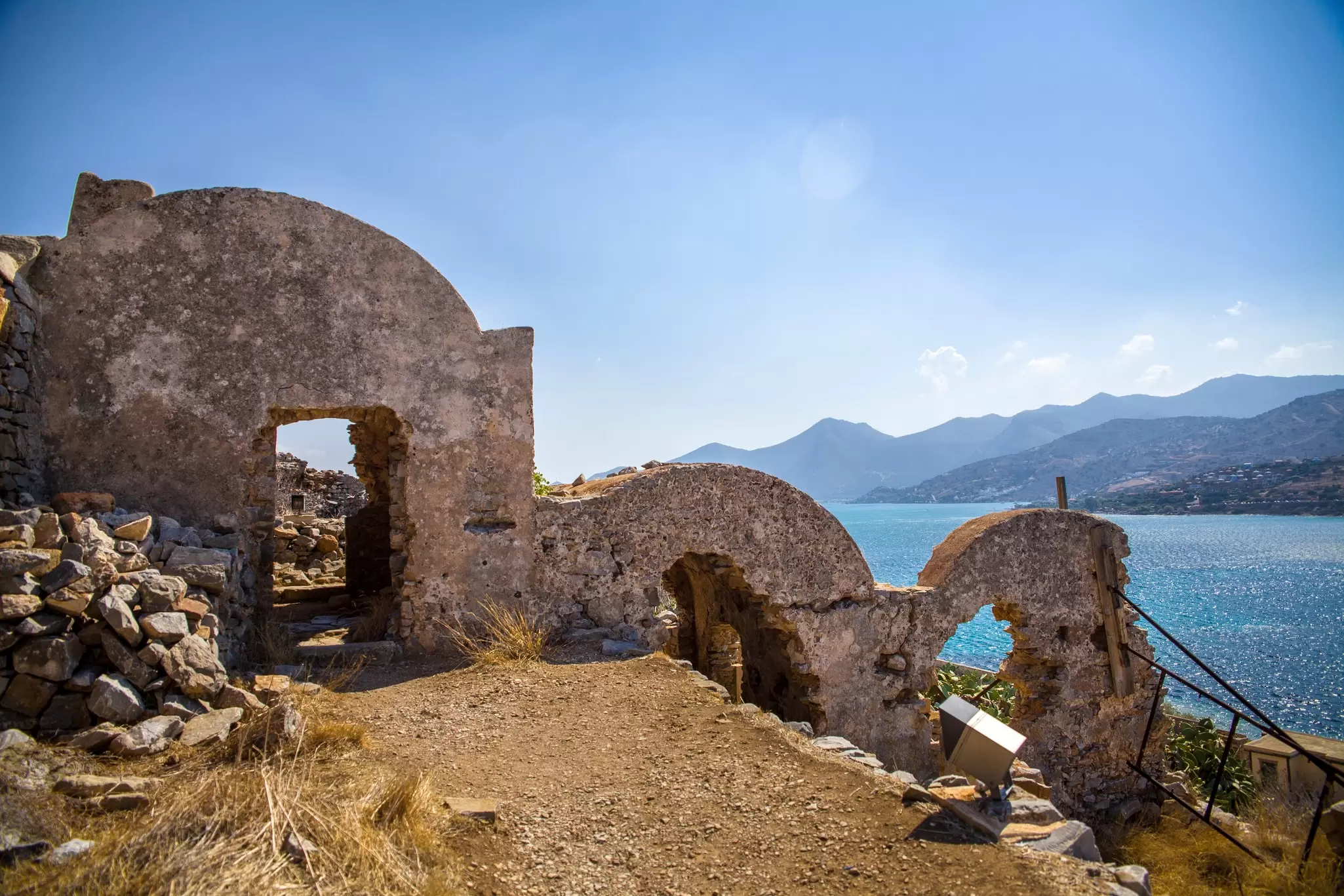
As many as 1000 Greeks were quarantined on Spinalonga, initially in squalid and miserable conditions. This changed in 1936 with the arrival of Epaminondas Remoundakis, a law student who contracted leprosy at the age of 21, and who fought passionately for better medical care and infrastructure on the island. A cure for leprosy was finally discovered in 1948, and the last person left Spinalonga in 1957.
Surviving infrastructure from the island's 53 years as an isolation center includes a large concrete hospital building and various dorms for staff and patients. Most are on the west side, down near the water on the main road around the island.
Touring the Island
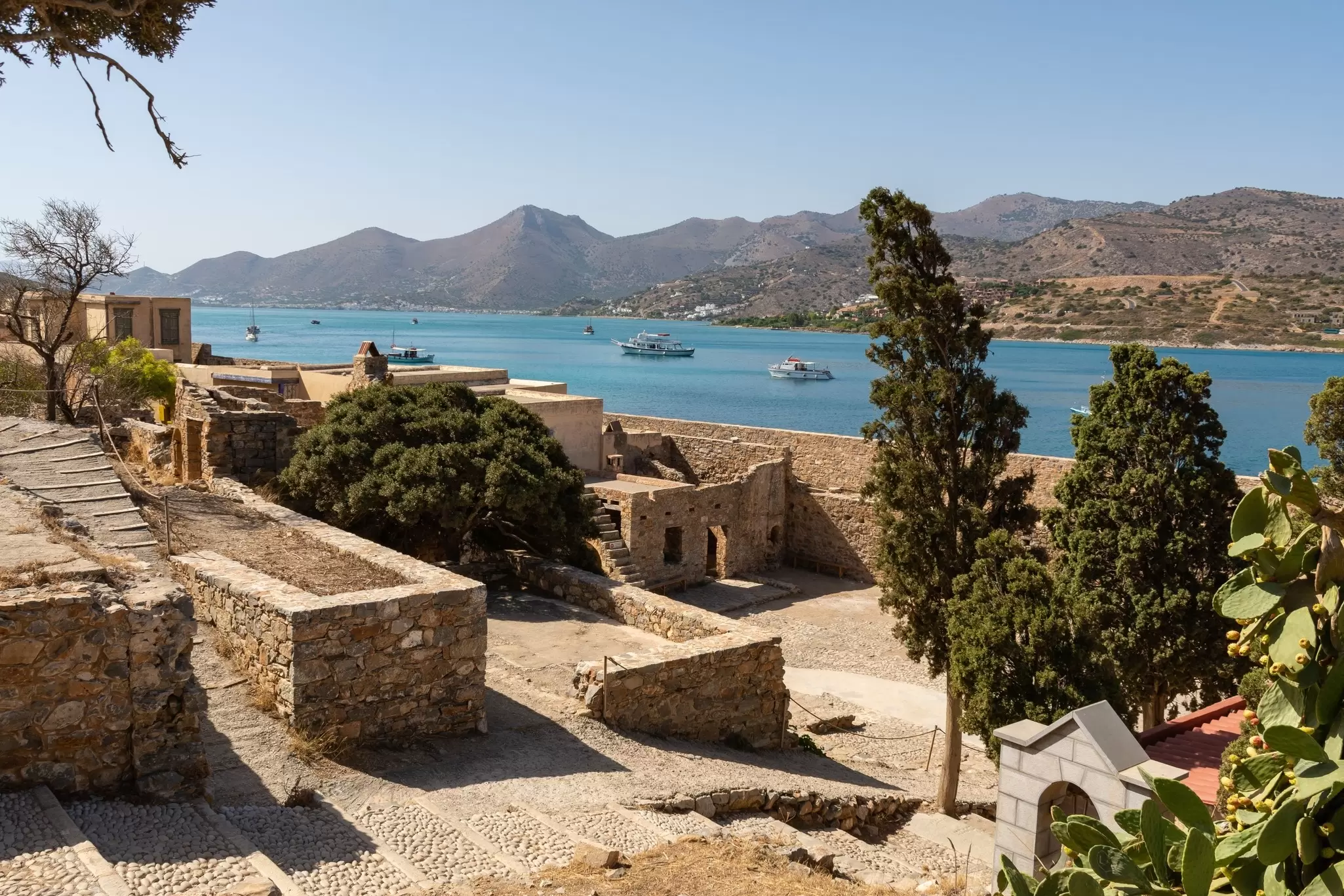
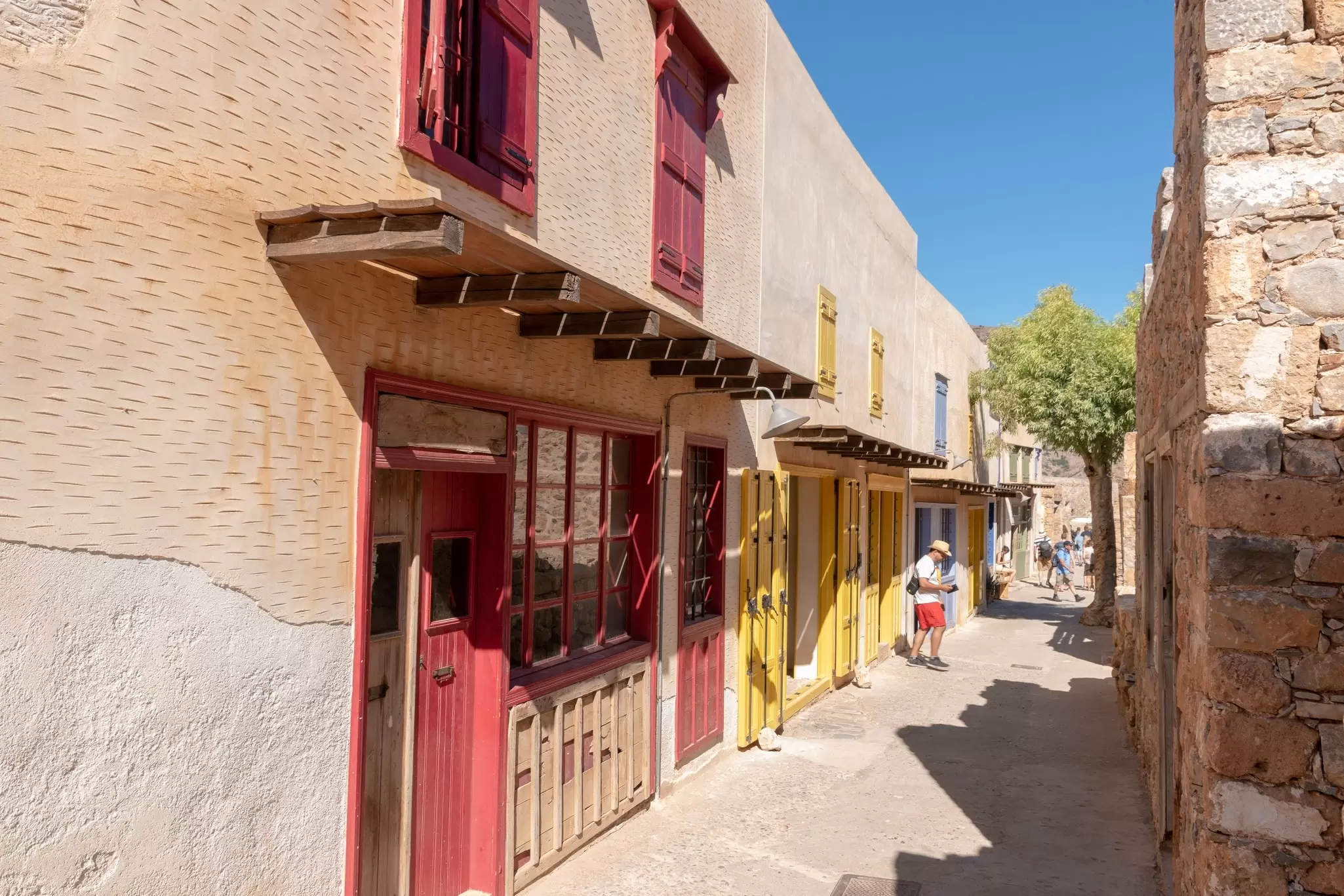
You can walk the 1km perimeter trail of the island in 30 minutes, but you should take much longer. Initially, you are in the midst of the most built-up area, which is immediately after the notorious Dante's Gate tunnel. Emerging onto what passes for the island's main drag, you encounter a series of restored service buildings with displays and exhibits covering the history from the Venetian times to the present day.
Informative signs abound, making for fascinating reading: many are tied to the Greek government's efforts to gain full UNESCO World Heritage Site recognition for the island.
Walking in a clockwise direction, the views of Elounda Bay are ever-changing. The stark umber hills contrast with the brilliant blue water. When you reach the north end, the fortifications become more robust and frequent, with dozens of cannon ports. For centuries, Spinalonga was considered one of the Mediterranean's strongest fortresses.
The east side looks out to sea, and there are many places to pause and quietly contemplate the island's history. Side trails extend up the hillsides where mazes of foundations reveal just how extensively the island was built up during the Venetian era. Look for the small church and cemetery.
Soon, you're back at the docks. Both here and on the east side, trails lead down to the water for swimming.