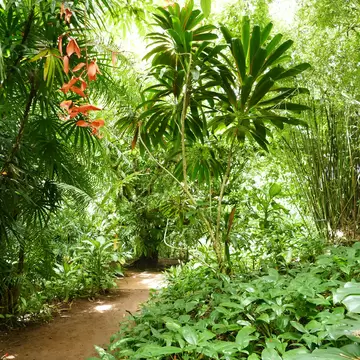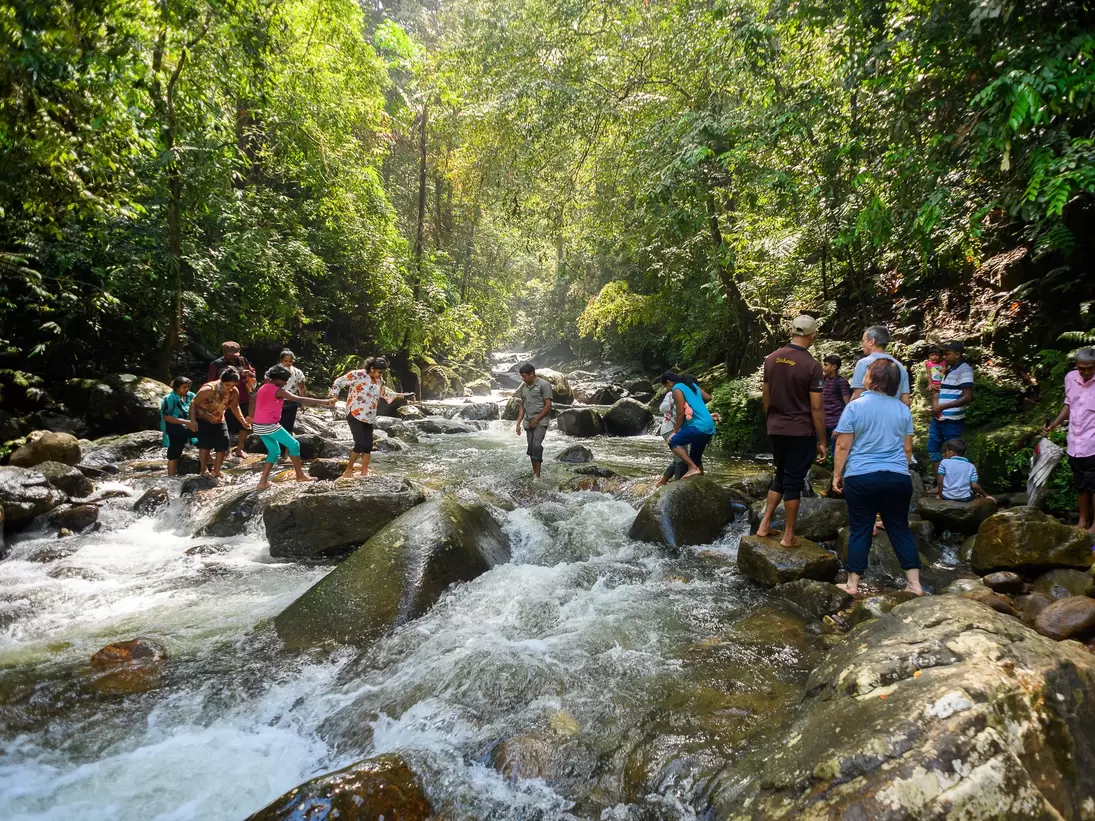
Sri Lanka's top bird-watching destination, the UNESCO-recognized 89-sq-km Sinharaja Forest Reserve (entry Rs 1500; mandatory guide Rs 3000) protects the largest remaining tract of lowland rainforest in Sri Lanka's southwest. Remote and tricky to access, it is an extraordinary biodiversity hotspot: here you'll find over 830 plants and animals unique to the island, as well as most of Sri Lanka's endemic birds.
There are two entrances: Deniyaya in the south (easier to reach by public transport from Galle, other coastal towns and Ratnapura) and Kudawa in the northwest. You'll need your own wheels; otherwise, hire a tuk tuk in Ratnapura.
Unlike most Sri Lankan national parks, access to Sinharaja Forest is only on foot, accompanied by a mandatory guide. While operators in southern resorts offer day trips to Sinharaja, it's best to base yourself in basic accommodation in either Deniyaya and Kudawa. That way, you can be at the park gate when it opens at 7am, when the birds and other wildlife are more active, rather than spend hours in a vehicle.
Guides are indispensable, since the dense rainforest canopy lets in limited daylight, and wildlife spotting isn't particularly easy. The two- to three-hour rainforest treks are incredibly worthwhile if you're a keen walker unperturbed by regular tropical downpours (year-round, though January to March and August and September are marginally drier), muddy forest tracks, leeches (bring leech socks!) and other forest critters, including fist-sized arachnids and the venomous krait and hump-nosed viper.
Sinharaja's largest carnivore is the leopard; you're more likely to see its droppings and tracks rather than catch sight of the majestic feline. Also seldom seen are rusty spotted cats and fishing cats. Sambar deer, barking deer and wild boars are easily seen in the undergrowth (also look out for porcupines, pangolins, mongooses and squirrels). Look up to see the swaying canopy, whose motion betrays the presence of purple-faced langurs.