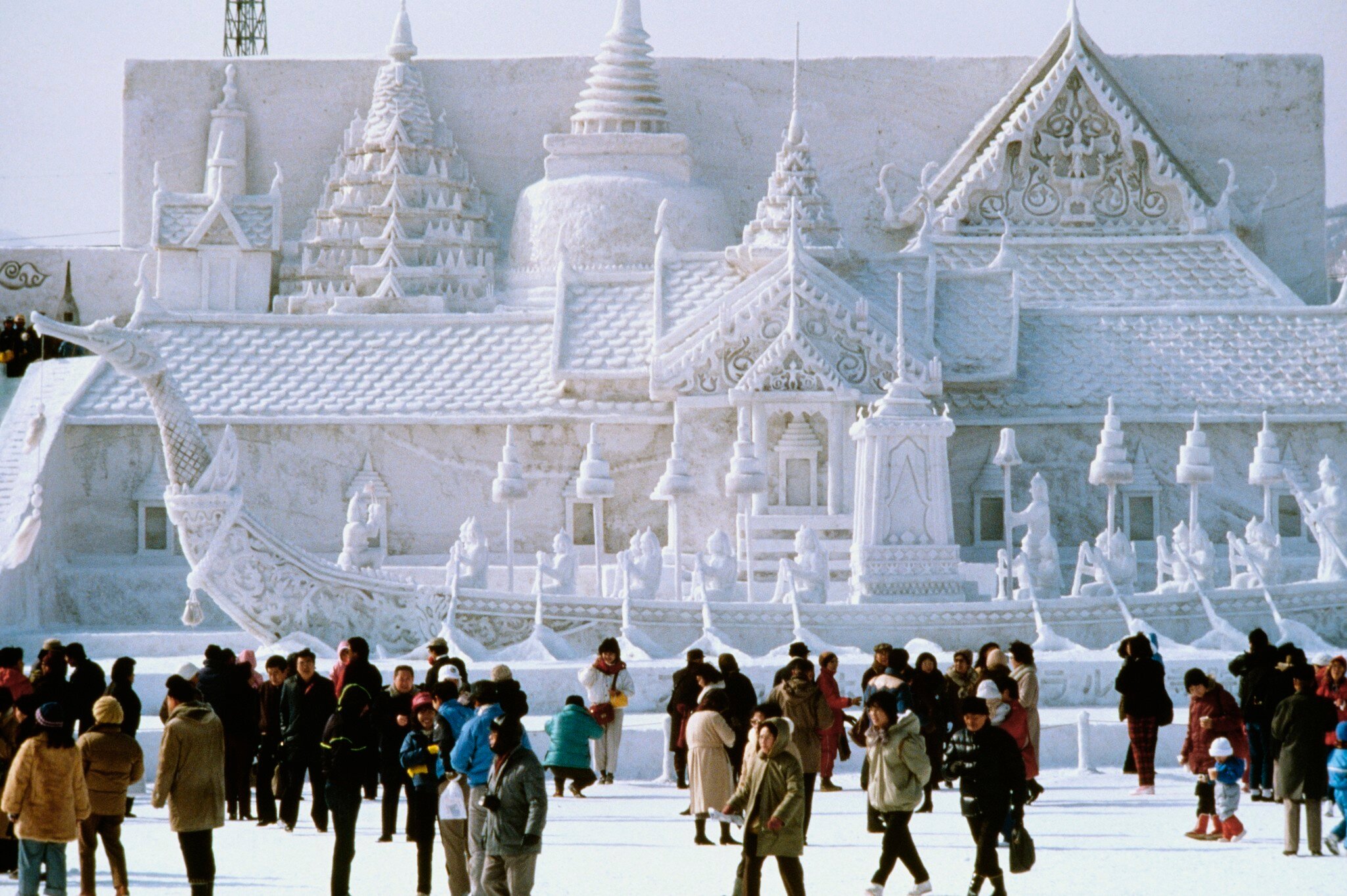
Drawing more than two million excited visitors and literally doubling the population of Sapporo, the annual Yuki Matsuri (さっぽろ雪まつり; Snow Festival) takes place across three sites over seven days in early February. It’s arguably one of Japan’s top festivals and not to be missed if you have the opportunity.
History of the Yuki Matsuri
While most major Japanese festivals have some ties to religion, Yuki Matsuri has none and instead dates to 1950, when local high school students built six snow statues in Ōdōri-kōen. They received a positive reaction and it was decided to do it again. The Japan Self Defense Force stepped up in 1955, building a number of huge statues, then for the 10th festival in 1959, the city went all out, making snow sculptures that were shown on television and in newspapers throughout Japan. That brought visitors from all over the country the following and ensuing years, then for the 1972 Winter Olympics, Sapporo and its Snow Festival featured in media all over the world. The International Snow Sculpture Contest kicked off in 1974, and for the last 50 years, teams from around the globe have attended to compete in what has become an international festival.
Ōdōri-Kōen Site
While there are three official festival sites around Sapporo, keep in mind that as the city’s population literally doubles for seven days, the whole place is pumping. The Ōdōri-kōen site covers 11 city blocks with everything illuminated until 10pm. This is where you’ll see the biggest snow and ice statues, some up to 15m high and 25m wide, plus you’ll find an ice-skating rink, jump rail for snowboarders, light-and-sound shows and a full array of street stalls offering the best in food and drink from across Hokkaidō.
As well as the spectacular International Snow Sculpture Contest, which draws teams from all over the world, the Citizens’ Snow Sculptures, a category with its own popularity contest, is a winner, with some 80 local groups entering and numbers increasing every year. Ōdōri-kōen is alive and this is a great time to head up the Sapporo TV Tower at the eastern end of the park to look down on it all, especially after sunset.
Susukino Site
For six blocks south from Susukino Crossing, the festival takes over Sapporo’s legendary entertainment district. While neon lights are the norm in this part of the city, it’s all go for the festival, with some 60 sponsored and incredibly detailed ice statues lining the main street and illuminated until 11pm. There’s lots of branding going on down here, along with plenty of restaurants and bars to dive into. One of the best ways to stay warm is to consume a bowl of steaming Sapporo miso-rāmen. Expect all sorts of well-lubricated revelry as the night rolls on.
Tsudome Site
In northern Sapporo, next to Okadama Airport, Tsudome is a sports dome and recreation area that is home to the festival’s "fun for the family" activities. Indoor attractions include giant slides, playgrounds and food stalls, with all to be enjoyed no matter the weather. On the menu outdoors are ice slides, rafting on snow, luge slopes, a white maze and plenty more.
The Tsudome site is open 10am to 4pm each day of the festival and accessed by shuttle bus from Sakaemachi Station on the Tōhō subway line.