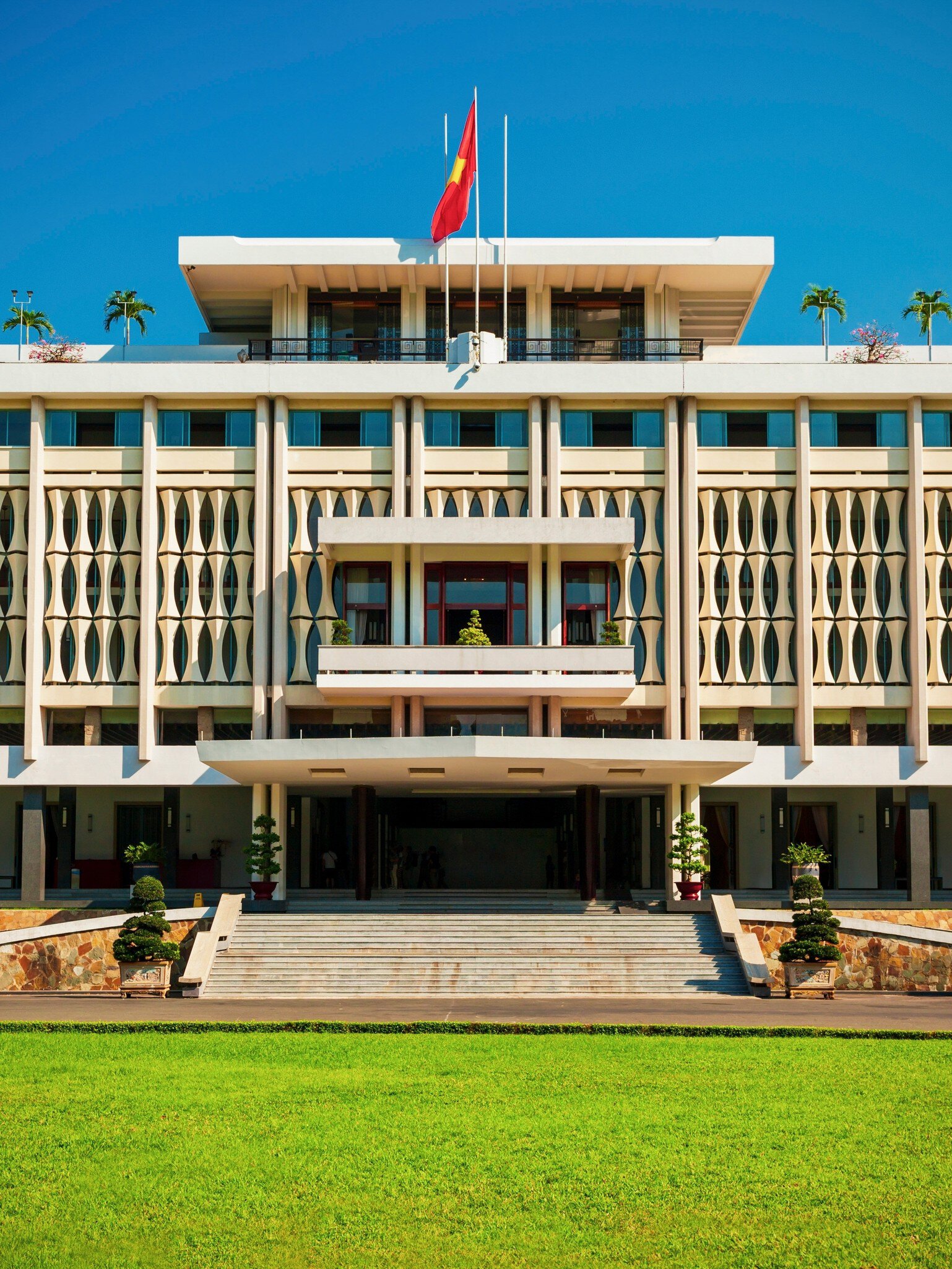
The Reunification Palace, also known as the Independence Palace, is a momentous site in the events leading to the end of the American War. Whether you are a history buff, nature lover or architecture and art enthusiast, this attraction will be worth every two to three hours you're here to visit.
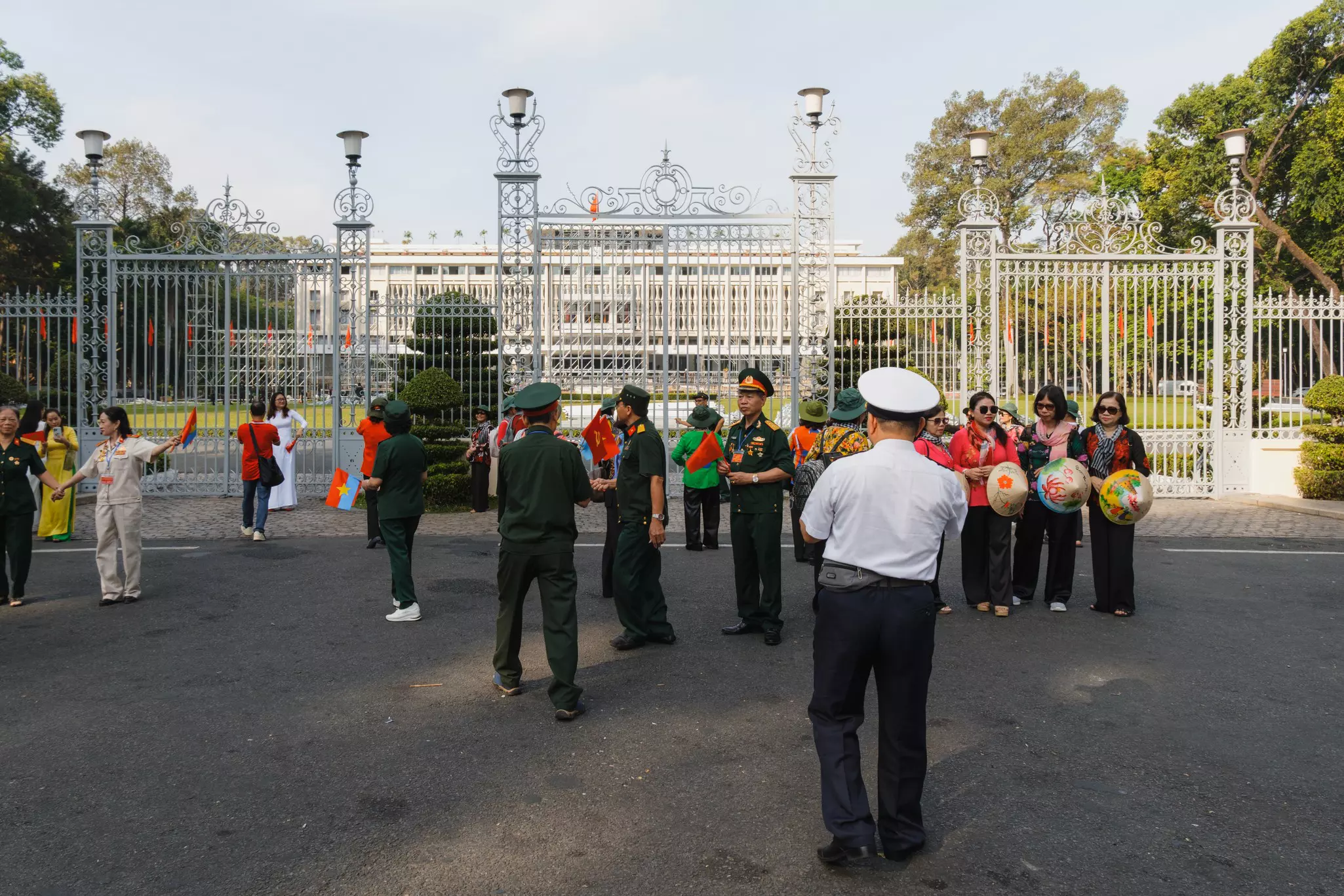
Front Gate
The front gate of Independence Palace is perhaps the palace's most recognizable feature. It is immortalized in photographs of the North Vietnamese tank crashing through it on April 30, 1975, a moment that symbolized the end of the American War and the reunification of the country – marking the significance of the palace in Vietnam's history.
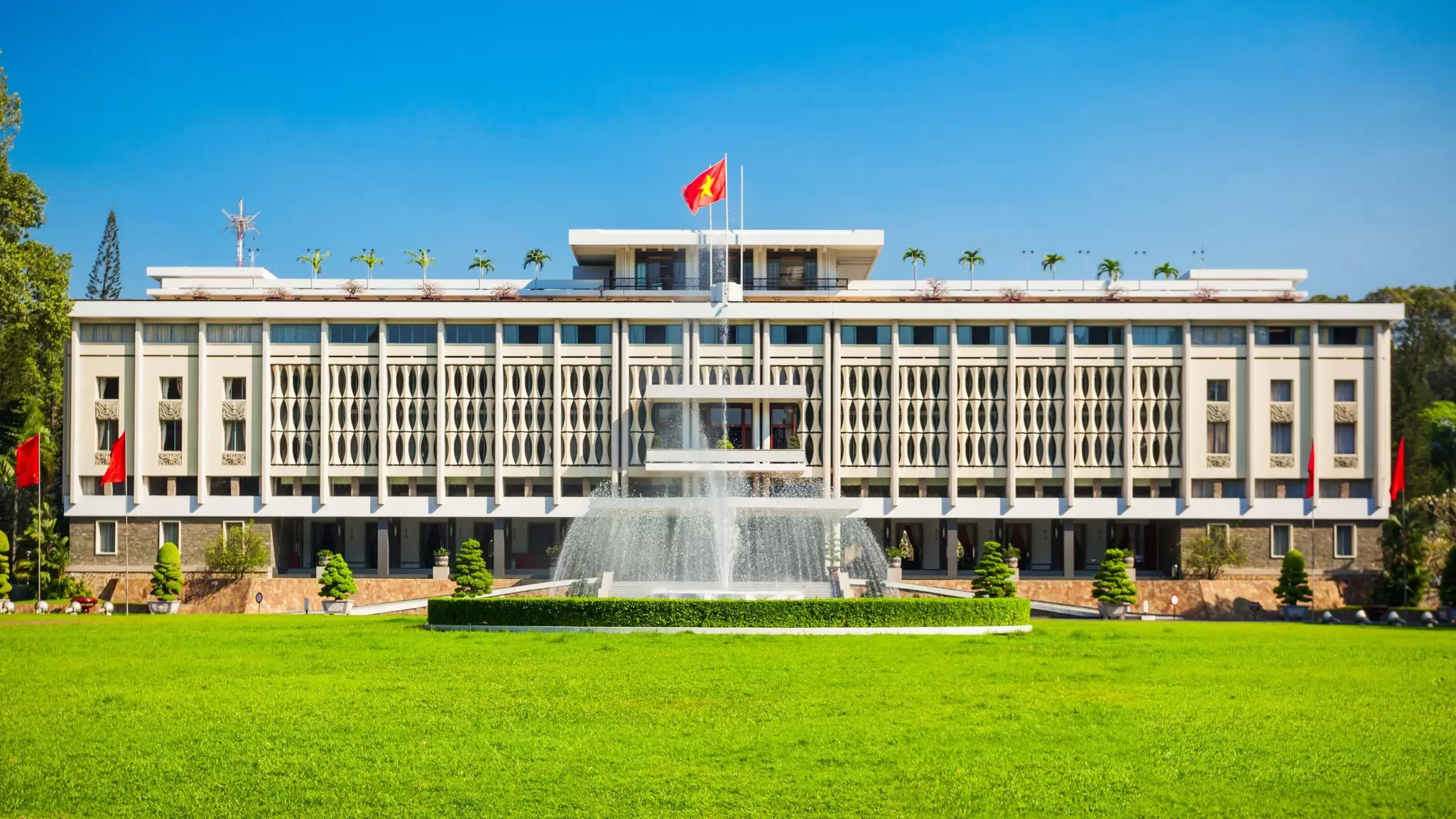
Fountain
The elegant fountain in the middle of the oval-shaped front lawn is the best spot to marvel at the palace’s symmetrical structure. In keeping with feng shui principles, it's a design common in preventing the building from facing the main road, which is believed to be a bad omen.
Cinema Room
A unique feature of the palace is its private cinema, which was used by the president to screen movies for entertainment. Today it often shows documentaries and historical films about the palace and the American War, providing visitors with additional context.
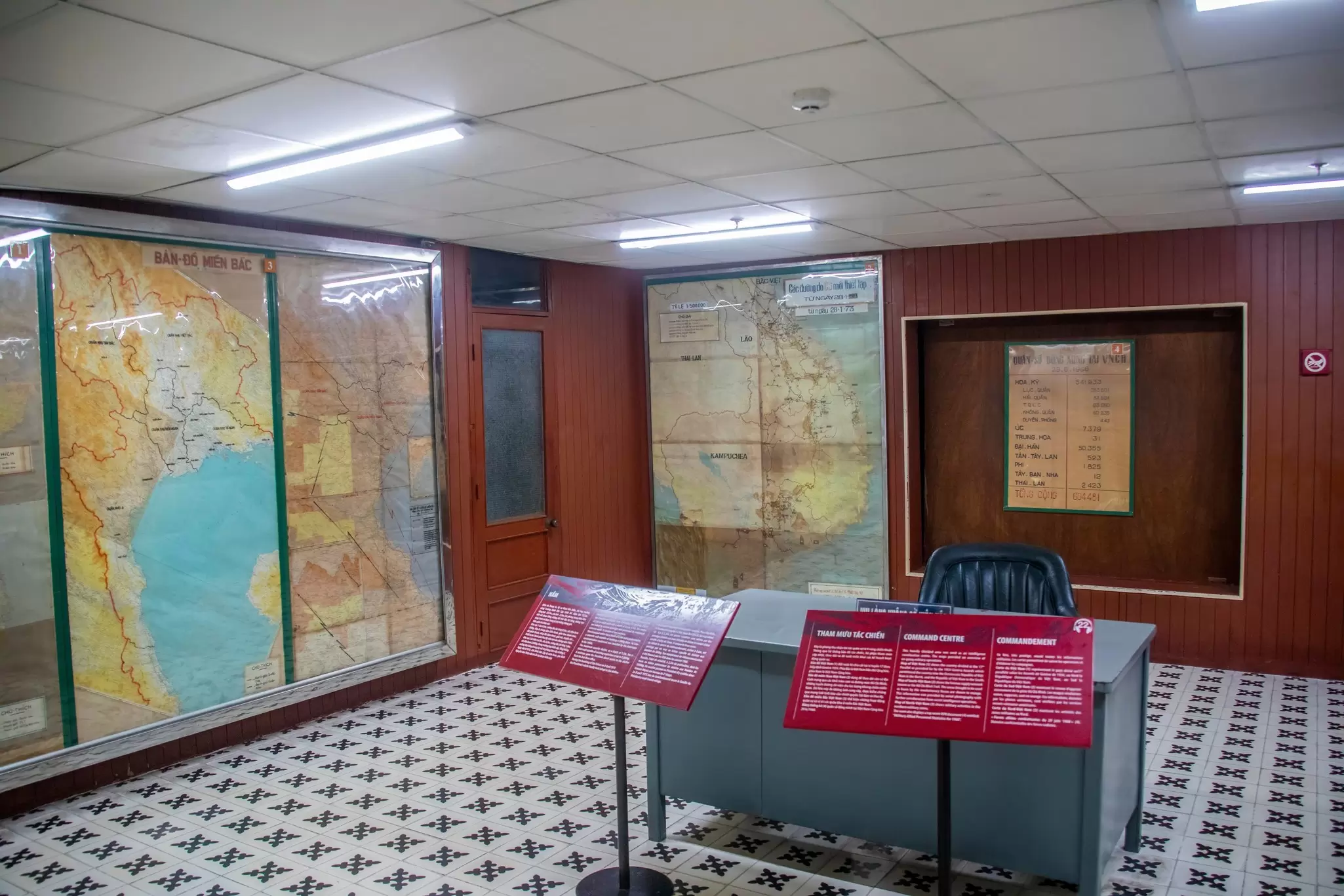
Bunkers
The bunkers are one of the most fascinating parts of the palace. Characterized by narrow corridors, low ceilings and dim light, it was used by the president and his military advisors to monitor the progress of the war. It is equipped with old maps, radio equipment and telephones, offering a tangible connection to the war's strategic operations. The bunkers aren't well ventilated, so a portable fan of sorts is recommended.
Rooftop Helipad
The rooftop of the Independence Palace features a helipad, which was used during the final days of the American War. A replica of the UH-1 Huey helicopter, similar to those used during the war, is displayed here, symbolizing the evacuation efforts as the city fell. The helipad also offers a panoramic view of the relic.
Museum on the Palace Grounds
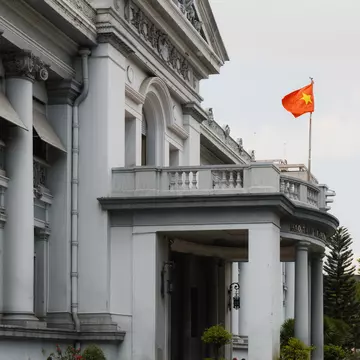
Admission to the palace also grants access to the exhibition room in the former Norodom Palace. Within this two-story French building you’ll explore its historical evolution and the turbulent past of the Reunification Palace and those who resided in it through rare photographs, immersive documentary videos and artifacts organized into themes and historical periods. The kitsch detailing and period architectural motifs of the exhibition hall themselves make it an intriguing spectacle. Allow about an hour to cover the whole exhibition.
Among the Greenery
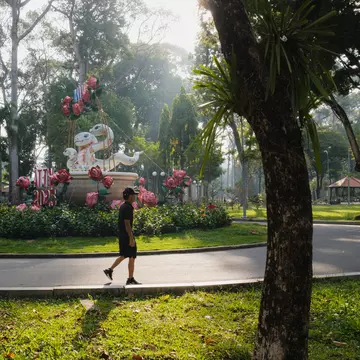
Though no one knows exactly when the magnificent trees surrounding the main buildings were planted or why the gazebo was constructed on such a distant grassy hill, put aside these unanswered questions and enjoy a walk. The winding pathways are covered by the lush foliage of tropical plants and dotted with meticulously pruned shrubs and flowering plants. Grab a cold drink and some snacks from Cafe 30/4 before heading to the gazebo to relax.