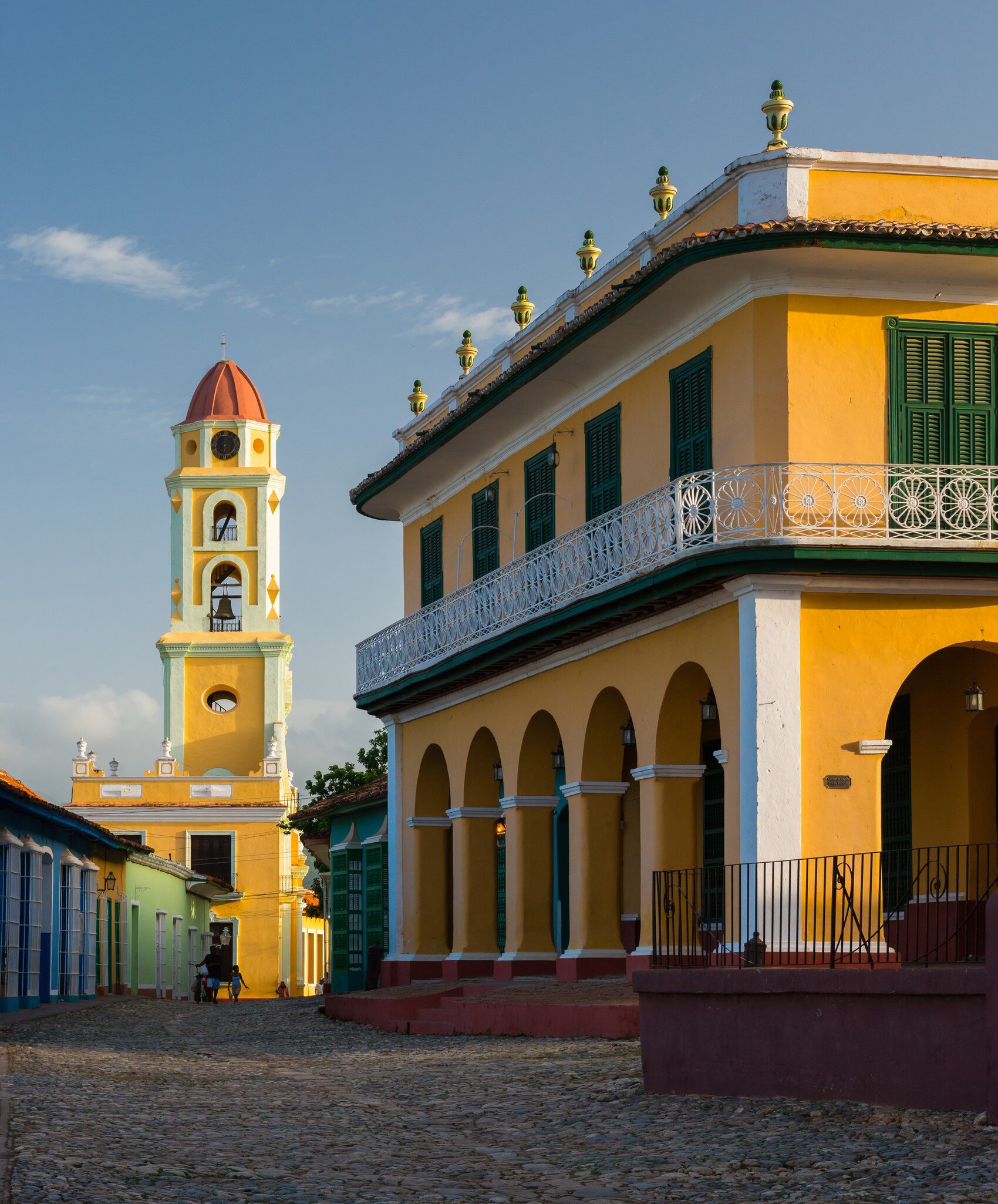
Cocooned amid the cobbles in the middle of Trinidad's centro histórico, Plaza Mayor is about as 19th century you can get in today’s world without a time machine, especially in the morning before the tourists roll in. Set on sloping ground, the square is ringed by an impressive ensemble of colonial-era mansions built by Cuba’s erstwhile sugar barons. Many are now museums.
Romantic Museum
The emblematic Palacio Brunet was built in 1740, with a second floor added in 1808 (a sure sign the owners had money). The expansion was funded by the house’s then owner, Jose Mariano Borrell y Padron, one of the richest men in Cuba who went on to fund Trinidad’s Palacio Cantero and the Hacienda Ingenio Guáimaro in the Valle de los Ingenios. It’s been the Museo Romántico (entry CUP$100) since 1974.
Of all Trinidad’s museums, this is the most impressive. It's filled with original 19th-century furnishings, a banquet table set for dinner, faded family portraits and a tiled period kitchen. The shady Andalusian courtyard with its wooden balustrades is gorgeous.
Archaeological Museum
On the northwestern side of Plaza Mayor, the Museo de Arqueología Guamuhaya (entry CUP$100) contains a curious melange of stuffed animals, indigenous skeletons, booty from shipwrecks and random 19th-century kitchen furniture. Popularly known as Casa Padrón, the building in which it resides dates from 1835. The German naturalist Alexander von Humboldt was once allegedly a guest.
Architectural Museum
The azure-blue house on the southeastern side of Plaza Mayor is the Casa de los Sanchez Iznaga. This was the former residence of the wealthy Iznaga family, who once owned one of the region’s largest sugar mills but whose offspring were involved in revolutionary activities from the 1840s onward.
Originally two buildings, erected in 1738 and 1785, the house acquired its current layout in the early 19th century. With an attractive frontage set off by wrought-iron railings enclosing a shady porch, it hosts the modest Museo de Arquitectura Trinitaria (entry CUP$50) with frescoes, chandeliers and brief explanations of the city’s distinct architectural features from moldings to doorknobs.
Benito Ortiz Art Gallery
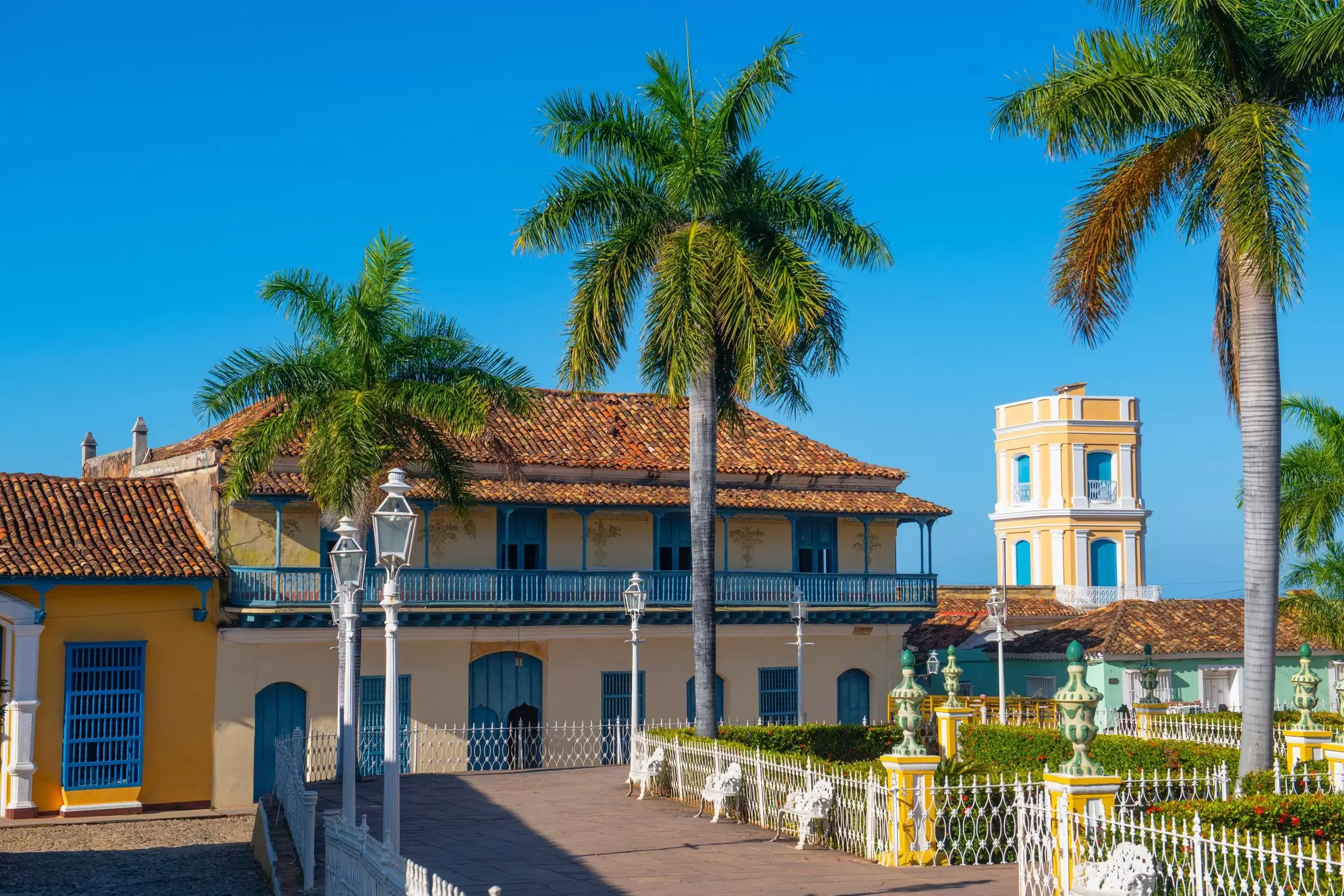
Behold the distinctive barrotes (wooden window grills) on the Casa Ortiz, a distinctive Trinidadian architectural feature that hints at the house’s age (metal grills later replaced wood). The house was built by landowner Don Jose Rafael Ortiz around 1800; its two stories displayed his incredible wealth. Today it’s the Galería de Arte Benito Ortiz (entry free) with mostly temporary exhibitions of talented local artists.
Iglesia Parroquial de la Santísima Trinidad
A church has graced Plaza Mayor since the 1600s, although the current neoclassical structure, famed for its appearance in numerous photo-shoots, is a result of a 19th-century rebuild that took 75 years (the current church opened in 1892).
The interior is bright and simply furnished, save for two ornate spiral staircases and a dark-wood Gothic altarpiece. It’s also home to one of Cuba’s most revered religious icons, El Señor de la Vera Cruz (Christ of the True Cross), dating from 1713.
The crucifix was originally destined for Veracruz in Mexico. However, after the ship carrying it was sent back to port three times due to inclement weather, Trinidad’s priests assumed it was divine intervention and decided to keep the cross. It remains a venerated object.
