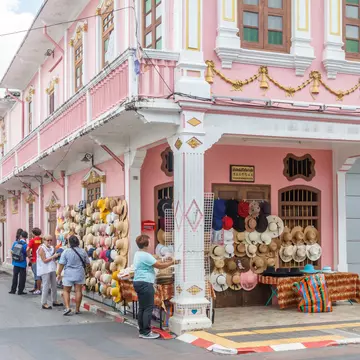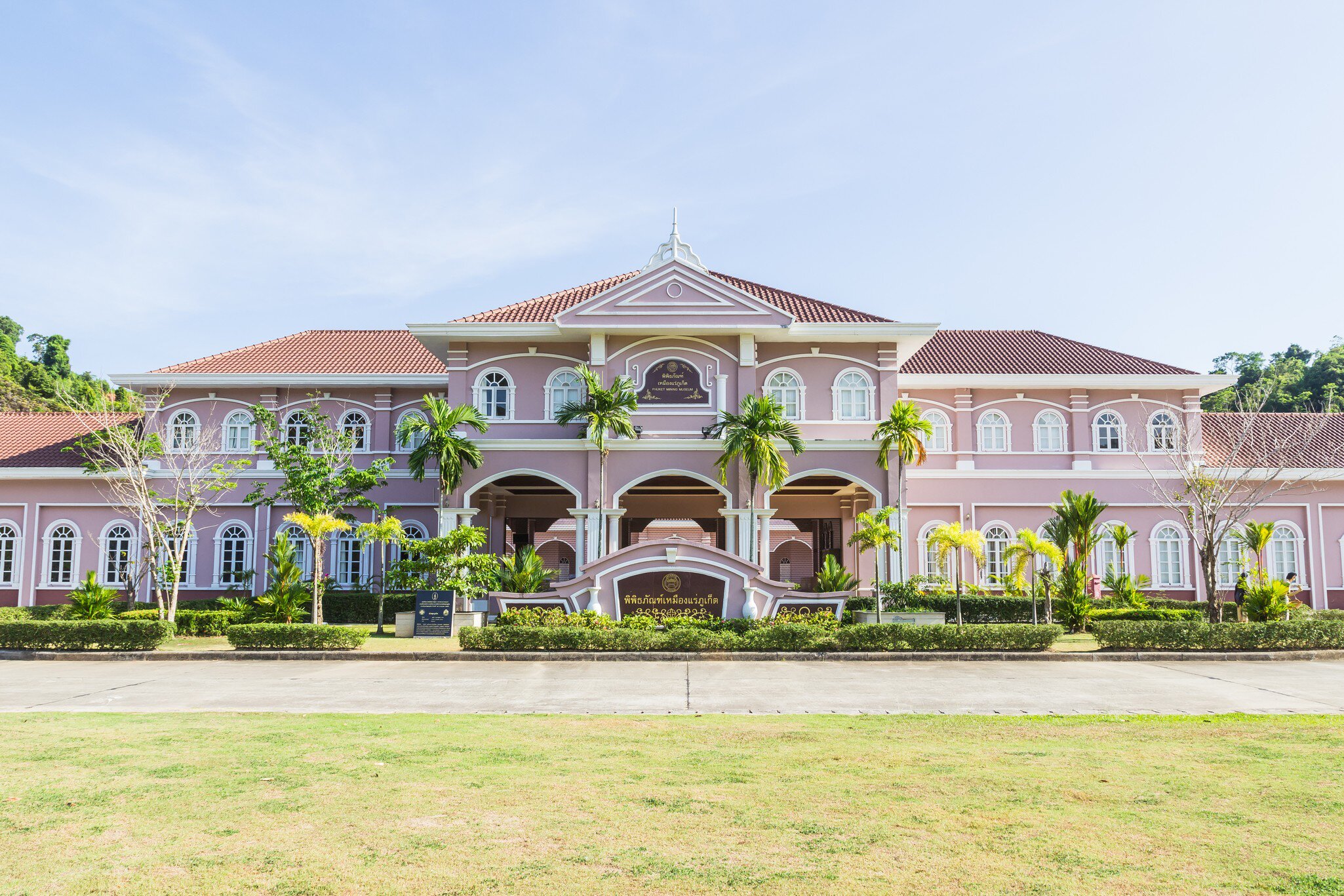
Set in a Sino-European building, Phuket Mining Museum tells the fascinating story of the island's tin industry. Take the time to get to this former tin mine in Amphoe Kathu, a district in the middle of the island. The museum will give you a deeper understanding of the British, Dutch and Chinese-Malaysian influences that shaped the architectural landscape in Old Phuket Town.
The Museum Interiors
At the celestial display, you navigate through planets to get to rooms on geology and human evolution. The museum digs deep from the very start, surprising you with wax figures of Homo Habilis, one of the earliest members of the genus Homo. Indeed, strolling through the narrow pathways framed by stone walls feels like traveling through time.
Further models, which look deceptively real, await at exhibits chock-full of information on mining techniques, including drifting, ground sluicing, open-cut mining, hydraulic mining or open-pit mining techniques like gravel pumping, where mines use bulldozers or explosives. These quirky exhibits are as fun as they are educational. Interesting audio and visual presentations hide at every corner. A dredge-mining operation is staged with bucket ladder dredges, which could dig up ore-containing underwater soil before spouting it down into a drop chute.
The staggering mix of archaeology, machinery and technology continues in the mineral dressing room, where cassiterite, a source of tin, is informatively on show. After working your way through a series of rooms, cross the jetty and get swallowed by the hull of a sailing ship. As you set foot in the next section, Chinese culture gradually unfolds.
A Legacy That Lives On
The demand for tin skyrocketed in the early 20th century, with the realization that no one could win wars with only weapons. Discovering that cans allowed food to be stored for months, Europeans eagerly wanted tin, kicking off the heyday of the "black gold." Tin mining required huge labor forces. Five hundred people who would dig and carry had to be employed in a single tin mine, and few Thai workers were available because King Rama V had abolished slavery. Hence, they needed people from southeast China. Drawn by the tin fever, these Hokkien-Chinese, originally from Fujian, flocked to Phuket to escape China's civil war.
Through their involvement in the tin industry, Phuket's first Chinese immigrants who'd relocated from Singapore, Penang and Malacca became incredibly wealthy. These immigrants, who'd been in Phuket much longer, owned rather than worked in the mines.
Lots of the affluent Chinese immigrants married local women, paving the way for a mixed-blood Peranakan ethnicity. Also called Baba Nyonya, these affluent, Phuket-born people looked down on Chinese workers who arrived in droves from China's southeastern coast. Unlike the Phuket Babas, the mine workers escaped their harsh realities by resorting to gambling, hanging out in opium dens and meeting sex workers.
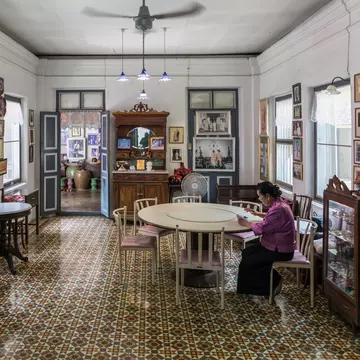
Gambling and opium smoking come to life in the museum's Communal Way of Life section, where figures of opium addicts on beds taking deep pulls at pipes will catch your eye. This section also tells the story of tin barons and showcases arched windows, paper lanterns, swing doors as well as marble-topped teak tables and dark chocolate-colored furniture in typically Victorian style.
Another nook of the museum beautifully portrays the enjoyment that ethnic Chinese took in playing the game of Sam-kok.
A Sight for Sore Eyes
Visually appealing both inside and out, the museum spans a whopping 400 rai (640,000 sq meters) and comprises several themed sections. Starting with ancient photographs, minerals and money, the connected galleries lead to zones that detail the mining process from ore to ingot. A reminder of the wealth that resulted from tin mining, the most intriguing area dives into Peranakan and Hokkien-Chinese culture.