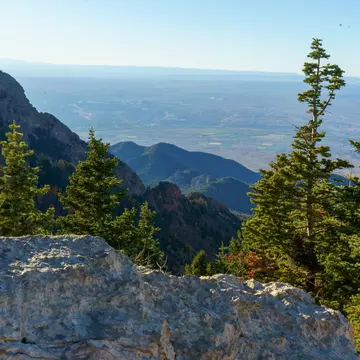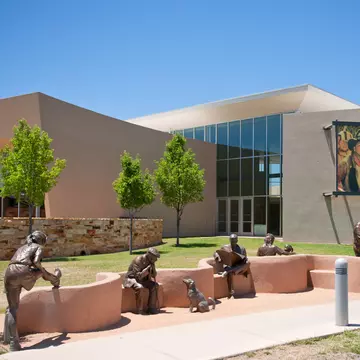
A 10-minute drive from downtown on Albuquerque’s West Mesa escarpment sits one of the largest collections of symbols carved into rocks by Spanish and Native American settlers, mostly from 400 to 700 years ago. As many as 20,000 petroglyphs are in the 7200-acre Petroglyph National Monument area with trails leading to hundreds of carvings. Most symbols were created by the ancestors of Pueblo people.
Creating Petroglyphs
People moved here during severe droughts as the area offered a water supply and land that could be farmed with beans, squash and corn, and game such as antelope, deer and elk roamed nearby. Around 1000 people settled here, building large adobe pueblos around an open plaza.
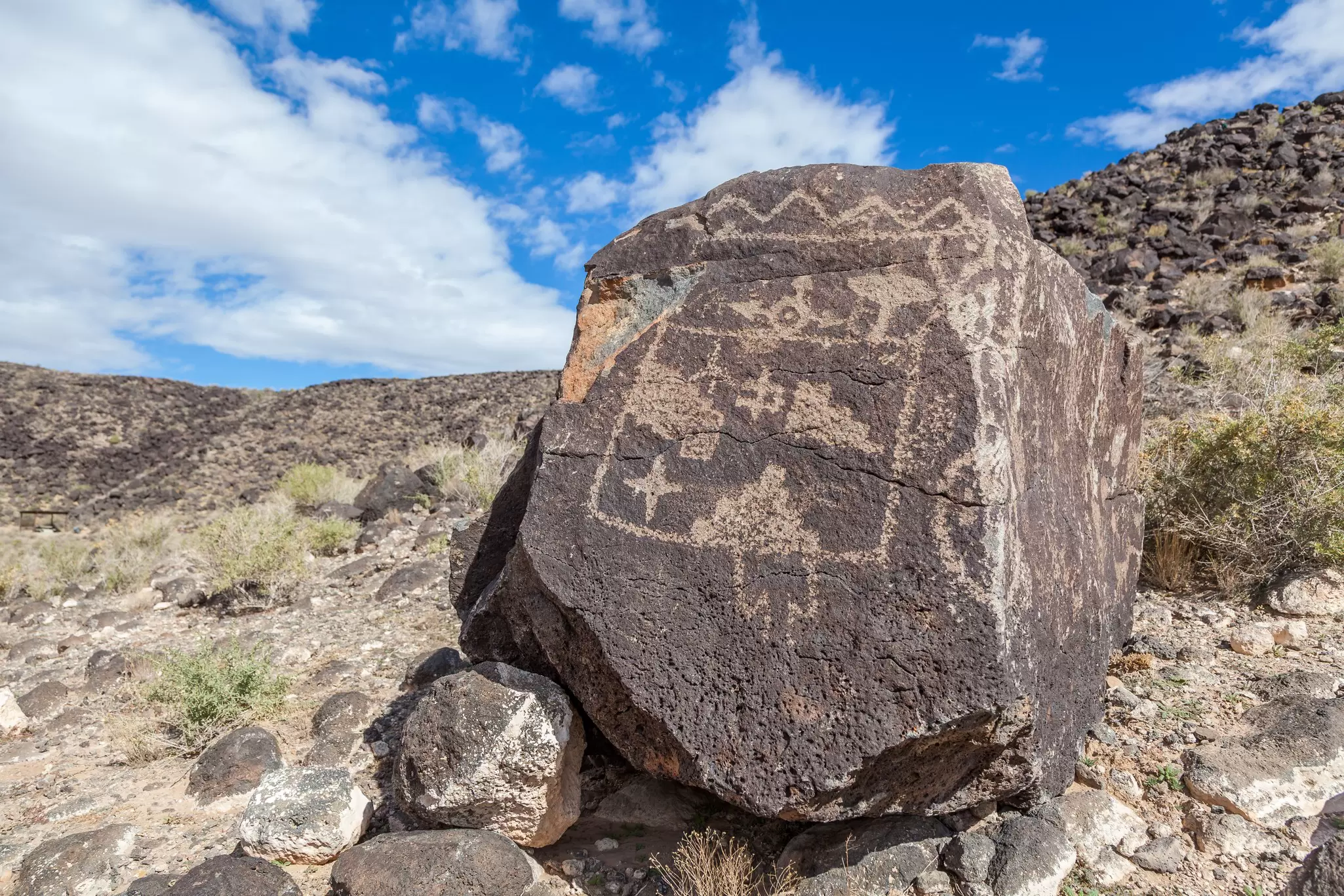
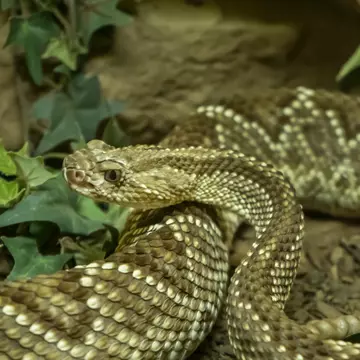
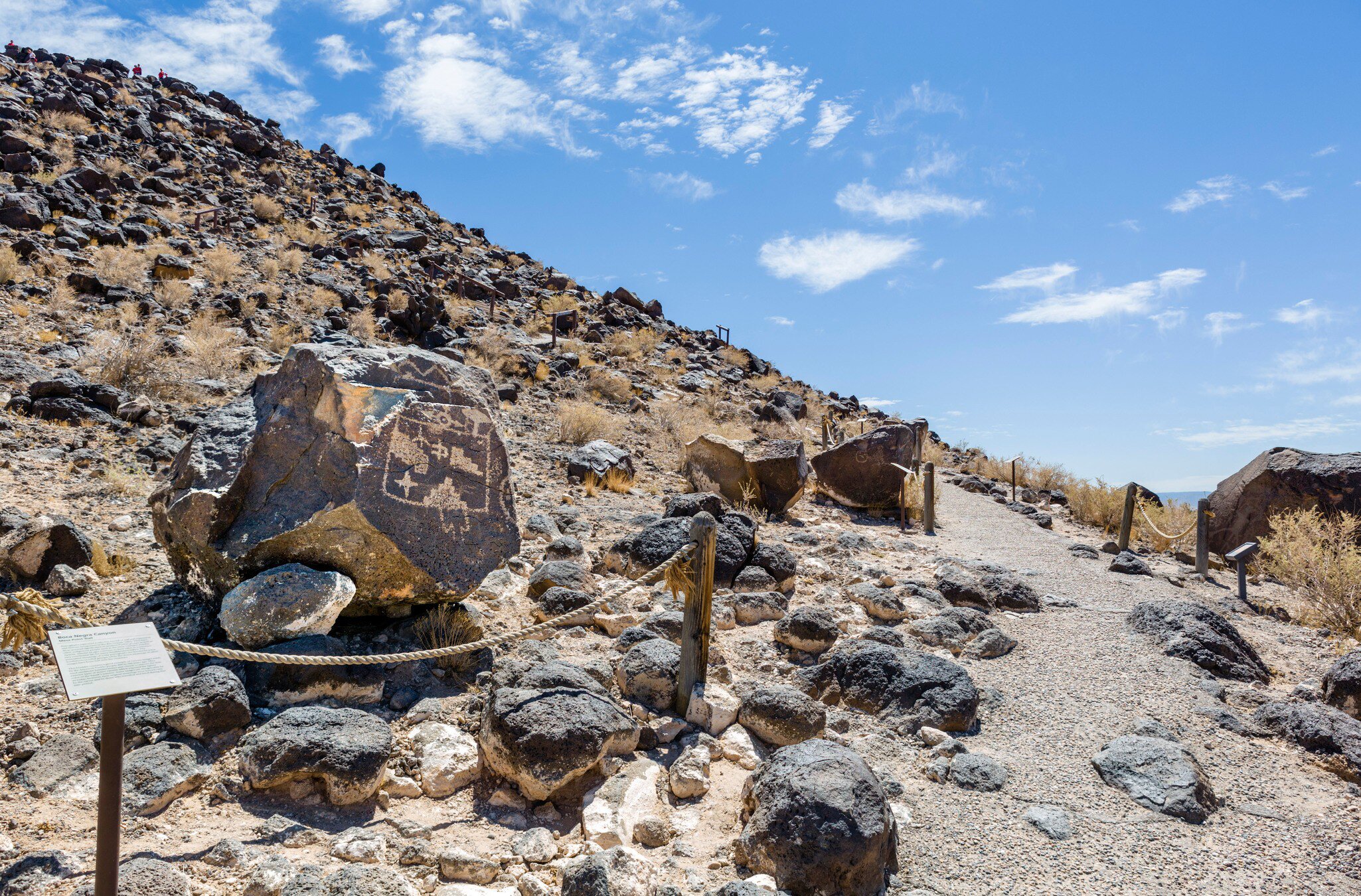
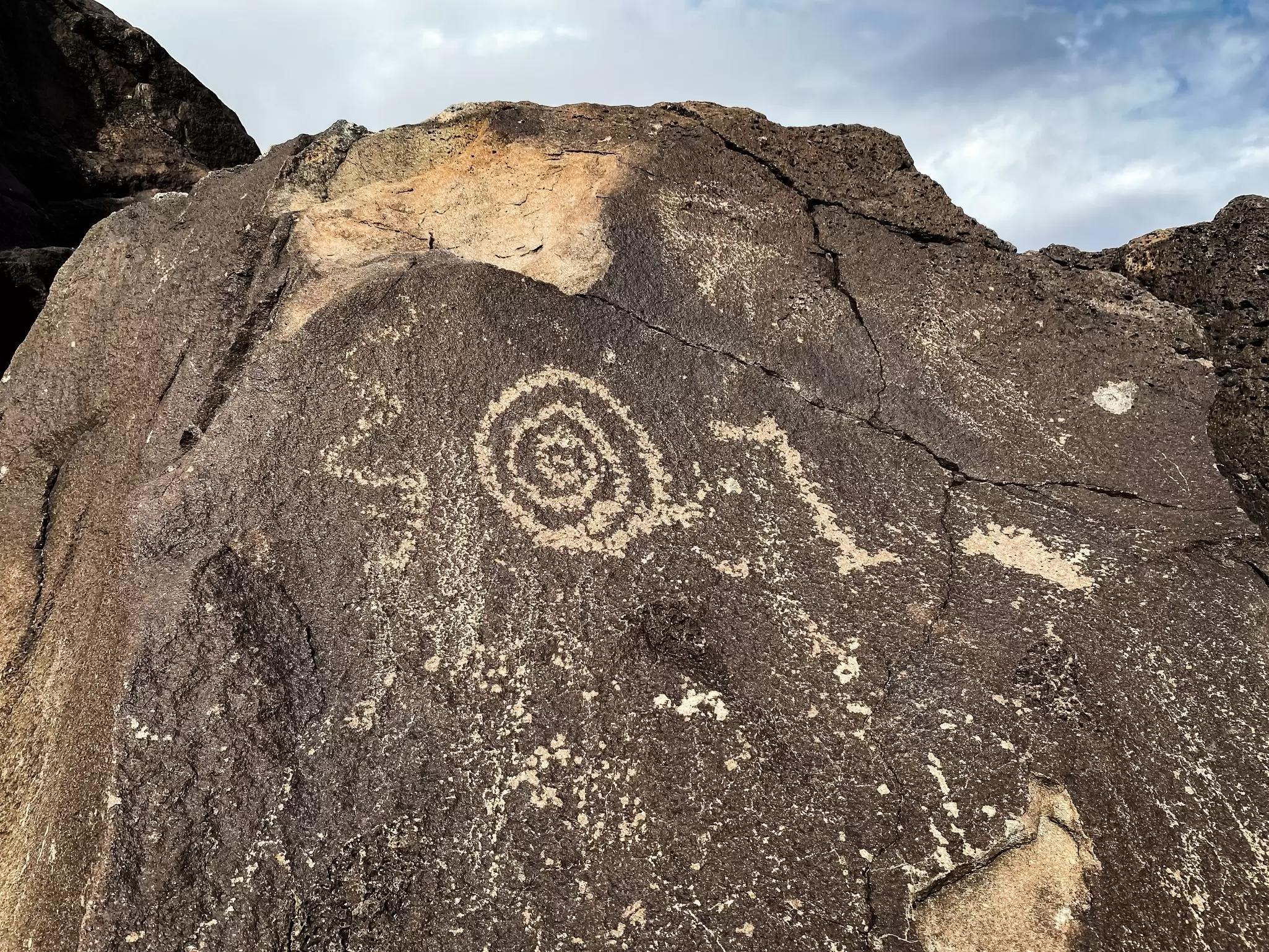
It’s believed the petroglyphs were created for cultural and spiritual reasons. The carvings were created by hitting a basalt boulder with a stone – a technique called "Rio Grand Style." Images commonly seen here include human figures, hands and feet, animals (lions, animal tracks, snakes etc) and spirals. It’s still unknown what a large proportion of the petroglyphs mean, and many Native American tribes attribute different or multiple meanings to the same symbols.
The Trails
Boca Negra Canyon has around 100 petroglyphs along an unevenly paved 1-mile trail, dotted with boulders and climbing the side of a hill. In this outdoor gallery, clear carvings depict human figures, fish, insects and geometric and abstract symbols. Riconada Canyon trail is a 2.2-mile loop with some 300 images along an exposed sandy desert path that skirts a wall of basalt rocks dotted with symbols including creatures, human forms, masks, snakes, insects and alien-like figures, with distorted bodies and limbs. Pierdras Maracas Canyon trail is a 1.9-mile hike along an easy sandy trail with views of handprints on rocks.