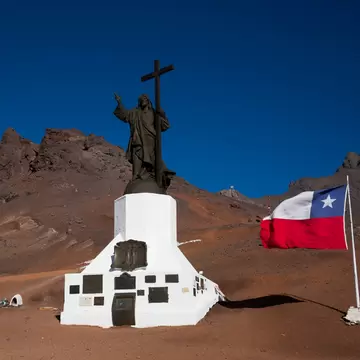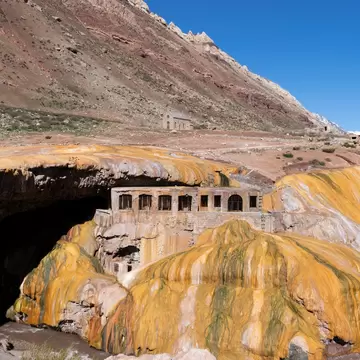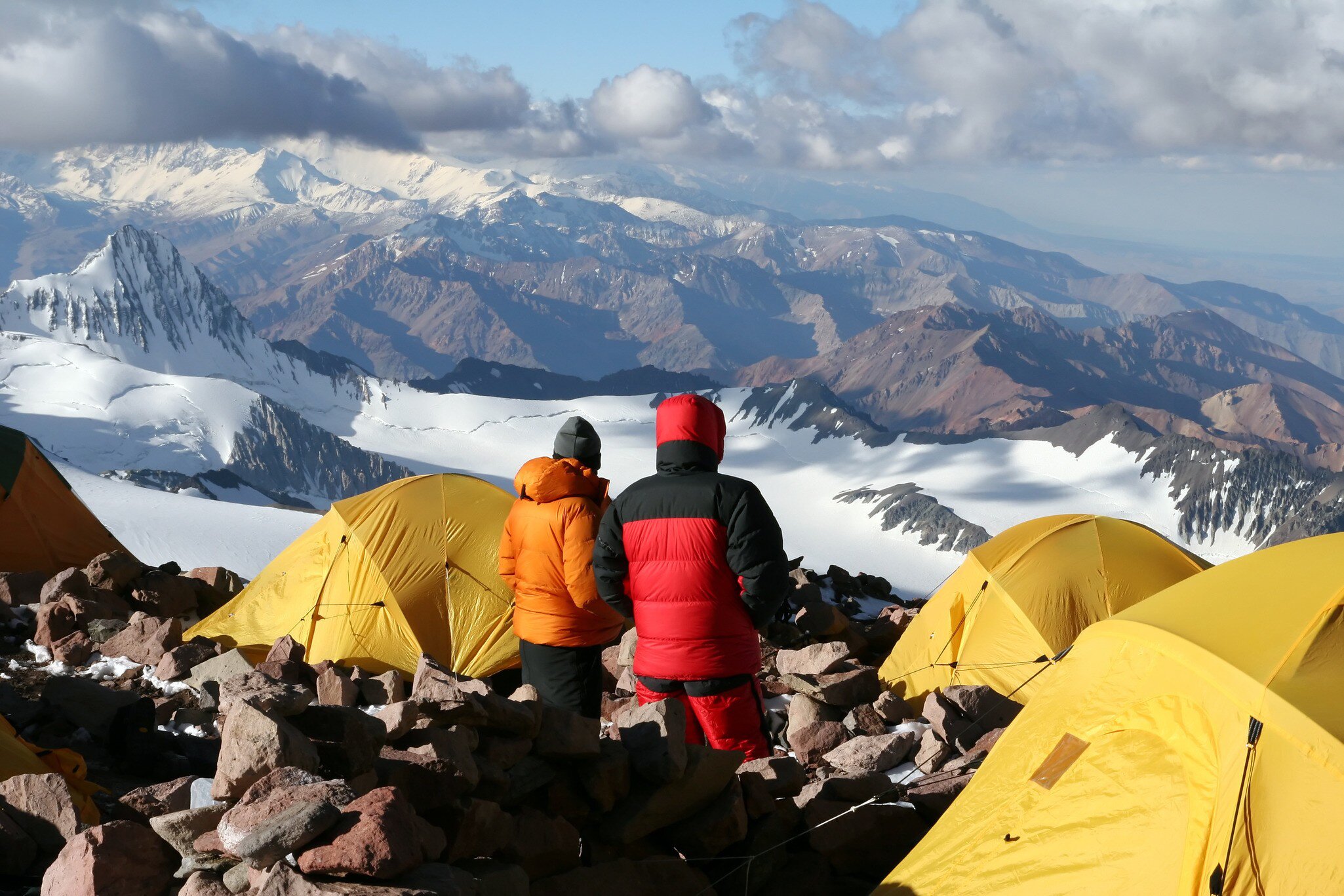
Drive west from Mendoza capital via Uspallata and in a few hours you'll reach Parque Provincial Aconcagua, the Andes' snowcapped heart. In summer, the park attracts mountaineers from all over the world, eager to undertake the three-week expedition to conquer the namesake summit which, thanks to its 6962m peak, takes the title of highest mountain in both the southern and western hemispheres.
Visiting Aconcagua for the Day
You don’t have to be a mountaineer to enjoy the austere environment of Parque Provincial Aconcagua. From the Centro de Atención de Visitantes, just off RN 7, you can do a gentle 400m stroll along the Sendero Mirador Aconcagua to an overlook of the highest peak in the Americas. Or pay the park entrance fee and set off on one of the three day hikes.
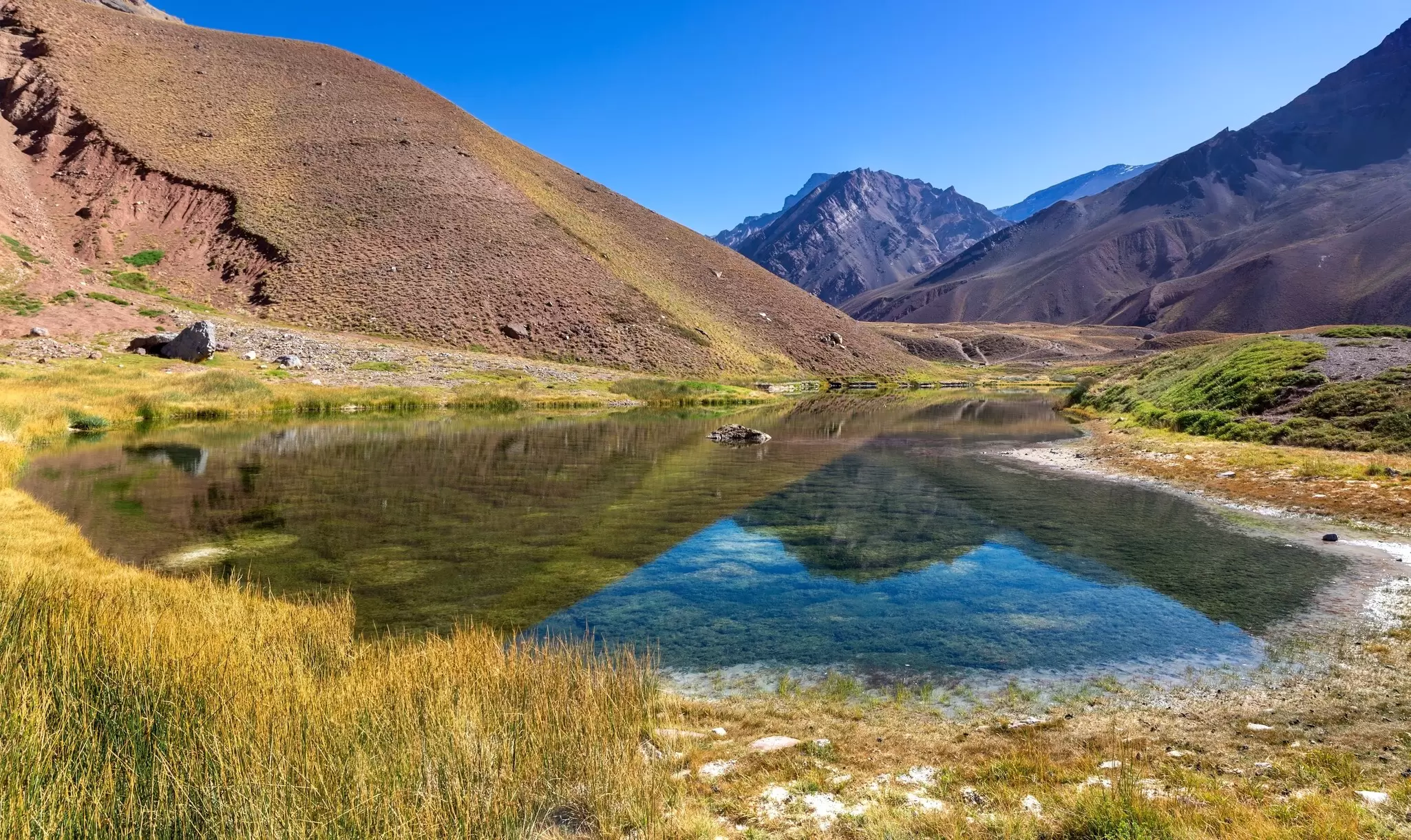
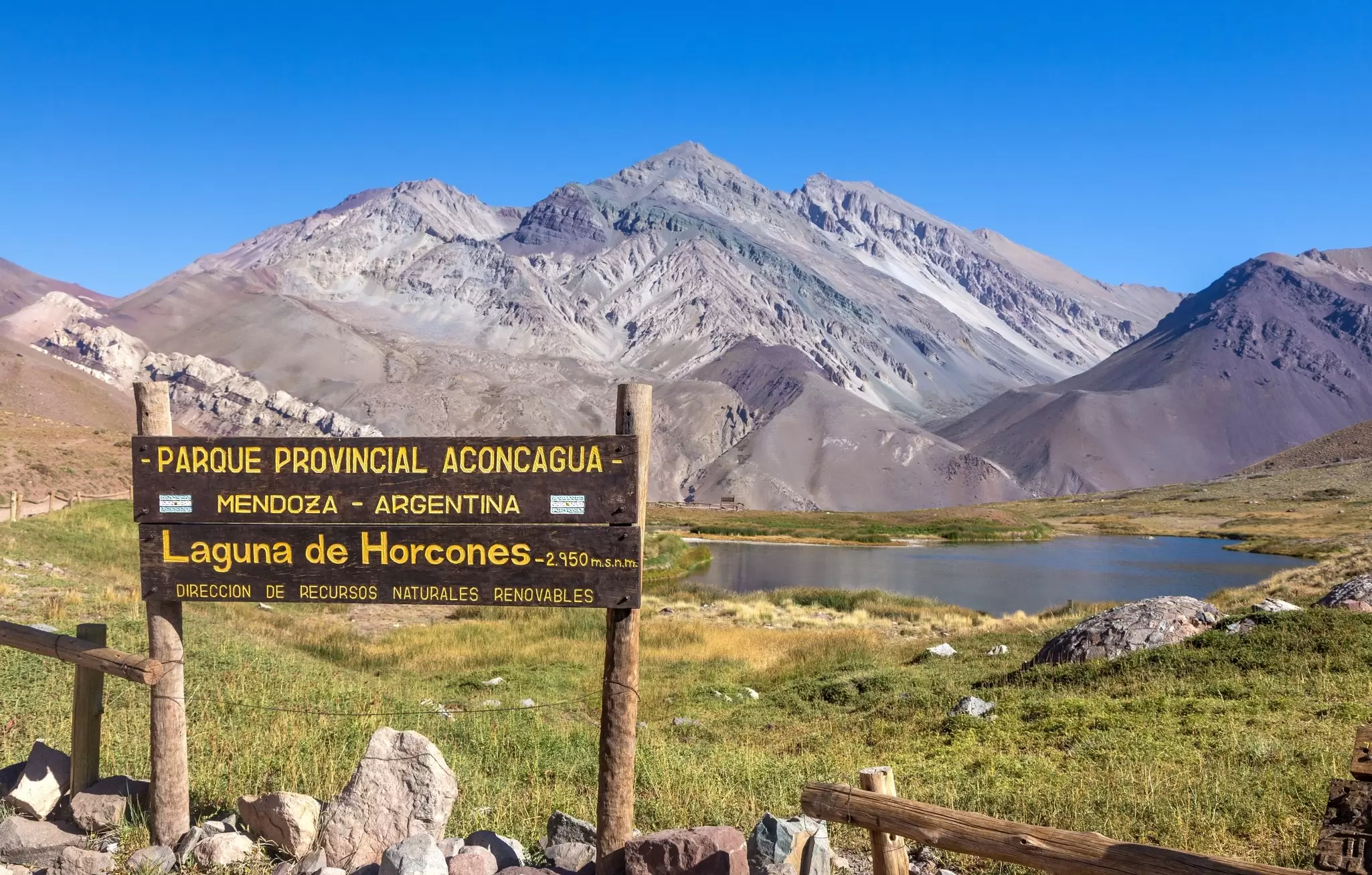
The shortest is the 1.5km hike to Laguna Horcones, an alpine lake, followed by the 3km hike to Puente Colgante, a dramatic hanging bridge. The longest trek, Confluencia, continues onward from Puente Colgante up to 3390m for a 16km return journey deeper into the Andes. Allow about seven or eight hours for Confluencia, and be sure to leave before the cutoff time of 11am.
Multi-Day Trips up the Mountain
Active travelers should seriously consider tackling a three- to seven-day expedition along the lower slopes of Aconcagua. On the shorter end, you could do two nights camping at Confluencia, and a full-day ascent up to Plaza Francia (4200m) at the foot of the summit. On the longer end, you could do the Plaza Francia hike, return to Confluencia, and then continue up to Plaza de Mulas (4250m), also known as Aconcagua Base Camp. You could even tack on another day from there summiting Cerro Bonete (5000m) to view the west face of Aconcagua. Note that any overnight trips to the park require a permit from the Dirección de Recursos Naturales Renovables in Mendoza.
Summiting Aconcagua
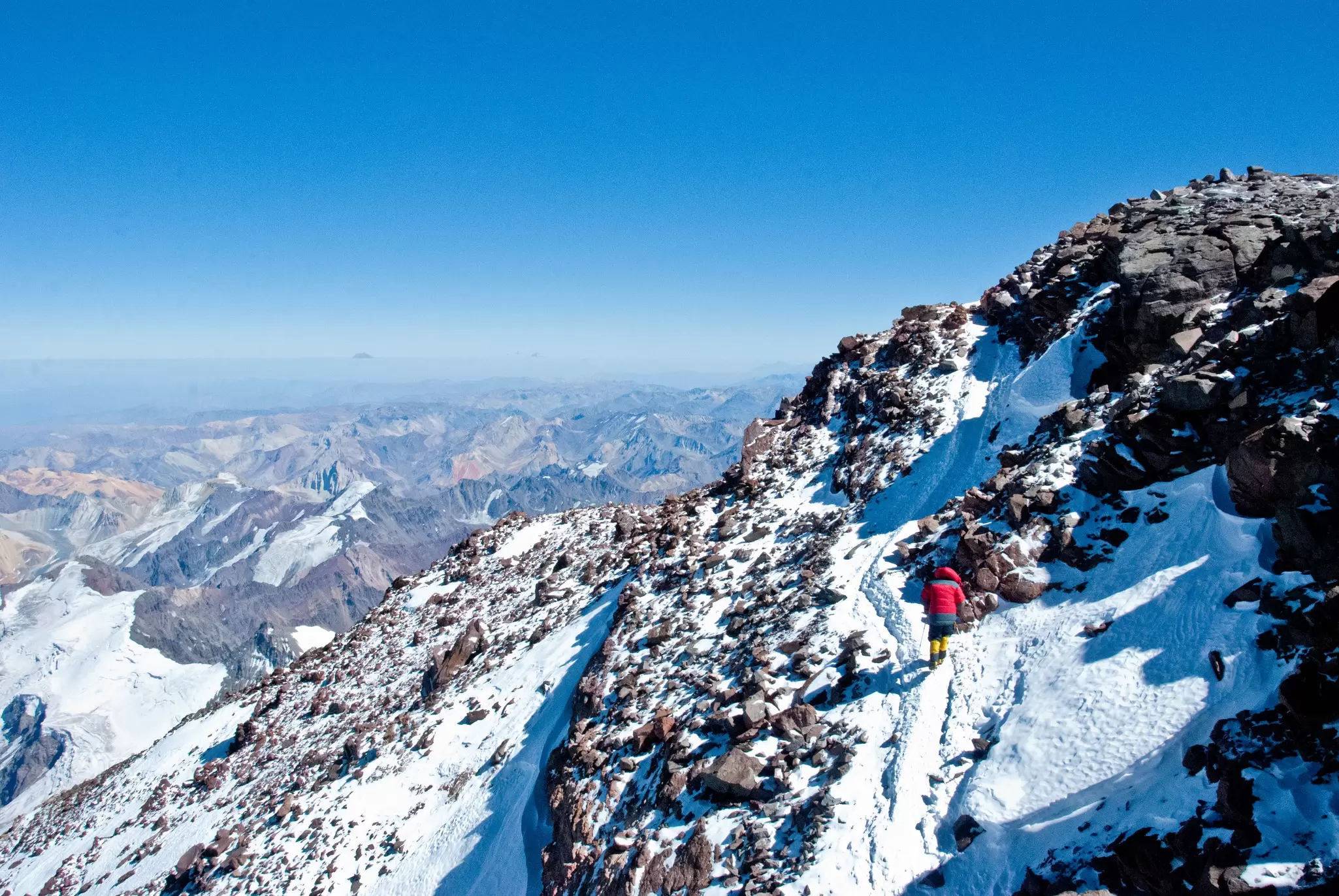
Unless you are a wildly accomplished mountaineer, you will want to summit Aconcagua on a guided expedition. Of the two main approaches, the western route to Plaza de Mulas is the most accessible. From there, you hike to the additional camps of Plaza Canadá (4900m), Nido de Cóndores (5400m), and Plaza Cólera (6000m) before pushing onward to the summit. The main alternative route via Plaza Argentina (4200m) is known as the Polish Traverse and begins on the mountain’s opposite side. It requires more hiking, occasionally with crampons and ice axes, but eventually links up with the traditional route at Plaza Colera, via Campo 1 (5000m) and Campo 2 (5500m). Though not a particularly technical climb, the environmental conditions on Aconcagua – including temperatures as low as -30° C at the summit – are so extreme that every year a handful of mountaineers do not return.
Preparing for a Big Expedition
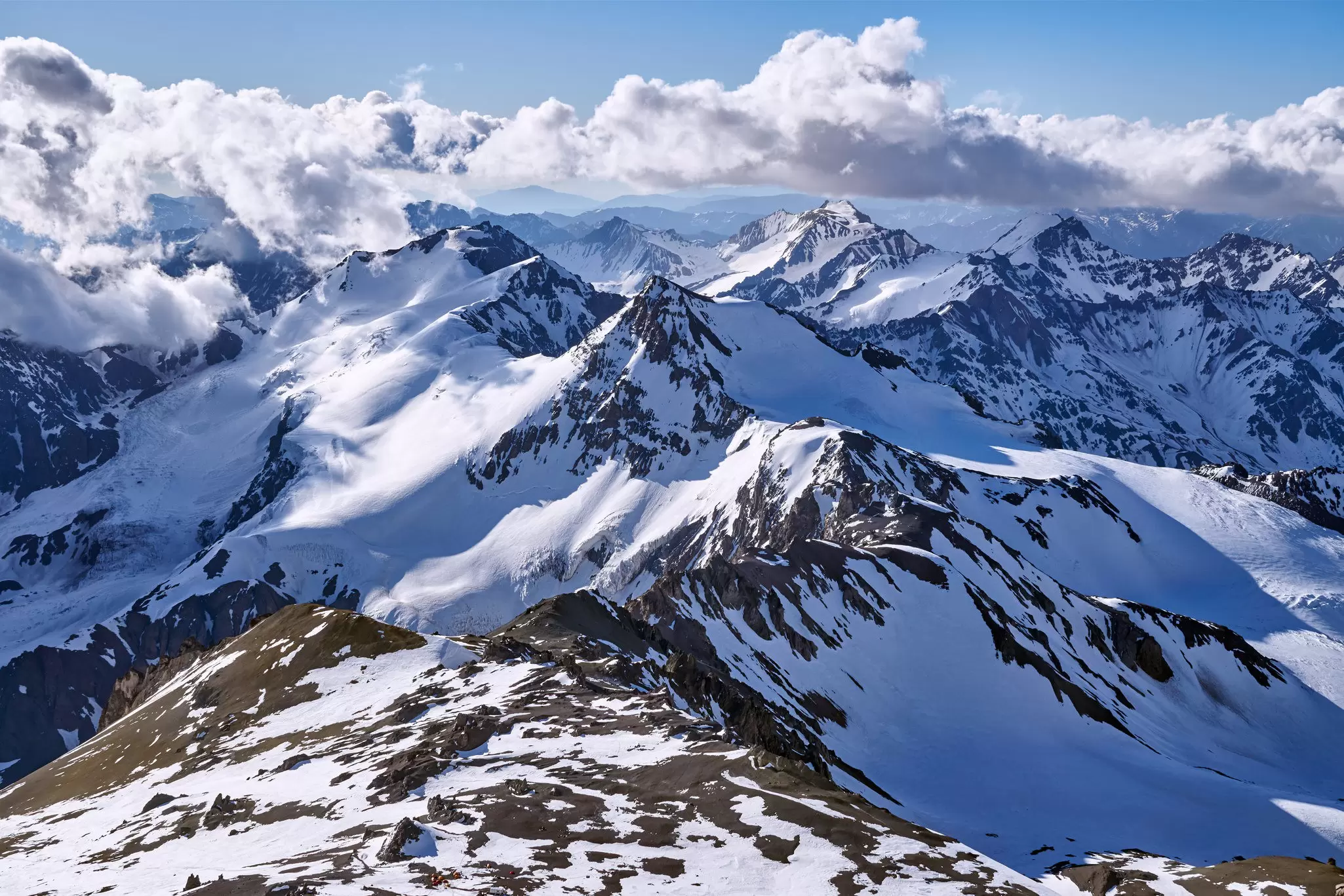
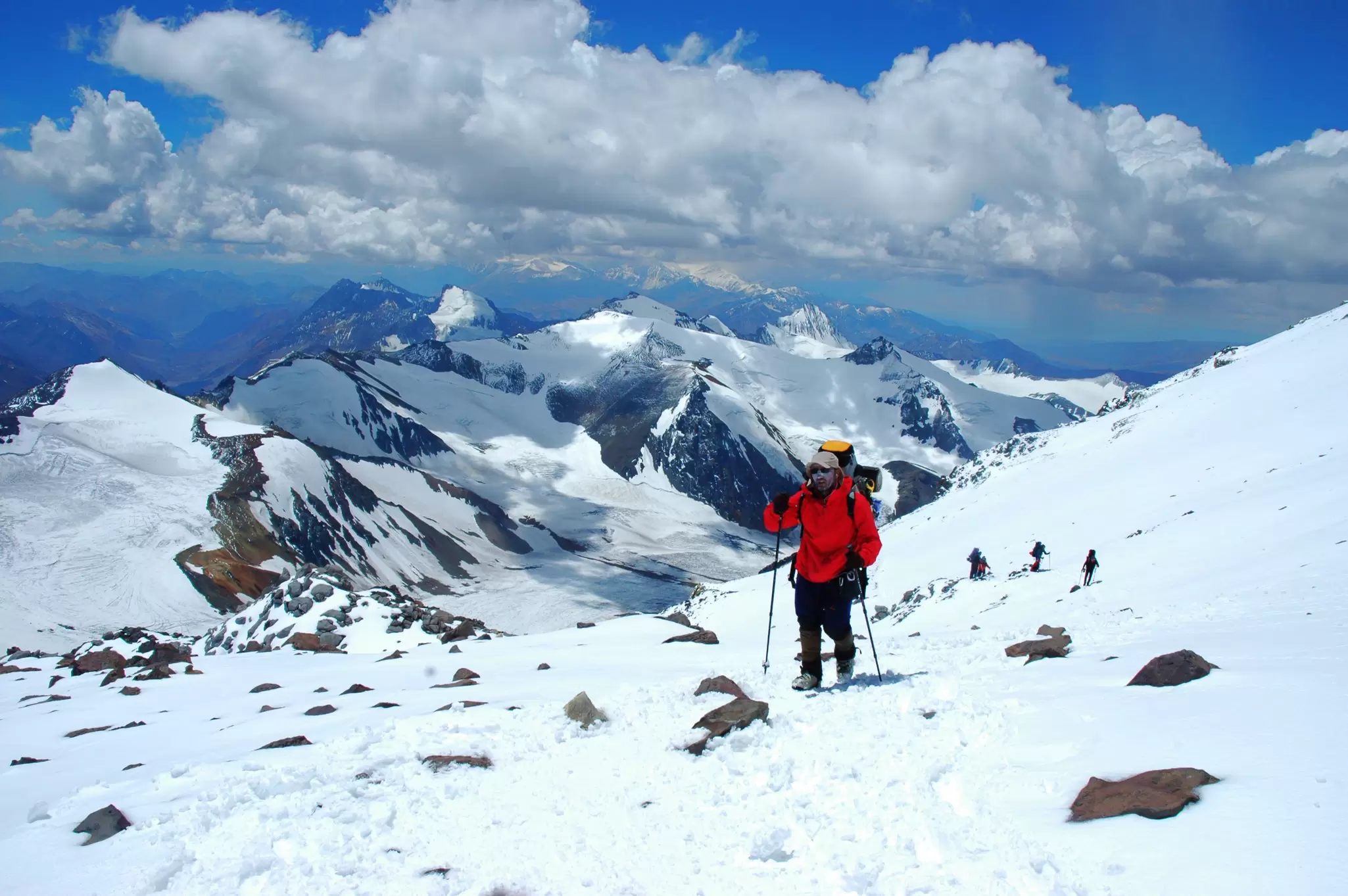
The short summiting season runs from mid-November through the end of February. Permits to scale Aconcagua are mandatory and most easily acquired with the help of a specialist Mendoza-based tour operator, such as Inka Expediciones (inkaexpediciones.com), Andes Vertical (andes-vertical.com) or Aconcagua Mountain Guides (aconcaguamountainguides.com). Trips generally cost around US$6000 and last between 18 and 20 days. Given that Argentine summer holidays take place in January, this is the busiest and most expensive month to visit. Note that all of the above companies also offer the shorter (and much cheaper) trekking trips on Aconcagua.
The Final Base Camp
A 10-minute drive west of Los Penitentes village and 1km from the Puente del Inca, the Cementerio de los Andinistas was created in the late 19th century for railway laborers who didn't survive the harsh conditions while working on the Transandean Railway linking Mendoza with Chile. At the turn of the 20th century, other civilians and, later, mountaineers came to rest here. Stop by and pay your respects.