Stretching along 15km of pristine coastline between Uvita and Piñuela beach, Parque Nacional Marino Ballena protects some of the most important coastal, transition and marine zones in the country. Created in 1992, the national park aims to preserve the delicate ecosystem of mangroves, beaches, coral reefs and especially whale-breeding grounds found around Uvita.
Under Water
The national park protects 5160 hectares of marine area, principally located around the breeding and nursery grounds for the visiting humpback whales.
The massive marine mammals aren't the only ones that benefit from the conservation zone, however. False orcas and pilot whales are often also present, along with spotted, beluga and bottlenose dolphins, olive ridley turtles, Pacific sea turtles and more.
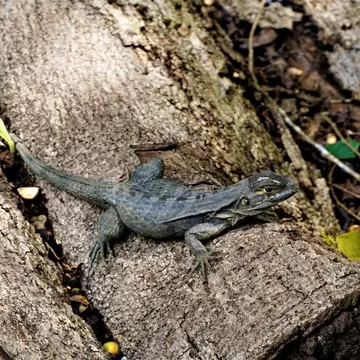
The park's area also encompasses a few islands, like Isla Ballena (Whale Rock), a rock formation 2km from shore that's home to a number of birds and iguanas, coral reefs and their inhabitants, as well as Islas Tres Hermanas, three offshore rock formations important for nesting sea birds.
Beaches
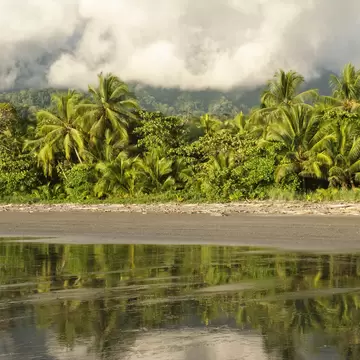
Although Parque Nacional Marino Ballena's coastal zones only amount to 171 hectares of land, the park protects some of the most beautiful beaches in the country. All of the park's beaches are blissfully uncrowded – although you'll sometimes find families with hammocks and grills set up between palm trees – but do require an entry fee to visit. Playa Uvita is the main beach, with the best access to the Whale's Tail, while Bahía, Playa Colonia, Ballena, Arco and Piñuelas beaches are all great alternatives if you're looking to escape the crowds.
The Whale's Tail
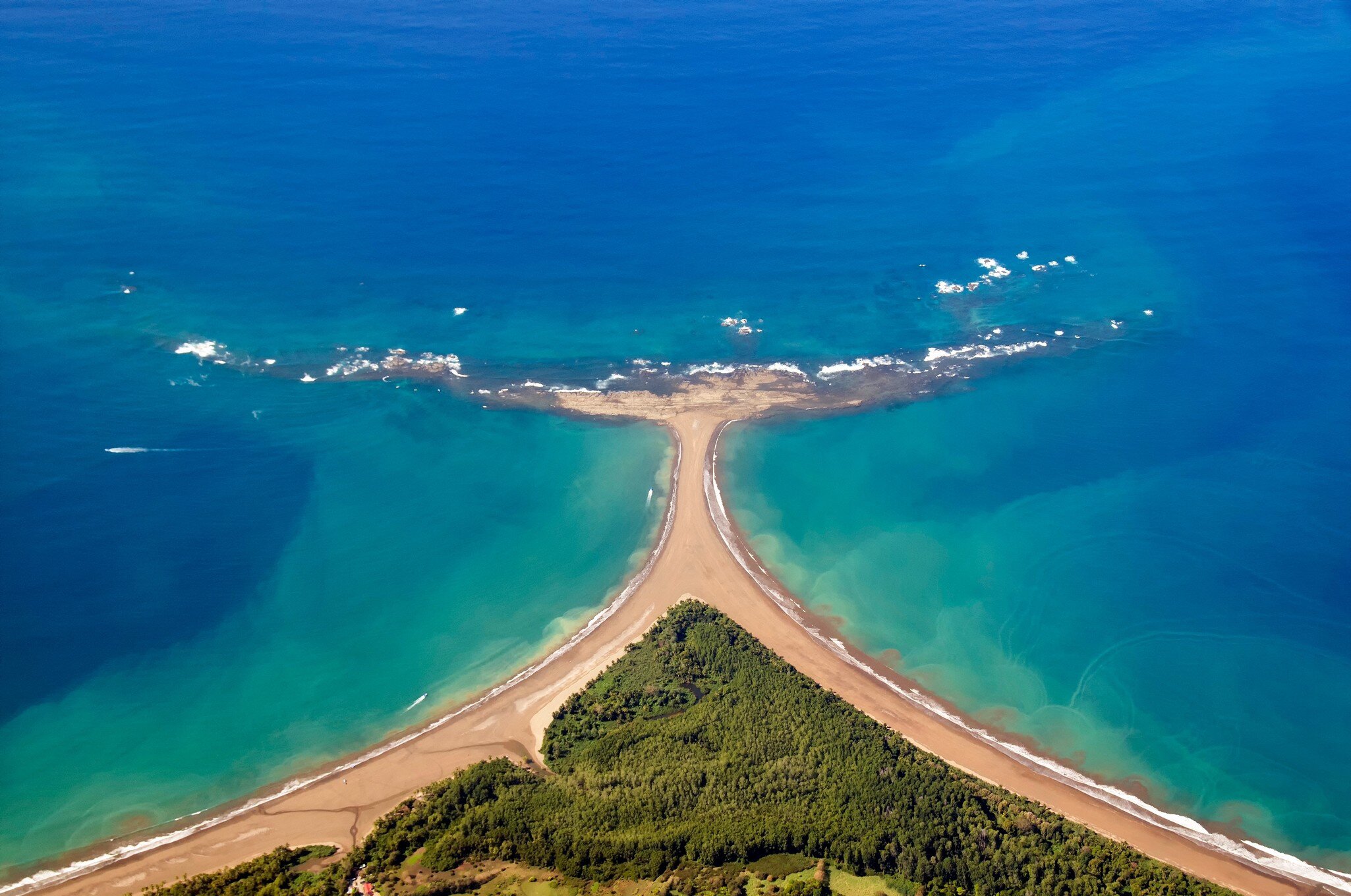
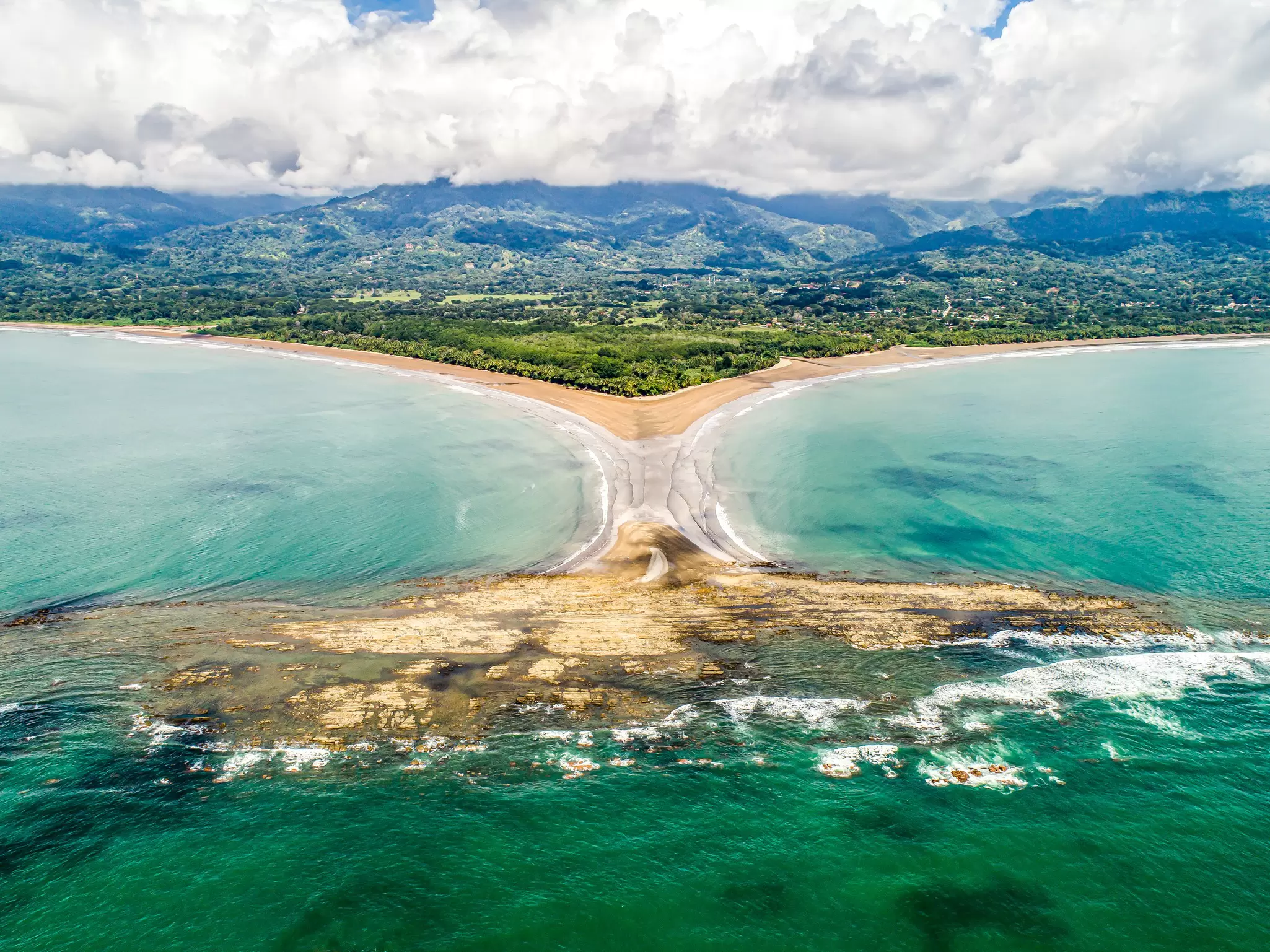
One of Parque Nacional Marino Ballena's main draws is Punta Uvita, more commonly known as the Whale's Tail.
This tómbolo, or natural land bridge, when seen from above, is the spitting image of a whale's tail – all too fitting on a coastline that attracts more humpback whales than anywhere else in the country.
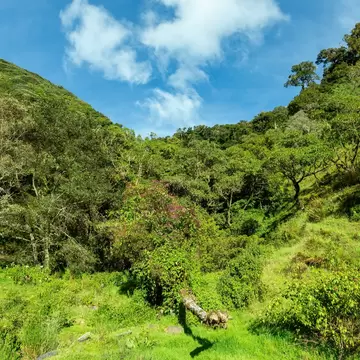
The tómbolo is the result of natural sedimentation caused by converging currents, and is only visible (and can only be visited) at low tide. While the best way to see the tail is from up high, if you don't have access to an airplane, you can drive up into the hills just behind Uvita for views from the road. Walking along the Whale's Tail is also worth the experience.
Check the tide charts, then head to the park's main entrance at Bahía Ballena, from where it's only a 15- to 20-minute walk to the tail. The rocky formation is covered with tide pools teeming with life, and also offers excellent views of the jungle-backed coastline. Note that there's no shade, and sturdy shoes may help for walking along the rocks.
Onshore Wildlife
Onshore, Parque Nacional Marino Ballena is teeming with diverse wildlife. Many of Costa Rica's famous monkeys – including howler, capuchin and squirrel monkeys – are present, along with two- and three-fingered sloths, raccoons and even the occasional puma or ocelot. If birdwatching is more your style, keep your eyes peeled for toucans, sandpipers, pelicans and white-tailed hawks, among other feathered flyers.
Entrance Fee
Parque Nacional Marino Ballena has four official accesses, all located just off the South Inter-American Hwy: Uvita, Colonia, Ballena and Piñuela. It costs US$7 to enter the park (free for children under 11 and seniors), but your fee is good all day for multiple entries at any of the park's beaches.