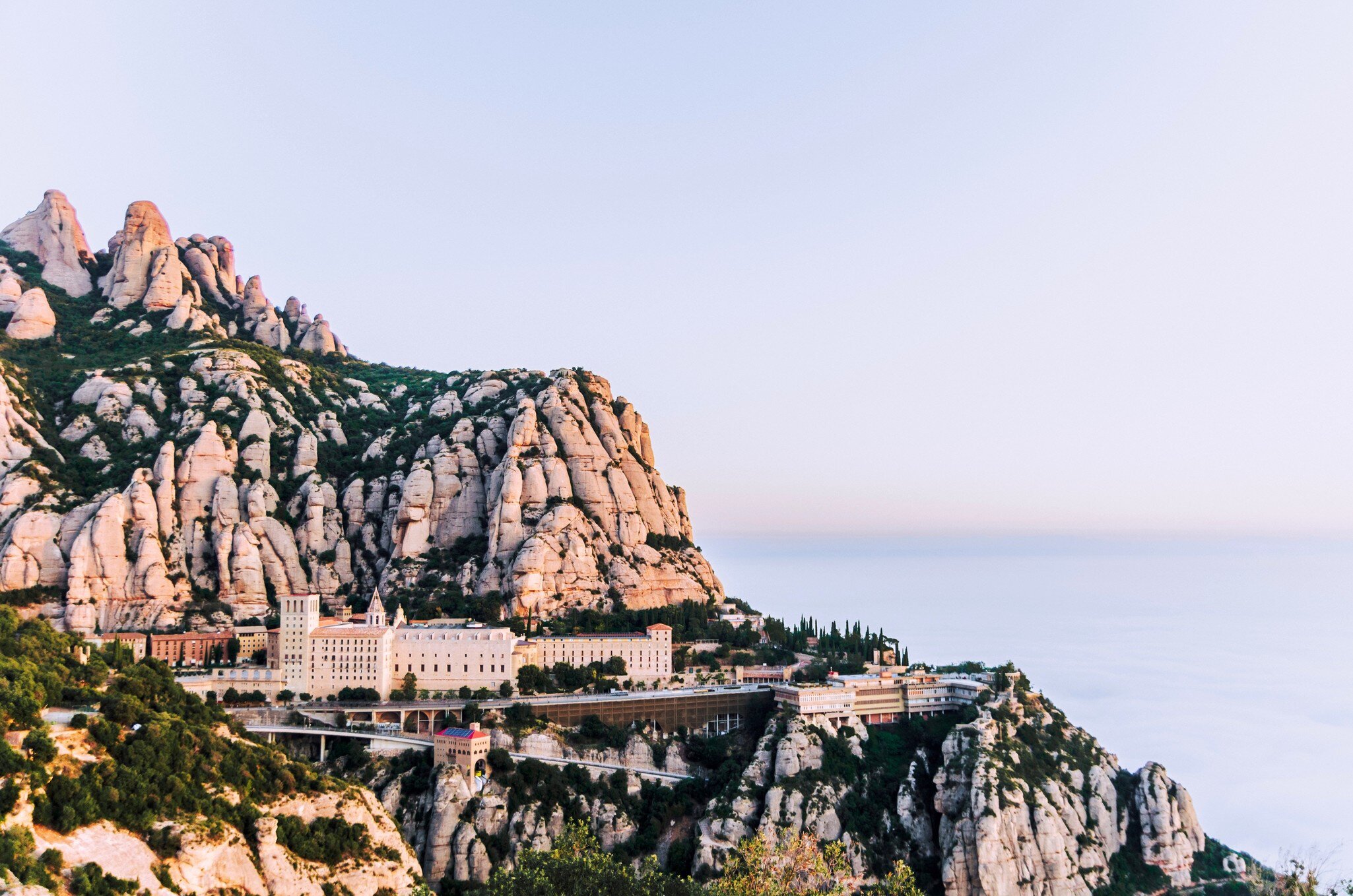
Meaning "serrated mountain" in Catalan, this holy mountain, 50km northwest of Barcelona, is instantly recognized by its silhouette, which from a distance looks like the serrated teeth of a knife. Nestled in this rocky fortress, a monastery sits at a height that was once challenging to reach but now is visited by millions of people every year.
Geology & History
The pronounced peaks of Montserrat may appear sharp and needle-like from a distance, but on closer inspection, you’ll see that the "serrated mountain" is actually quite curvaceous. Eroded by fierce winds and rain, Montserrat’s iconic pillars consist of conglomerate rock, a type of sedimentary stone left behind from when the region was once the delta of the ancient Ebro River.
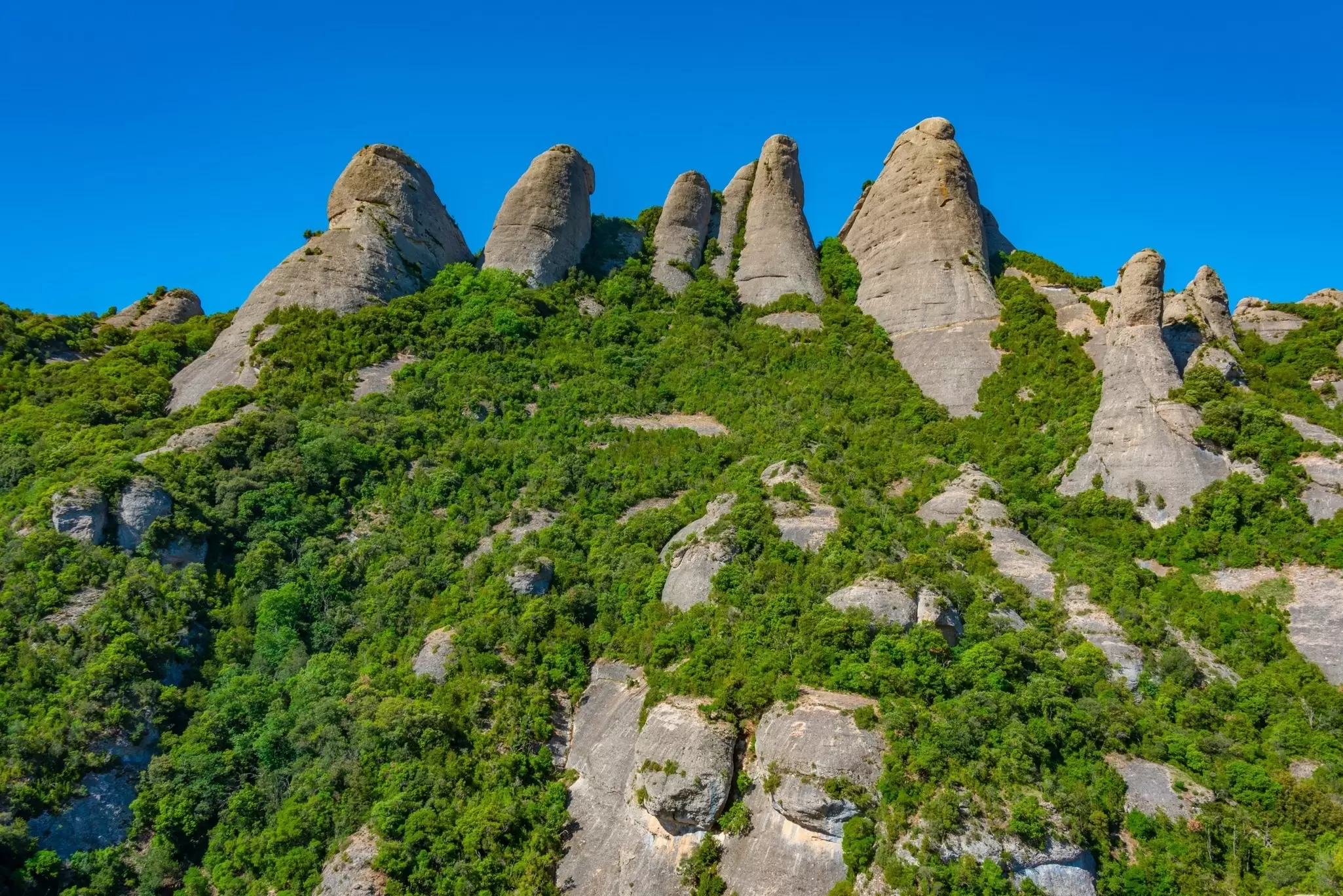
The Parc Natural de la Muntanya de Montserrat belongs to the Catalan Pre-Coastal Range, and its tallest peak, Sant Jeroni, sits at 1236m high. Such an unusual-looking mountain standing alone on the horizon was destined to become a place of legends and spiritual importance, and in 1025, the Abbey of Montserrat was founded by the Order of St Benedict. Pilgrimages to visit La Moreneta, the Black Madonna statue, began soon after.
The Monastery & the Basilica
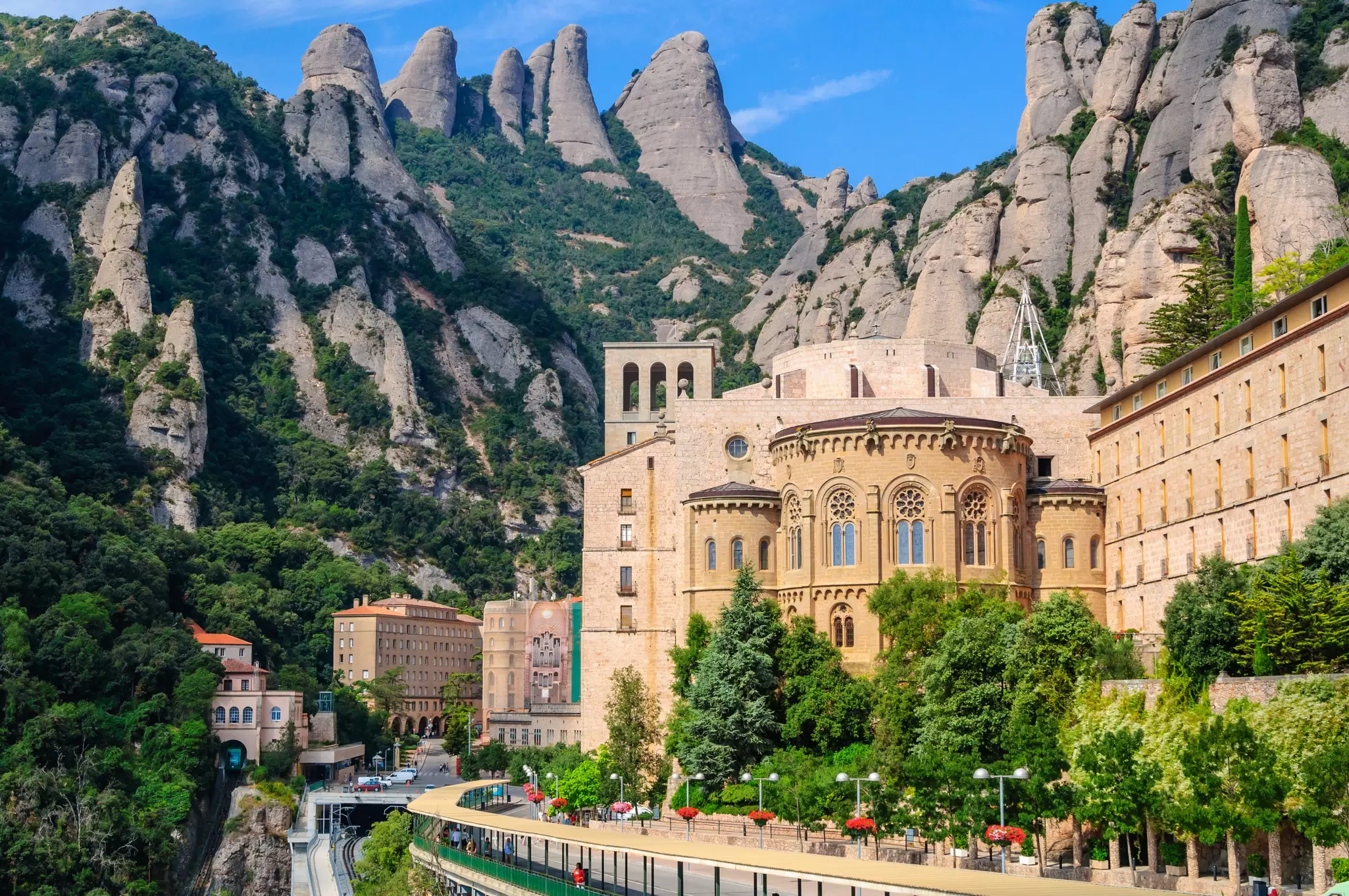
Montserrat isn't only a working monastery home to a congregation of monks, but also a major tourist attraction accustomed to a daily flow of visitors – religious pilgrims and tourists alike – so there is a small area with restaurants, souvenir shops and an information center.
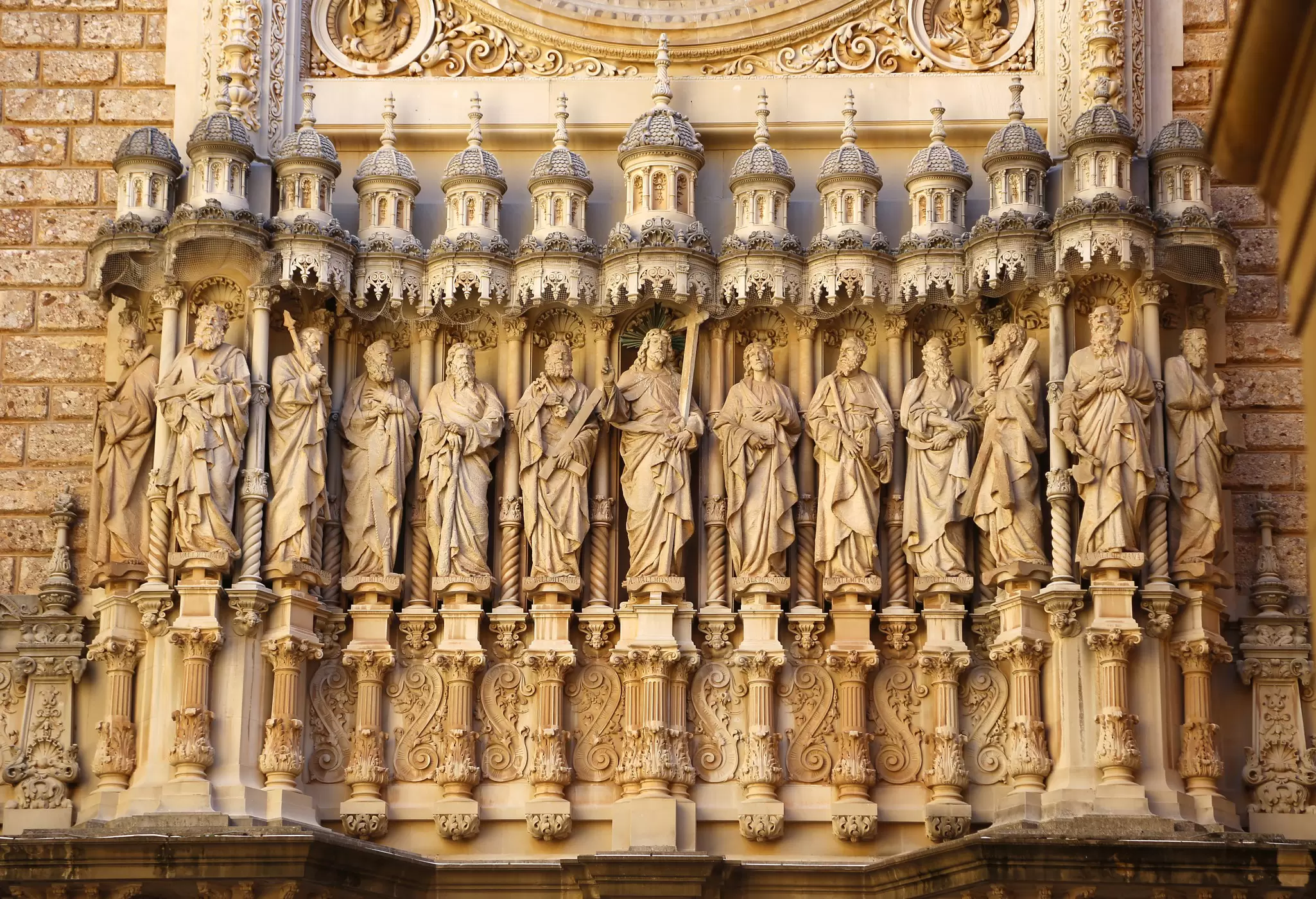
To visit the monastery, you’ll first climb up the stairs to the Plaça de Santa Maria, from which you can appreciate the 15th-century cloister and the late-19th-century facade of the church. Through the archway, you’ll cross a marble floor and come face to face with the carvings of Christ and the Twelve Apostles before entering the basilica, where you can better appreciate the gold-and-marble trimmings of the Catalan Gothic interior with Renaissance flair. Sit in the pews and cast your gaze upwards to find the figure of La Moreneta displayed for all to see.
The Black Madonna
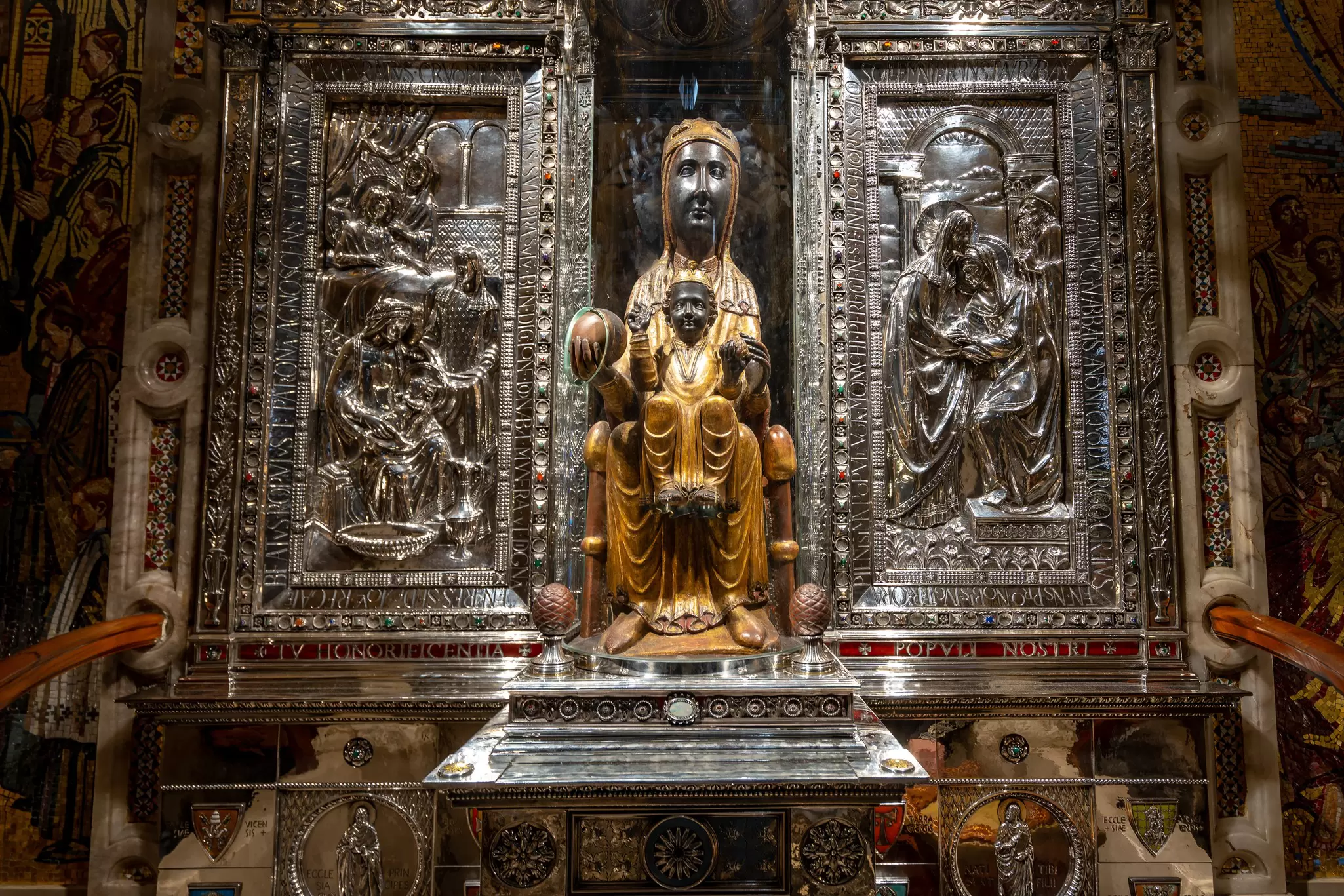
For a closer look, take the right-hand stairs and line up to pay homage to the famous La Moreneta, the Black Virgin of Montserrat in the Cambril de la Mare de Déu. The wood-carved statue depicts the Virgin Mary with the baby Jesus on her knee; she is considered one of Catalonia’s patron saints.
Getting There
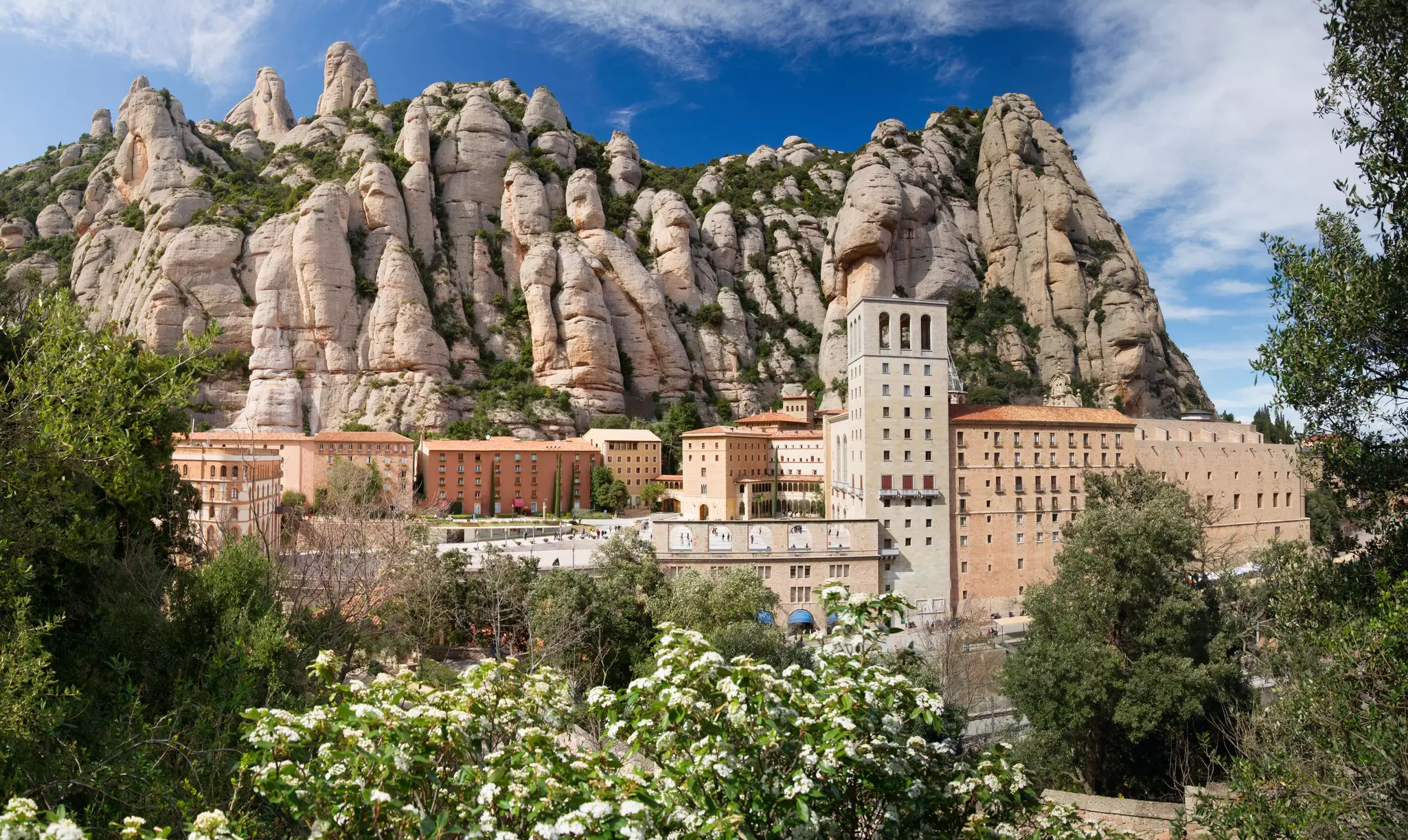
From Barcelona, Montserrat is easily accessible via the Ferrocarrils de la Generalitat de Catalunya (FGC) R5 line, which means that all trips will begin from the underground train station in Plaça d'Espanya. If arriving by car, you’ll take the C16 northwest past Terrassa, then get on the C55 south to Monistrol de Montserrat and drive up to the top, where paid parking is available. If arriving by train, there are three ways to get up to the monastery: the cable car, the rack railway or on foot.
Combo Tickets
The train takes about 90 minutes, and when you buy your ticket, you’ll have the option to buy a combo that includes your round-trip transfer up the mountain either by the Cremallera (rack railway) or Aeri (cable car). Some tickets also include two rides on the Sant Joan or Santa Cova Funicular, which you can access once you reach the main monastery area.
Aeri de Montserrat
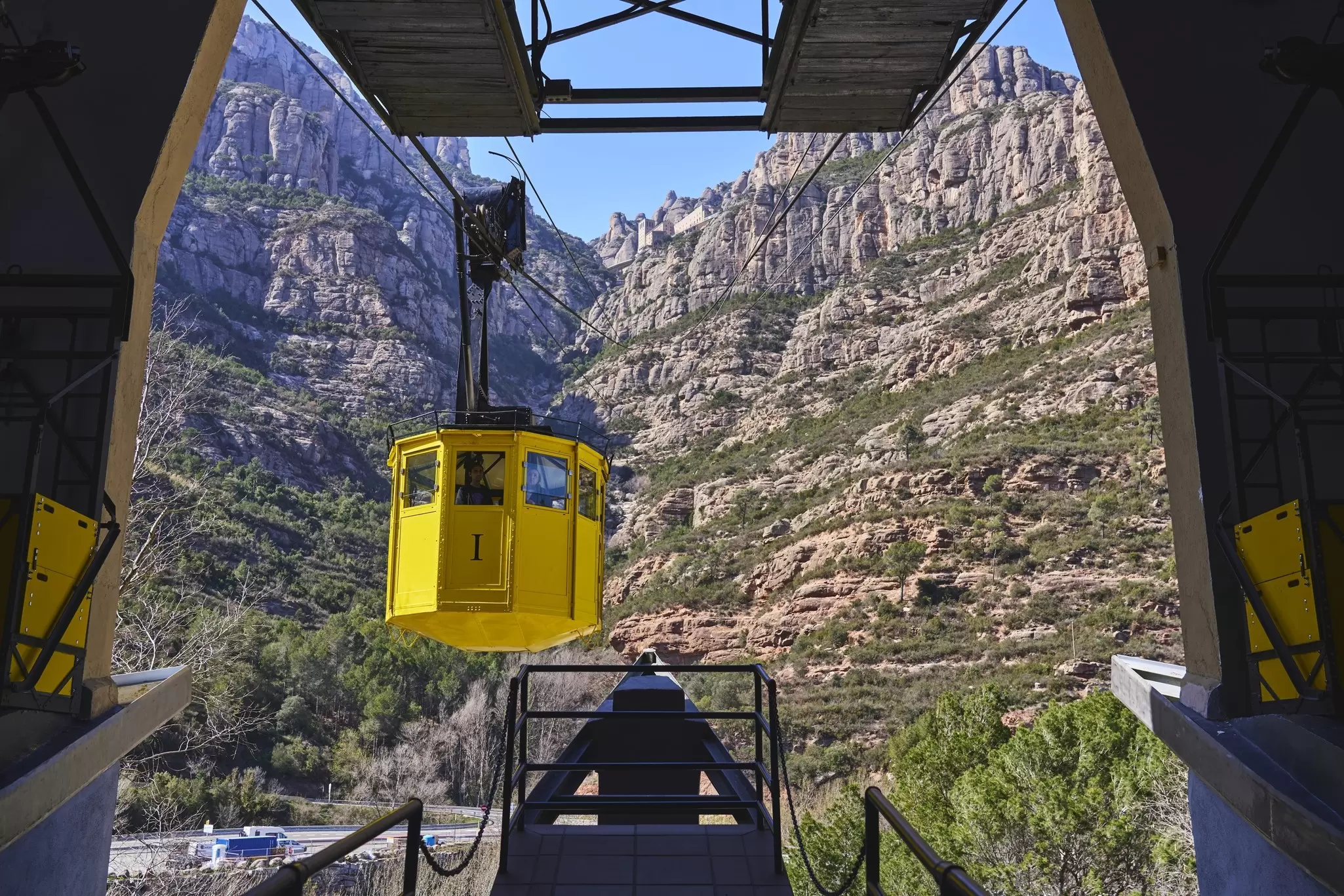
Painted sunny yellow, the Aeri de Montserrat has been shuttling passengers through the sky up to Montserrat since 1930. If you have the combo ticket from Barcelona, pay attention to the stops and disembark at the Aeri de Montserrat Station. The ride up takes five minutes, but the line can get long if it’s busy.
Cremallera de Montserrat
Chugging up the hill from the Monistrol de Montserrat station, the Cremallera de Montserrat is a rack railway that can help you complete the 5km trip up the mountain. The Cremallera is a good choice if you’re traveling during Barcelona’s summer high season and don’t want to spend time waiting in line for the Aeri.
Funicular de Sant Joan
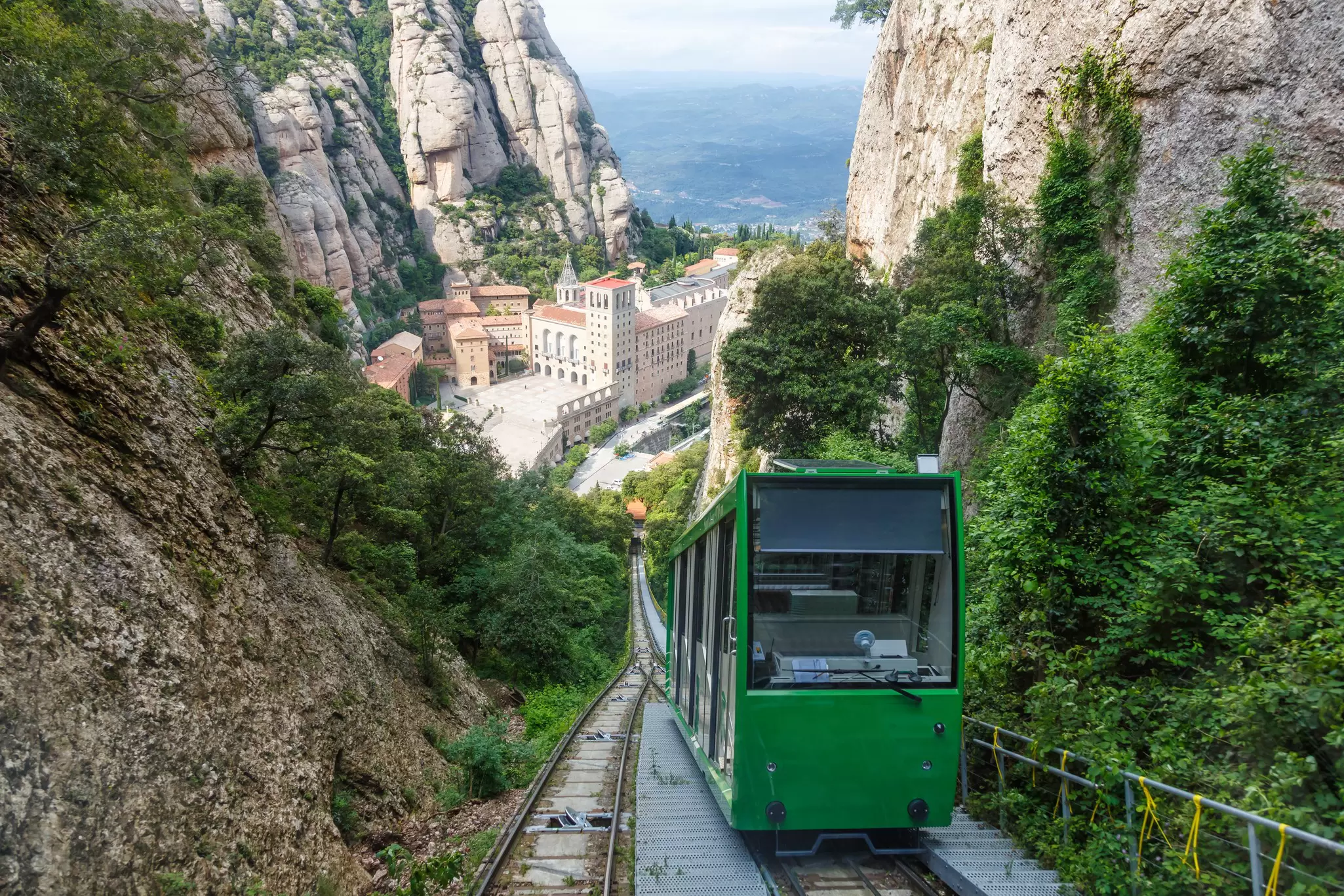
Once you’ve arrived at the monastery, the Funicular de Sant Joan can help you get to an even higher vantage point and connect to more trails to explore the natural park and visit the Ermita de Sant Joan.
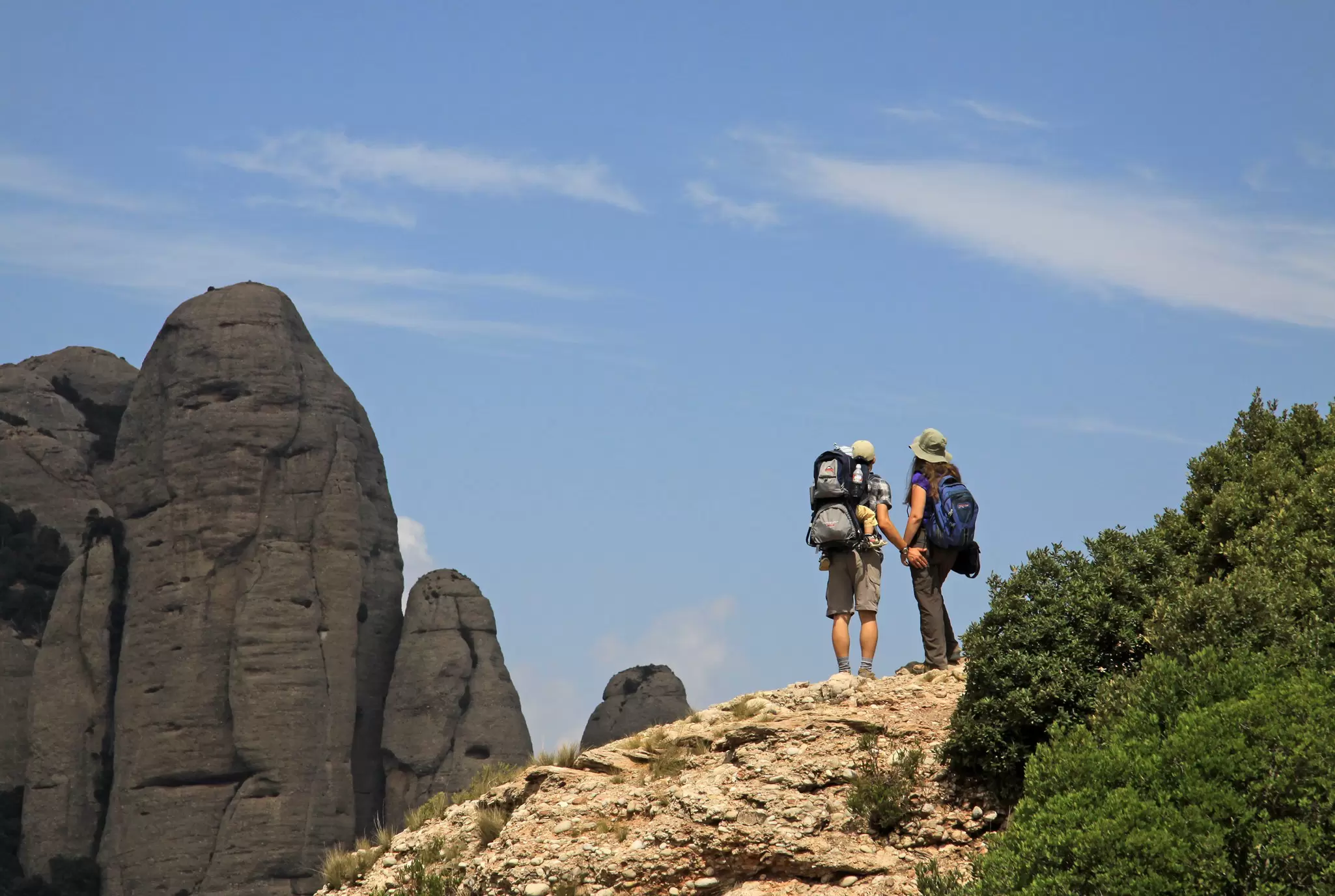
Funicular de la Santa Cova
The Funicular de la Santa Cova connects the main Montserrat area to the cave-turned-chapel where, according to legend, local shepherds found the Virgin of Montserrat. At the top, you’ll walk along the Rosari Monumental, a series of sculptures that includes works designed by Antoni Gaudí.