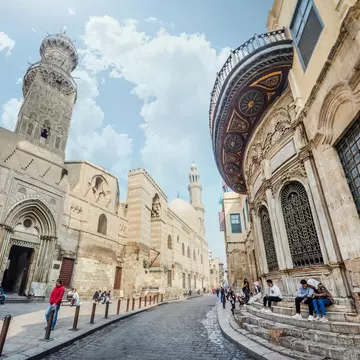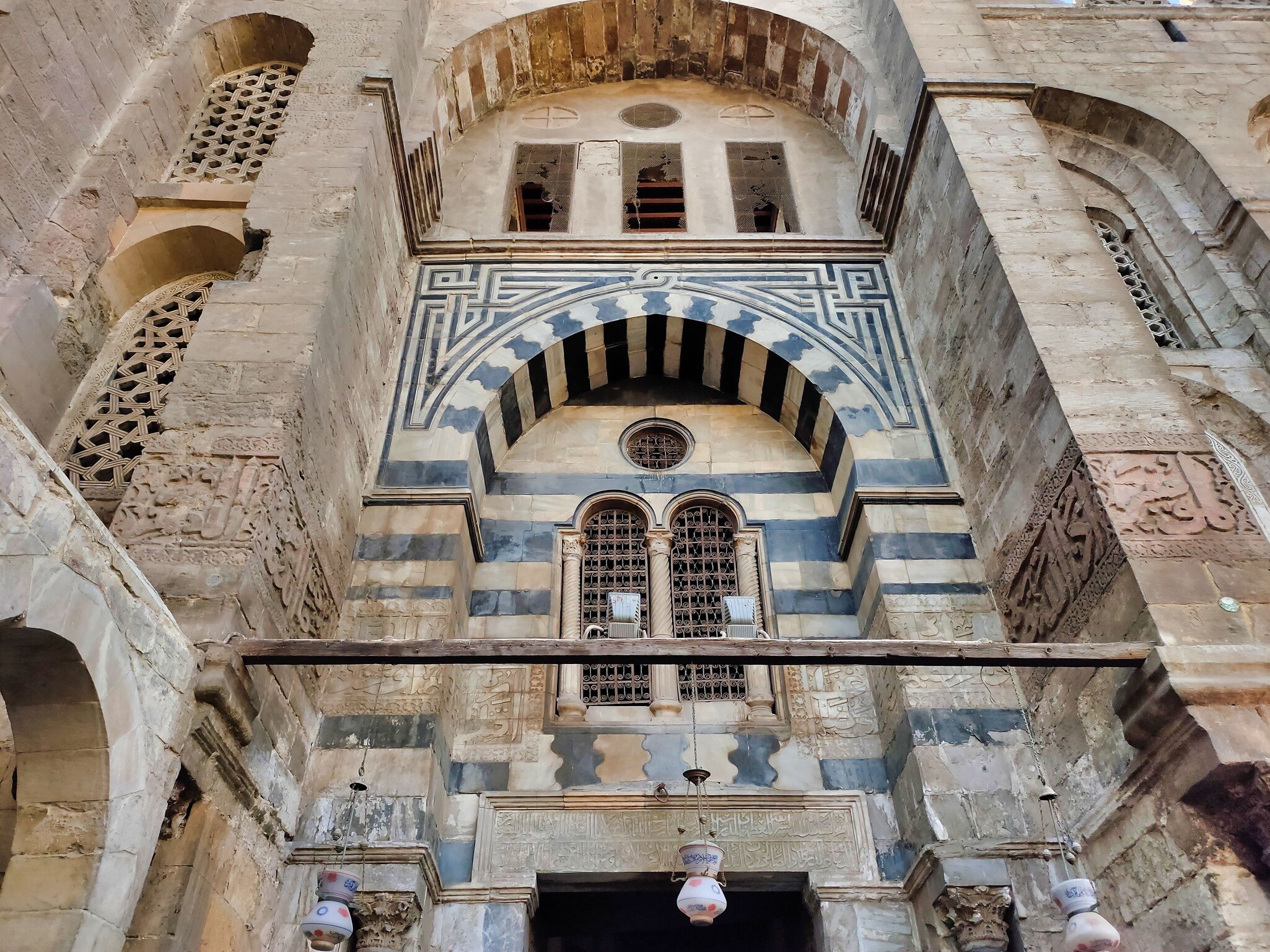
Built in just 13 months, the 1279 Mausoleum and Madrasa of Qalawun is both the earliest and the most splendid of the vast religious complexes on this street. The mausoleum, on the right, is a particularly intricate assemblage of inlaid stone and stucco, patterned with stars and floral motifs and lit by stained-glass windows. The complex also includes a bimaristan (hospital), which Qalawun ordered to be built after he visited one in Damascus, where he was cured of colic.
The Arab traveler and historian Ibn Battuta, who visited Cairo in 1325, was impressed that Qalawun's hospital contained "an innumerable quantity of appliances and medicaments." He also described how the mausoleum was flanked by Quran reciters day and night chanting requiems for the dead within.