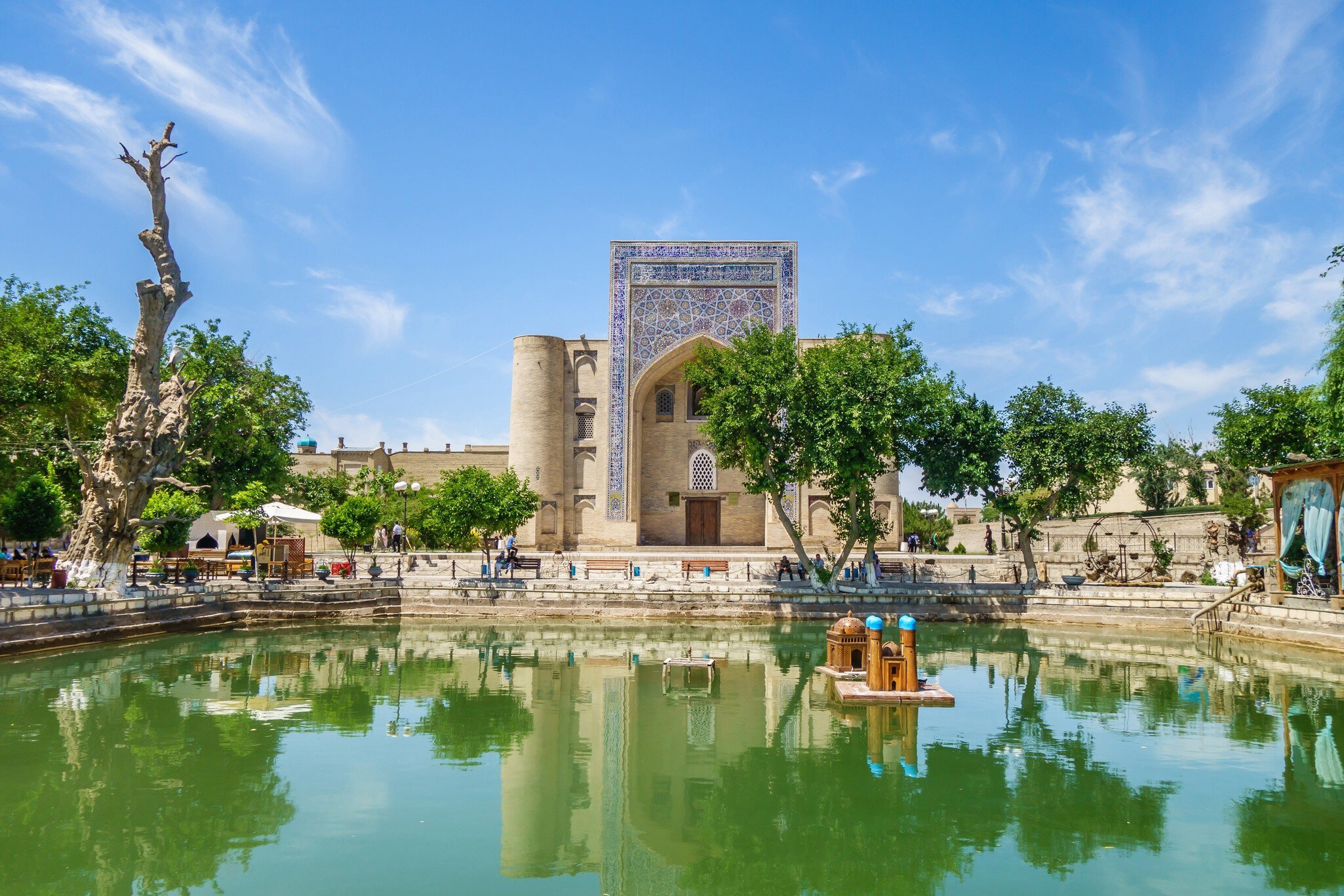
Lyab-i Hauz, a plaza built around a pool in 1620 (the name is Tajik for "around the pool"), is the most peaceful and interesting spot in town, shaded by mulberry trees as old as the pool. The old tea-sipping, chessboard-clutching Uzbek men who once inhabited this corner of town have been moved on by local entrepreneurs bent on cashing in on the tourist trade. Still, the plaza maintains its old-world style despite the evening pop music and family funfair feel.
Until a century ago Bukhara was watered by a network of canals and 200 stone pools (hauz) where people gathered and gossiped, drank and washed. As the water wasn’t changed often, Bukhara was famous for plagues and water-borne diseases; the average 19th-century Bukharan is said to have died by the age of 32. The Bolsheviks modernised the system and drained most of the pools but several, like the Lyabi-Hauz, remain.