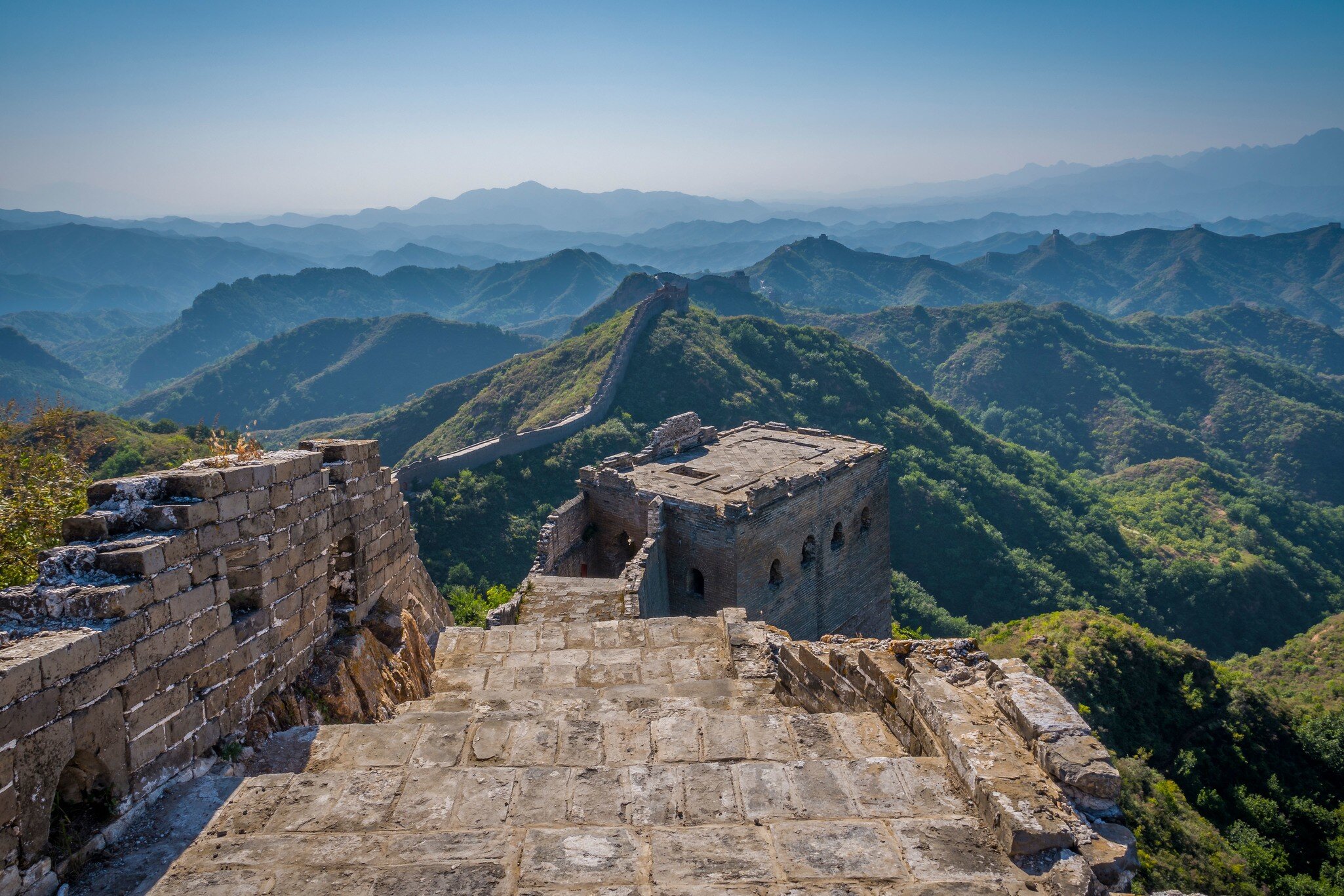
Thanks to some especially breathtaking switchbacks, Jinshanling (金山岭, Jīnshānlǐng) has garnered a strong reputation among landscape photographers. Like its neighbor, Simatai, Jinshanling has been minimally restored, so the wall is generally safe to walk but retains its battle-scarred aesthetic, including medieval graffiti etched into the stone. This section of the Great Wall has some unusual features such as barrier walls (walls within the Wall) and a particularly high density of watchtowers. The towers are also diverse in style and construction material, giving each a distinct personality. General admission is ¥55-65. Info boards in English at various points cover history and architecture.
Jinshanling has a cable-car system that carries visitors to the approximate middle of the wall. The park also has its own campground, giving you the rare opportunity to spend the night in your own tent (¥150-200 per night). To be clear, camping on the wall itself is not permitted. If you’ve been holding out on a tour, Jinshanling is a worthy splurge; the park is tricky to reach on public transit from Beijing, and taxis can get expensive.
The 10.5km section of Jinshanling claims 67 towers and a litany of heart-pounding staircases, which become rougher as you approach Simatai. It was once common practice to hike from one Great Wall site to the other, but park administrators strongly discourage walking between Jinshanling and Simatai.
Jinshanling is distant enough from Beijing that it sees far fewer tourists than the likes of Mutianyu.