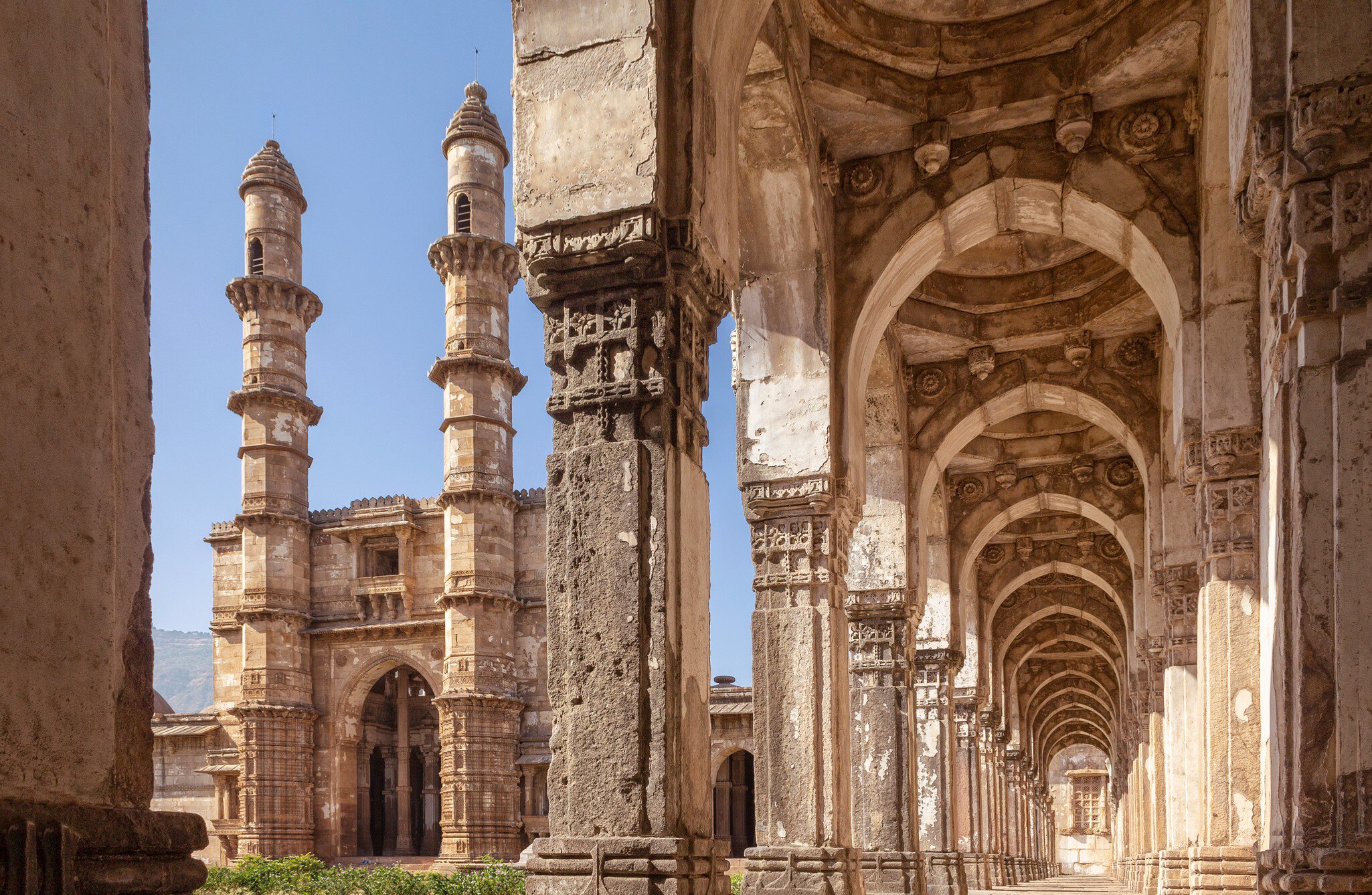
The evocative ruins of the one-time capital of Sultan Mahmud Begada today stand as testament to Champaner's brief period of 15th-century glory. When Champaner was captured by Mughal emperor Humayun in 1535, the Gujarati capital reverted to Ahmedabad, and Champaner fell into ruin.
Monumental, UNESCO-listed mosques fill the Champaner-Pavagadh Archaeological Park (entry ₹600), which is like an open-air museum – it has mosques, water installations, military structures and a palace. It remains the only unchanged Islamic pre-Mughal city in India. Start a tour of the historic city at the Citadel and look out for the carved entrance porch of the striking Jami Masjid, the stone carvings in the prayer hall, the rare brick tomb, and the step-wells that are testimony to the sophisticated water system that existed at the time.
Other beautiful mosques include the Saher ki Masjid, behind the ticket office inside the citadel, which was probably the private royal mosque, and the Kevda Masjid, 300m north of the citadel and about 600m west of the Jami Masjid. Here you can climb narrow stairs to the roof, and higher up the minarets, to spot other mosques even further out in the countryside – Nagina Masjid, 500m north, with no minarets but exquisite geometric carving, particularly on the tomb next to it, and Lila Gumbaj ki Masjid, 800m east, on a high platform and with a fluted central dome. The twin minarets resembling factory chimneys, about 1km west, adorn the Brick Minar ki Masjid, a rare brick tomb.
The Kalikamata Temple on the scenic hilltop at Pavagadh is a pilgrimage site and can be reached via a two- to three-hour walk or via a cable car ride (₹150) .