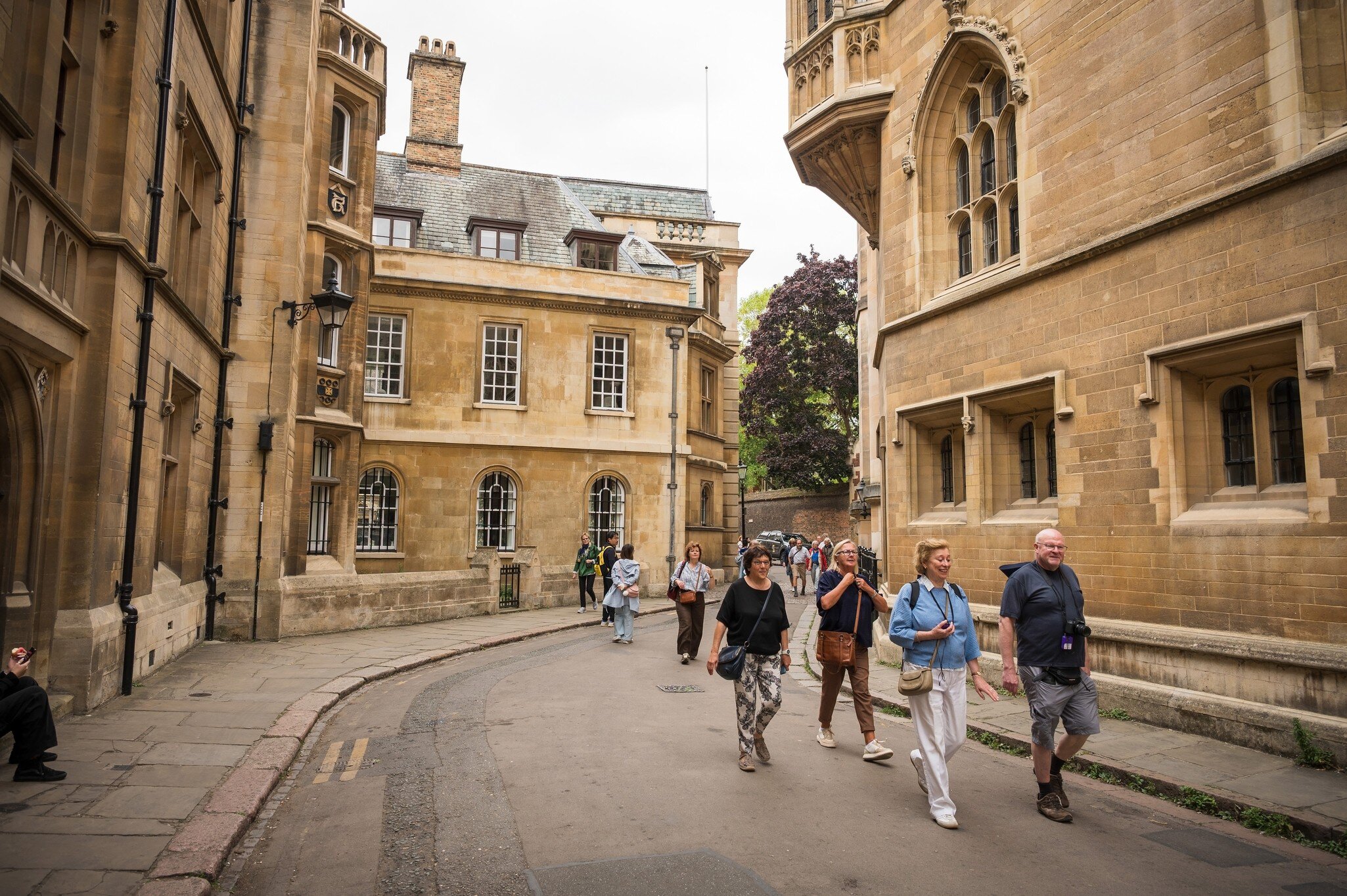
Founded around 1209 by scholars who left Oxford University following the controversial hanging of three colleagues, Cambridge University (cam.ac.uk) has educated some of the world’s greatest minds, from Isaac Newton to Zadie Smith. As a result, its colleges and institutes, scattered across Cambridge, are magnets for tourists keen to glimpse the innards of one of the world’s great universities.
Cambridge University Botanic Gardens
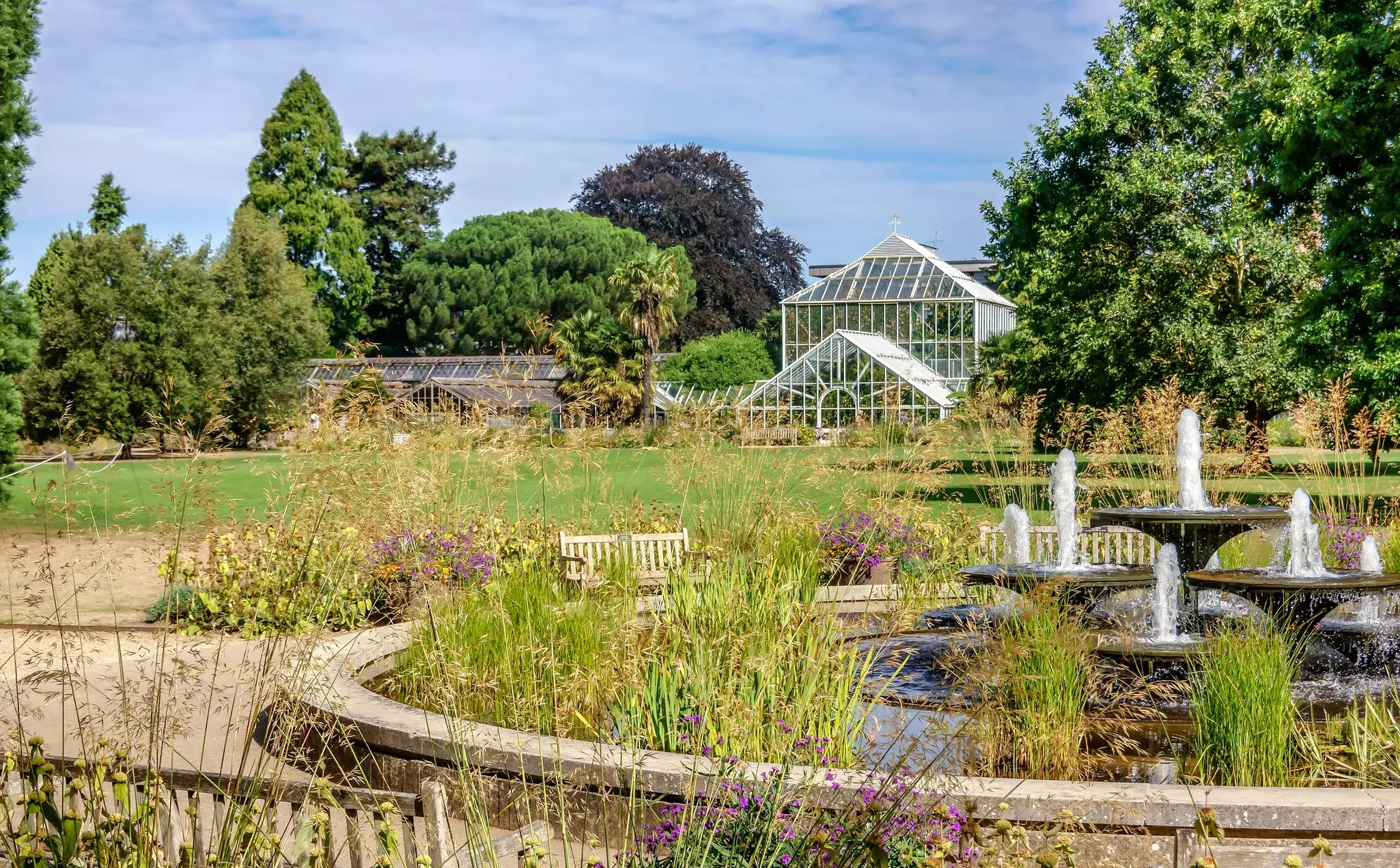
Founded by Charles Darwin's mentor, Professor John Henslow, this beautiful botanic garden is a gorgeous green expanse full of hidden corners, tiny paths and secret spaces. It's home to more than 8000 plant species, from mature trees in the arboretum to carnivorous pitcher plants in Victorian-era greenhouses.
The Colleges
Cambridge’s 31 colleges can only be visited at the discretion of each college porter, and hours vary, so contact individual colleges in advance. The oldest are Peterhouse College (1284) and Clare College (1326); both are worth a visit for their interesting early architecture.
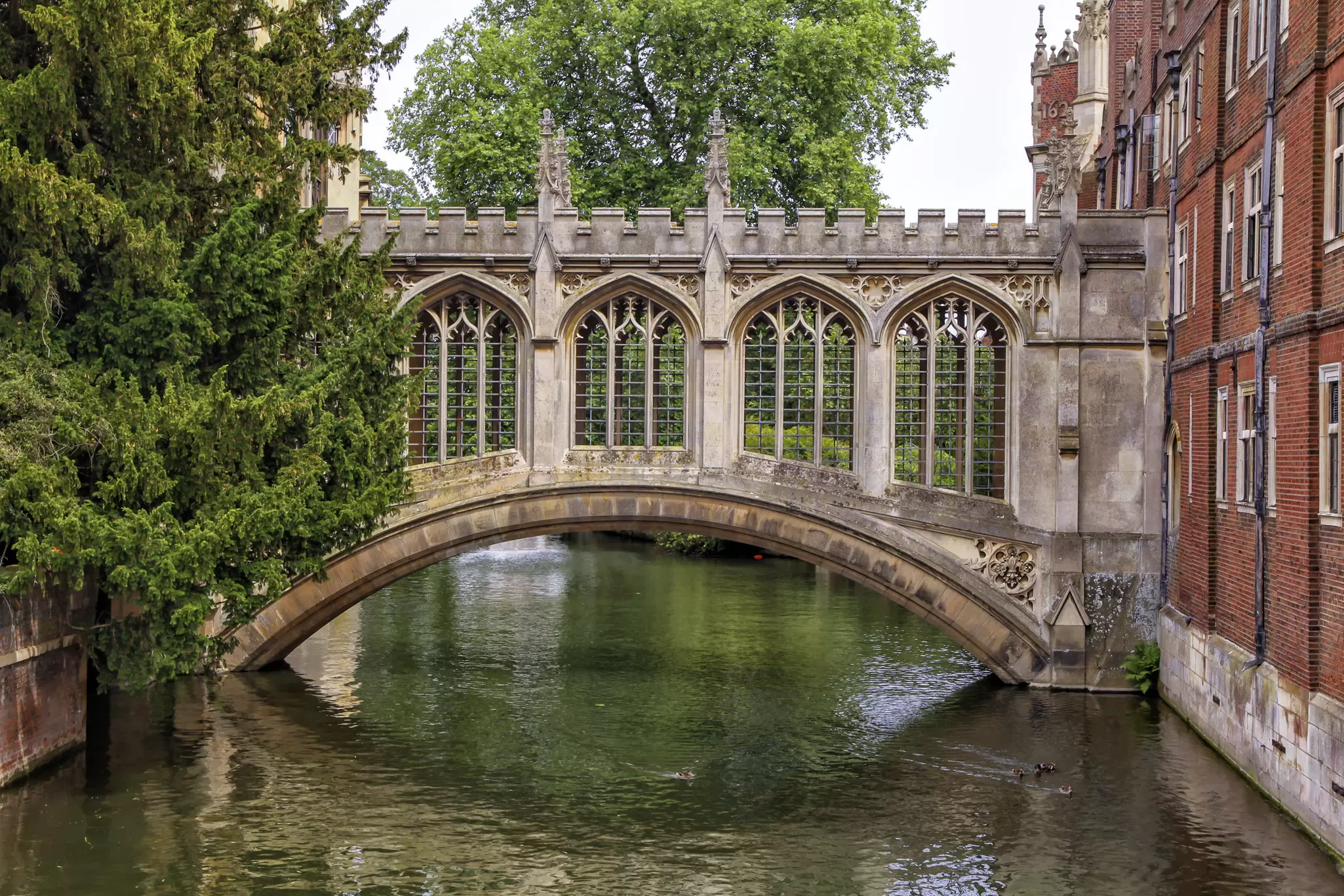
Genteel 15th-century Queens' College elegantly straddles the river, as does highly photogenic St John’s College, which boasts an alma mater of six prime ministers and poet William Wordsworth. It's connected by the ecclesiastical-looking Bridge of Sighs.
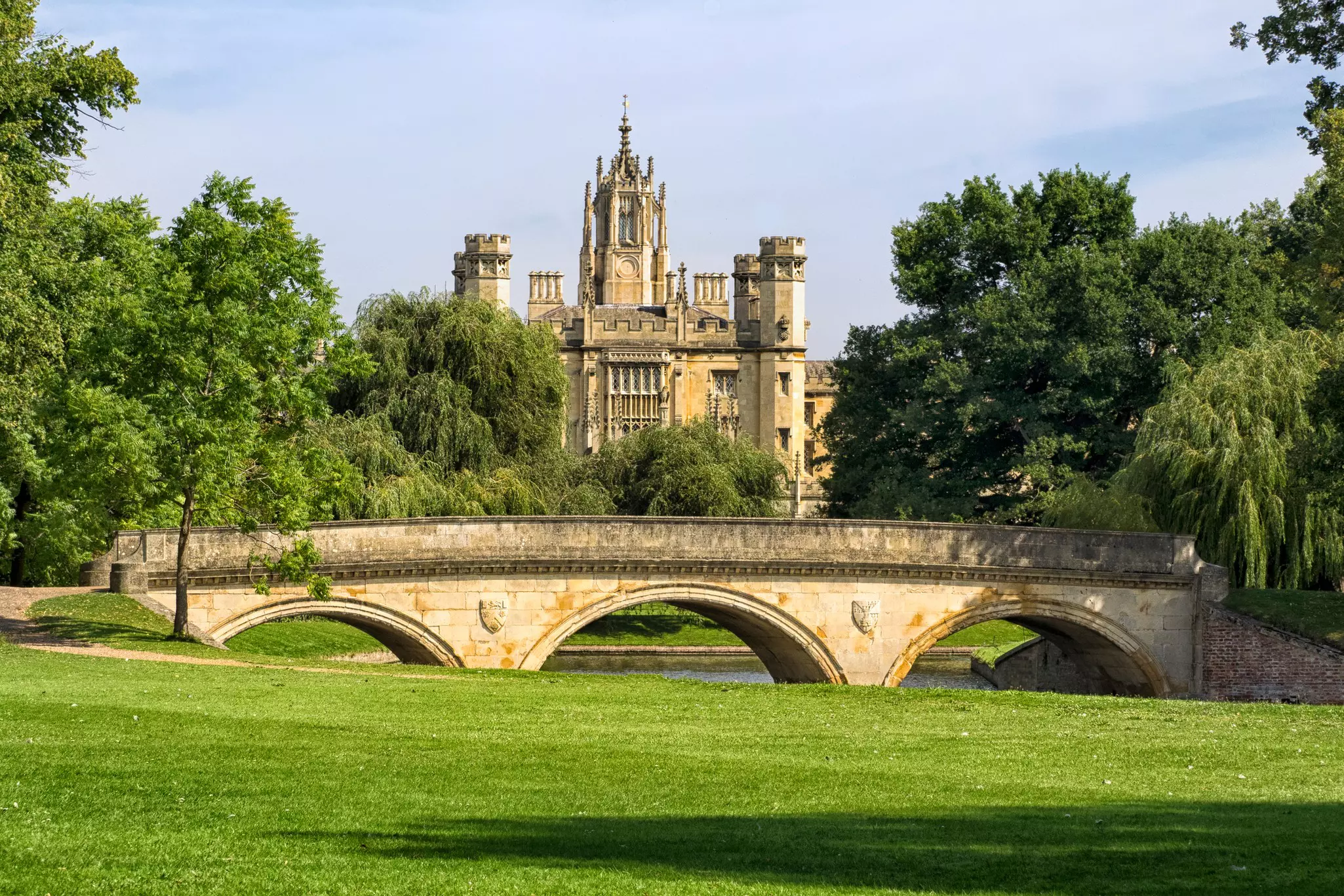
Gonville and Caius College has three fascinating gates – Virtue, Humility and Honour, representing the progress of the good student – and links to the Senate House (and thus graduation). Visitors enter Christ’s College beneath its gleaming Tudor-era Great Gate into Cambridge's only circular front court. The college’s gardens, dedicated to alumnus Charles Darwin, contain actual plant species from his famous Galápagos voyage, while the Fellows' Garden contains the mulberry tree beneath which poet John Milton reputedly wrote Lycidas. Graceful Corpus Christi, founded in 1352, boasts a medieval Old Court with a fascinating sundial and the important Parker Library.
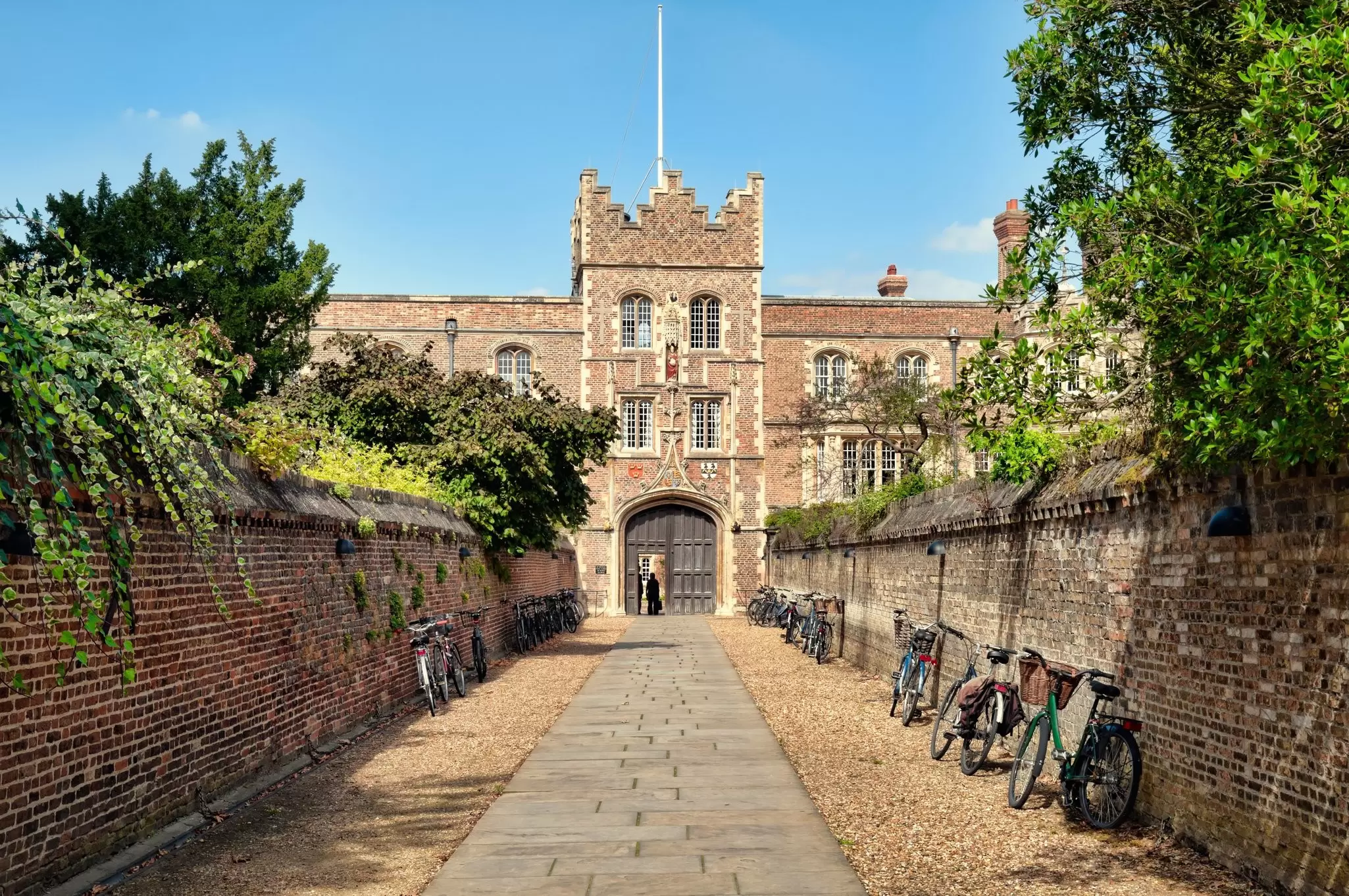
Once a nunnery, highlights of 15th-century Jesus College include the handsome, timber-framed Old Library, a 13th-century chancel and art nouveau features by, among others, William Morris. Illustrious alumni include Thomas Edward – "Lawrence of Arabia" – and Samuel Taylor Coleridge.
Ironically, Cambridge’s only college named after a woman was also the last to admit female students (in 1988). Riverside Magdalene College is a former Benedictine hostel and home to the famous Pepys Library.
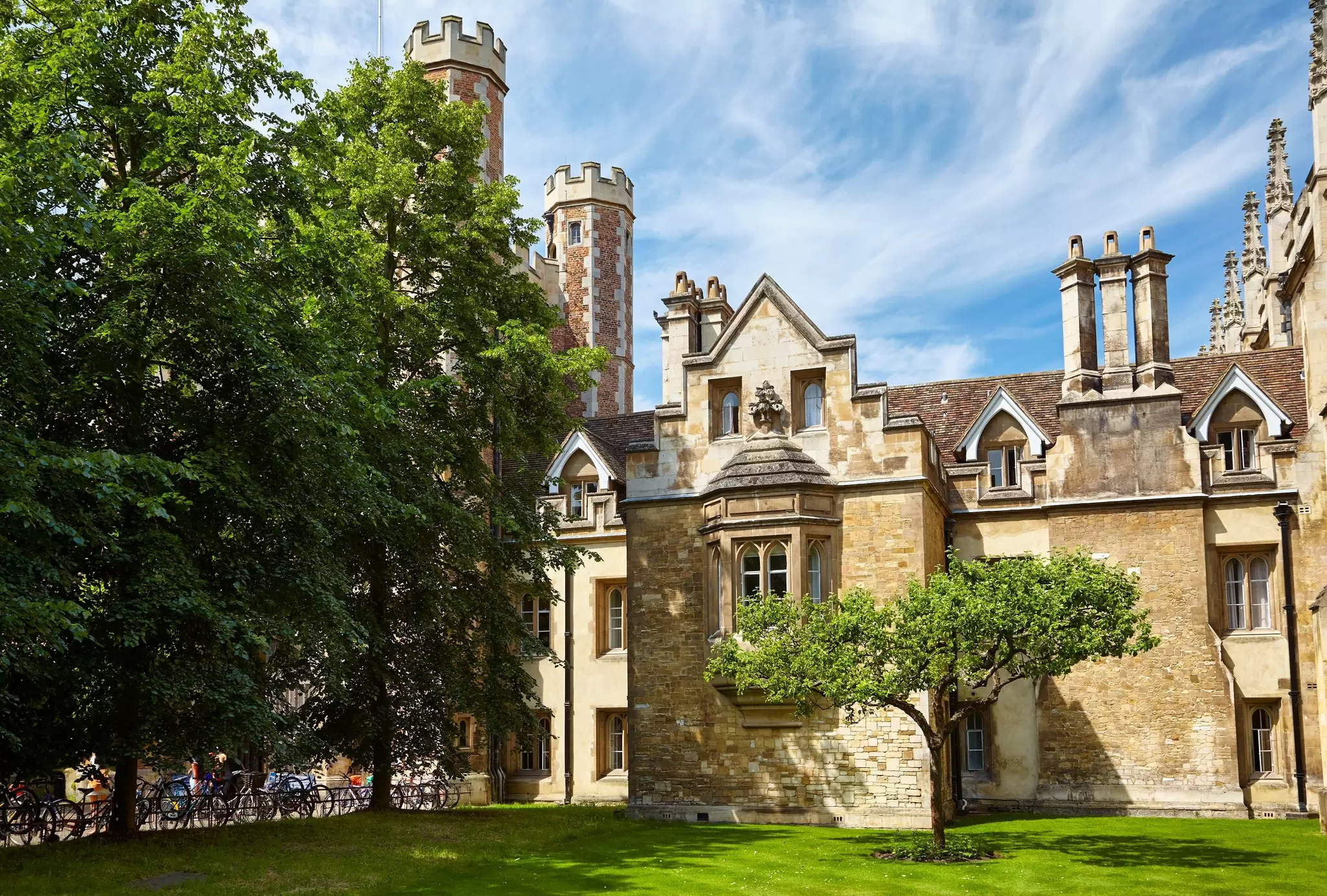
Cambridge’s largest college is Trinity College, with its iconic Tudor gateway. A statue of college founder Henry VIII remains holding a golden orb in one hand and a table leg in the other, after a window cleaner placed it there in the 1980s. Next to the entrance is a small tree, reportedly descended from the one that dropped an apple on alumnus Sir Isaac Newton.
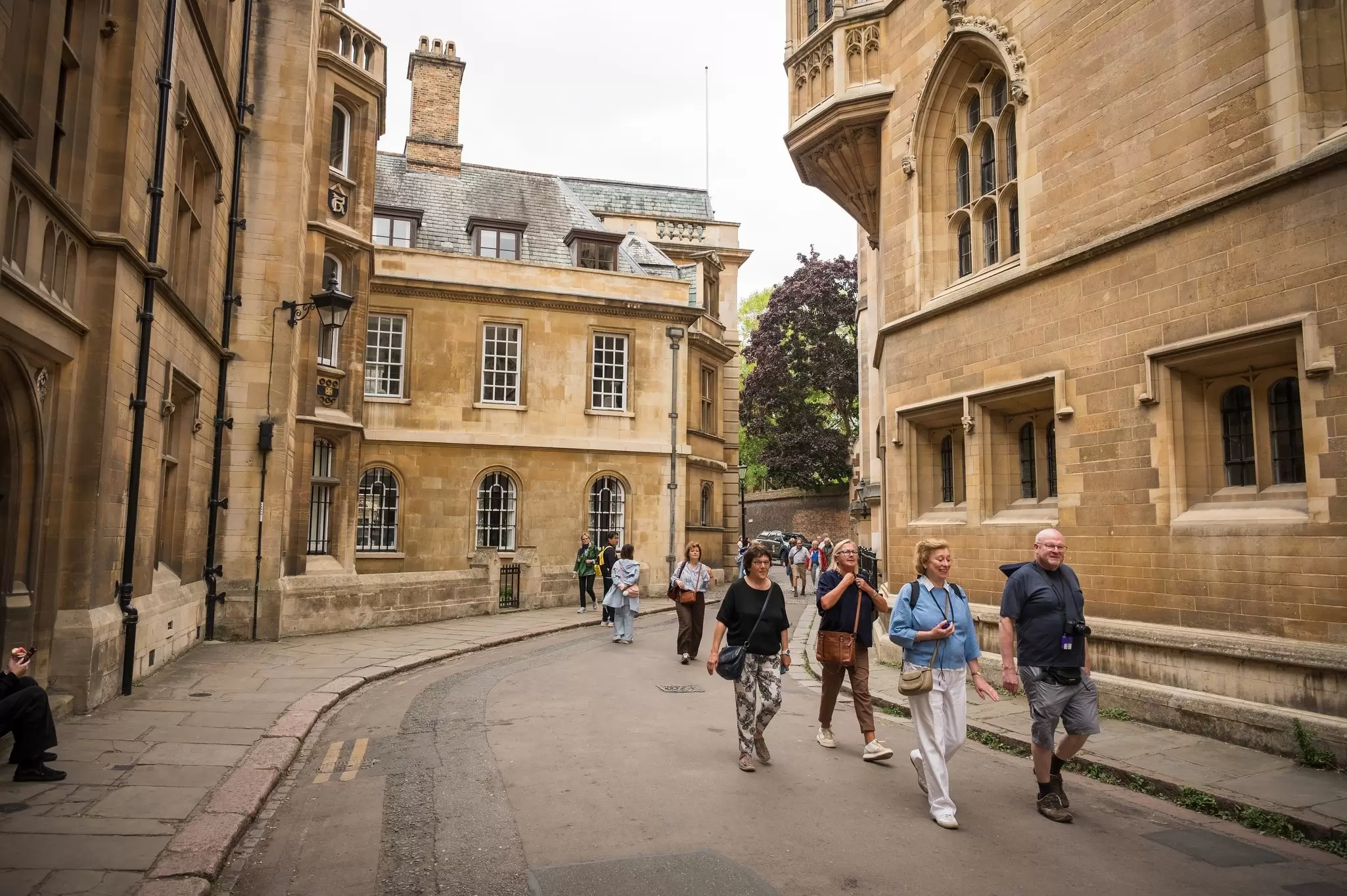
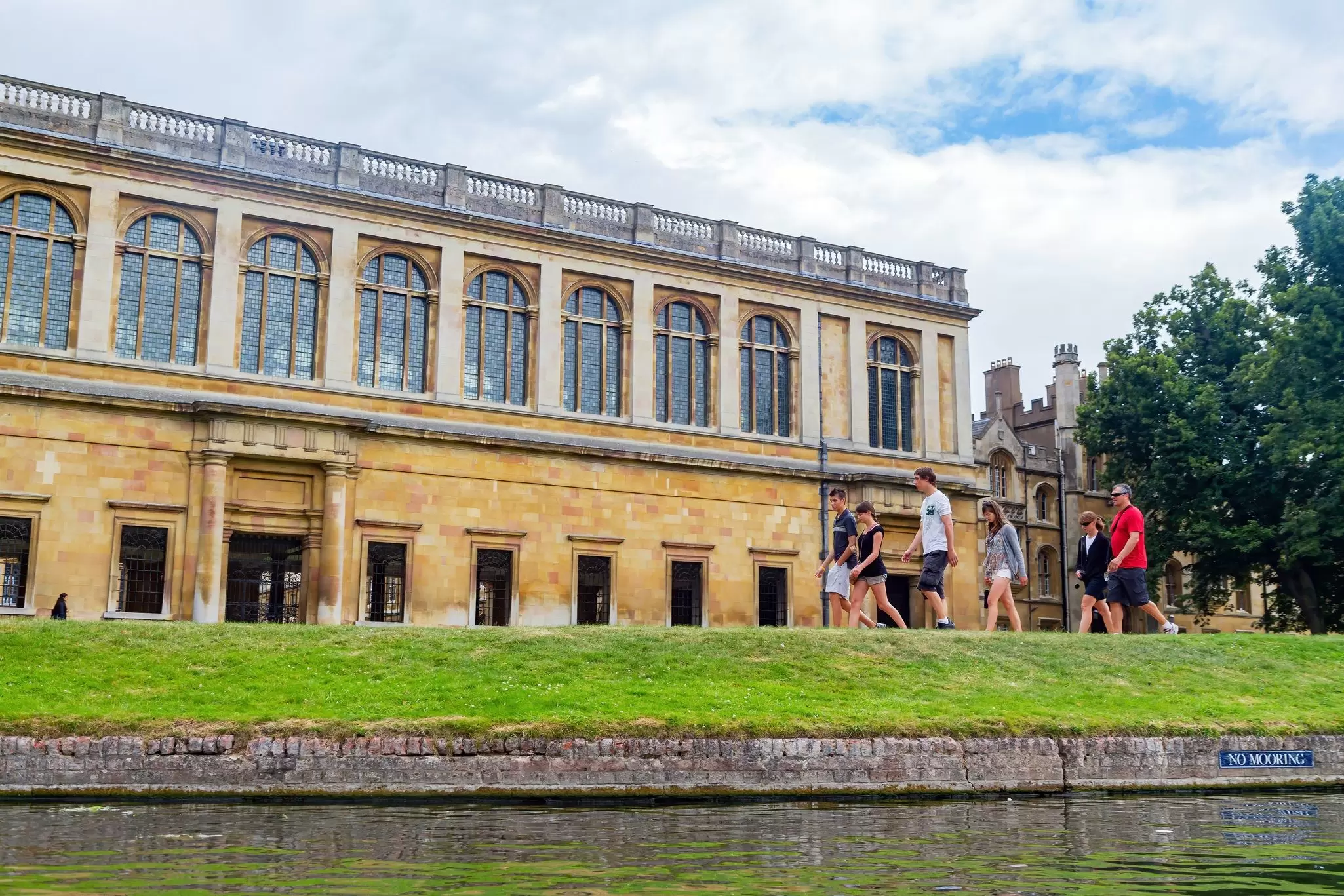
Across the college’s vast Great Court, ringed by grand Gothic architecture, is the Hogwarts-like hall, with its dramatic hammer-beam roof and lantern. Behind are the dignified cloisters of Nevile's Court and, to the right, the imposing 16th-century chapel. Trinity is also home to the Wren Library, and its famous alumni include poet Lord Byron and King Charles III. Easily missed, diminutive 14th-century Trinity Hall College boasts Cambridge’s most beautiful wood-lined chapel and was Stephen Hawking’s college.
Corpus Clock
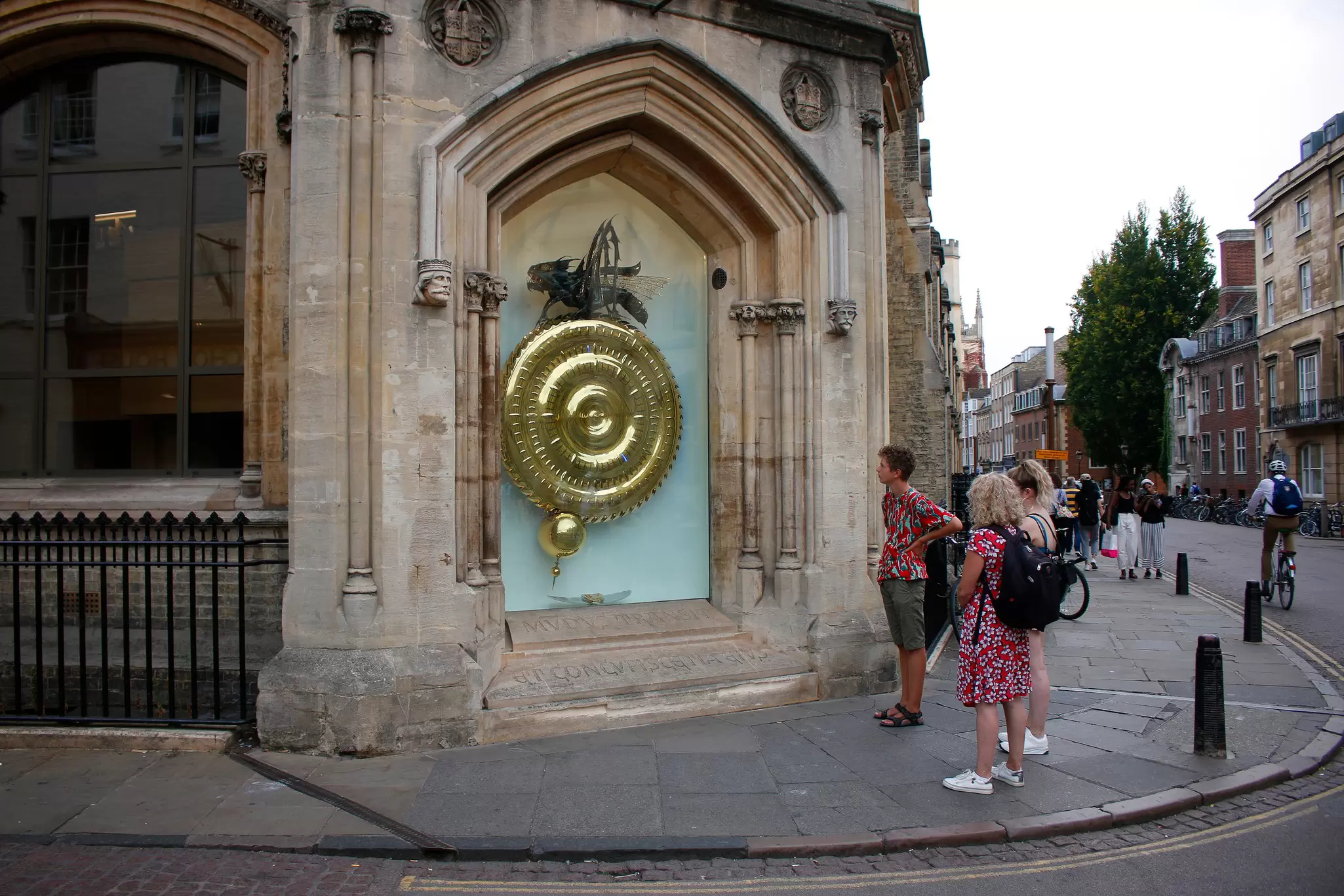
According to creator JC Taylor, the 24-carat gold Corpus Clock’s inaccuracy – it's only accurate once every five minutes – isn’t because it's broken, but reflects life's irregularity. Notice the hideous-looking insect "time-eater" inching across the top, turning the cogs with its legs.
Museums
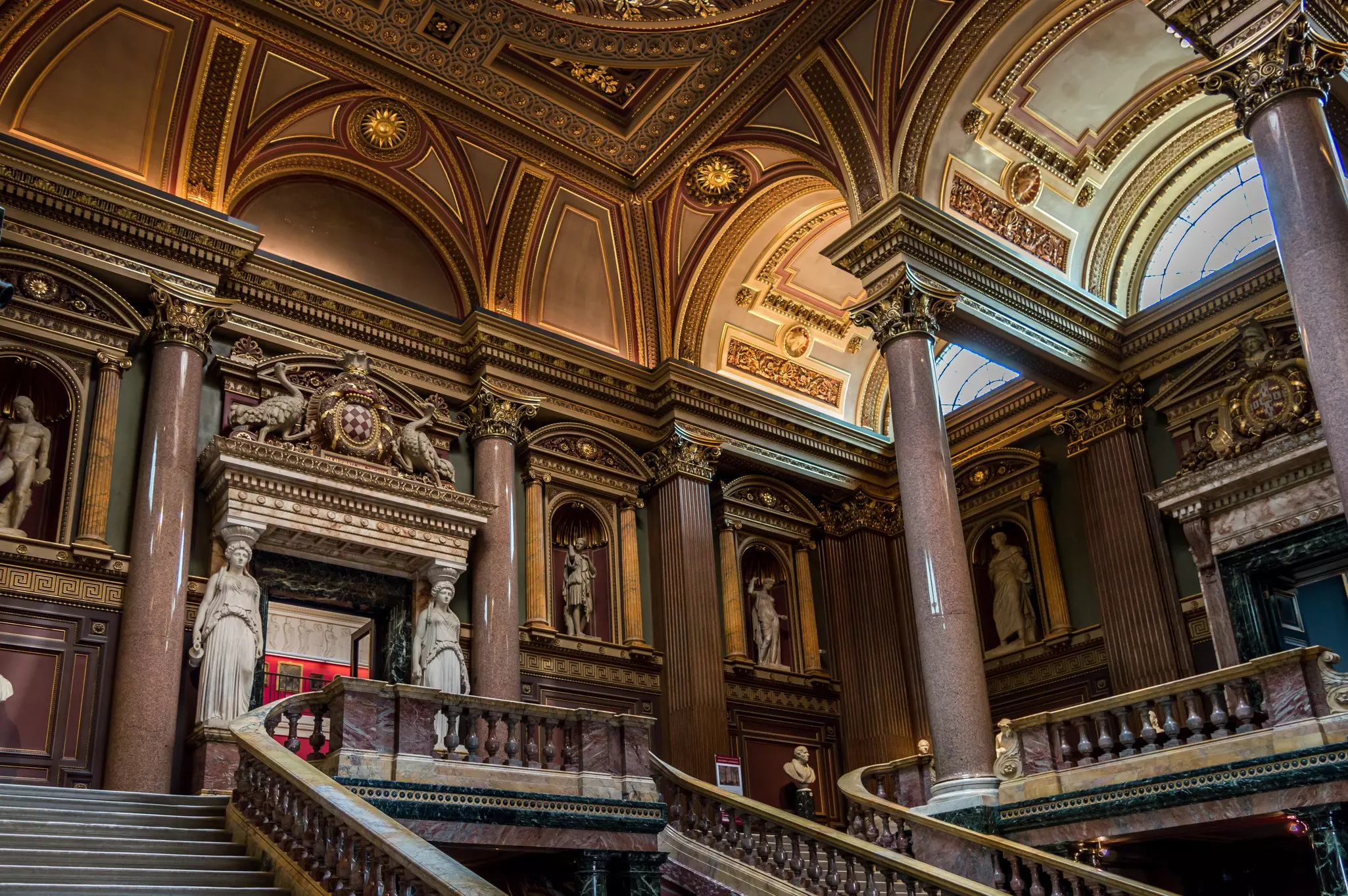
The university’s Fitzwilliam Museum (fitzmuseum.cam.ac.uk) was the first public art museum in Britain, built in colossal neoclassical style to house the fabulous collection bequeathed to his old university by the seventh Viscount Fitzwilliam. Its highlights include Roman, Egyptian and Cypriot grave goods, artworks by great masters and one of the country's finest collections of ancient, medieval and modern pottery.
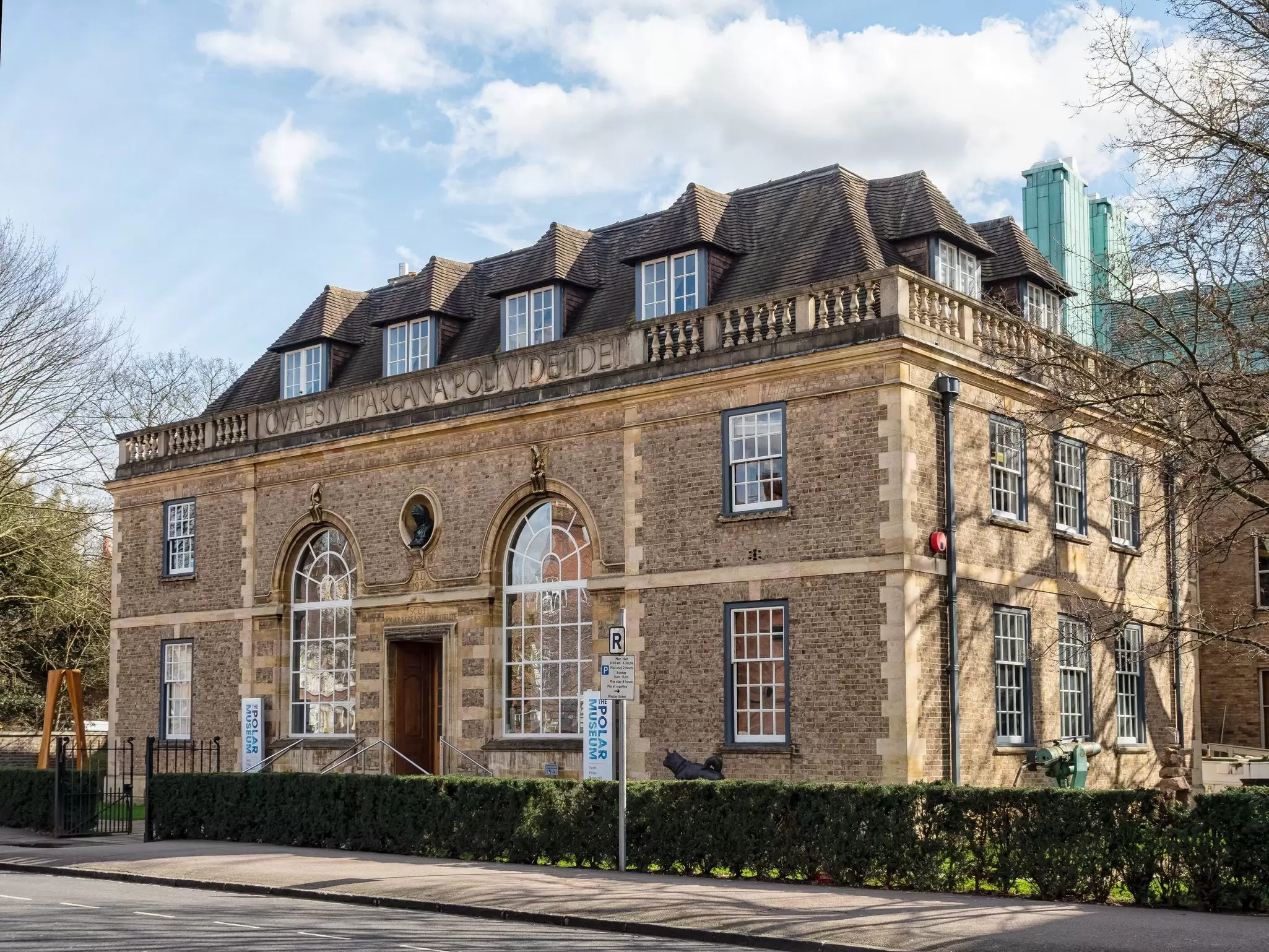
The other popular museum is the Polar Museum (www.spri.cam.ac.uk/museum), where the trials, victories and tragic mistakes of great polar explorers such as Ernest Shackleton and Robert Scott are powerfully evoked using paintings, photographs, equipment, maps, journals and even poignant last messages to loved ones. Other exhibits include models of their ships, innovative equipment and interactive displays on ice, climate change and the people of the Arctic.
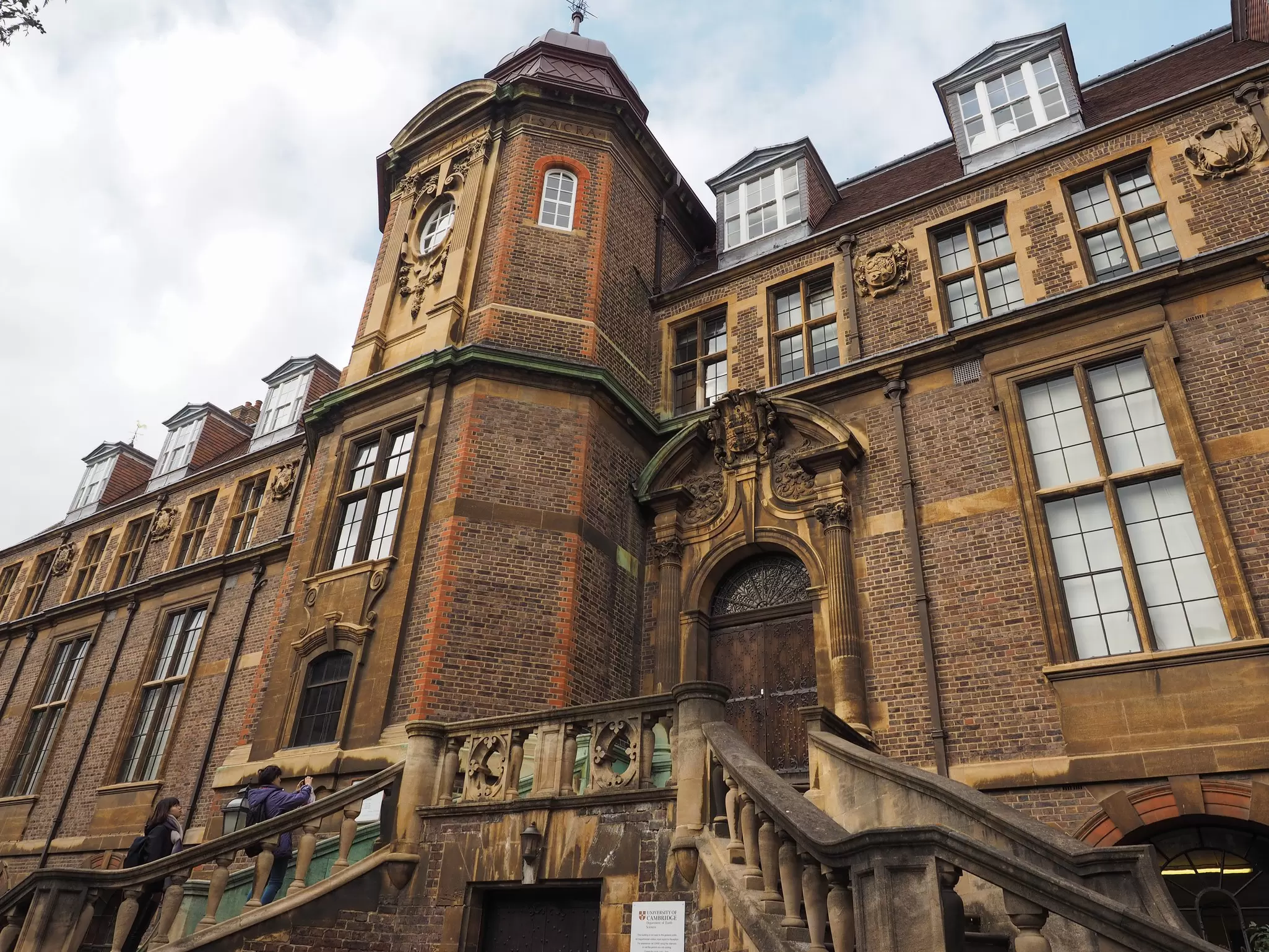
The Sedgwick Museum of Earth Sciences (sedgwickmuseum.cam.ac.uk) is the university’s oldest museum and popular with families. It tells the story of the Earth and is home to a number of dinosaur skeletons. Ethnological objects and archaeological treasures from as far afield as Fiji and Australia's Torres Strait can be viewed at the Museum of Archaeology & Anthropology (maa.cam.ac.uk), while the Museum of Zoology (museum.zoo.cam.ac.uk) is home to an intriguing collection of stuffed beasties and skeletons, from tiny marmosets to elephants and whales.
Whipple Museum of the History of Science (www.whipplemuseum.cam.ac.uk) is devoted to scientific discovery and the highlight of the Museum of Classical Archaeology (museums.cam.ac.uk/museums/museum-classical-archaeology) is a collection of 450 plaster casts of iconic classical sculptures.
Kettle’s Yard
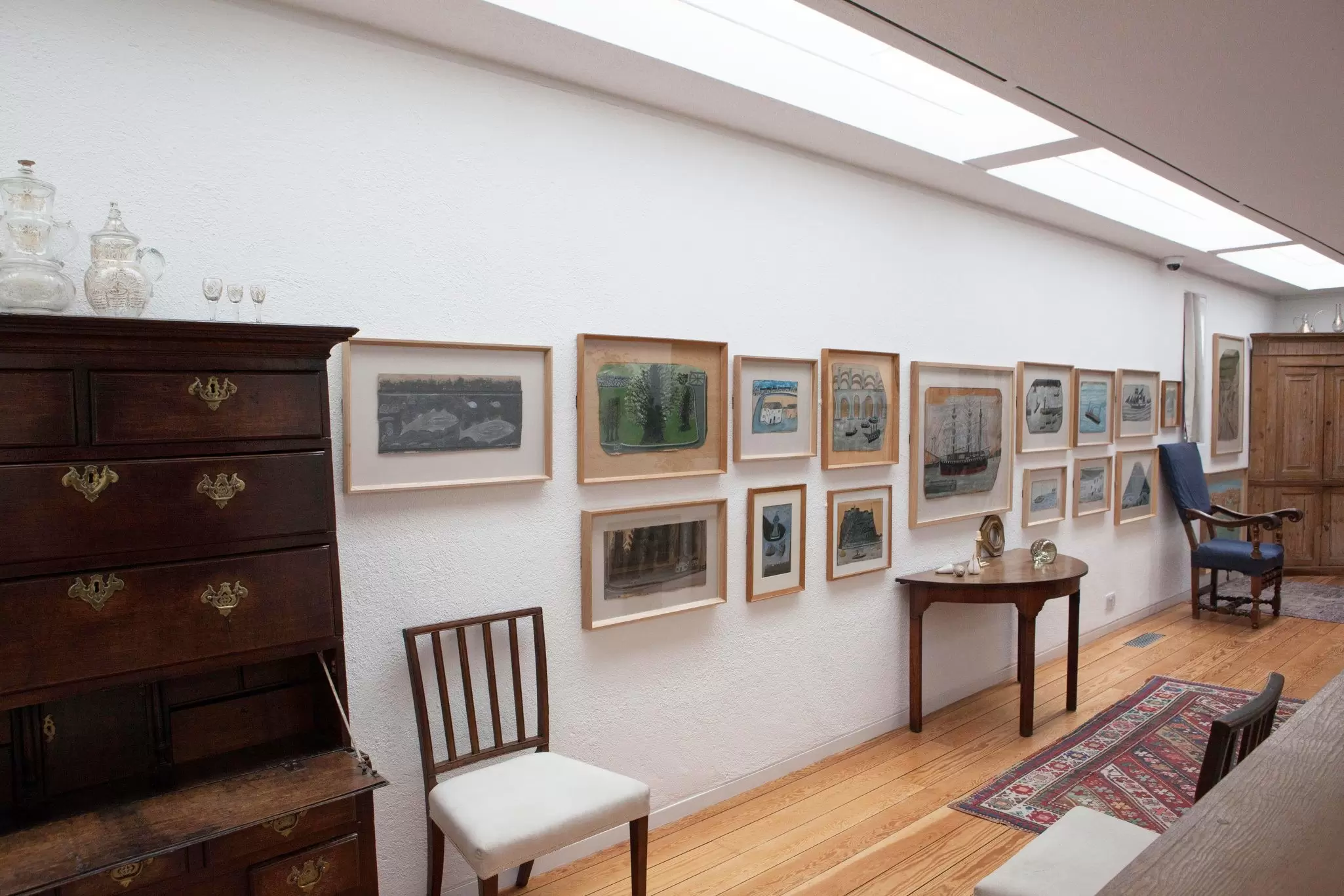
Set in the beautiful former house of collector Jim Ede, the university’s Kettle's Yard gallery of modern and contemporary art (museums.cam.ac.uk/museums/kettles-yard) remains laid out as if it's still lived in, with permanent highlights in the collection including a self-portrait by Christopher Wood as well as pieces by Henry Moore and Winifred Nicholson.
Libraries
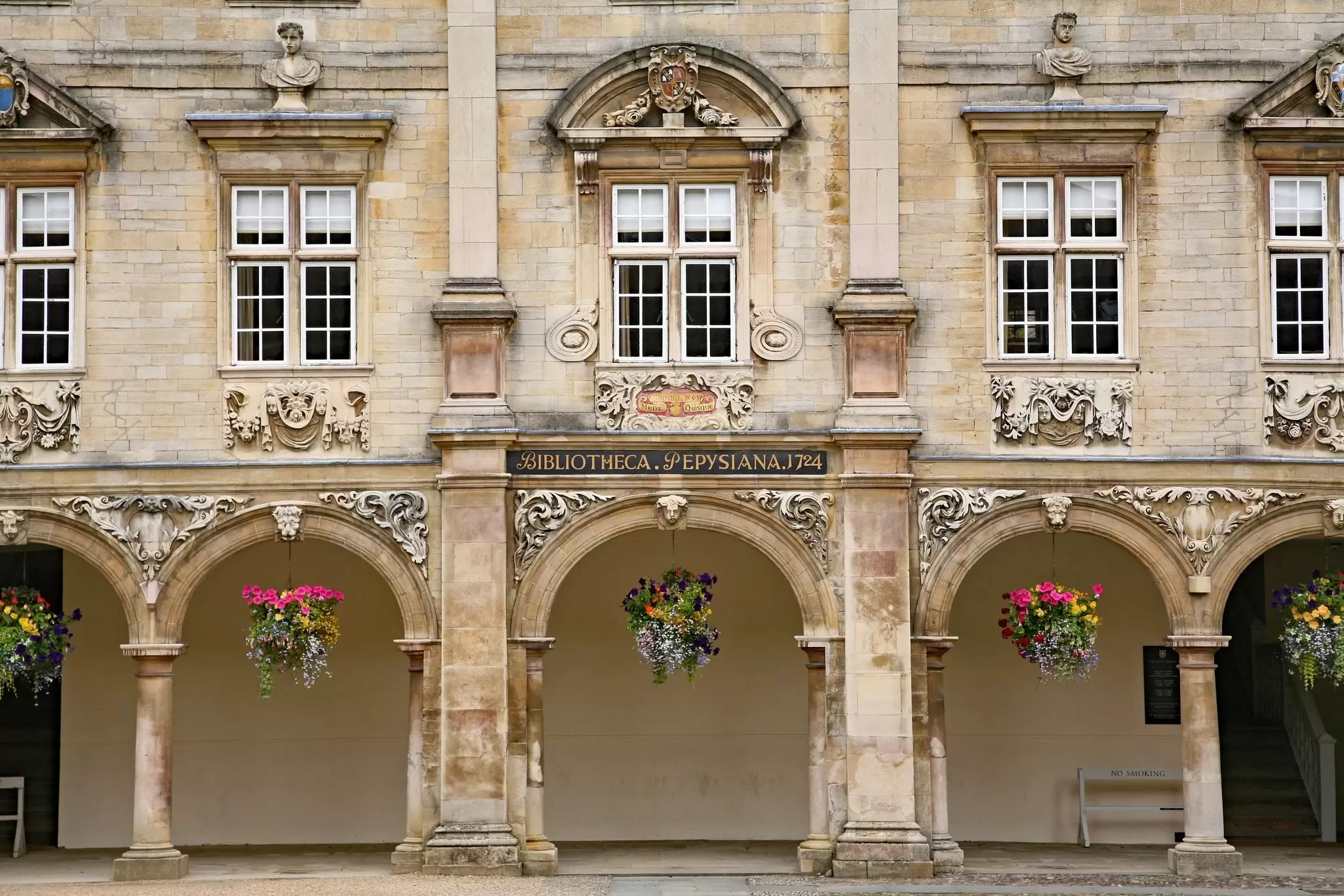
Cambridge’s 100-plus libraries are closed to the public, except two: Pepys Library (magd.cam.ac.uk/pepys) in riverside Magdalene College, which holds 3000 books bequeathed by the 17th-century diarist to his old college, a collection covering everything from illuminated medieval manuscripts to the Anthony Roll, a 1540s depiction of the Royal Navy's ships; and the Wren Library at Trinity College (trin.cam.ac.uk/library/wren-library; closed at the time of research), which contains 55,000 pre-19th-century books and more than 2500 manuscripts, including works by Shakespeare, Newton and AA Milne's original Winnie-the-Pooh.
Corpus Christi’s famous Parker Library (corpus.cam.ac.uk/parker-library), home to the world’s finest collection of Anglo-Saxon manuscripts, opens publicly for regular exhibitions, while the other fascinating library – visited only by pre-booked tours – is the 16th-century Trinity Hall College library (trin.cam.ac.uk), which has original Jacobean reading desks and books chained to shelves.
Churches
The foundations of Cambridge's sublime university church, Great St Mary's Church, date from 1010, but most of what you now see is from 1351 and a grand Gothic remodeling between 1478 and 1519. Its tower can be climbed with a ticket for awe-inspiring views over Cambridge.
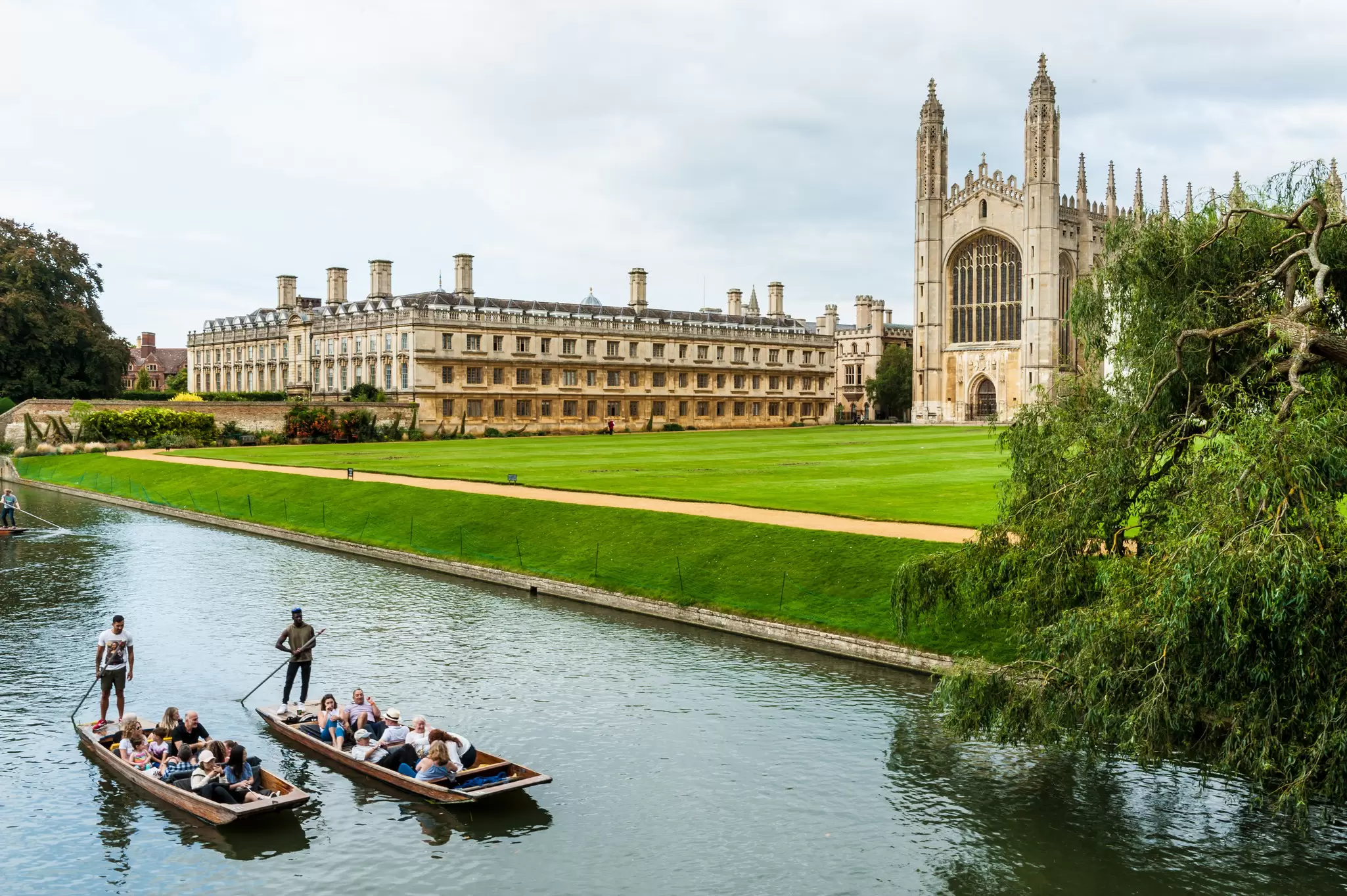
One of England’s most extraordinary Gothic monuments, limestone-faced, 16th-century King's College Chapel is home to the world's largest – and one of the most intricate – fan-vaulted ceilings. Founded in 1446 by Henry VI and finished by Henry VIII, it has lofty stained-glass windows that flood the interior with light. The antechapel and choir are divided by a carved wooden screen, where Henry VIII's initials are entwined with Anne Boleyn's. Playing the role of high altar is Rubens' 17th-century masterpiece, Adoration of the Magi.
Senate House
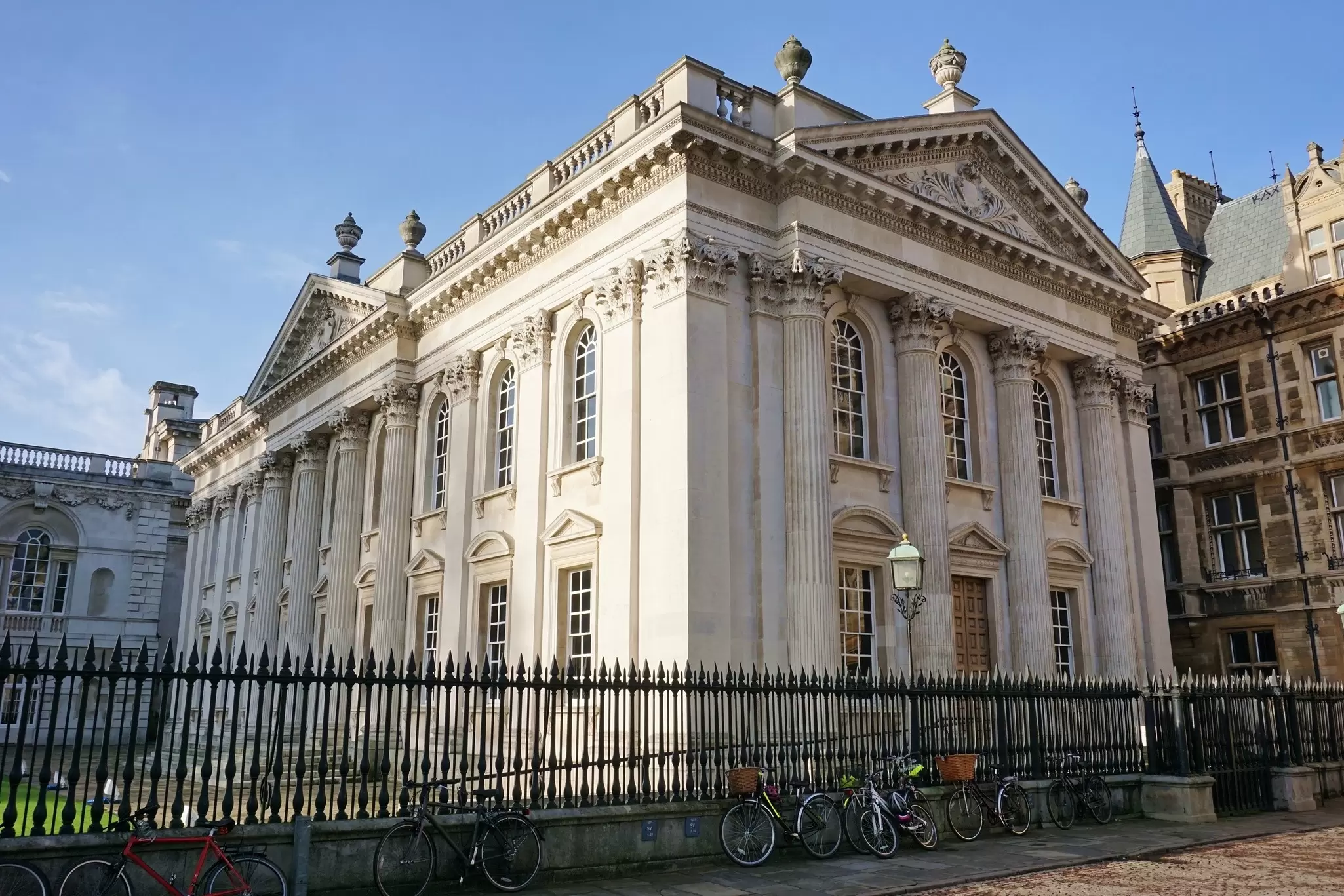
The beautiful, baroque Senate House (not open to the public), tucked between King's College and Gonville and Caius College, was designed in 1730 by James Gibbs and is where graduations are held in summer. Look out for the degree-class lists that are posted outside at the end of the academic year.
Top Tips
As an active university, the quietest times to visit Cambridge’s many sites are during the major holidays, though that’s when the museums are at their busiest. Even then, barring the dedicated public institutes such as museums and galleries, it's always best to look up opening hours, especially for the colleges, many of which host private events that can lead to the entire site being off-limits for days. This is especially important if you're keen to view a particular college – in this case, try to phone ahead and confirm the information online.