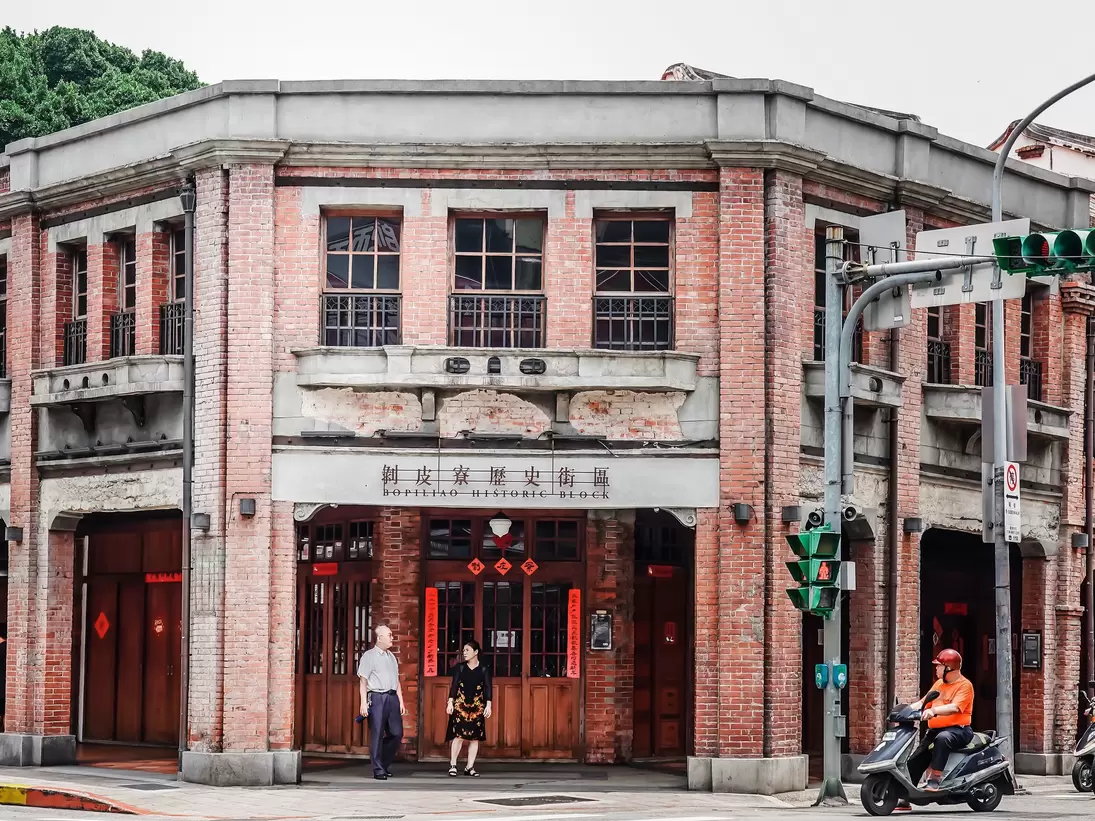
One of the best-preserved historic sections of Wanhua, Bopiliao covers both Qing and early Japanese-era architecture. During the Japanese era, the narrow Qing-built street and shops became the back alley to new, wider Guangzhou St. As such the eras neatly divide themselves, with Japanese buildings to the south and Qing to the north. The differing styles are easy to spot: Qing-era buildings are commonly red brick, and shopfronts are set back from arcades. Japanese buildings incorporate western baroque designs, and facades are embellished with flowers and other common motifs.
Some of the buildings house art galleries (generally open from 9am to 6pm, Tuesday to Sunday) showing experimental works, mostly by young local artists. Although reconstruction work is impressive, the street lacks life; it's more like a museum compared with the atmospheric Dihua St that is still used by the community. But it's worth a look if you're in the area. If you’ve just visited Longshan Temple, it makes sense to saunter on over to admire this short street of renovated shophouses.
Bopiliao was the setting for many scenes in the 2010 Taiwanese gangster flick Monga.