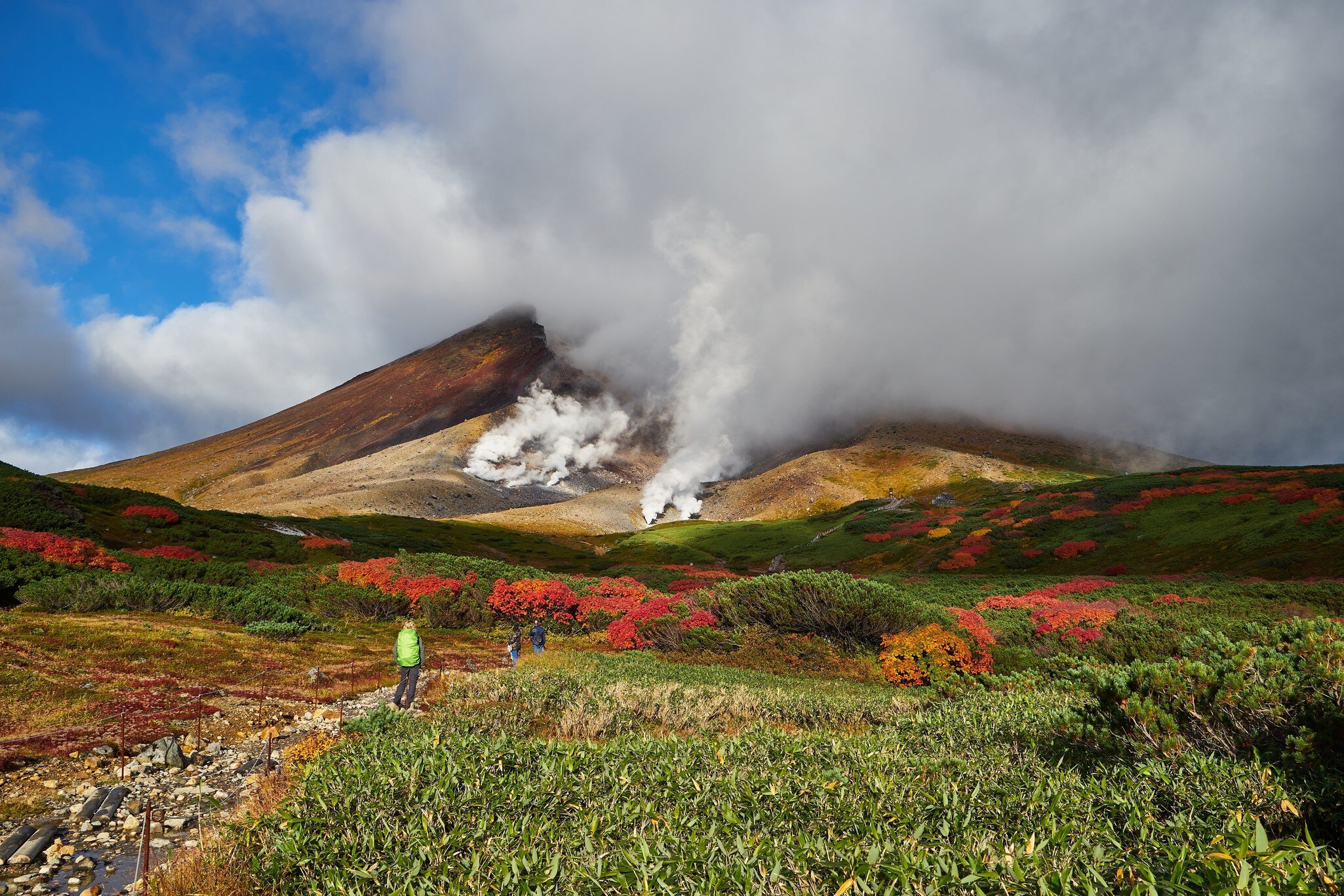
Daisetsuzan National Park is Japan’s largest true wilderness, located in the heart of Hokkaidō. A wild upland area packed with remote peaks, steaming volcanoes and secluded hot springs, it is a haven for outdoor lovers. Meaning "big snowy mountains" in the native Ainu language, and snowbound for a good half the year, this unique environment is home to some of Japan’s most interesting flora and fauna.
Natural Wonderland
Daisetsuzan is one of the finest hiking destinations in Japan, with miles of trails through untouched and wild landscapes. Aim for July to late September, when most trails are snow free, but pack a warm layer as even summer can be chilly.
The most gentle walk is a 30- to 60-minute stroll around Sugatami at the top of the Asahidake Ropeway; well-marked trails lead past reflective ponds and steaming volcanic fumaroles, with fantastic close-up views of Asahi-dake. Fit hikers can attempt the climb to the summit, reachable in about two hours from the top ropeway station. The toughest day hike in the area continues down the back side of the peak and loops back to Sugatami via wild hot springs and alpine flower fields in six to seven hours.
At the eastern end of the park near Sōunkyō Onsen, there’s great hiking to be had by taking the ropeway and chairlift up the mountain. It's then a short 1½-hour climb to the summit of Kuro-dake. Alternatively, head to Tokachidake Onsen for a seven-hour round trip to the volcanic summit of Tokachi-dake.
Longer Treks
Experienced and well-equipped hikers can try some of the park’s longer treks, which require camping or a stay in a mountain hut – be aware that huts in Hokkaidō are quite basic, so you will need to bring your own sleeping gear and food.
The shortest "long" hike is a two-day hop between the ropeways at Asahidake Onsen and Sōunkyō Onsen. The route climbs over the major peaks of Asahi-dake and Kuro-dake, looping around the enormous Ohachi-daira, Hokkaidō’s largest caldera, with a stay or camp at Kurodake-Ishimuro, a very basic stone hut (open late June to late September).
The longest and most challenging trek in the park is the Daisetsuzan Grand Traverse, a five- to seven-day adventure traveling 80km north–south through its remote and mountainous interior. There are huts along the way, but you’ll need a tent for at least one night, and all your own food and gear. One for the hardcore only!
Skiing & Snowboarding
Daisetsuzan offers some exceptional backcountry skiing and snowboarding for those with experience.
In winter you can take the ropeway from Asahidake Onsen at 1100m up to Sugatami at 1600m, from where a mixture of intermediate and advanced courses lead through the trees back down the mountain. There’s minimal signage and courses are unpatrolled, so it’s best to go with a guide, but expect amazing dry powder and wonderful views.
In the northeast of the park above Sōunkyō Onsen there are similar opportunities for adventurous winter-sports fanatics. Take the ropeway and then a chairlift up to the high slopes for runs rated at 50% beginner, 30% intermediate and 20% advanced. Snow conditions are usually excellent and there are backcountry and snowshoe hiking opportunities, too.