Sep 20, 20266 min read
A Guide to Diving in Greece: Everything you Need to KnowJun 29, 2026
7 MIN READ

Writer
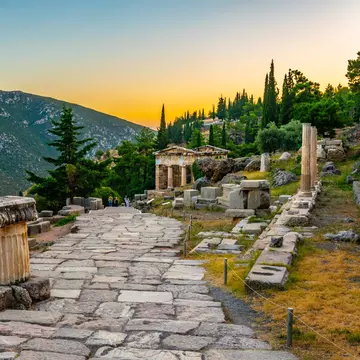
Ancient Delphi, Greece. trabantos/Shutterstock

Writer
Lonely Planet may earn a commission from affiliate links on our site. All recommendations and reviews reflect our own independent opinions.
In Greece, world-renowned ancient sites – some featuring in the Greek myths, the greatest tales of all time – carpet the country. With every layer excavated, another civilization is revealed. And the architecture and artifacts created to honor the gods – Athena, Poseidon, Apollo and Zeus, to name just a few – remain ready for us to marvel at and explore. These are the some of Greece’s most incredible ancient ruins and how to visit them.
The most important ancient site in the Western world
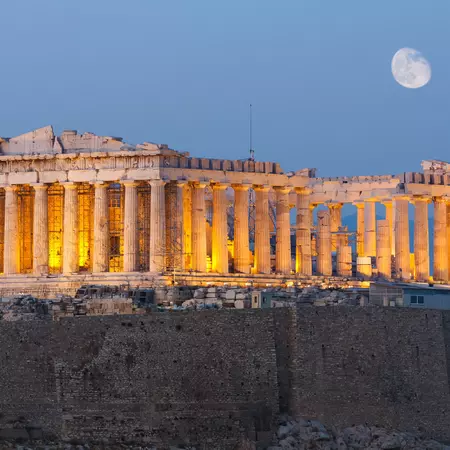
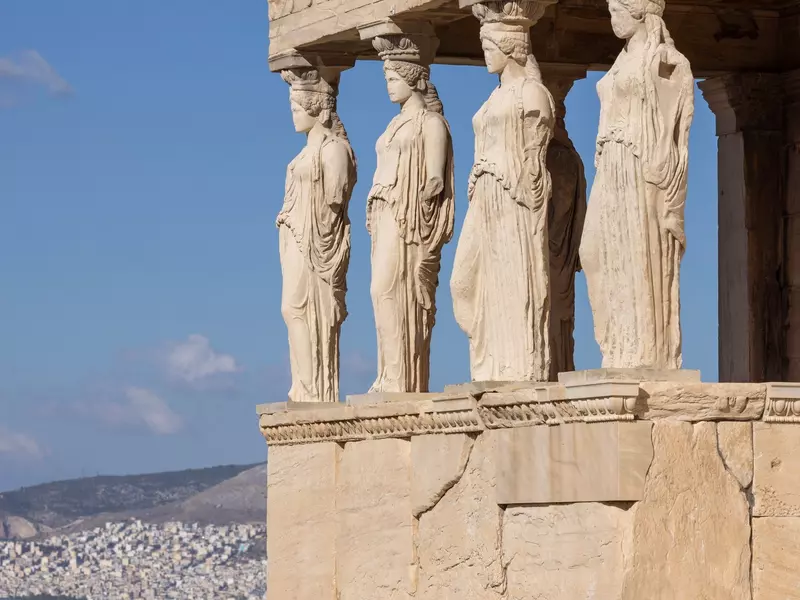
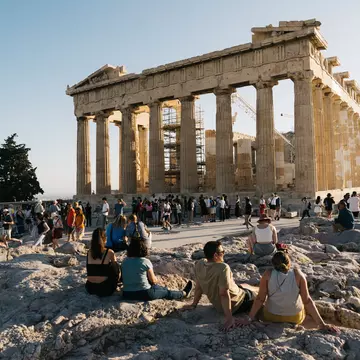
It’s one of the most visually familiar ancient sites in the world. And even so, your first glimpse of the Acropolis will take your breath away. Crowned by the Parthenon, this sacred rock and natural fortress is visible from almost everywhere in central Athens. Its monuments and sanctuaries of Pentelic marble gleam in the midday sun and gradually take on a honey hue as the sun sinks, while at night they stand beautifully illuminated, a sentinel above the city. On the southern slopes, a fabulous modern museum provides an intimate view of the Acropolis’ key treasures.
Highlights of the Acropolis site include the Parthenon (meaning “virgin’s apartment”), which is dedicated to the goddess Athena Parthenos, as well as the Odeon of Herodes Atticus and the Erechtheion.
Popularly known as the Herodeon, the Odeon of Herodes Atticus is a 5000-seat amphitheater hugging the southwestern slopes of the Acropolis. The best way to experience the theater is by attending a performance. The Athens Epidaurus Festival stages drama, music and dance shows here between June and August, and occasionally there are blockbuster pop concerts and other events.
Planning tip: You will never have the Acropolis to yourself, but there are some tactics to avoid the worst of the crowds. Book an early timed-entry slot on the official ticket site, aiming to arrive at 8am, as soon as the site opens, when it will be cooler. Alternatively, visit later in the day. Note that the site’s southeast entrance, near Akropoli metro station, tends to be less crowded.
See magnificent temples and treasuries
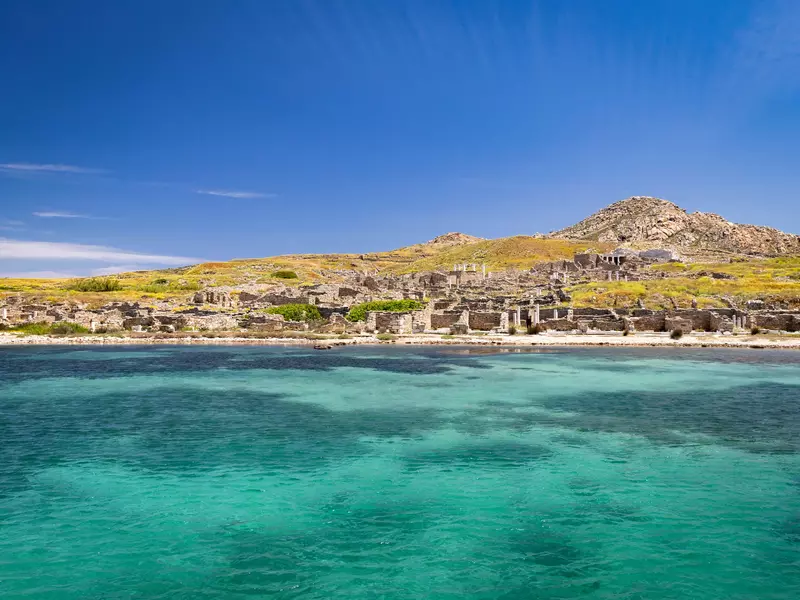
The Cyclades fulfill their collective name (kyklos means circle) by encircling the sacred island of Delos. The mythical birthplace of twins Apollo and Artemis, splendid Ancient Delos was a shrine turned sacred treasury and commercial center. This UNESCO World Heritage Site is one of the most important archaeological sites in Greece. If you cast your imagination wide to transform this sprawling ruin into the magnificent city it once was, it’s not difficult to imagine Ancient Delos in all its original splendor.
The key areas to explore are the Sanctuary of Apollo, the spiritual heart of the complex, to the left of the ferry dock. Two large stoas (colonnaded porticos) lined the Sacred Way leading to the Propylaea, the monumental entrance to a complex of magnificent temples and treasuries. Three temples to Apollo stood side by side, facing a colossal 9m-high statue of the god. Also within the compound is the Artemision, containing the Temple of Artemis.
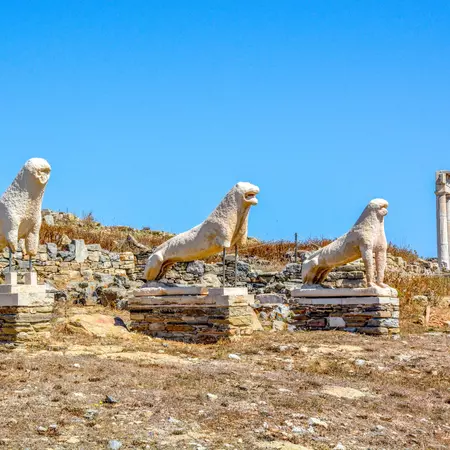
Beyond here is the crowd-pleasing Terrace of the Lions. These proud marble beasts were offerings from the people of Naxos, presented to Delos in the 7th century BCE to guard the Sacred Lake (drained since 1925 to prevent malarial mosquito-breeding) where Leto gave birth to her twins.
Planning tip: While many significant finds from Delos are in the National Archaeological Museum in Athens, the island’s museum retains an interesting collection, including the originals of many of the frescoes, mosaics and statues that were removed from the site and replaced with in-situ replicas.
An insight into Crete's Minoan civilization
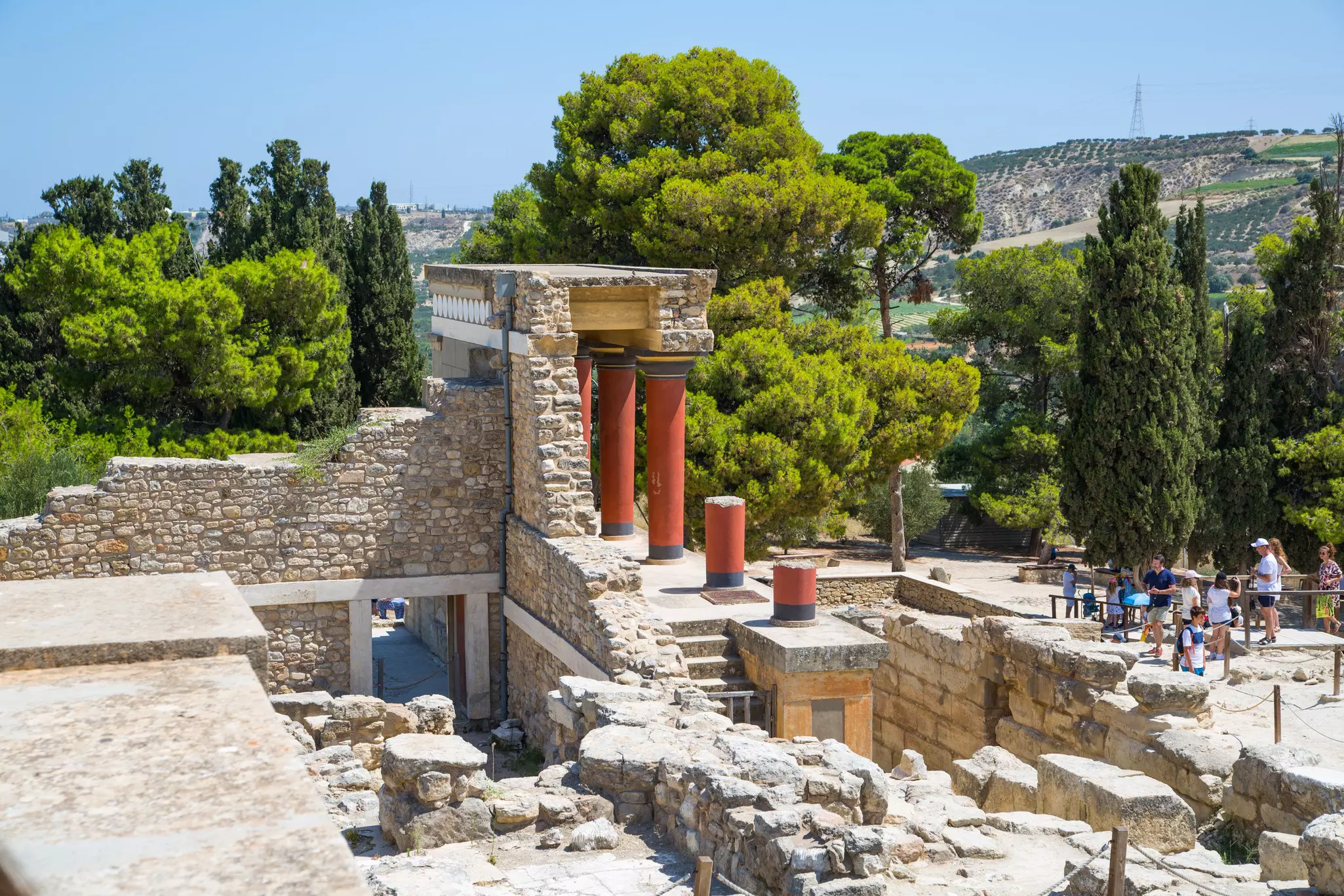
Crete’s must-see historical attraction is the Palace of Knossos. Knossos’ first palace (1900 BCE) was destroyed by an earthquake around 1700 BCE and rebuilt with a grander and more sophisticated design. It was partially leveled again between 1500 and 1450 BCE, then inhabited for another 50 years before finally burning down.
Knossos was mainly excavated between 1900 and 1930 by British archaeologist Sir Arthur Evans. His reconstruction methods remain controversial, with many modern archaeologists believing that he sacrificed accuracy to his overly vivid imagination.
Planning tip: To beat the crowds and avoid the heat, get to Knossos either at 8am or after 3pm. Timed-entry tickets must be bought online. We recommend visiting the site together with the Heraklion Archaeological Museum to get a full understanding of the site.
Follow the original pilgrims
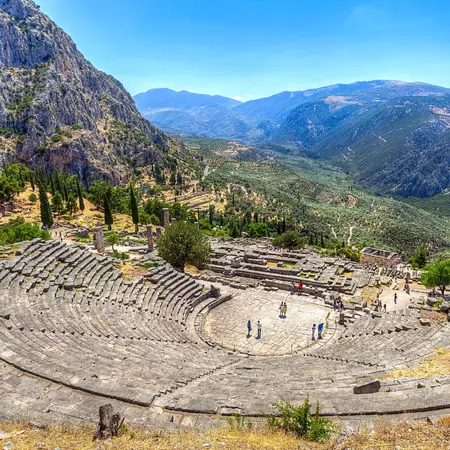
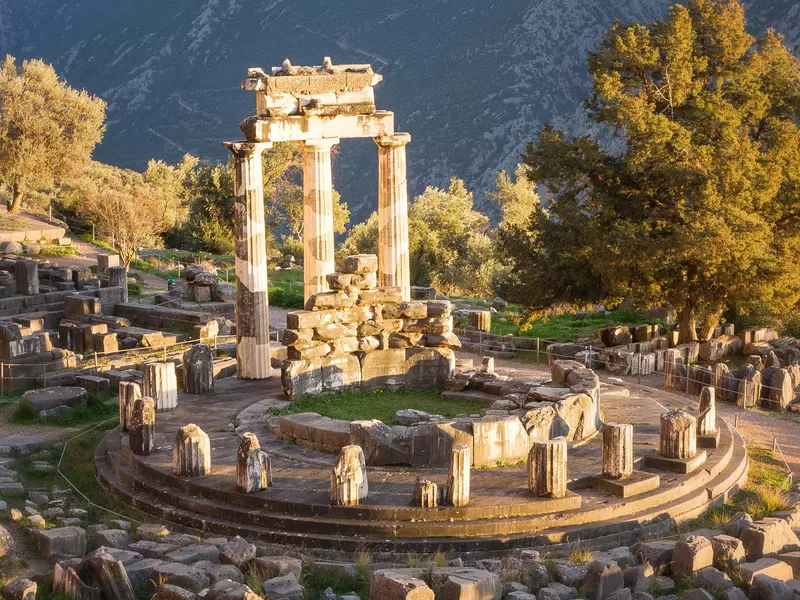
Cicero wrote that the oracle at Delphi would never have been so famous and “so crowded with offerings from peoples and kings of every land” if its prophecies hadn’t been time-tested. Today, the ancient site once again draws tens of thousands of modern-day devotees annually. As the original pilgrims did, start your visit at the circular Classical-era Tholos of Athena Pronea, southeast of the ancient site. Delphi’s most-photographed monument dates to 380 BCE; it was here that the faithful offered a sacrifice. Afterwards, they would purify themselves at the nearby Castalian Spring, where today you can quench your thirst at a fountain.
Entering the main site, you’ll follow the stone-paved Sacred Way, which winds its way uphill through the site. Stepping into the Sanctuary of Apollo, you can see numerous treasuries gifted by nations and city-states in gratitude for receiving counsel from Pythia, the high priestess. Visually, the most impressive is the Athenian Treasury, built of fine Parian marble in the late 6th or early 5th century BCE. But the most significant is the Temple of Apollo, a 4th-century BCE Doric pavilion where an enormous statue of Apollo stood, and invaluable votive offerings were kept. Pythia is thought to have delivered her prophecies, as relayed to her from Apollo, in a chamber beneath.
As you survey the temple, remember the Delphic maxims “know thyself” and "nothing in excess,” which were inscribed on a vestibule within.
Planning tip: The joy of staying right in the town of Delphi is that you can easily walk to all the ancient sites and museums. Delphi is a pleasant drive (2 hour and 30 minutes) from Athens. Alternatively, take the train from Athens to Amfiklia. Delphi is an hour from there by taxi. KTEL intercity buses run regularly from Athens’ Liosion bus terminal to Delphi. Driving is mostly easy, with well-maintained roads along the coast.
One of Greece's most poignant ancient sites
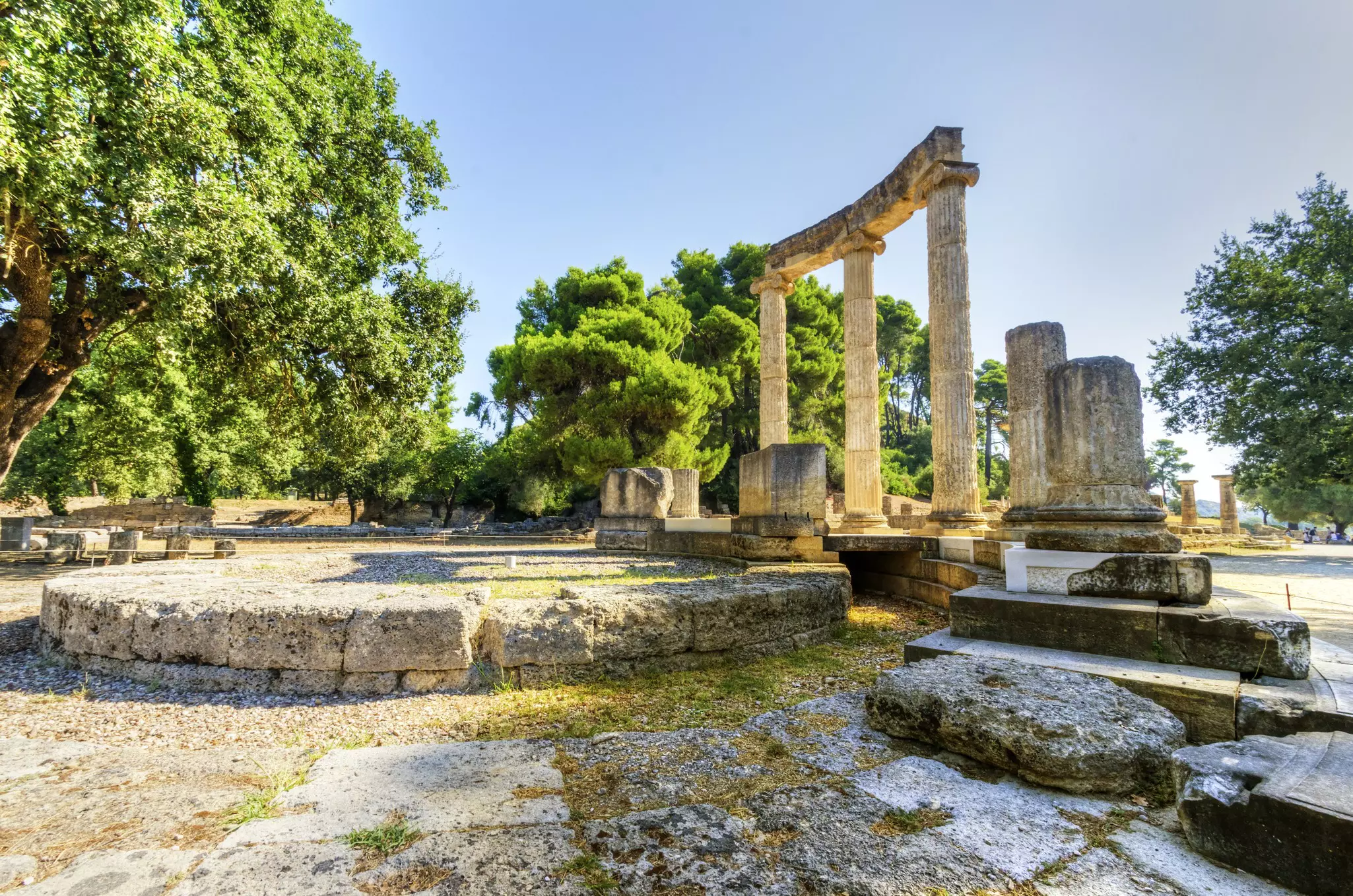
Most famous for being the birthplace of the Olympic Games, the Valley of the Gods, as it’s known, is proud to have boasted the original ancient Olympic stadium. One of the largest ancient sites in Greece, this is where, from 776 BCE on, the best-known sporting event took place every 4 years – and continues to this day. It’s nestled in what’s known as the Alfios Valley and spread out across the rivers of Alpheus (the largest in the Peloponnese) and Kladhios.
The Olympic Games were held in Olympia’s ancient stadium every 4 years for more than 1100 years, until their abolition by Emperor Theodosius I in 393 CE. Over time, earthquakes have slowly eroded the structures and little remains of the temples and athletic facilities, but it’s still possible to wander around what’s left of the original stadium, entered by a stone archway, and imagine the cheers of the crowds.
You don’t need to be a connoisseur of Greek history to appreciate the historical importance of the Olympic site. Its country surroundings and stillness lend it enough reverence to be appreciated as a destination in its own right.
Planning tip: The village of Olympia itself is flat and pedestrian friendly. Buses depart from the train station, located in the middle of town one block east of the main street. Walking in the site is not difficult, though paths are gravel; only some sections of the site are wheelchair accessible. Buses run between Olympia and Pyrgos, from where you can get to many cities.
This article is adapted from the 17th edition of Lonely Planet’s Greece guidebook.
Book your Greece trip with Lonely Planet Journeys
See Greece how it's meant to be seen
Planned by local experts and tailored to you, Lonely Planet Journeys handles the logistics so you can just enjoy the trip. Tell us what you want and we'll build your Greece itinerary from scratch, or browse our bookable trips to get inspired.


Explore related stories