

Advertisement

The dome of St Peter's Basilica in the Vatican, Rome. Jose Luis Vega/Shutterstock
Rome is an expensive city, but you don’t have to break the bank to enjoy it. A surprising number of big sights are free, and it costs nothing to stroll its historic lanes, piazzas and parks. The streets are a sight in themselves and, wherever you go, there’s always something to see. Many ticketed attractions, including some museums, can be accessed for free if you plan ahead.
From the passeggiata (traditional evening stroll) through Renaissance architecture to checking out modern street art, here's our pick of the best things to do in Rome that are completely free.


Visit historic landmarks and sites for free
1. Enjoy a stroll through history
Rome is the very definition of an open-air museum: you can see hundreds of attractions without paying for a single entry ticket simply by walking past and enjoying them from street level. Admire the awe-inspiring exteriors of the Colosseum, Pantheon, Circo Massimo or the Vittoriano as you stroll through the city center on your way from historic places such as Campo de’ Fiori, Piazza Navona or the Roman Forum.
Transport tip: A relatively reliable network of buses and trams serve these areas, with a single ticket, valid for 100 minutes, costing €1.50. All city buses are wheelchair-accessible via ramps, and newer-style trams have platform-level boarding.
Advertisement

2. Soak up local life on the Piazza Navona
Long a hub of local life in Rome, Piazza Navona hosted Rome’s main market for nearly 300 years. Now there is a Christmas market during the holiday season and plenty of activity year-round.
Planning tip: The best times to come to enjoy Piazza Navona at its most alluring are in the early morning before the crowds or after dark when fountains, like Bernini’s iconic Fontana dei Quattro Fiumi, are illuminated. Or better yet, be there when it’s crowded to watch the street performers and tourists come and go and hang out until dusk.
3. Admire the riches of St Peter's Basilica
There will probably be a line to get into the showstopping St Peter's Basilica. It took 126 years to build, so a little wait to see this opus maybe isn't so bad. As Rome's largest, richest and most spectacular basilica, St Peter's leaves all other churches in its shadow – and is completely free to enter. The basilica is home to three of Italy’s most celebrated masterpieces: Michelangelo’s Pieta, his soaring dome and Bernini’s 29m-high baldachin over the papal altar.
Planning tip: Take Line A of the metro to Ottaviano-S. Pietro station. If you don’t want to wait in line, you can book a €7 audio tour of the basilica along with a time slot to enter. You’lll need to book a ticket to climb the dome (€22).

4. Pay tribute in the Jewish Ghetto
The atmospheric Jewish Ghetto is studded with artisans' studios, kosher bakeries and popular trattorias. Dating back to the 2nd century BCE, this is one of the oldest Jewish quarters in Europe. While some Jewish people came as business envoys, most came as enslaved people.
As you stroll around, look for a series of brass cobblestones. These are memorial plaques commemorating the city’s Holocaust victims: each one names a person and gives the date and destination of their deportation and death. They are placed outside the victims’ homes.
Transport tip: Take the Line 8 tram to Arenula/Cairoli.

5. Marvel at Renaissance architecture at Tempietto del Bramante
Bramante's tempietto (little temple) is considered the first great building of the High Renaissance. It is a perfect little surprise squeezed into the courtyard of the Chiesa di San Pietro in Montorio, on the spot where St Peter is said to have been crucified. Its classically inspired design and ideal proportions epitomize the Renaissance zeitgeist.
Planning tip: It's quite a climb up to the church, but it makes an ideal stop on a walking tour of Gianicolo. The tempietto is reached through the Spanish Royal Academy entrance to the north of the church. If you can get access to the academy’s upper level, you'll find magnificent – and free! – views of Rome.
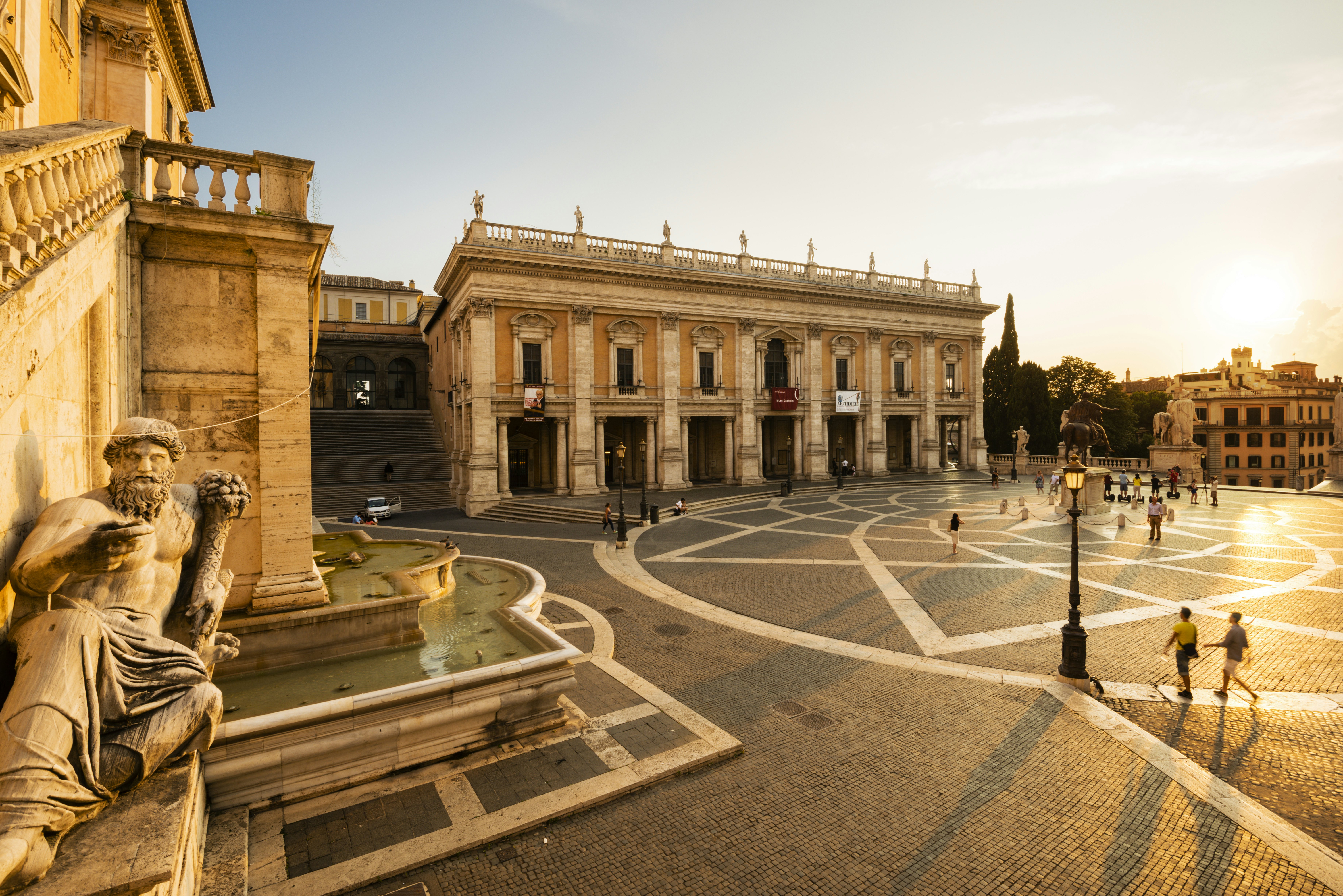
6. Climb the Cordonata staircase to Piazza del Campidoglio
This hilltop piazza, designed by Michelangelo in 1538, is one of Rome's most beautiful squares. There are several approaches to Piazza del Campidoglio, but the most dramatic is the graceful Cordonata staircase, which leads up from Piazza d'Aracoeli.
7. Visit the landmark Trajan's Column
The ancient landmark of Trajan's Column towers over the Imperial Forums. If you can make them out, the reliefs depict Trajan's military campaigns in great detail.

Advertisement
See art and culture for free in Rome's churches, museums and streets
8. Gaze at famous religious art in Rome’s churches
You can see many of Italy’s most famous works of art not in museums but in churches, which are free to enter. Admire Michelangelo’s Pietà in St Peter’s Basilica, Caravaggio’s The Calling of St Matthew in Chiesa di San Luigi dei Francesi and Bernini’s Ecstasy of St Theresa in Chiesa di Santa Maria della Vittoria, just to name a few masterpieces. Rome has more than 900 churches, almost all of which are adorned with sculptures and frescoes; if you appreciate religious art, walk into any church to be awed. You might stumble upon a world-famous masterpiece you didn’t know was there.
9. Enjoy free museums in Rome
Rome has more than 200 museums and while many of them are ticketed, some are always free to all. The list of free museums in Rome includes Museo Giovanni Barracco, (where you can admire hundreds of sculptures from Egyptian to Greek to Roman art in a 16th-century building a stone’s throw away from Piazza Navona), the Napoleonic Museum, and the Villa di Massenzio, among others.
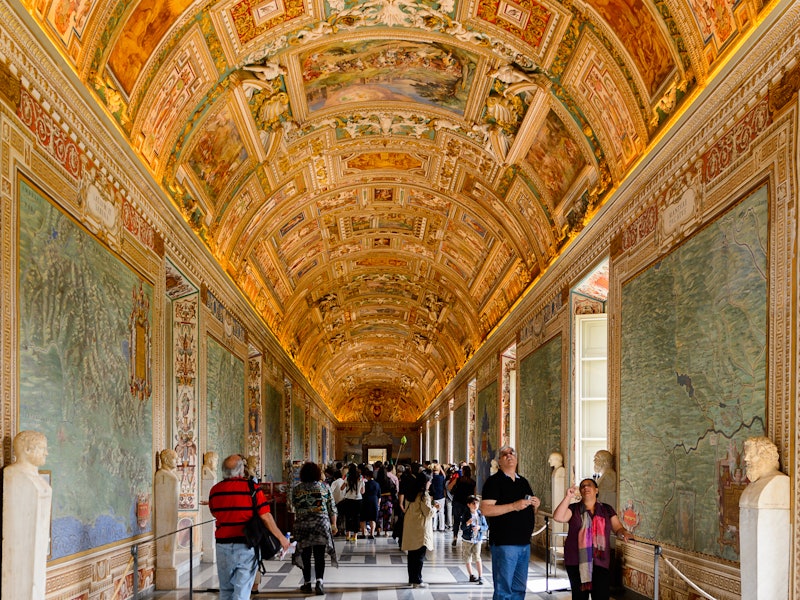

10. Time your visit right to enter ticketed museums at no cost
More than 30 museums and attractions are free every first Sunday of the month, including the Colosseum, the Archaeological Park of Ostia Antica, and the Vittoriano. (The Vatican Museums are free on the last Sunday of every month.) While this means these places will be more crowded, it also allows Romans and tourists alike to dedicate an entire day to culture and museum-hopping.
Planning tip: If you can’t take advantage of free Sunday admission, check each museum’s ticket information to see if you can get a discount; you may be eligible based on your age, profession or nationality. Minors often get in for free or at a discounted price, as do students and teachers from the EU and senior citizens. Bring ID.

11. Learn about legends in Basilica di San Pietro in Vincoli
This 5th-century church was built to house the shackles of St Peter, which are displayed under the altar. But the real star of the show at Basilica di San Pietro in Vincoli is Michelangelo's muscular sculpture of Moses with horns, which has its own interesting legend debating whether the horns resulted from a mistranslation of original Hebrew text or were included by Michelangelo as some sort of protest.
Planning tip: The church is accessed via a steep flight of steps leading up from Via Cavour and passing under a low arch.
12. Check out street art in less-visited neighborhoods
For millennia, the architects and artists of Rome have made an effort to leave a lasting impression. The same can be said for today's contemporary creatives, both Roman and international, who contribute to making the city more colorful with their street art. Head a bit off the beaten path and tour some of the most iconic murals of the city in the Ostiense, Testaccio and Pigneto neighborhoods.

Relax in Rome's parks, gardens and outdoor spaces
13. Visit Rome’s incredible rose garden in spring
The Roseto Comunale on the Aventine Hill is home to more than 1000 species of roses. Every spring, you can visit it for free; the dates may vary, so it’s always best to check the calendar on an official Roma Capitale page. Reservations are not needed unless you’d like to arrange a guided tour. Take a break from the chaos of sightseeing and simply enjoy this corner of colorful nature in the heart of Rome.


14. Have a picnic in Villa Doria Pamphilj
An iconic and picturesque park in the Monteverde neighborhood, Villa Doria Pamphilj is a prime spot for picnics, study dates and impromptu ball games for people of all ages. The massive park measures 180 hectares and presents different types of scenery, including a view of the imposing 17th-century palace within the park. Whether you are looking for shade in summer or sunlight in spring, fall or winter, Villa Pamphilj is ideal for a break from traffic.

15. Walk the Via Appia Antica
Antiquity's most famous road, Via Appia Antica, has been an exclusive Rome address since 312 BCE, and exploring it on foot is truly one of Rome's best free things to do. This beautiful cobbled thoroughfare is flanked by grassy fields, Roman structures and towering pine trees. It was here that Spartacus and 6000 of his enslaved rebels were crucified and early Christians buried their dead.
Planning tip: For more information and a map of the area, stop by the Appia Antica Service Center at the northern end of the road. Bus 118 serves Appia Antica from Porta San Sebastiano, Circo Massimo metro station and Piazza Venezia. Alternatively, you can get the 218 from San Giovanni.
16. Go to an outdoor movie screening
Every summer, the nonprofit association Piccolo America organizes a series of free movie screenings in various locations throughout Rome called Il Cinema In Piazza (“cinema in the square”). Films vary each night – cartoons, classic Hollywood films, international Oscar winners and recent releases – all shown in their original languages with Italian or English subtitles.
Planning tip: Screenings begin at 9:15pm. Scout the area before then and split up – someone to hold seats and someone to grab local street food like supplì (battered and fried risotto shaped into cylinders and filled with cheese).


17. Wander the paths of Villa Borghese and enjoy one of the best city views
Locals, lovers, tourists, joggers – no one can resist the lure of Rome's most famous park. Villa Borghese is an oasis of shaded walkways, verdant corners and excellent museums to be explored. The lovingly landscaped Giardino del Lago features a copy of a Roman temple on the lake’s artificial islet.
Planning tip: For panoramic views of St Peter's Basilica, walk up Pincio Hill and head for the terrace.
18. Find peace in Cimitero Acattolico
A verdant oasis of peace, Rome’s "non-Catholic" cemetery in the southern neighborhood of Testaccio is imbued with a kind of Grand Tour romance. Up to 4000 people are buried here, including poets John Keats and Percy Bysshe Shelley.
As you wander among the gravestones, look for the Angelo del Dolore (Angel of Grief), an oft-replicated 1894 sculpture that US artist William Wetmore Story created for his wife’s grave.

19. Get an iconic view of St Peter's dome through a keyhole
You probably can’t go inside the Villa del Priorato di Malta, but head over to the Sovereign Order of Malta anyway and peek through the keyhole. You'll see one of Rome’s most celebrated views: St Peter's dome, perfectly framed at the end of a hedge-lined avenue.
Experience local life in Rome
20. Drink unlimited clean water from historic fountains
You never need to buy water when in Rome; the city has more than 2500 public fountains dispensing clean drinking water. Many fountains – called nasoni (“big noses”) – were installed in the 1870s when Rome became the capital of unified Italy, but plenty more have been installed since. The most recent ones look different from the classic nasoni and even allow you to choose between sparkling and still water. Purchasing water bottles in Rome can be expensive; cut this expense by bringing your reusable water bottle and filling it at every nasone you see – it’s a quintessential Roman experience.
Local tip: Do not crouch to drink from the nasone. Rather, place a finger in the tube, and the pressure will make the water come out of a smaller hole on top of the faucet, so you can drink much more comfortably.


21. Browse the market at Campo de' Fiori
Colorful and always busy, Campo de' Fiori is a major focus of Roman life: by day, it hosts one of the city's best-known markets, and by night its bars and restaurants do a brisk trade. The piazza's poetic name (Field of Flowers) refers to the open meadow that stood here before the square was laid out in the mid-15th century.
22. Find the hidden square through Arco degli Acetari
For one of Rome’s most picturesque scenes, head to this dark archway just off Campo de’ Fiori. The arch itself isn’t especially memorable, but go through it and you’ll emerge onto a tiny medieval square enclosed by rust-orange houses and cascading plants. Cats and bicycles litter the cobbles while washing hangs off pretty flower-lined balconies overhead.

23. See atmospheric architecture in Quartiere Coppedè
One of Rome’s most extraordinary neighborhoods, Quartiere Coppedè was conceived and built by the little-known Florentine architect Gino Coppedè between 1913 and 1926. It's a fairy-tale series of palazzos (mansions) with Tuscan turrets, Liberty sculptures, Moorish arches, Gothic gargoyles, frescoed facades and palm-fringed gardens, centering around the magnificent Piazza Mincio.
24. Partake in the passeggiata
The passeggiata (traditional evening stroll) is a quintessential Roman experience. It's particularly colorful on the weekends, when families, friends and lovers take to the streets to strut up and down, slurp on gelato and window-shop.
Planning tip: To join in, head to Via del Corso around 6pm. Alternatively, watch the theatrics on Piazza di Spagna.
Advertisement