Sights in Ukraine
-
A
Kievo-Pecherska Lavra
Tourists and Orthodox pilgrims alike flock to the Kievo-Pecherska Lavra. It’s easy to see why the tourists come. Set on 28 hectares of grassy hills above the Dnipro River, the monastery’s tight cluster of gold-domed churches is a feast for the eyes, the hoard of Scythian gold rivals that of the Hermitage in St Petersburg, and the underground labyrinths lined with mummified monks are exotic and intriguing.
reviewed
-
B
Lychakivske Cemetery
Don’t even think of leaving town until you’ve seen the Lychakivske Cemetery; it is only a short journey from the centre. This is the Père Lachaise of Eastern Europe, with the same sort of overgrown grounds and Gothic aura as the famous Parisian necropolis. Eagle eyes can try to spot the graves of revered nationalist poet Ivan Franko, Soviet gymnastics legend Viktor Chukarin, early 20th-century opera star Solomiya Krushelnytska, and some 2000 Poles who died fighting Ukrainians and Bolsheviks from 1918 to 1920. Ultimately you needn’t recognise a single soul to be moved by the mournful photos of loved ones, ornate tombstones and floral tributes.
reviewed
-
C
Andriyivsky uzviz
It says a lot for Andriyivsky uzviz that it has retained its charm despite the souvenir stalls overflowing on its cobblestones. Historically this curving incline linked the high ground of the administrative centre, or Upper Town, to Podil. Nowadays it's frequented by purveyors of Ukrainian crafts, Soviet memorabilia, Yuri Gagarin T-shirts and the occasional stunning photo of Kyiv. Yet the quaint houses and crooked pavements still give the place plenty of atmosphere.
reviewed
-
Zhyvopysna aleya
About three-quarters of the way up Andriyivsky uzviz on the left, just before you get to St Andrew's Church, is Zhyvopysna aleya, which turns into a giant outdoor art gallery on weekends. We can't say much for the art (anyone for an air-brushed portrait of a semi-clad vixen in front of St Andrew's Cathedral?), but the leafy path leading southeast from here to Volodymyrska Hirka park makes for a pleasant walk or jog.
reviewed
-
D
Ploshcha Rynok
This 16th-century market square lies at the heart of Lviv's rich heritage. A 19th-century town hall (ratusha) stands in the middle of the plaza, with fountains featuring Greek gods on each of its corners. You can climb the neo-Renaissance tower but the 40-odd buildings around the square's perimeter are more interesting.
reviewed
-
St Sophia's Church
St Sophia's Church with its distinctive peach exterior and lavish interior, is a must-see for lovers of baroque churches.
reviewed
-
E
Maydan Nezalezhnosti
Fountain-filled maydan Nezalezhnosti is the city's most popular meeting place. This was made plain on worldwide TV at the end of 2004 when the square became ground zero for Ukraine's Orange Revolution and makeshift tent city.
The square has held protests since the Orange Revolution and will probably see many more. But 'Maydan' does not require political strife to affirm its place as Kyiv's loudly thumping heart. All streets in the centre seem to spill into maydan Nezalezhnosti, and with them spills a cross-section of Kyiv life: vendors selling food and souvenirs, teenagers carousing under the watchful gaze of winged angel statues, skate rats and snake charmers, lovers and…
reviewed
-
F
Museum of the Great Patriotic War
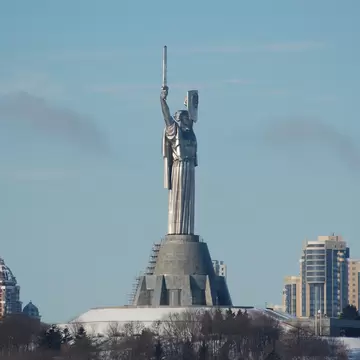
There's not much to say about Rodina Mat (literally 'Nation's Mother', but formally called the Defence of the Motherland Monument). However, from certain parts of Kyiv it's highly visible and so requires a fittingly high-profile explanation. Especially when you're journeying in from the left (or east) bank, this 62m-tall statue of a female warrior is liable to loom up on the horizon and make you wonder, 'What the hell is that?'
What the hell, indeed. It's the icing on top of the Museum of the Great Patriotic War. The statue has been nicknamed 'the Iron Lady' and 'Tin Tits'. Even if you don't like such Soviet pomposity, don't say too much; you'd be taking on a titanium…
reviewed
-
Chernivsti University
Chernivsti University is like a trip on LSD. This fantastic red-brick ensemble, with coloured tiles decorating its pseudo-Byzantine, pseudo-Moorish and pseudo-Hanseatic wings, is the last thing you'd expect to see here. The architect responsible was Czech Josef Hlavka, who was also behind Chernivtsi's Former Armenian Cathedral, as well as large chunks of Vienna.
To the left as you pass the gatehouse is the Seminarska Church, now used for concerts and ceremonies. Straight ahead stands the former main palace residence of the Metropolitans, housing two remarkable staircases and a fantastic, 1st-floor Marmurovy Zal (hall). Whether you'll be able to access them is uncertain,…
reviewed
-
Antoniy Caves
The Antoniy Caves, Chernihiv's answer to Kyiv's Kievo-Pecherska Lavra lurk beneath the ground a short walk north of the Troyitsko-Illynsky Monastery. The caves consist of 315m of passageways, galleries and chapels constructed from the 11th to 13th centuries.
These are very different from those in Kyiv in that they lack both dead mummies and, for the most part, live tourists. The conditions here were too cold and humid to support mummification. Instead, the bones of monks killed during the Mongol invasion are preserved in a windowed sarcophagus; touching the sarcophagus is considered good luck. The cave's benefactor and namesake, St Antoniy of Pechersk, also helped burrow…
reviewed
Advertisement
-
Khortytsya Island
The Zaporizhska Sich on Khortytsya Island was the most important cradle of Ukrainian Cossackdom, where hetman (leader) Dmytro Baida united disparate groups of Cossacks in the construction of a sich (fort) in 1553-54. At the height of its power the community numbered some 20,000 fighters, under the authority of one hetman. On the battlefield they were formidable opponents; off it formidable vodka drinkers.
There's an amphitheatre on the southern portion of the island where highly entertaining horse shows and mock fights are put on periodically by Cossack descendants; check with the travel agency at the Hotel Intourist for details.
reviewed
-
Podil
The funicular to the rear of St Michael's Gold-Domed Monastery and Andriyivsky uzviz both lead down to the riverside mercantile quarter of Podil. An appealing grid of streets lined with quaint lanterns and eclectic turn-of-the-20th-century buildings, it's the antidote to all those Soviet façades that dominate vul Khreshchatyk. Dating back to the earliest settlements, the area grew quickly around the port. Today it's a buzzing restaurant district.
Podil was last rebuilt in 1811 after a devastating fire and emerged largely unscathed from WWII.
reviewed
-
G
Armenian Cathedral
By some accounts, Lviv has more than 80 churches and it’s all too easy to overdose on ornate interiors and golden iconostases, but one church you should not miss is the elegant 1363 Armenian Cathedral. The placid cathedral courtyard is a maze of arched passageways and squat buildings festooned with intricate Caucasian detail. Stepping into the courtyard feels like stepping into another era. Quaint, cobbled vul Virmenska was the heart of the old Armenian (‘Virmenska’ in Ukrainian) quarter.
reviewed
-
H
Zoloti Vorota
The famous Zoloti Vorota sounds much better than it looks, but the summer patio around the fountain out front is a great place to have a drink. Erected in 1037 and modelled on Constantinople’s Golden Gate, this was the main entrance into the ancient city, with ramparts stretching out from both sides. However, the gate was largely destroyed in the 1240 Mongol sacking of Kyiv, and what you see today is a 1982 reconstruction. The statue to the side is of Yaroslav.
reviewed
-
I
St Andrew’s Church
That blue, beautiful piece of baroque dominating the view as you walk up ‘the uzviz ’ is St Andrew’s Church. Built in 1754 by Italian architect Bartelomeo Rastrelli, who also designed the Winter Palace in St Petersburg, this is a magnificent interpretation of the traditional Ukrainian five-domed, cross-shaped church. Entry to the rich interior, where English placards explain the history of the church, is free during frequent services and 6uah at other times.
reviewed
-
J
Arkadia beach
Lots of people do swim at Odesa's crowded, dirty beaches in summer, but that's not really what beach life here is about. With its English, Victorian-style sideshows and lines of cafes, bars and clubs, the most popular beach, Arkadia, is for hanging out - seeing and being seen. As you travel down the boulevard, enjoy the views of the old sanatoriums.
reviewed
-
Naval Museum
In the naval museum you can breach the huge nuclear-blast-proof doors and wander some of the 600m of the former repair docks, mess rooms and thankfully now empty arsenal on a one-hour-long guided tour. When MTV launched in Ukraine in 2007, this is where it held the party. But take a jumper; it gets chilly inside.
reviewed
-
K
Funicular
Heading around the left of St Michael's Gold-Domed Monastery to the rear, you'll find the quaint funicular that runs down a steep hillside to the river terminal in the mercantile district of Podil. Although in the summer trees partially obscure your view, this is still the most fun public-transport ride in town.
reviewed
-
Museum of Strategic Missile Troops
It’s not easy to find, but deep in Ukraine’s agricultural heartland, 30km north of Pervomaysk, lies arguably Ukraine’s coolest museum. The Museum of Strategic Missile Troops, better known as the Nuclear Missile Museum, was formerly a nuclear missile launch facility.
reviewed
-
L
House of Chimeras
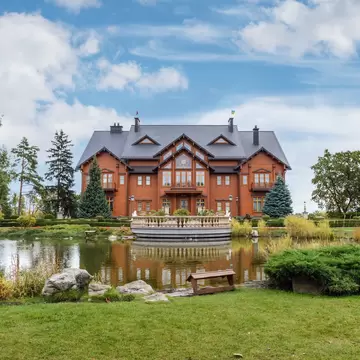
With its demonic-looking animals and gargoyles, the House of Chimeras is Kyiv’s weirdest building. Built at the start of the 20th century by architect Vladislav Horodetsky, it’s been more recently used as a presidential administration office.
reviewed
Advertisement
-
Pyrohovo Museum of Folk Architecture
Ukraine is dotted with ‘open-air’ museums like this, full of life-size models of different rustic buildings. However, the Pyrohovo Museum of Folk Architecture is one of the most fun and best maintained.
reviewed
-
M
PinchukArtCentre
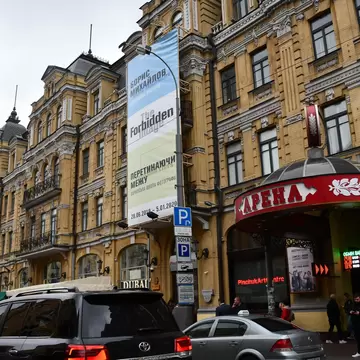
The rotating exhibits at the world-class PinchukArtCentre feature elite names in the world of European contemporary art and design, all financed by billionaire mogul Viktor Pinchuk.
reviewed
-
Art Museum
The faintly entertaining Art Museum is in the Church of the Blessed Virgin Mary with an attic-like jumble of religious sculptures and paintings.
reviewed
-
Chufut-Kale
For many visitors, Chufut-Kale will prove to be Bakhchysaray's highlight. Rising 200m, this long and bluff plateau houses a honeycomb of caves and structures where people took refuge for centuries. It's wonderful to explore, especially (but gingerly) the burial chambers and casemates with large open 'windows' in the vertiginous northern cliff. These are truly breathtaking, as is the view into the valley below.
Although the joint entrance to the Uspensky Monastery and Chufut-Kale looks a bit touristy, the 1.5km walk to the cave city ensures it's not too overrun with people.
First appearing in historical records as Kyrk-Or (Forty Fortifications), the city was settled…
reviewed
-
Babyn Yar
On 29 September 1941, Nazi troops rounded up Kyiv's 34,000-strong Jewish population, marched them to the Babyn Yar ravine, and massacred them all in the following 48 hours. Victims were shot and buried in the ravine. Over the next two years, many thousands more lost their lives at Babyn Yar when it was turned into a concentration camp, called Syrets after the Kyivan suburb it was in. Romany people, partisans and even footballers would be among those killed.
The place's dreadful history only came to light after the war, and three monuments have been erected over time. The first was a colossal Soviet effort dating from 1976, which is found in the southern sector of the…
reviewed