Things to do in Barcelona
-
A
Park Güell
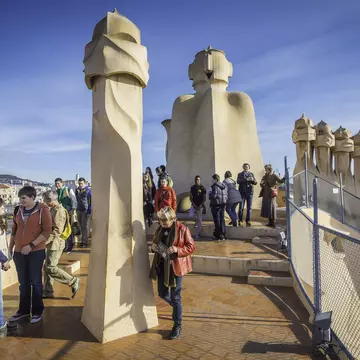
North of Gràcia and about 4km from Plaça de Catalunya, Park Güell is where Gaudí turned his hand to landscape gardening. It’s a strange, enchanting place where his passion for natural forms really took flight – to the point where the artificial almost seems more natural than the natural.
Park Güell originated in 1900, when Count Eusebi Güell bought a tree-covered hillside (then outside Barcelona) and hired Gaudí to create a miniature city of houses for the wealthy in landscaped grounds. The project was a commercial flop and was abandoned in 1914 – but not before Gaudí had created 3km of roads and walks, steps, a plaza and two gatehouses in his inimitable manner.…
reviewed
-
B
La Sagrada Família
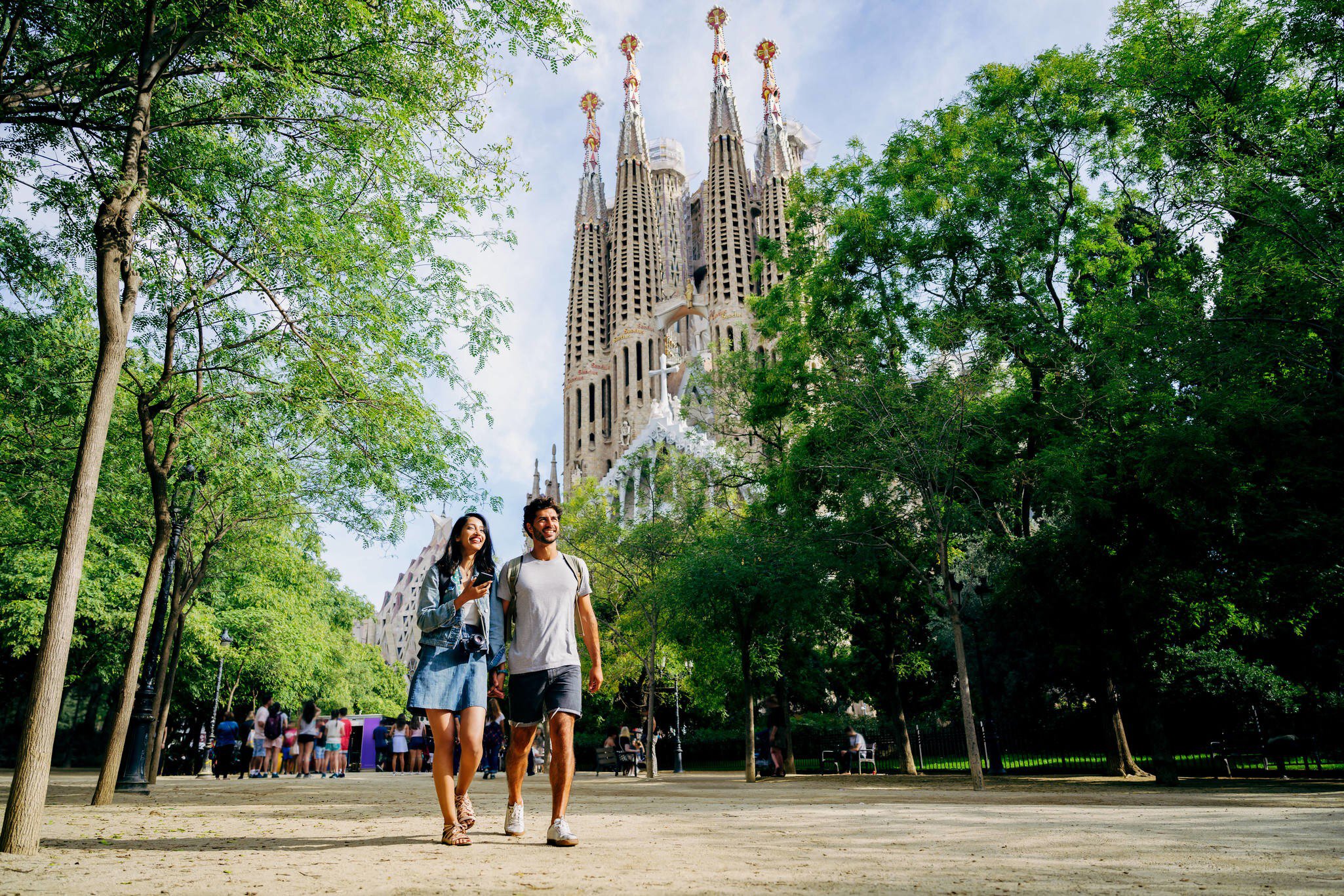
If you have time for only one sightseeing outing, this should be it. La Sagrada Família inspires awe by its sheer verticality, and in the manner of the medieval cathedrals it emulates, it’s still under construction after more than 100 years. When completed, the highest tower will be more than half as high again as those that stand today.
Unfinished it may be, but it attracts around 2.8 million visitors a year and is the most visited monument in Spain. The most important recent tourist was Pope Benedict XVI, who consecrated the church in a huge ceremony in November 2010.
The Temple Expiatori de la Sagrada Família (Expiatory Temple of the Holy Family) was Antoni Gaudí’s…
reviewed
-
C
Gamaya
A breath of fresh laid-back Ibiza air runs through this new ladies’ wear store tucked away on a street that has gone from near abandonment in the 1990s to become a delightful shopping lane today. The lady who runs this shop designs the breezy summer dresses, pants-and-tops combinations and prints herself.
reviewed
-
D
Casa Batlló
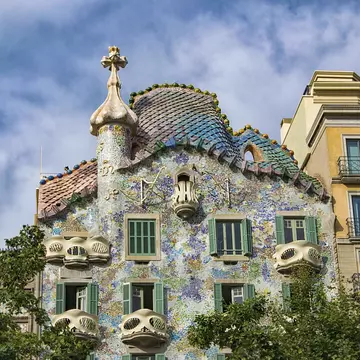
One of the strangest residential buildings in Europe, this is Gaudí at his hallucinogenic best. The facade, sprinkled with bits of blue, mauve and green tiles and studded with wave-shaped window frames and balconies, rises to an uneven blue-tiled roof with a solitary tower.
It is one of the three houses on the block between Carrer del Consell de Cent and Carrer d’Aragó that gave it the playful name Manzana de la Discordia, meaning ‘Apple (Block) of Discord’. The others are Puig i Cadafalch’s Casa Amatller and Domènech i Montaner’s Casa Lleó Morera. They were all renovated between 1898 and 1906 and show how eclectic a ‘style’ Modernisme was.
Locals know…
reviewed
-
E
Babylon Idiomas
This small school offers a high degree of flexibility – you can study for a week or enlist for a half-year intensive course in Spanish. The big selling point is class size, with a maximum of eight students per class. A week of tuition (30 hours plus five hours of culture) costs €260.
reviewed
-
F
Cafè Zurich
It doesn’t have the atmosphere of the cafe of the same name that once occupied this prime spot, but not even the hardest of hearts can deny the location is impeccable. Pull up an outdoor pew for the human circus that is Plaça de Catalunya, or huddle over a paper on the mezzanine on a winter’s day. In summer it stays open as late as 1am.
reviewed
-
G
Mercat de la Boqueria
Shop in the Mercat de la Boqueria, one of the world’s great produce markets, and complement with any other necessities from a local supermarket.
reviewed
-
H
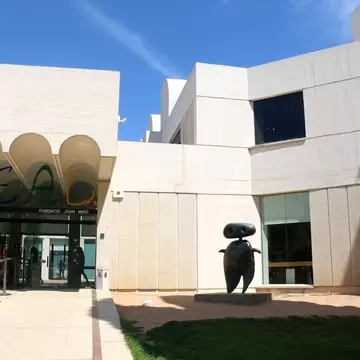
Fundació Joan Miró
Joan Miró, the city’s best-known 20th-century artistic progeny, bequeathed this art foundation to his hometown in 1971. Its light-filled buildings, designed by close friend and architect Josep Lluís Sert (who also built Miró’s Mallorca studios), are crammed with seminal works, from Miró’s earliest timid sketches to paintings from his last years.
Sert's shimmering white temple to the art of one of the stars of the 20th-century Spanish firmament is considered one of the world's most outstanding museum buildings; the architect designed it after spending much of Franco's dictatorship years in the US, as the head of the School of Design at Harvard University. The…
reviewed
-
I
Montserrat
Montserrat (Serrated Mountain) is the spiritual heart of Catalonia and your best opportunity to enjoy awesome scenery on a day trip from Barcelona. Comprising a massif of limestone pinnacles rising precipitously over gorges, this wondrous place has drawn hermits (er, independent travellers) since the 5th century.
Montserrat, 50km (31mi) northwest of Barcelona, has weird rocky crags, ruined hermitage caves, a monastery and hordes of tourists from the Costa Brava. The Monestir de Montserrat was founded in 1025 to commemorate numerous visions of the Virgin Mary. Today it houses a community of about 80 monks, and pilgrims come to venerate La Moreneta (the Black Virgin), a…
reviewed
-
Plaça Reial & Around
Just south of Carrer de Ferran, near its La Rambla end, Plaça Reial is a traffic-free plaza whose 19th-century neoclassical facades are punctuated by numerous eateries, bars and nightspots. It was created on the site of a convent, one of several destroyed along La Rambla (the strip was teeming with religious institutions) in the wake of the Spain-wide disentailment laws that stripped the Church of much of its property.
reviewed
Advertisement
-
J
Elisabets
This unassuming restaurant is popular for no-nonsense local fare. The walls are lined with old radio sets and the menú del día (set menu, €10.75) varies daily. If you prefer a la carta, try the ragú de jabalí (wild boar stew) and finish with mel i mató (a Catalan dessert made from cheese and honey). Those with a post-midnight hunger on Friday nights can probably get a meal here as late as 1am.
reviewed
-
K
Sergio Aranda
Trained in the art of jewellery creation in Switzerland, Aranda produces an original line of goods, including jewellery made using ancient coins. He also specializes in pearls, making all sorts of original and even daring necklaces and other items for ladies looking for something combining the extroverted and unique with the classic.
reviewed
-
L
Escribà
Antoni Escribà carries forward a family tradition (since 1906) of melting barcelonins’ hearts with remarkable pastries and criminal chocolate creations. Try the Easter bunyols de xocolata (little round pastry balls filled with chocolate cream). Escribà has another branch in a Modernista setting at La Rambla de Sant Josep 83.
reviewed
-
M
Inopia
Albert Adrià, brother of star chef Ferran, has his hands full with this constantly busy gourmet-tapas temple. Select a pintxo de cuixa de pollastre a l’ast (chunk of rotisserie chicken thigh) or the lightly fried, tempura-style vegetables. Wash down with house red or Moritz beer.
reviewed
-
N
Museu del Futbol Club Barcelona
One of Barcelona's most visited museums is the Museu del Futbol Club Barcelona, next to the club's giant Camp Nou stadium. The museum, renovated in 2010, provides a high-tech view into the club, with massive touch screens allowing visitors to explore arcane aspects of the legendary team. The best bits of the museum itself are the photo section, the goal videos and the views out over the stadium. You can admire the (in at least one case literally) golden boots of great goalscorers of the past and learn about the greats who have played for Barça over the years, including Maradona, Ronaldinho, Kubala and many others.
reviewed
-
O
Bar Celta
This bright, rambunctious tapas bar specialises in pulpo (octopus) and other sea critters like navajas (razor clams). It does a good job: even the most demanding of Galician natives give this spot the thumbs up. Sit at the zinc bar, order a bottle of Ribeiro and the traditional Galician tazas (little white cups) and tuck into your raciones (larger portions of tapas dishes).
reviewed
-
P
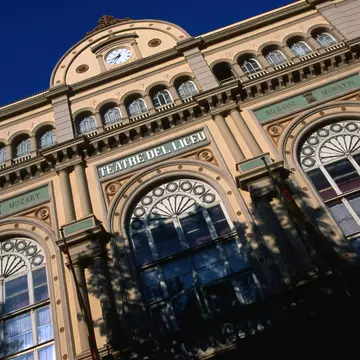
Palau de la Música Catalana
This concert hall is a high point of Barcelona’s Modernista architecture. It’s not exactly a symphony, but more a series of crescendos in tile, brick, sculpted stone and stained glass. Built by Domènech i Montaner between 1905 and 1908 for the Orfeo Català musical society, it was conceived as a temple for the Catalan Renaixença (Renaissance).
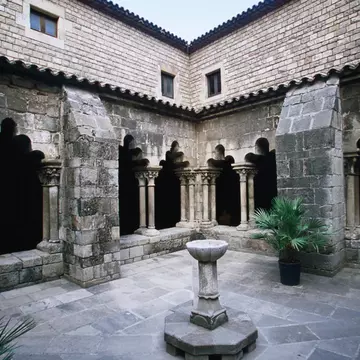
The palace was built with the help of some of the best Catalan artisans of the time, in the cloister of the former Convent de Sant Francesc, and since 1990 it has undergone several major changes.
The palau, like a peacock, shows off much of its splendour on the outside. Take in the principal facade with its mosaics, floral…
reviewed
-
Q
Castell de Montjuïc
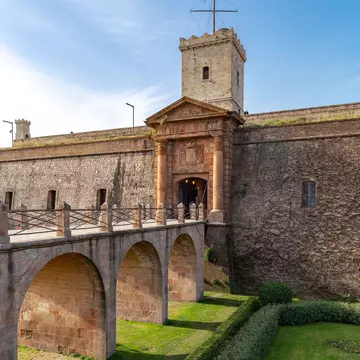
The forbidding Castell (castle or fort) de Montjuïc dominates the southeastern heights of Montjuïc and enjoys commanding views over the Mediterranean. It dates, in its present form, from the late 17th and 18th centuries. For most of its dark history, it has been used to watch over the city and as a political prison and killing ground.
Anarchists were executed here around the end of the 19th century, fascists during the civil war and Republicans after it – most notoriously Lluís Companys in 1940. The castle is surrounded by a network of ditches and walls (from which its strategic position over the city and port become clear).
Until 2009 the castle was home to a…
reviewed
-
R
Speakeasy
This clandestine restaurant lurks behind the Dry Martini bar. You will be shown a door through the open kitchen area to the ‘storeroom’, lined with hundreds of bottles of backlit, quality tipples. Dark decorative tones, a few works of art, low lighting, light jazz music and smooth service complete the setting. The menu has tempting options like the huge hunk of burrata cheese with white asparagus and strips of ravishing jamón (cured ham).
reviewed
-
S
Liquid
reviewed
Advertisement
-
T
Casa Amalia
This formal restaurant is popular for its hearty Catalan cooking that uses fresh produce, mainly sourced from the busy market next door. On Thursdays during winter it offers the Catalan mountain classic, escudella. Otherwise, you might try light variations on local cuisine, such as the bacallà al allioli de poma (cod in an apple-based aioli sauce). The four-course menú del día is exceptional lunchtime value at €12.
The orange and white decorated joint has split-level dining that makes the most of its space.
reviewed
-
U
Igueldo
White and maroon décor and smooth lines tempt patrons into this refined, contemporary Basque option. Sink into a white leather chair or perch at the back bar for chuletón a la parrilla (one kilo of grilled chop for two), or an intense cochinillo confitado con peras (suckling pig prepared with pears). Igueldo is a winner at lunch with a menú del día (€20) that include choices such as penne con txipirones (pasta with tiny cuttlefish).
reviewed
-
V
Port Olímpic
A busy marina built for the Olympic sailing events, Port Olímpic is surrounded by bars and restaurants. An eye-catcher on the approach from La Barceloneta is Frank Gehry’s giant copper Peix (Fish) sculpture. The area behind Port Olímpic, dominated by twin-tower blocks (the luxury Hotel Arts Barcelona and the Torre Mapfre office block), is the former Vila Olímpica living quarters for the Olympic competitors, which was later sold off as apartments.
reviewed
-
W
Parco
The Italian love affair with Barcelona manifests itself here with this branch of the stylish Milan sushi-restaurant-cum-cocktail-bar. With a little fusion music in the background, start the evening with a round of bulbous cocktails before ordering plates of sushi and sashimi. Lighting is low, while red and black dominate the décor. Those unlucky enough to miss out on a lounge may find themselves uncomfortably perched on backless chairs.
reviewed
-
X
Cerveseria Catalana
The ‘Catalan Brewery’ is good for breakfast, lunch and dinner. Come in for your morning coffee and croissant, or wait until lunch to enjoy choosing from the abundance of tapas and montaditos (canapés). You can sit at the bar, on the pavement terrace or in the restaurant at the back. The variety of hot tapas, salads and other snacks draws a well-dressed crowd of locals and outsiders.
reviewed