Sights in Senegal
-
Lac Rose
Lac Rose owes its name to its pink colouring, caused by a high mineral and salt content, which also makes for very buoyant swimming. It's a popular Dakarois picnic spot, attracting tour groups and, inevitably, souvenir sellers, and has achieved notoriety in modern times as the terminus of the annual Dakar motor rally.
reviewed
-
Cap Skiring
The beaches in the Cap Skiring area are among West Africa's finest. Unsuprisingly, a thriving tourist industry has developed around it, though it remains pleasantly low-key. And just a short drive away from the bustle of the Cap, the tourist bustle gives way to small villages, and the golden beaches are calmer.
reviewed
-
A
Institut Fondamental d'Afrique Noir (IFAN) Museum
The IFAN Museum is one of the best museums in West Africa. Lively, imaginative displays show masks and traditional dress across the region (including Mali, Guinea-Bissau, Benin and Nigeria) and provide an excellent overview of styles, without bombarding you with more than you can take in.
The museum is a testimony to former President Senghor's interest in promoting African art and culture. You can also see beautiful fabrics and carvings, drums, musical instruments and agricultural tools, though there are no English explanations and, sadly, not much from Senegal itself.
reviewed
-
Ferme de Djibelor
Heading 5km west out of town, you can walk through the vast greenness of the Ferme de Djibelor, which has a large, tropical fruit and flower garden to enjoy (and from which to purchase fresh produce).
It also has a rather bizarre crocodile farm at the back, where you can get close to Nile crocs in all ages and sizes - from tiny babies to 'granddads', though knowing that they're kept to be one day slaughtered for their meat and skin spoils the fun a little (the crocodile products from the farm can be exported legally, as they're not taken from wild animals).
reviewed
-
Maison des Esclaves
This building is one of the last remaining 18th-century slave-trading houses on the island. Built in 1786 and renovated in 1990, it serves as a graphic reminder of that cruel commerce. There is, however, considerable debate as to the building's historical significance.
Although it's probable the dungeon was used to hold slaves, it's unlikely that this building or indeed any other on the island was used to ship considerable numbers of slaves. Still, a visit here is an evocative way to bring to life the horrors of that era.
reviewed
-
Soumbédioune
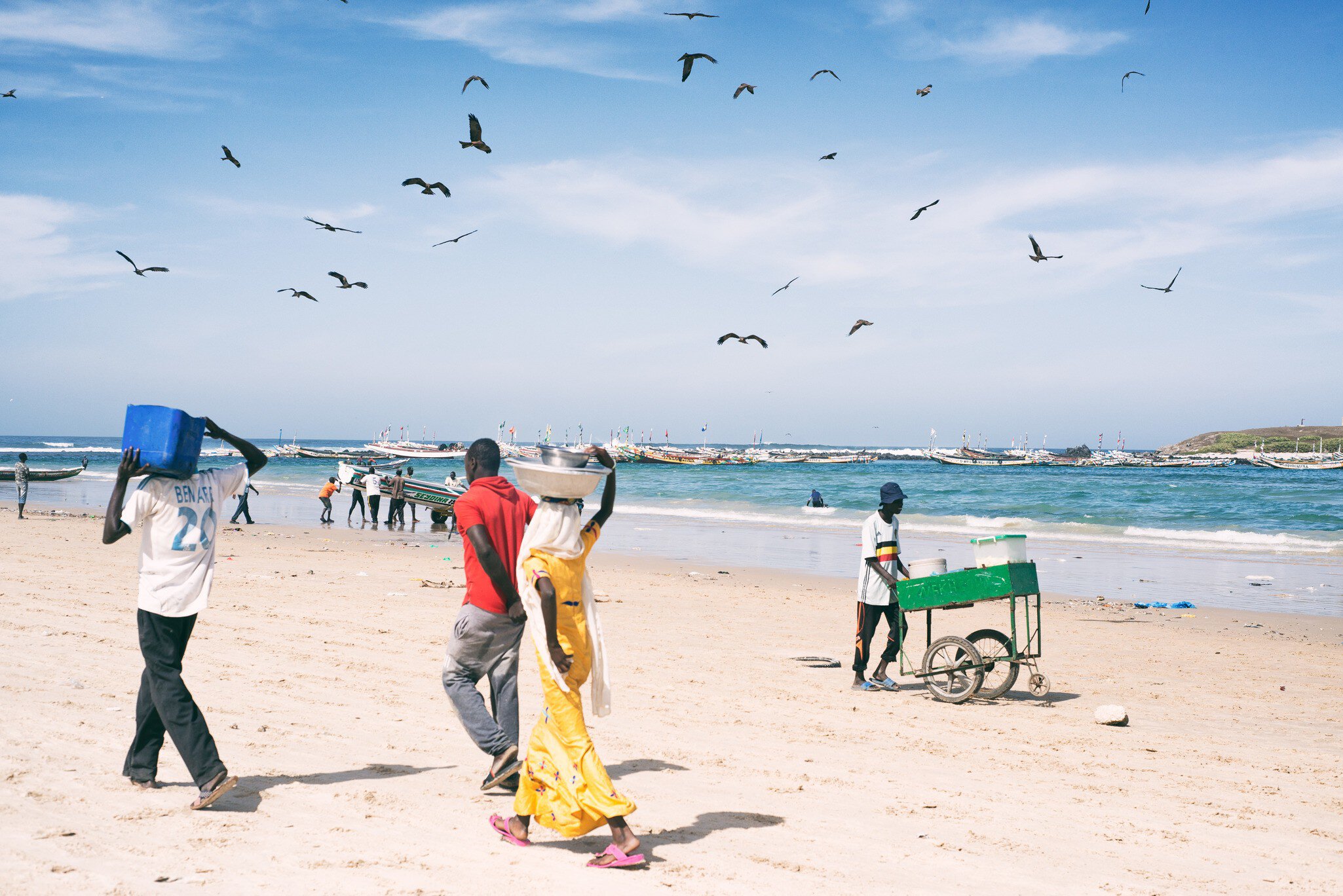
Northwest of the centre, and well worth the trip, is the fishing beach and market of Soumbédioune, originally a village but now a suburb engulfed by the city. It's best in the late afternoon when the fishing boats are returning with their catch.
This is also a major centre of pirogue (canoe) building, and behind the fish market you'll see carpenters turning planks and tree trunks into large ocean-going canoes. The Village Artisanal nearby is full of craft stalls and large groups of tourists.
reviewed
-
Île de Gorée
With its colonial brick-structures and sand-blown, bougainvillea-flushed alleyways, this island is a haven of tranquility. But there's a sad background to all this calm beauty - Île de Gorée used to be an important slave trading station, and many visitors come here for traces of this tragic past.
Try to visit Gorée on its annual Jours des Portes Ouvertes in May/June, when the island's numerous artists' ateliers and many private homes are open to the public.
reviewed
-
B
Layen Mausoleum
There's a fantastically wide beach near the fishing village of Yoff. The stretch of beach closest to the village is quite polluted, with a fish market dominating most of the scene. The traditional Yoff village and its majestic Layen Mausoleum, however, are well worth a visit. The residents there are noted for the strong Islamic culture. Smoking and drinking are not allowed and visitors should be appropriately dressed (meaning long skirts for women, long trousers for men).
reviewed
-
C
Mosqué de la Divinité
Taking the coastal road northwards, you'll see the stunning Mosqué de la Divinité perched on the coast near Les Mamelles quartier. Les Mamelles Lighthouse, off Rte de la Corniche-Ouest, is just a 25-minute walk or 1km drive north from here, on a small volcanic hill. You get an excellent view across Dakar from the 1864 building; visits are best made during the day and are free of charge.
reviewed
-
Rue du Commerce
Any day around town should also take you along Rue du Commerce, which runs parallel to the river - not only for the stunning view, but for the impressive sight of dozens of pirogue makers and painters, fishermen and women cleaning mussels. The best place to see them at work is the stretch of coast between the Hôtel Kadiandoumagne and the restaurant Le Erobon.
reviewed
Advertisement
-
Plage de la Voile d'Or
The Plage de Hann, once one of Dakar's finest strands, is now an environmental catastrophe due to illegal sewage disposal by the adjacent industrial zone. South of here, in the shelter of Pointe de Bel-Air, are the private beaches Plage de la Voile d'Or and the adjacent Plage Monaco (admission around CFA650), where occasional beach concerts take place year-round.
reviewed
-
Post Office Building
Central Ziguinchor, with its colourful colonial buildings and wide streets overlooked by mighty trees, is well worth exploring for an afternoon. Interesting buildings include the central post office on Rue du Général de Gaulle (there are occasional open days, on which you can visit all those parts of the structure you don't normally get to see).
reviewed
-
Parc National du Niokolo-Koba
Lush and beautiful, Niokolo-Koba covers 900 sq km (347 sq mi). It's Senegal's major national park and an international biosphere reserve. There are resident elephants, lions, leopards and the giant derby eland; you're unlikely to spot any of these, but you can content yourself with the sight of monkeys (green and hussar), roan antelopes and hartebeest.
reviewed
-
D
Secret
On the route towards Les Almadies, the so-called Secret is a favourite surfing spot, while further north, Dakar's finest sand stretches along the coast of N'Gor, where beach access costs around CFA500, and Yoff. Strong currents make Yoff's beaches largely unsuitable for swimming, but most beach lovers head there anyway, or to Île de Gorée .
reviewed
-
E
Salon Michèle Ka
In Point E, the Salon Michèle Ka is not only the funkiest hairdressing salon in town, but also one of the most original art galleries. The whole salon, from styling tables to wall displays, is decorated with urban sous-verre motifs à la car rapide. It's an absolute must-see - you don't need to get a new hairstyle to visit.
reviewed
-
Parc National des Oiseaux du Djoudj
From November to April, some three million birds migrating south from Europe stop here, because it's one of the first places with permanent water south of the Sahara. This park is one of the most important bird sanctuaries in the world, and almost 30 species have been recorded. Pink flamingos, pelicans, ducks and waders are most plentiful.
reviewed
-
F
Plage de l'Anse Bernard
Beaches within easy reach of the city centre include the private Plage Lagon II, near Hôtel Lagon II, and Plage de l'Anse Bernard near Hôtel Le Savana. Those along the Rte de la Corniche-Ouest are popular with local joggers, picnic parties and Sai-Sais. Strong currents make them less suitable for swimming.
reviewed
-
G
Cathedral
The cathedral is a large but fairly unspectacular 1920s building. It's still worth a glimpse, being the main cathedral of the capital city, and the adjacent garden has a leafy children's playground - your kids will no doubt prefer to staying there rather than take a tour of Dakar's impressive colonial buildings.
reviewed
-
H
Hôtel de Ville
Central Dakar has a few impressive colonial buildings. There's the Gouvernance and the Chambre de Commerce, both on Place de l'Indépendance. The stately Hôtel de Ville sits right behind, and a short walk north takes you to the elegant building of the train station.
reviewed
-
I
Grande Mosquée
The impressive Grande Mosquée built in 1964, sits in the heart of Médina, a lively neighbourhood where tiny tailor shops fight for space with improvised market stalls, and creative ideas brew between street cafés and makeshift football grounds.
reviewed
Advertisement
-
J
Lighthouse
Les Mamelles Lighthouse, off Rte de la Corniche-Ouest, is just a 25-minute walk or 1km drive north from here, on a small volcanic hill. You get an excellent view across Dakar from the 1864 building; visits are best made during the day and are free of charge.
reviewed
-
K
Espace Culturel VEMA
The Espace Culturel VEMA is a ray of hope in the dreary industrial lands near the Île de Gorée ferry. Its spiced-up warehouse frequently houses exhibitions and events, but you need to phone first to see if anything's on.
reviewed
-
L
Yassine Arts Center
You can't miss the gargantuan, lion-shaped entry to the Yassine Arts Center. Exhibitions here have a habit of spilling over into the hotel, theatre, restaurant and even the fitness centre that form part of the complex.
reviewed
-
M
Assemblée Nationale
The road has since been renamed Av Léopold Senghor, although most locals still refer to it by its old name. The Assemblée Nationale, with its modern glass façade, is easy to reach from here.
reviewed
-
N
Chambre de Commerce
There's the Gouvernance and the Chambre de Commerce on either side of Place de l'Indépendance, a remarkable space itself because it is huge, wide, lined by grand buildings and symmetrically laid out.
reviewed