go to content go to search box go to global site navigation

Paraguay

Sights in Paraguay

  1. A

    Centro Cultural Manzana de la Rivera

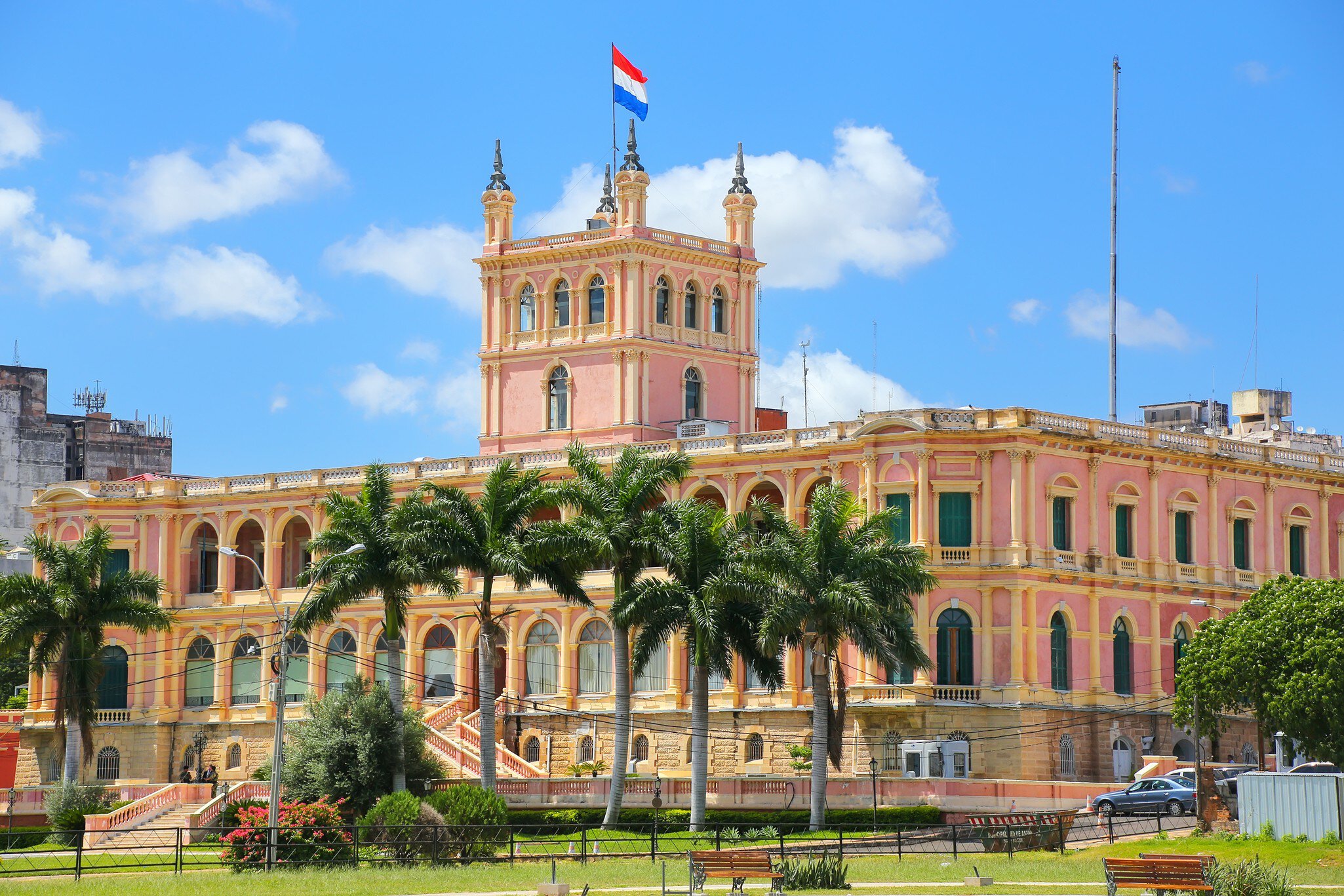
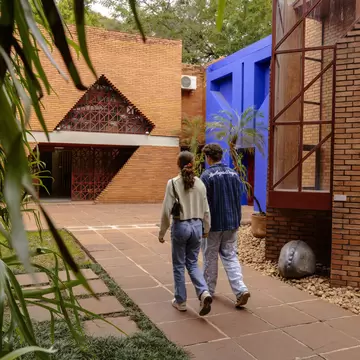
    Across the street from the Palacio de Gobierno is the free Centro Cultural Manzana de la Rivera, a complex of eight colorful and restored houses. The oldest is Casa Viola (1750), where the Museo Memoria de la Ciudad houses a history of Asunción's urban development.

    reviewed

  2. B

    Museo del Barro

    Everyone's favorite, Museo del Barro, is east of the center in a slick modern neighborhood. It displays everything from modern paintings to pre-Columbian and indigenous crafts to political caricatures of prominent Paraguayans. Take bus 30 from Oliva and alight at Av Molas López; the museum is to the south off Callejón Cañada in a contemporary building.

    reviewed

  3. Trinidad & Jesús

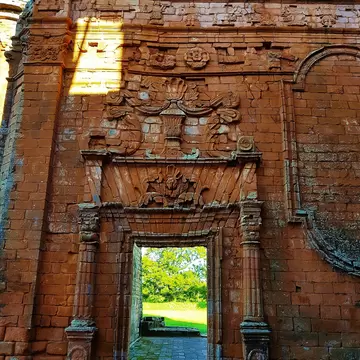
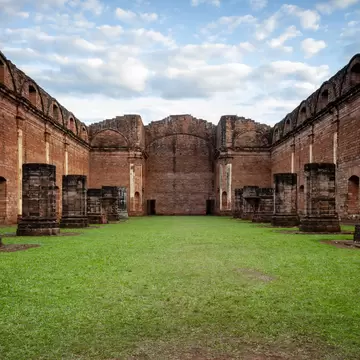
    High on a hill, Trinidad is Paraguay's best-preserved Jesuit reducción (settlement) where native people were concentrated for religious instruction, education and protection. Stunning and peaceful, it has been a Unesco World Heritage Site since 1993.

    Jesús is the nearly complete construction of a Jesuit mission, interrupted by the Jesuit's expulsion in 1767.

    At Trinidad, don't expect the usual tourist conveniences - the closest bathrooms are in the nearby Hotel León, where meals, refreshments and spacious rooms are available. Camping is also possible outside the ruins.

    Jesús, 12km (7mi) north of Trinidad, has especially trained local guides available for hire. Guides…

    reviewed

  4. Parque Nacional Cerro Corá

    This national park is now etched onto the map as one of Paraguay's treasures. Established in 1990 to combat rapidly increasing deforestation - a result of the demand for agricultural land - it protects an area of dry tropical forest and natural savanna within steep, isolated hills. It also has some interesting pre-Colombian caves and petroglyphs to ogle.

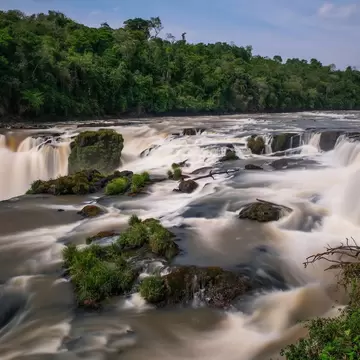
    The park's nature trails head to rivers, waterfalls and a small natural mirador (viewpoint), Cerro Muralia (325m/1066ft). Rare birds and a zoo worth of animals - including tortoises, armadillos and monkeys - can be spotted (rumor has it that there's even a jaguar, but this is based on footprints only). There's a camping…

    reviewed

  5. Parque Nacional Cerro Corá

    Now etched onto the map as one of Paraguay's treasures, this national park was established in 1990 to combat deforestation - a result of the demand for agricultural land. Set in the steep, isolated hills, it protects an area of dry tropical forest and natural savanna. There's also some pretty interesting pre-Columbian caves and petroglyphs to peruse.

    The park's plethora of nature trails lead to waterfalls, rivers and a mirador (viewpoint), Cerro Muralia, which is 325m (1066ft) high. Keep your eyes peeled for rare birds and animals including tortoises, armadillos and monkeys. Some say there's a jaguar, but this is only based on footprints. For outdoorsy types, there's a…

    reviewed

  6. C

    Museo de Historia Natural

    The Museo de Historia Natural is notable only for its spectacular display of insects - including a butterfly with a 274mm wingspan. From downtown, the most direct bus is 44-B ('Artigas') from Oliva and 15 de Agosto, which goes right to the gates.

    Every second Sunday a train departs the Botanic Gardens to Areguá. Tickets can be purchased from the old train station at Plaza Uruguay.

    reviewed

  7. Fortín Boquerón

    Neu-Halbstadt is the center of the Neuland Colony. Fortín Boquerón preserves a sample of the trenches used during the conflict between Bolivia and Paraguay in the Chaco War (1932-35). In June 1932, Bolivians launched a successful attack against Fortín Boquerón. Two months later, Paraguayans reclaimed the area. If history's your thing, you should check it out.

    reviewed

  8. Itaipú Dam

    Paraguay's publicity machine is awash with figures about the Itaipú hydro-electric project - it's the world's second largest. A visit to this massive dam will reveal an amazing array of statistics including the astonishing fact that the generators supply 80% of Paraguay's electricity. It's so unbelievably exciting, it features on the 100,000 guaraní bill.

    reviewed

  9. Fortín Toledo

    Once the site of trench warfare during the Chaco War, Fortín Toledo is now host to a reserve nurturing a small population of Chacoan peccary, a Pleistocene relic thought to be extinct until 1975. Sponsored in part by San Diego Zoo, it welcomes interested onlookers if schedules permit. Nearby lies a string of abandoned fortifications and a military cemetery.

    reviewed

  10. Parque Nacional Ybycuí

    This popular national park preserves some of eastern Paraguay's last remaining subtropical rainforest. Its steep hills, dissected by creeks with attractive waterfalls and pools, reach 400m (1312ft). The dense forest makes it hard to see the animals, which tend to hide, with the exception of stunningly colorful butterflies like the huge metallic blue morpho.

    reviewed

  11. Advertisement

  12. Casa de la Independencia

    Built in 1772, Casa de la Independencia is where Paraguayans declared their independence from Spain in 1811 - it's also Asunción's oldest building. These days it houses a small museum featuring furniture, coins and copies of speeches, giving a glimpse into Asunción's rich modern history. Don't forget your dictionary: explanations are in Spanish only.

    reviewed

  13. Parque Nacional Médeanos del Chaco

    Like every national park in Paraguay, this one is breathtaking and well worth the visit. It should not, however, be attempted alone and you should never wander at night - threats include anything from jaguars to contrabandists. For tours, contact Hans Fast (fast@telesurf.com.py). To do it justice, trips of three days and nights are recommended.

    reviewed

  14. Refugio Biológico Tatí Yupí

    This beautiful expanse of natural forest and streams was established as a result of compensation from the Itaipú Dam project, to protect animals who sought shelter here and to recuperate formerly deforested areas. With excellent camping facilities, it's worth a visit. There are bikes and horses to boot - and it's all free!

    reviewed

  15. Museo de Arquelogía Industrial

    If you're one of those people who likes to know how things work, or you just like sheep, don't miss this one - an exploration of the town's agricultural and industrial past with an assortment of antique machines on display. And it's outdoors, which takes all the stuffiness out of a trip to the museum.

    reviewed

  16. Museo Boggiani

    The well-organized Museo Boggiani stretches artistic pursuits to a new feathery high - it houses much of the feather art collection of Italian ethnographer Guido Boggiani, who conducted fieldwork with the Chamacoco Indians of the upper Río Paraguay. It's well worth the 45min bus ride.

    reviewed

  17. Parque Nacional Defensores del Chaco

    Defensores del Chaco is a wooded alluvial plain; Cerro León is its greatest landmark. The dense thorn forest harbors large cats such as jaguars, pumas and ocelots. To avoid being eaten, explore the park as part of a guided tour, which is best arranged from Asunción.

    reviewed

  18. D

    Panteón de los Héroes

    A military guard, in typically frozen fashion, protects the remains of former president Francisco Solano López and other key figures of Paraguay's catastrophic wars, in the Panteón de los Héroes. The changing of the guard happens every eight days.

    reviewed

  19. Museo del Cuartel de la Villa Real

    If you don't catch the sleepy syndrome, have a look at this beautifully restored Hispano-Paraguayo building. Not only is the exterior worth a gander, the intriguing historical exhibits and war paraphernalia throw some light on the town's rich history.

    reviewed

  20. E

    Casa de la Independencia

    Asunción's oldest building is the Casa de la Independencia . Built in 1772, it was where Paraguayans declared independence in 1811. The quaint museum features furniture, coins and copies of speeches, although explanations are in Spanish only.

    reviewed

  21. F

    Museo Etnográfico Andrés Barbero

    The free anthropological and archaeological Museo Etnográfico Andrés Barbero displays indigenous tools, ceramics and weavings, plus superb photographs and maps showing where each item comes from.

    reviewed

  22. Advertisement

  23. G

    Catedral Metropolitana

    At the southeast end of Plaza Constitución lies the 19th-century Catedral Metropolitana and its nearby museum.

    reviewed

  24. H

    Centro Cultural Manzana de la Rivera

    Across the street from the Palacio de Gobierno is the free Centro Cultural Manzana de la Rivera, a complex of eight colorful and restored houses. The oldest is Casa Viola (1750), where the Museo Memoria de la Ciudad houses a history of Asunción's urban development.

    reviewed